What a Stone Conveyor Pulley Does on a Hard-Working Line
A stone conveyor pulley is the rotating drum that turns a conveyor belt, sets its tension, and shapes its path at the head, tail, or bends of a stone-handling conveyor. In a quarry, a limestone mine, or a sand and aggregate plant, the belt may carry sharp, heavy, and abrasive rock all day, so the pulley has to do more than spin. It must hold the belt in line, survive grit and moisture, and keep enough grip to move the load without slip.
People often shorten the name to conveyor pulley or drum pulley. Both refer to the same component, and the exact role depends on where it sits in the conveyor layout.
How the Drum Is Built
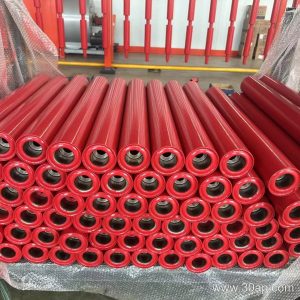
A typical stone conveyor pulley is a welded steel shell with end discs, a shaft, and bearing housings. The shell may be machined smooth or covered with rubber or ceramic lagging. The shaft passes through the shell and is supported by bearings mounted on a conveyor bracket or frame. In dusty stone plants, the bearing seals matter as much as the shell thickness, because fine rock dust finds its way into everything.
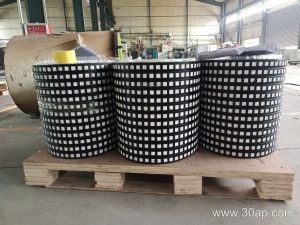
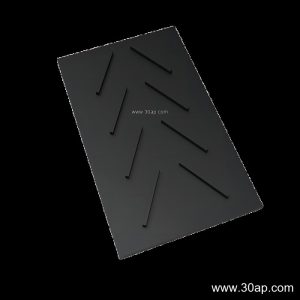
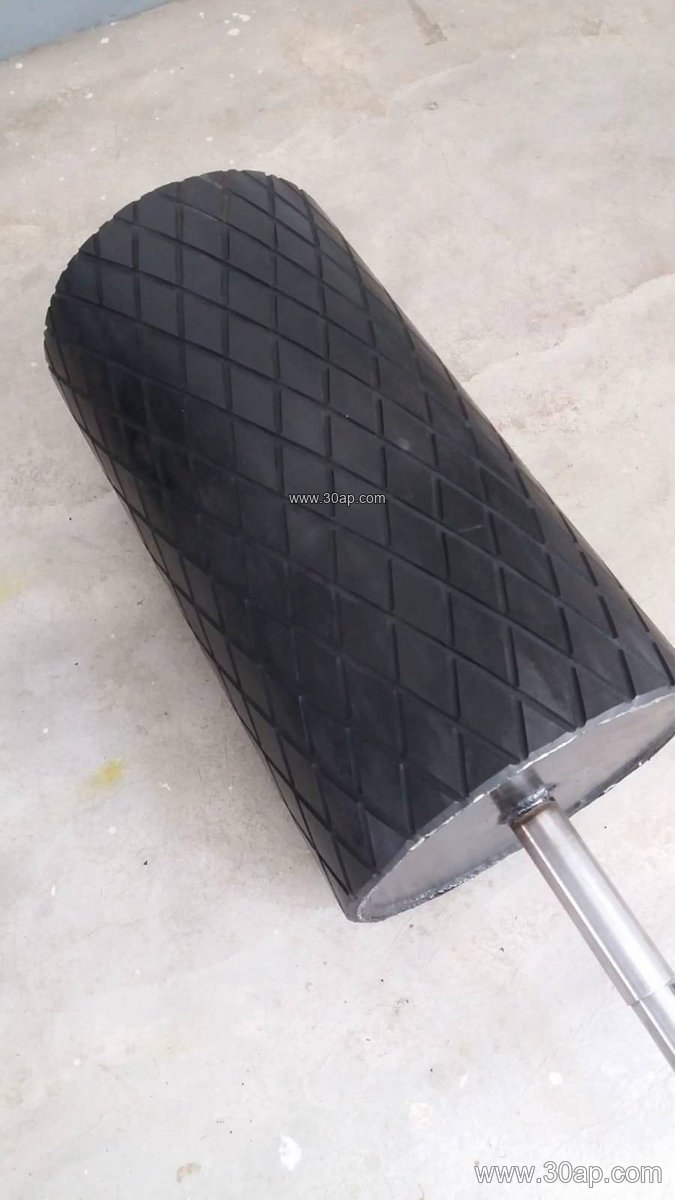
Common surface forms include plain finished shells, hot-vulcanized rubber lagging, cold-bonded rubber, diamond groove lagging, herringbone lagging, and ceramic lagging. Lagging thickness is often 8, 10, 12, 15, or 20 mm, selected by duty rather than habit. A head pulley that drives a heavy stone belt usually benefits from lagging with good friction; a bend or snub pulley may run with a plain face where grip is not the issue.
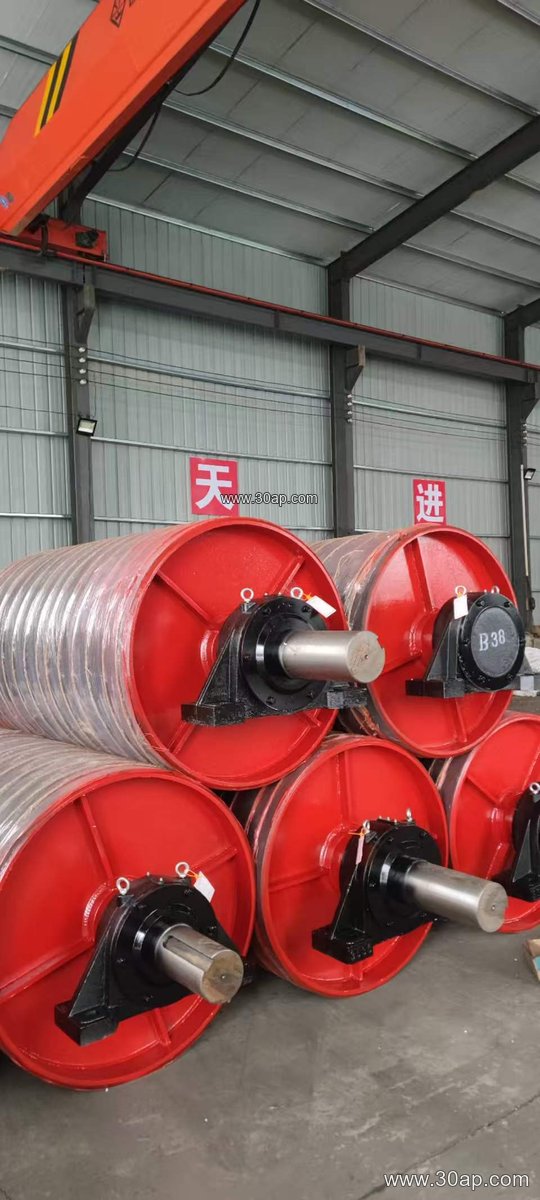
Drive, Tail, and Bend Positions Are Not the Same
The drive pulley, sometimes called the head pulley, transmits power to the belt and is normally the largest drum in the system. The tail pulley sits at the loading end and helps return the belt, often with a self-cleaning or wing design where sticky material is a problem. A bend pulley changes belt direction, and a take-up pulley maintains tension. These roles are not interchangeable, so a buyer should state the position clearly when ordering. A stone conveyor pulley for the drive position and one for a bend will differ in diameter, lagging, and shaft design even on the same conveyor.
In a coal washing plant or a power station coal yard, the same logic applies, but flame retardant and anti-static belt requirements may push the pulley specification toward larger safety margins.
Matching Pulley Size to Belt Width and Load
Belt width and pulley diameter are related but not locked together. A wider belt usually needs a wider shell face and a larger diameter to limit belt bending stress, yet the final diameter comes from belt tension, shaft torque, and the space available. Shell face width is normally a little greater than belt width; for example, a B800 belt often runs on a shell around 950 mm wide, and a B1200 belt on a shell near 1400 mm. Common combinations such as B800 × Ø500 or B1200 × Ø1000 appear in aggregate and ore lines, but they are examples, not fixed rules.
Shaft diameter is set by torque and load, not by belt width alone. Common shaft sizes range from Ø50 up to Ø200, and a larger pulley does not automatically mean a larger shaft without the torque calculation behind it.
| Belt width | Typical shell face | Example diameter |
|---|---|---|
| B500 | about 600 mm | Ø315, Ø400 |
| B650 | about 750 mm | Ø400, Ø500 |
| B800 | about 950 mm | Ø500, Ø630 |
| B1000 | about 1150 mm | Ø630, Ø800 |
| B1200 | about 1400 mm | Ø800, Ø1000 |
| B1400 | about 1600 mm | Ø1000, Ø1250 |
| B1600 | about 1800 mm | Ø1250, Ø1400 |
These values are reference data for discussion. Actual selection should follow the conveyor design, the belt type, and the duty cycle.
Working With the Belt and the Rest of the Conveyor
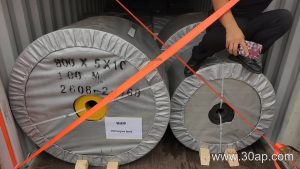
A stone conveyor pulley only performs well when it suits the belt it carries. A heavy-duty mining conveyor belt or a high abrasion resistant conveyor belt can be stiff and thick, so the pulley diameter must be large enough to avoid over-bending the carcass. On a long overland line with a steel cord conveyor belt, the drive pulley is often large and heavily lagged, while a fabric core conveyor belt on a shorter yard conveyor may use a smaller drum. Chevron or corrugated sidewall belts need clearance checks around the pulley, and skirted conveyor belt systems may need extra attention at the loading point.
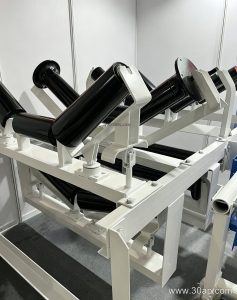
Alignment with the idler roller frames and the conveyor bracket matters too. A pulley that is out of square with the belt path causes edge wear and tracking problems that no amount of lagging will fix.
What Buyers Should Confirm Before Ordering
- Position in the conveyor: drive, tail, bend, take-up, or snub.
- Belt width and belt type, including whether it is an EP conveyor belt, NN conveyor belt, or steel cord construction.
- Required shell diameter and face width, with drawing or layout reference.
- Lagging surface and thickness, such as diamond groove rubber at 10 mm or ceramic at 15 mm.
- Shaft diameter and bearing type, confirmed by torque and load data.
- Environment: dust, water, heat, or oil, which may call for a heat resistant conveyor belt or oil resistant conveyor belt elsewhere on the line.
For more on matching drums, belts, and frames, visit our site at conveyor pulley and conveyor belt pages, or review idler roller and conveyor bracket options for a complete conveyor assembly.