What an Anti-Slip Lagged Pulley Does
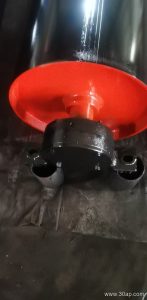
An anti-slip lagged pulley is a conveyor pulley whose shell carries a rubber or ceramic lagging layer designed to raise friction between the drum surface and the belt. The purpose is straightforward: keep the belt moving without visible slip at the drive or tension point. In a quarry, a cement plant, or a power plant coal yard, a slipping drive pulley quickly becomes a maintenance problem — the belt stalls, the lagging burns, and downstream equipment keeps running.
The term is used interchangeably with anti-slip rubber lagged pulley or anti-slip lagging pulley. It is a surface treatment choice applied to a conveyor pulley, not a separate class of drum. The drum itself may be a drive pulley, a tail pulley, or a bend pulley, and the lagging is specified to match the duty of that position.
How the Lagging Is Built
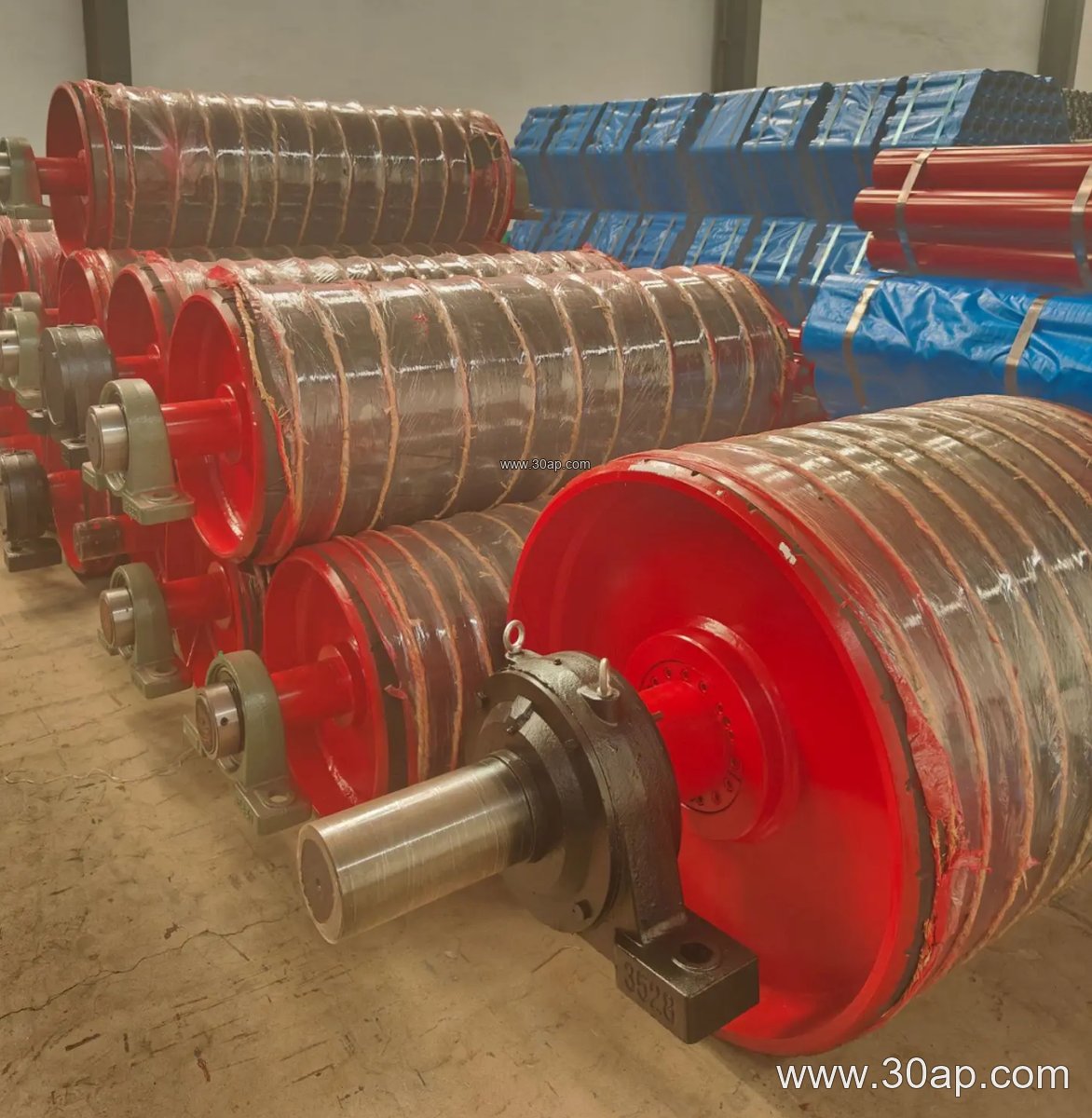
A lagged pulley starts as a steel shell with end discs and a shaft, then receives a friction layer on the outer surface. Common surface forms include:
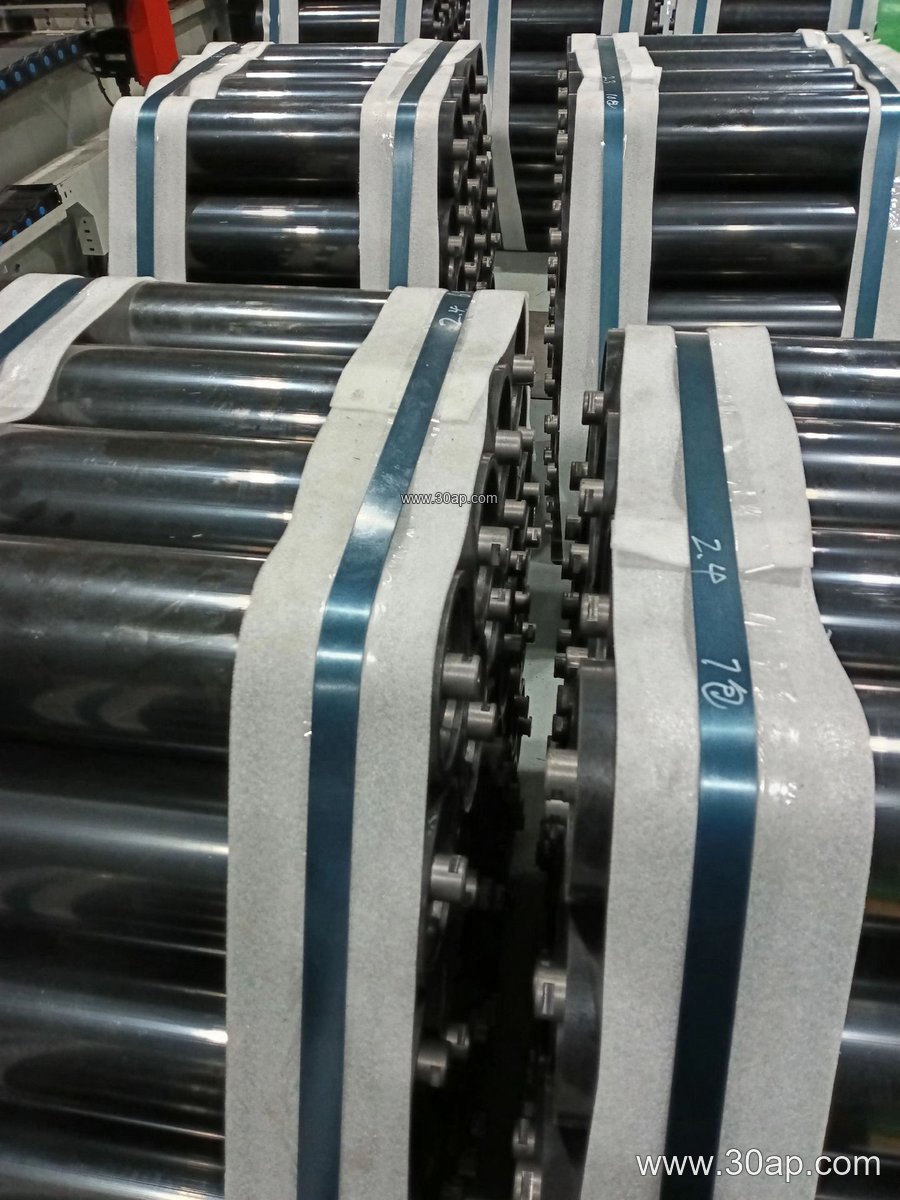
- Plain lagging — smooth rubber for general grip and gentle belt contact.
- Diamond lagging — raised diamond pattern that helps shed water and fines.
- Herringbone lagging — directional grooves that encourage self-cleaning.
- Ceramic lagging — embedded ceramic tiles for high-traction, abrasive service.
Attachment methods are usually cold-bonded rubber, hot-vulcanized rubber, or cast rubber. Lagging thickness commonly ranges from 8 mm to 20 mm, with 10 mm and 12 mm appearing often in medium-duty work and 15 mm to 20 mm in heavy drive positions. The right thickness depends on belt tension, pulley diameter, and how much wear the site expects.
Shell, Shaft, and Bearing Details
The shell diameter must be large enough to give the belt adequate wrap and to limit bending stress in the belt. Typical pulley diameters include Ø400, Ø500, Ø630, Ø800, Ø1000, and Ø1250, with larger sizes used on high-tension drives. Shaft diameter is set by torque and load — common values run from Ø80 to Ø200 — and should not be chosen from belt width alone. Face width is normally a little wider than the belt, so a B800 belt may run on a pulley with roughly 950 mm face, and a B1200 belt on a drum near 1400 mm face.
Where Anti-Slip Lagging Matters Most
Drive pulleys and tension pulleys carry the highest risk of slip, so lagging is most often specified there. In a limestone mine, a lagged head pulley keeps a heavy Mining Conveyor Belt moving under wet, dusty conditions. In an aggregate line, a lagged tail pulley can reduce material build-up and belt wander. A bend pulley may also be lagged when it carries significant wrap angle and the belt is lightly tensioned.
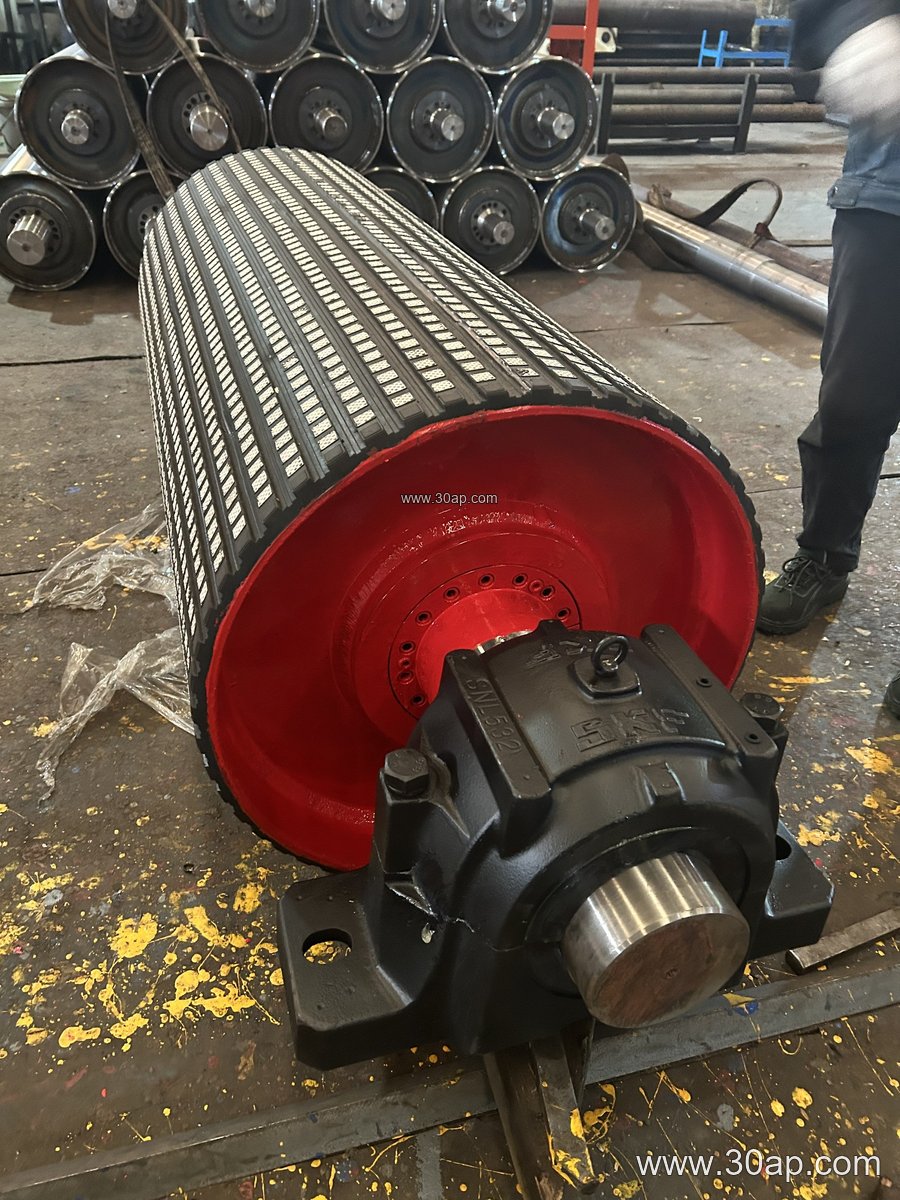
Lagging choice should follow the material and the environment. Abrasive ore favors ceramic or thick rubber. Wet, sticky feed benefits from a grooved or diamond pattern that sheds water. A food or clean-material line may prefer plain rubber to avoid trapping residue. Where static is a concern, an Anti-Static Conveyor Belt paired with a properly grounded pulley frame is a common approach.
Matching the Pulley to the Belt
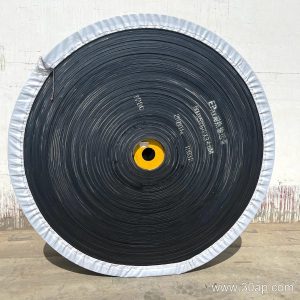
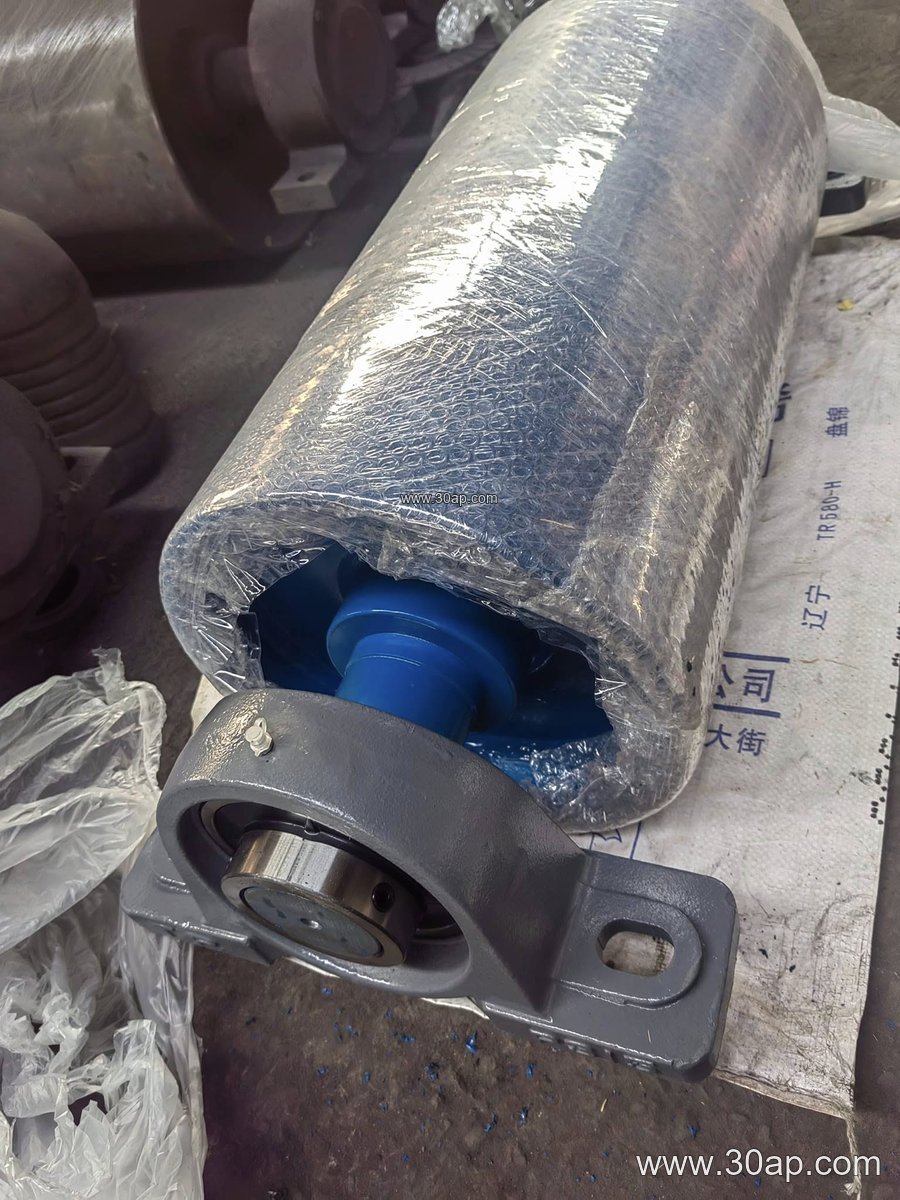
An anti-slip lagged pulley works best when the belt, the drum, and the conveyor bracket are treated as one system. A Steel Cord Conveyor Belt on a long overland run demands a large-diameter drive pulley and careful lagging thickness so the belt is not over-flexed. A Multi-Ply Fabric Core Conveyor Belt in a cement plant clinker line may use a medium drum with 12 mm rubber lagging. The table below shows representative combinations; these are examples, not fixed rules.
| Belt Width | Approx. Pulley Face | Example Diameter | Typical Lagging |
|---|---|---|---|
| B500 | 600 mm | Ø315 – Ø400 | 10 mm rubber |
| B800 | 950 mm | Ø500 – Ø630 | 12 mm diamond |
| B1200 | 1400 mm | Ø800 – Ø1000 | 15 mm rubber or ceramic |
| B1400 | 1600 mm | Ø1000 – Ø1250 | 15 – 20 mm ceramic |
Belt width does not lock a pulley to one diameter. A B1200 system may use Ø800 on a short conveyor and Ø1000 on a long, high-tension drive. The designer sets diameter from wrap angle, belt tension, and allowable belt bending, then selects lagging thickness and pattern.
Buyer Checklist
- Confirm the pulley position — drive, tail, tension, or bend — because the lagging duty differs.
- State belt type and width, for example an EP Conveyor Belt at 1200 mm or a Flame Retardant Conveyor Belt in a coal handling area.
- Give the required shaft diameter from torque calculations, not from belt width.
- Choose lagging pattern and thickness for the material: wet, abrasive, oily, or clean.
- Ask how the lagging is bonded and whether it can be replaced on site.
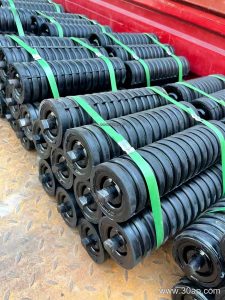
For more conveyor components, see the pulley and roller range at www.beltingpulley.com, where drums, idler rollers, and conveyor brackets are listed by duty. A well-chosen anti-slip lagged pulley protects the belt, reduces downtime, and keeps material moving through the plant.