What a Port Conveyor Idler Does at a Bulk Terminal
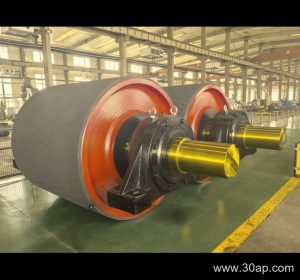
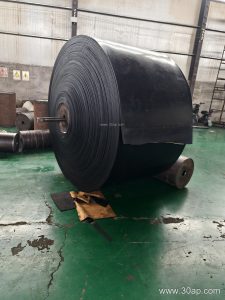
At a port, a Port Conveyor Idler is the rotating support that carries the conveyor belt and its cargo along the jetty, transfer towers, and stockyard conveyors. Unlike a drive pulley or a tail pulley, which transmit power and control belt tension, the idler simply supports the belt and reduces friction. The same component is often called a belt conveyor idler roller or carrying idler, and it must handle salt air, heavy dust, and continuous ship-loading duty. A typical terminal moves iron ore, coal, fertilizer, or grain, so the idler works alongside a heavy-duty mining conveyor belt or a ship loading conveyor belt that may be 1200mm, 1500mm, or 1800mm wide.
Construction Details That Matter in Coastal Conditions
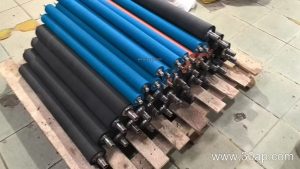
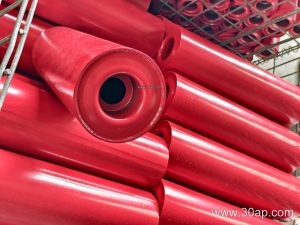
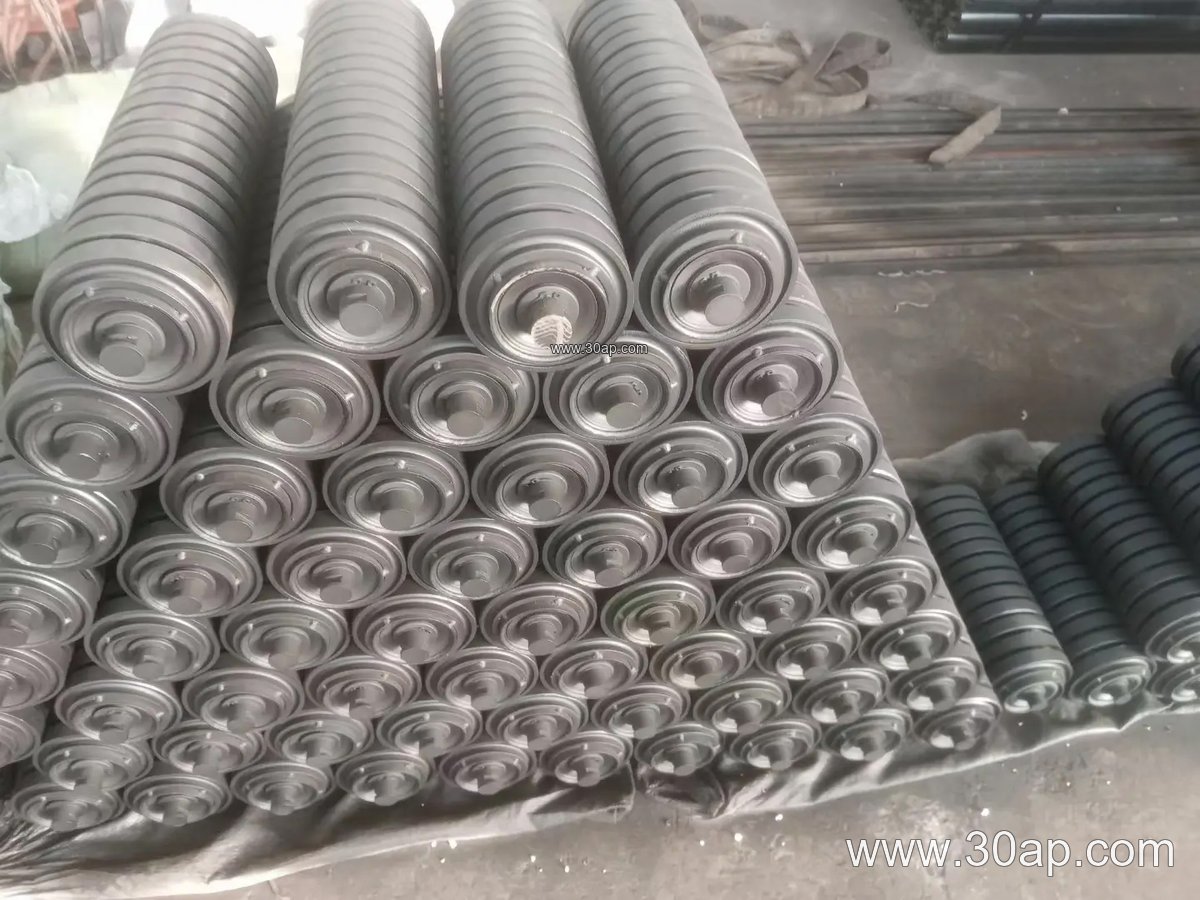
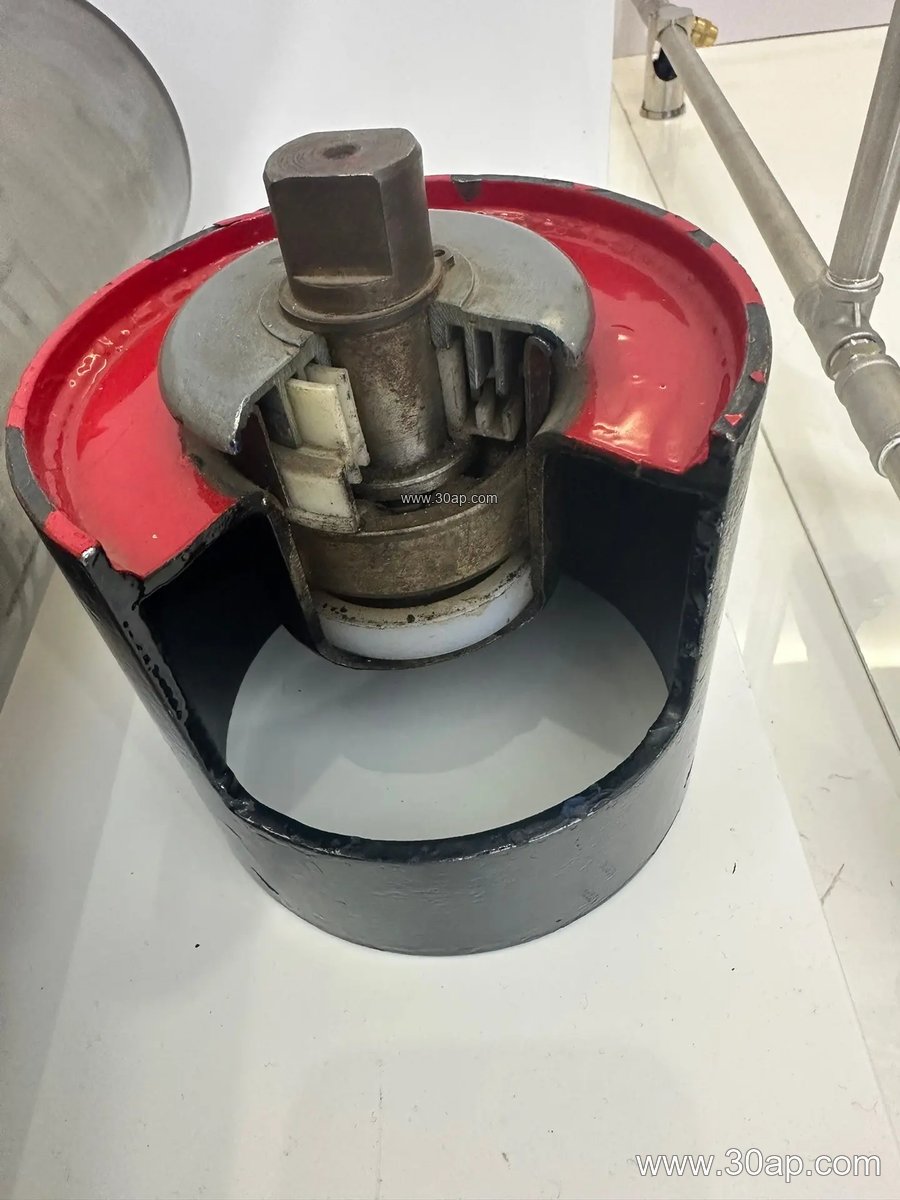
Most port idlers use a steel tube shell, a through shaft, and sealed ball bearings. Common roller diameters include Ø102, Ø108, Ø127, Ø133, Ø159, and Ø178, while bearing sizes such as 6205, 6305, 6306, and 6308 appear across different duty classes. The seal is critical: fine ore dust and humid air attack grease and cause seizure. A well-built idler uses labyrinth seals, a protective end cap, and a shaft that fits the conveyor bracket without play. Roller surface options include plain steel, nylon, ceramic, and rubber rings. Rubber-ring impact idlers are common under loading points where a crusher conveyor belt drops ore, while ceramic or nylon covers may be chosen where sticky material builds up.
Where Port Conveyor Idlers Are Used
You will find these idlers on ship loaders, stacker-reclaimers, jetty conveyors, and yard transfer belts. In a coal terminal, flame retardant conveyor belt and anti-static conveyor belt grades are common, and the idler frame must be grounded. In an iron ore or copper ore terminal, abrasion resistant conveyor belt grades run over troughing idlers at high tonnage. A cement plant or power plant unloading facility may use heat resistant conveyor belt for clinker or ash, so the idler bearings must tolerate warm ambient conditions. The same Port Conveyor Idler appears in quarry conveyor belt circuits and aggregate conveyor belt lines, but the sealing and load rating should match the material.
Troughing, Return, and Transition Arrangements
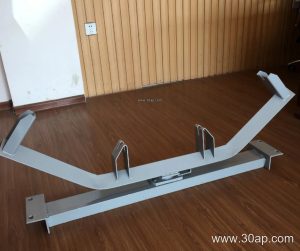
The carrying side usually uses three-roll troughing sets with trough angles of 20, 30, 35, or 45 degrees. The return side may use a flat return idler or a V-type return idler to keep the belt centered. Transition idlers are placed near pulleys to gradually change belt shape, and they are not a substitute for a bend pulley or a tail pulley. Self-aligning idlers, including friction and conical types, help correct belt wander on long jetty runs. A comb idler can be useful where sticky material clings to the return belt. For a pipe conveyor belt, the idler arrangement is entirely different and should not be confused with a conventional troughing set.
Common Dimensions and Reference Data
Idler length depends on belt width, trough angle, and roll arrangement. The table below gives common examples for three-roll troughing sets; side rolls and center rolls can differ, and these are reference values, not fixed matches.
| Belt width | Common idler length (three-roll troughing) | Typical roll diameter range |
|---|---|---|
| B500 | about 200 mm | Ø63 to Ø89 |
| B650 | about 250 mm | Ø76 to Ø108 |
| B800 | about 315 mm | Ø89 to Ø127 |
| B1000 | about 380 mm | Ø102 to Ø133 |
| B1200 | about 465 mm | Ø108 to Ø159 |
| B1400 | about 530 mm | Ø127 to Ø178 |
| B1600 | about 600 mm | Ø133 to Ø194 |
| B1800 | about 670 mm | Ø159 to Ø219 |
| B2000 | about 750 mm | Ø178 to Ø219 |
Do not assume that a given belt width requires one shaft diameter. Shaft size follows load, span, and bearing selection. A 1200mm wide conveyor belt may use different idler shafts depending on whether it carries coal or iron ore.
Buyer Checklist for Port Projects
- Confirm the belt width and trough angle before ordering; a 1000mm conveyor belt and a 1400mm conveyor belt need different roll lengths.
- Match the idler seal to the environment: salt spray, ore dust, or wash-down water.
- Check the conveyor bracket and frame dimensions so the idler drops in without modification.
- For loading zones, specify impact idlers with rubber rings rather than standard troughing rolls.
- For long jetty runs, consider self-aligning idlers and verify that the return side uses the correct flat or V-type arrangement.
Maintenance is mostly about rotation. A seized idler can wear through a rubber conveyor belt or an EP conveyor belt quickly, so schedule inspections and keep spare rollers for critical transfer points. A Port Conveyor Idler is a small cost item compared with a belt replacement, but it controls belt life, power draw, and spillage. Choose the roller diameter, bearing, seal, and surface form to match the terminal’s material and climate, and keep the drive pulley, tail pulley, and bend pulley as separate specification items.