What a Belt Conveyor Idler Frame Does
Every conveyor belt needs support along its run, and that support begins with the belt conveyor idler frame. This steel structure holds the idler rollers at the correct angle and spacing, keeping the belt in shape and the load moving smoothly. In a quarry, a cement plant, or a coal handling system, the idler frame is the quiet workhorse that determines how well the belt tracks and how long the rollers last.
The frame is not a glamorous component, but it carries real responsibility. It transfers the weight of the belt and material to the conveyor stringers, maintains the trough profile, and resists the constant vibration of bulk handling. A well-built idler frame keeps a 1200mm wide conveyor belt running true, while a weak frame lets the belt wander and the rollers wear unevenly.
Construction and Common Materials
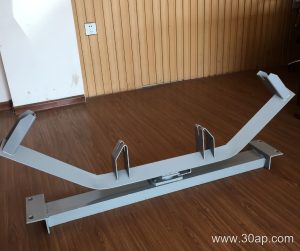
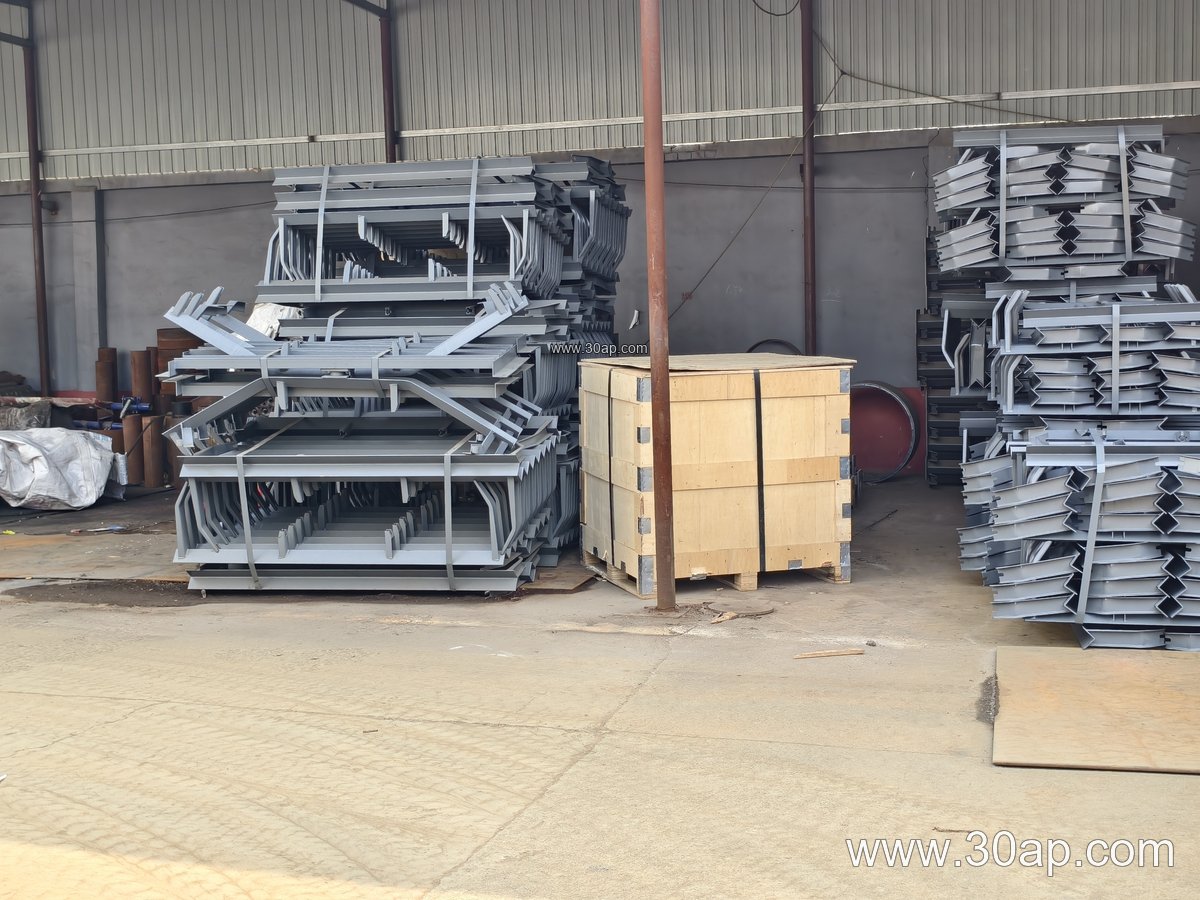
Most idler frames are fabricated from angle steel, channel steel, or folded steel plate. The choice depends on load and environment. In a sand and gravel line, a folded plate frame may be enough, while an iron ore terminal usually calls for heavier channel sections. The frame is drilled or punched to accept idler roller shafts, and the mounting hole spacing changes with belt width and trough angle. There is no single fixed hole pattern that fits every conveyor.
Surface treatment matters too. A painted frame suits a dry cement plant, but a galvanized or hot-dip coated frame holds up better in a port or a wash plant where moisture is present. The frame should be rigid enough that it does not flex when the belt is fully loaded, yet light enough to handle during installation.
Common Types and Where They Fit
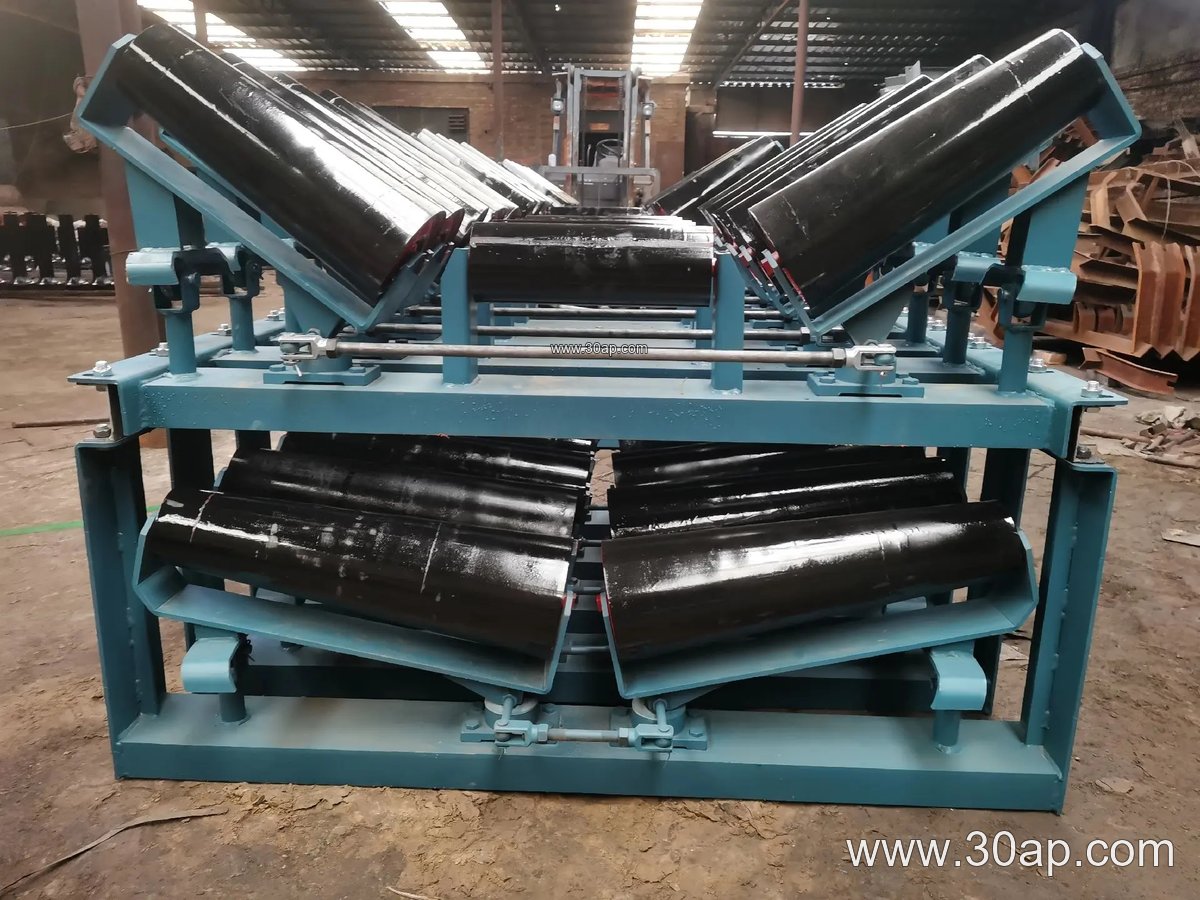
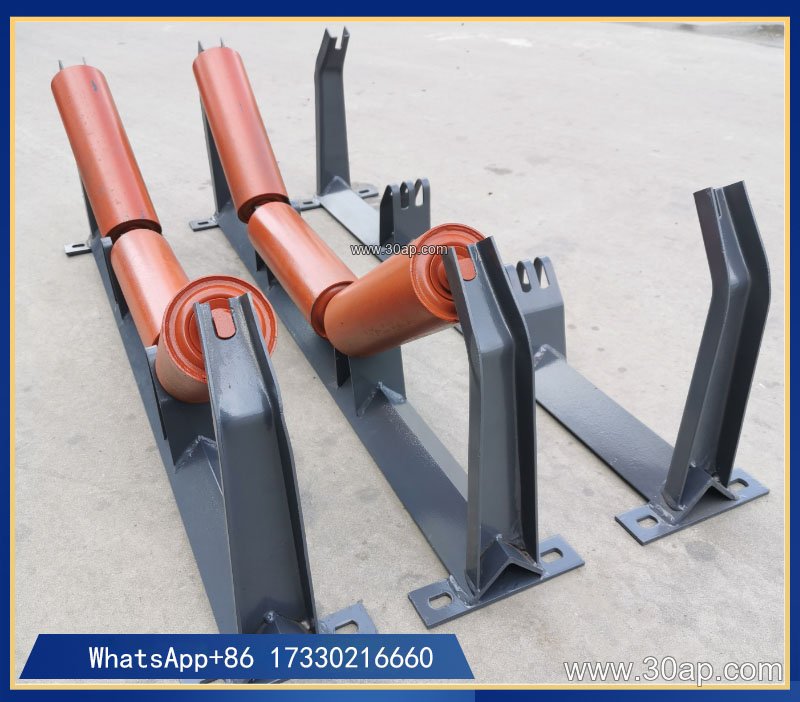
Idler frames come in several forms, each with a specific job along the conveyor line. The troughing frame, also called a carrying idler frame, supports the loaded side of the belt and sets the trough angle. Return frames support the empty belt underneath, often as a flat or V-return design. Transition frames sit near the head or tail pulley, where the belt changes from flat to troughed. Impact frames go under the loading point to absorb the shock of falling material. Self-aligning frames help correct belt tracking on long runs.
Adjustable frames allow the trough angle to be changed on site, which is useful during commissioning. A fixed frame is simpler and more rigid once the angle is confirmed. The adjustable type can move between common trough angles such as 20, 30, 35, and 45 degrees, while a fixed frame is built for one angle only.
Matching Frame, Roller, and Belt
Selecting an idler frame is a system decision. The belt width, the idler roller diameter, and the trough angle all interact. A B800 belt might use Ø89 or Ø108 rollers at a 35-degree trough, while a B1400 belt in a power plant coal yard often runs Ø133 or Ø159 rollers at a similar angle. These are common combinations, not rules. The frame must be ordered with the correct mounting dimensions for the chosen roller and belt width.
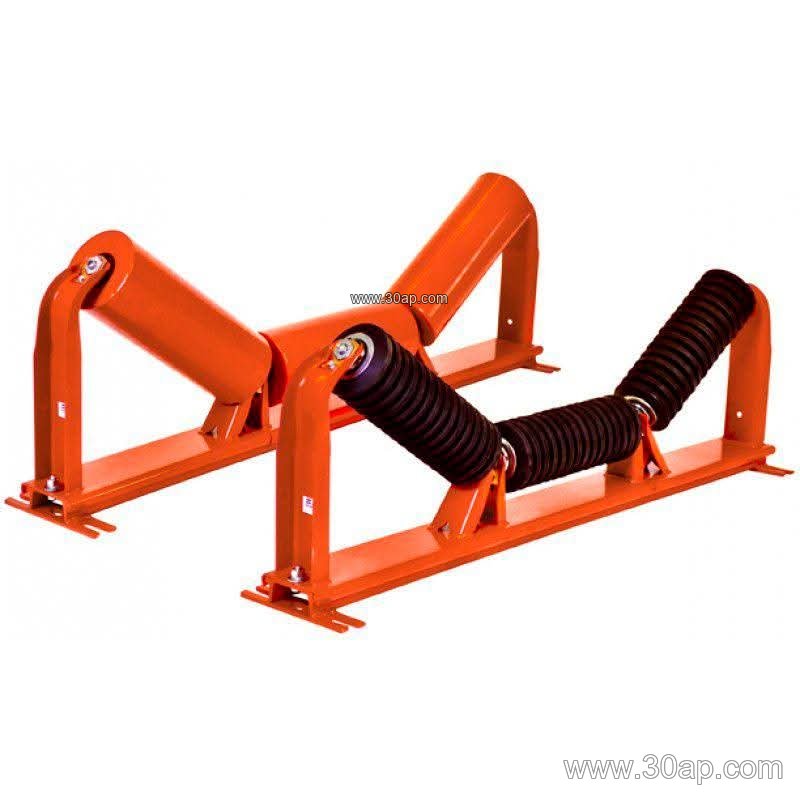
The conveyor belt itself also influences the frame choice. A heavy-duty mining conveyor belt with a thick cover needs sturdy rollers and a frame that will not distort under load. A heat resistant conveyor belt in a cement kiln area may need a frame designed to keep rollers aligned despite thermal expansion. The frame does not touch the belt directly, but it controls the geometry that the belt follows.
Installation and Maintenance Notes
Proper installation keeps the frame working. Frames should sit square to the conveyor centerline, and the stringers must be level and straight. Bolts should be tightened to the specified torque, and any shims used for alignment should be secure. After the first week of operation, check the frame bolts again, because vibration can loosen them.
Routine inspection is straightforward. Look for bent or twisted frames, worn mounting holes, and loose fasteners. A frame that has shifted will cause the belt to mistrack, which in turn damages the belt edge and the idler rollers. Replacing a damaged frame early is cheaper than replacing a chevron conveyor belt or a corrugated sidewall belt that has been ruined by misalignment.
Buyer Checklist
- Confirm the belt width, such as B650, B1000, or B1800, and the required trough angle.
- Match the frame to the idler roller diameter, for example Ø108, Ø133, or Ø159.
- Decide between fixed and adjustable frames based on whether the trough angle may change.
- Specify the material and surface treatment for the site conditions.
- Check mounting hole spacing and crossbeam length against the conveyor design, not against a generic table.
- Consider the environment: a quarry, a coal mine, a fertilizer plant, and a grain silo each place different demands on the frame.
For more information on idler frames and related conveyor components, visit our site at www.example.com/belt-conveyor-idler-frame. A frame that fits properly is the first step toward a conveyor that runs quietly and efficiently.