What a Heavy-Duty Trough Idler Does on a Conveyor
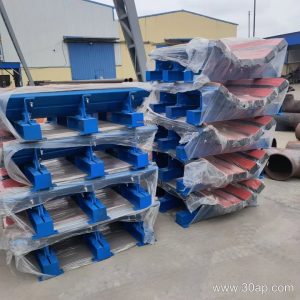
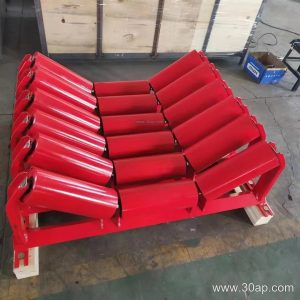
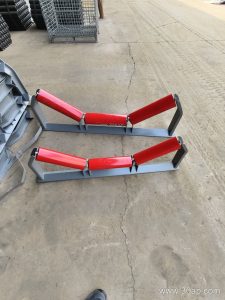
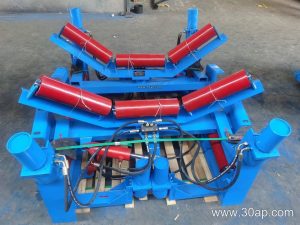
A heavy-duty trough idler is the carrying roller assembly that supports the loaded run of a conveyor belt and shapes it into a trough. Three rolls mounted on a common frame hold the belt in a stable curve, so bulk material stays centered instead of spilling over the edges. In a quarry, a limestone mine, or a cement plant feed line, this component works under constant load, grit, and moisture, which is why the heavy-duty version is built with thicker shells, stronger shafts, and better sealing than a light-duty roller.
The same item is often called a heavy-duty carrying idler or heavy trough roller. Those names describe the same product; they are not interchangeable with return idlers, impact idlers, or self-aligning types, which do different jobs at other points of the conveyor.
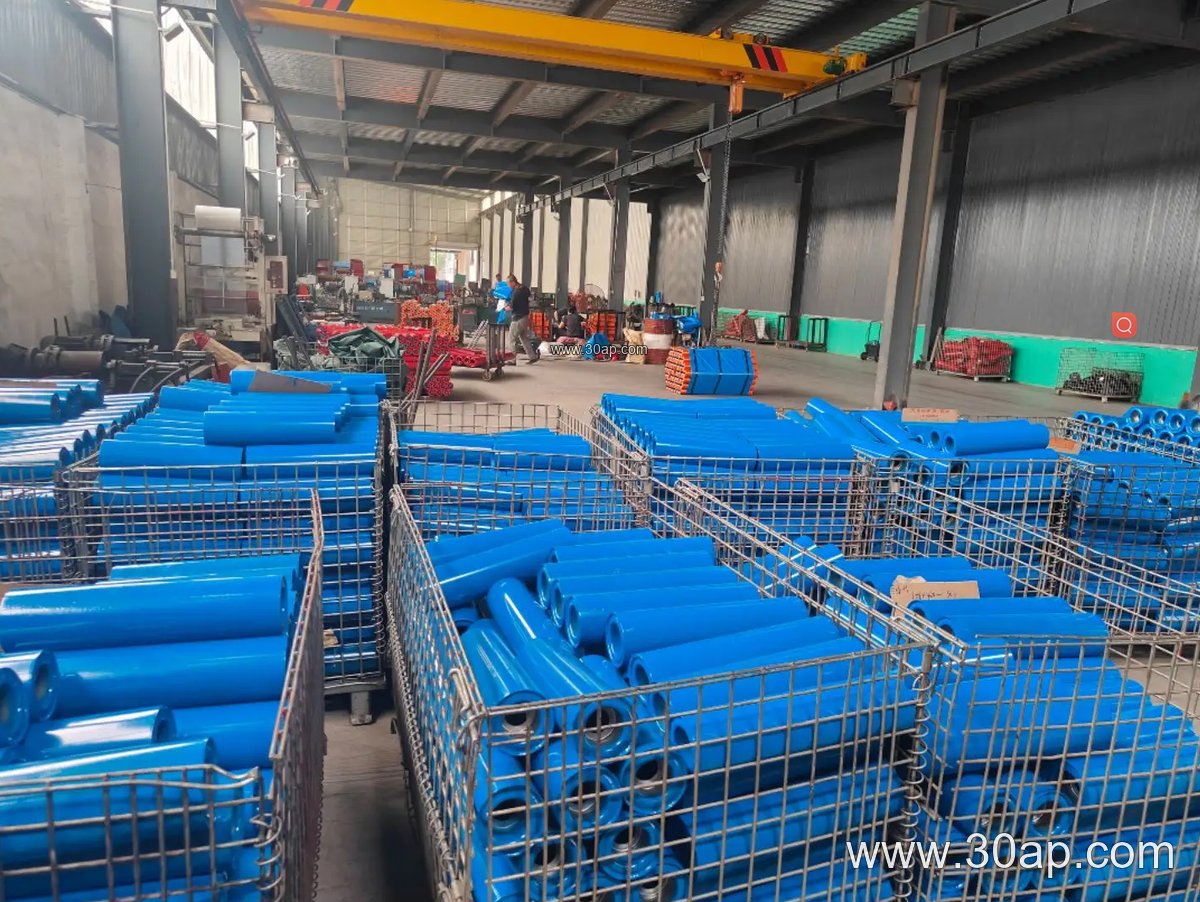
Construction Details That Matter
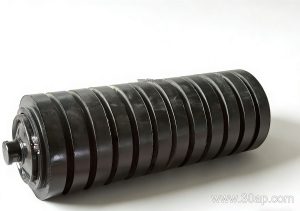
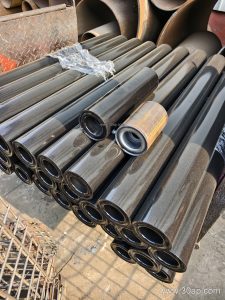
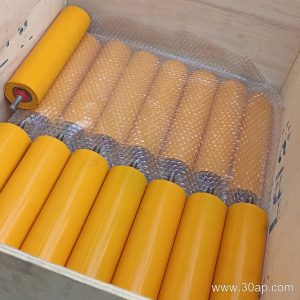
A typical unit combines a steel tube shell, a through shaft, sealed ball bearings, and a pressed or welded bracket that fixes the three rolls at the chosen trough angle. Roll surface options include plain steel, nylon, ceramic, and rubber rings. Rubber rings are common where fines and moisture make plain steel slippery, while ceramic lagging helps in abrasive service such as an iron ore or copper ore transfer point.
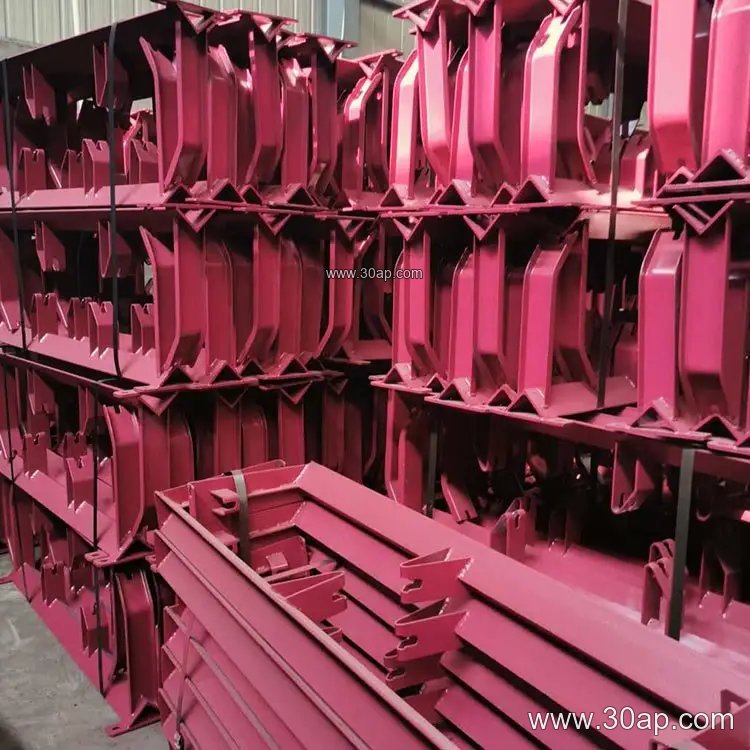
- Shell: welded steel tube, often with increased wall thickness for heavy loading
- Bearing housing: sealed and greased for dust and water resistance
- Frame: three-roll trough set, usually 20, 30, 35, or 45 degrees
- Roll diameter: commonly from Ø89 up to Ø194 or Ø219 in large installations
- Bearing sizes: 6205, 6305, 6306, 6308, and 6310 appear across the range, matched by load and shaft design rather than by belt width alone
Roll length follows belt width, trough angle, and the roll arrangement. For a three-roll set, common examples are about 200 mm for B500, 250 mm for B650, 315 mm for B800, 380 mm for B1000, 465 mm for B1200, 530 mm for B1400, 600 mm for B1600, 670 mm for B1800, and 750 mm for B2000. Side rolls and center rolls can differ, so these are reference points, not fixed pairings.
Where Heavy Trough Idlers Are Used
These assemblies suit continuous high-tonnage duty. You will find them under a heavy-duty mining conveyor belt at a primary crushing station, along a coal mining conveyor belt in a washing plant, and on aggregate conveyor belts that move sharp stone. Power plant coal yards, steel plant sinter lines, and port ship loading conveyors also rely on them where belt widths of 1200 mm, 1400 mm, or 1600 mm carry dense material at speed.
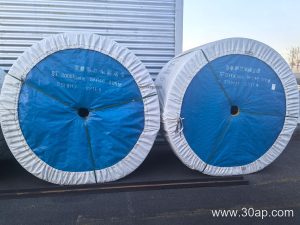
The roller works together with the rest of the conveyor: a conveyor pulley at the head drives the belt, a conveyor bracket holds the idler frame, and every idler roller along the line shares the load. If the belt is a steel cord conveyor belt or an abrasion resistant conveyor belt, the trough set still performs the same support function, but the roll surface and seal quality become more important.
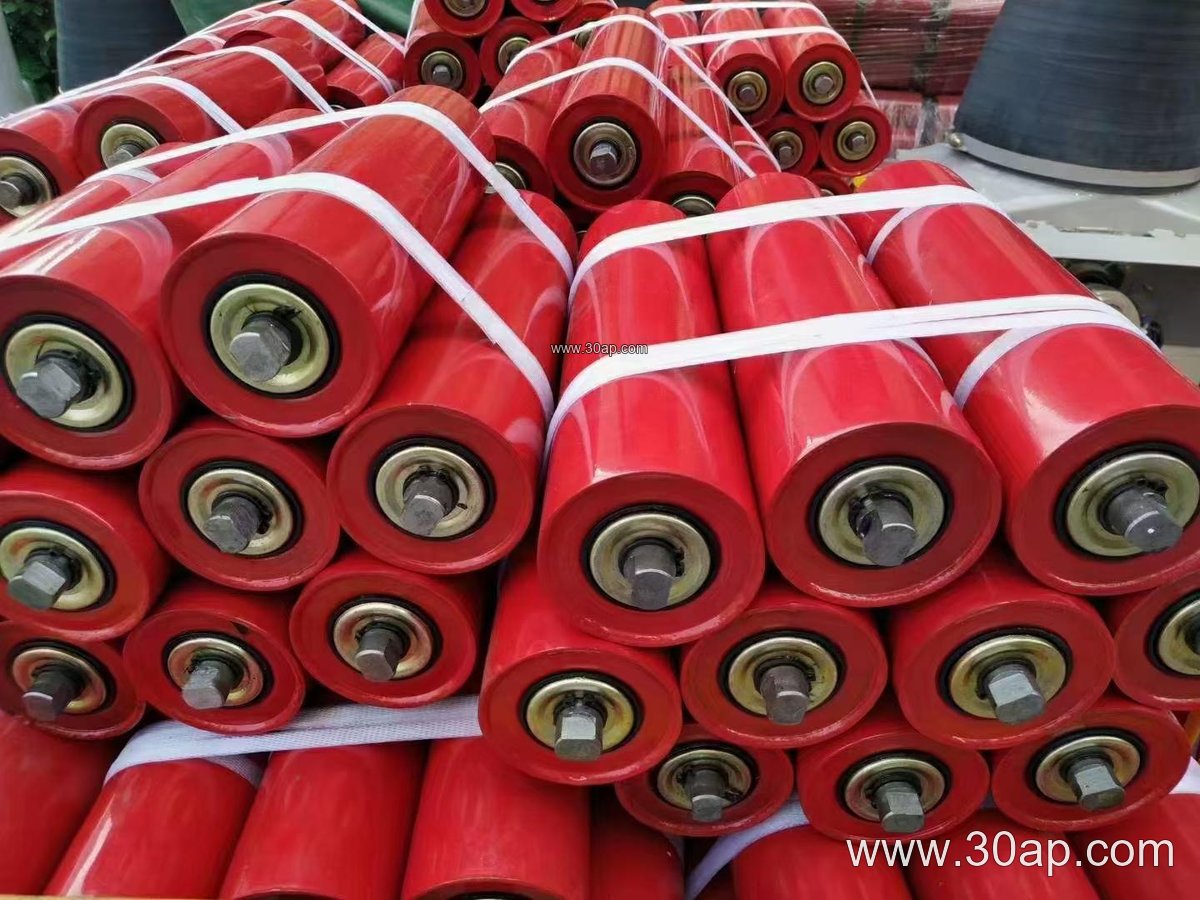
Choosing the Right Set
Selection starts with the belt width and the material. A 30-degree trough is a common general-purpose choice; 35 degrees gives better capacity retention for free-flowing material, while 45 degrees suits very wide belts and high tonnage. Narrow belts may use two-roll sets instead of three-roll sets. For dusty or wet conditions, sealed bearings and rubber or ceramic roll surfaces reduce sticking and wear.
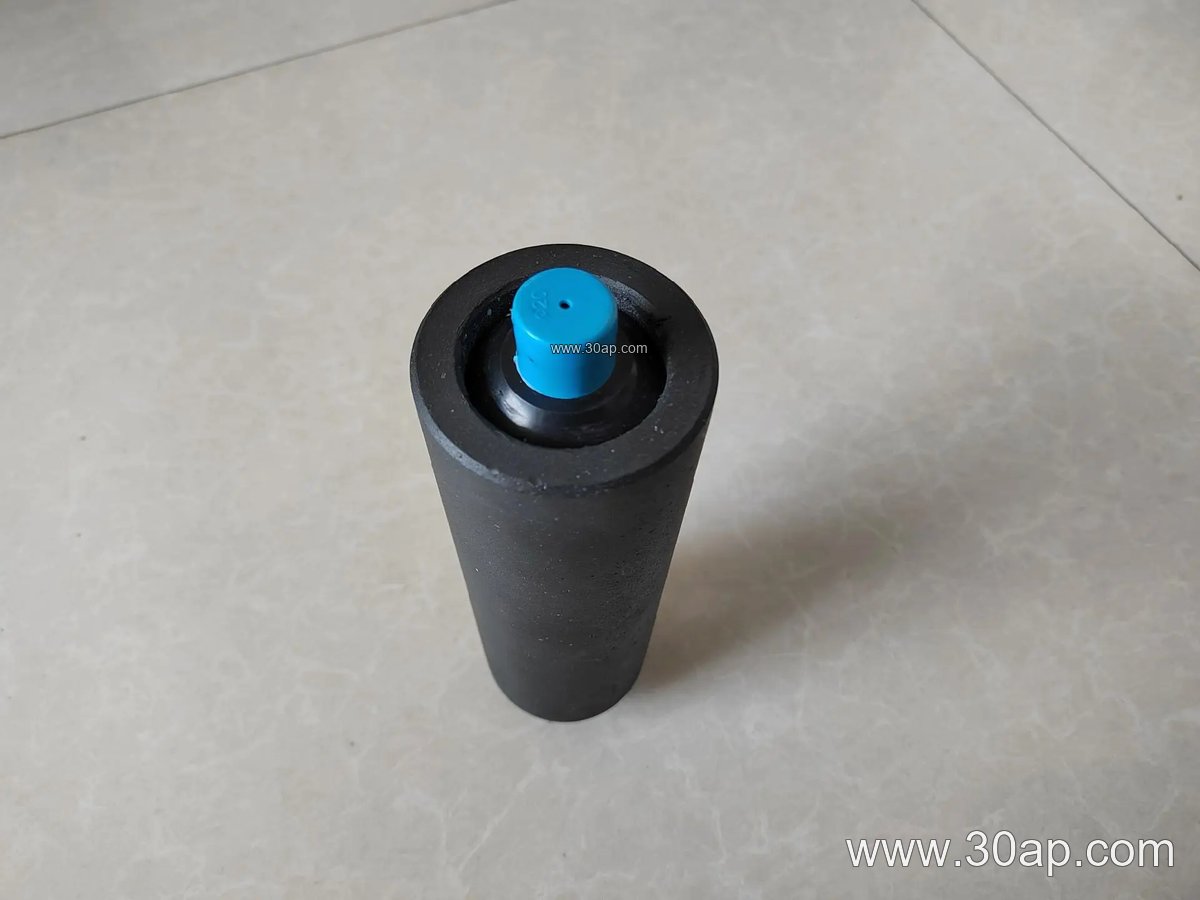
Buyers should confirm the shaft diameter, bearing size, and frame dimensions against the conveyor drawing rather than assuming a standard. A 1200 mm wide conveyor belt does not automatically define one shaft size, and one belt width can be paired with more than one pulley diameter at the drive end. Ask for the roll diameter, shell thickness, bearing type, trough angle, and mounting hole pattern in writing before ordering.
Maintenance and Inspection
Check for seized rolls, worn shells, and material buildup on the frame. A stuck roller drags on the belt, raises power demand, and can damage the cover. Replace rollers in matched sets where possible so the belt runs evenly. Keep the belt tracking straight, because a misaligned belt loads one side of the trough set and shortens roller life. In a sand and gravel line or a tunnel spoil conveyor, a short weekly walkover catches most problems early.
For related components, match the trough idler to the correct conveyor pulley and conveyor bracket rather than mixing frame styles from different suppliers. A well-matched heavy-duty trough idler keeps the belt supported, the material contained, and the whole conveying system running with fewer stops.