What a Rubber-Lined Pulley Does on a Conveyor
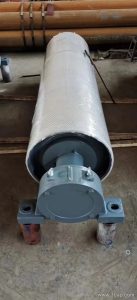
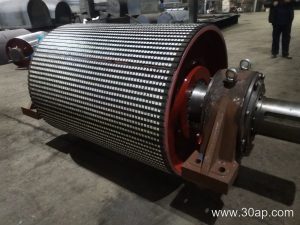
A rubber-lined pulley is a conveyor pulley whose shell is covered with a rubber layer, usually applied by hot vulcanization, cold bonding, or cast rubber. The lining raises friction between the shell and the conveyor belt, which matters most where the belt must be driven or kept tracking. In a quarry, a cement plant, or a power plant coal yard, this grip can be the difference between a steady belt and one that slips under load. The same component is also called a rubber lagged pulley or rubber-coated drum pulley, and those names refer to the same product.
The rubber lining should not be confused with the pulley type. A drive pulley, a tail pulley, and a bend pulley each do a different job, and they are not interchangeable. A rubber-lined drive pulley transmits torque, while a tail pulley mainly redirects and tensions the returning belt. A bend pulley changes belt direction without driving. Choosing a lined shell for one position does not mean the same design suits another.
Construction and Surface Options
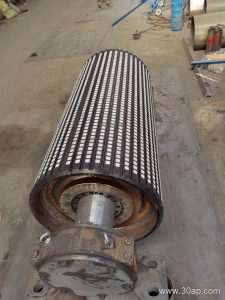
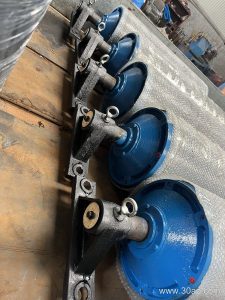
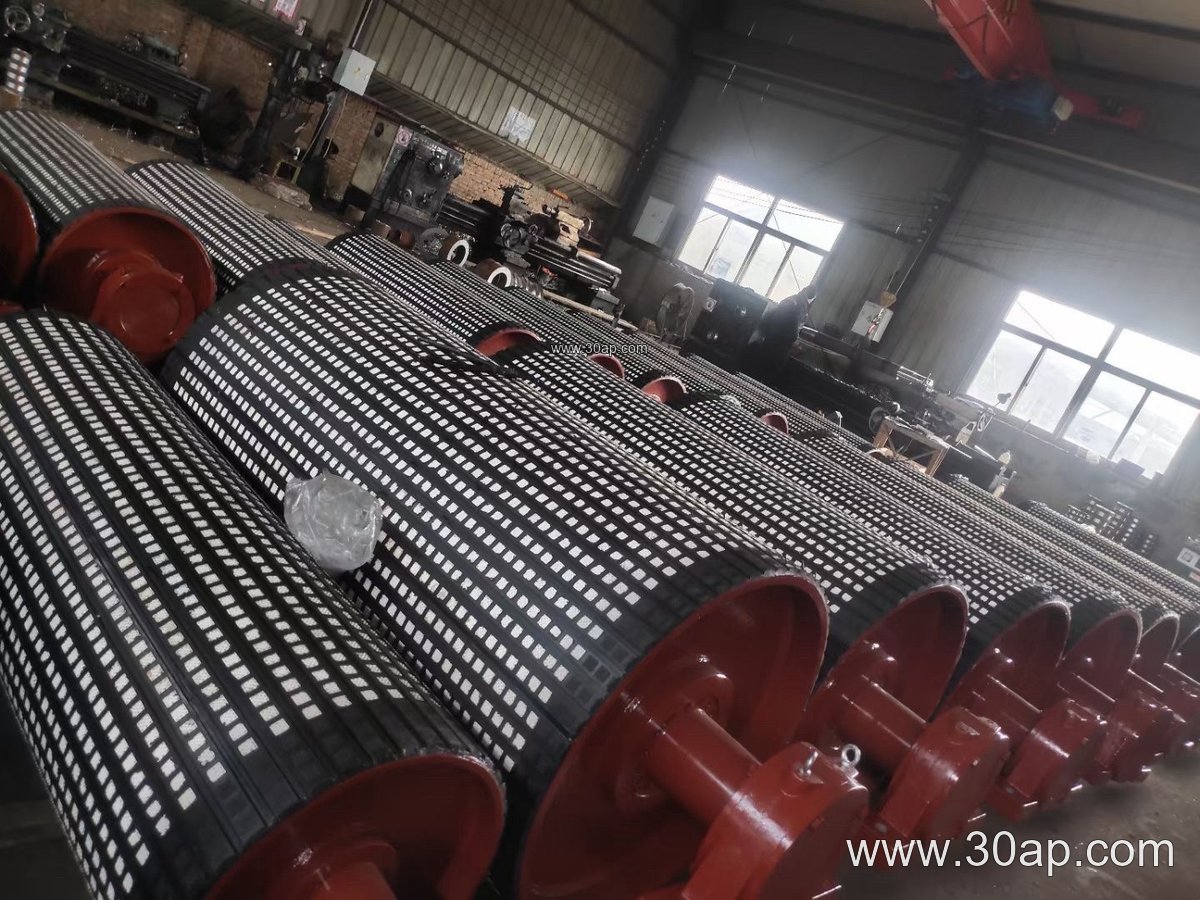
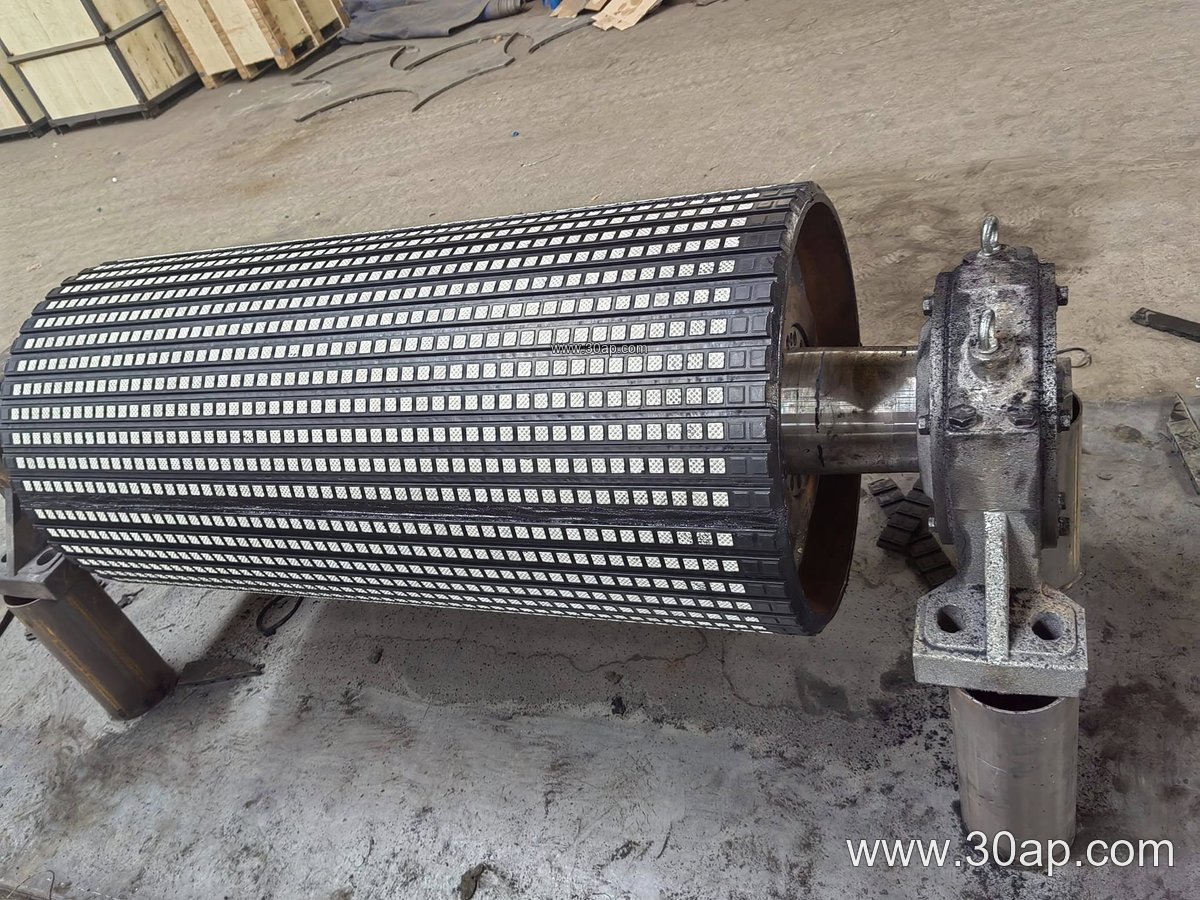
The basic body is a steel shell with end discs, a shaft, and bearing housings. The rubber layer is bonded to the shell and then finished to the required surface form. Common surface forms include plain rubber, diamond pattern, and herringbone pattern. Diamond lagging helps shed water and fine dust, while plain rubber is often chosen for cleaner duty. Ceramic lagging is a separate option and is not the same as a rubber-lined shell.
Lining thickness is commonly 8, 10, 12, 15, or 20 mm, selected according to belt tension, pulley diameter, and the abrasiveness of the material. A thicker cover is not automatically better; too much rubber can affect balance and heat build-up in continuous duty. The shell face width is usually slightly wider than the belt, so a B800 belt typically runs on a pulley face of about 950 mm, and a B1200 belt on about 1400 mm. These are reference relationships, not fixed pairings.
Typical reference combinations
| Belt width | Pulley face width (common) | Example diameter range |
|---|---|---|
| B500 | about 600 mm | Ø250 to Ø400 |
| B650 | about 750 mm | Ø315 to Ø500 |
| B800 | about 950 mm | Ø400 to Ø630 |
| B1000 | about 1150 mm | Ø500 to Ø800 |
| B1200 | about 1400 mm | Ø630 to Ø1000 |
| B1400 | about 1600 mm | Ø800 to Ø1250 |
Shaft diameter is determined by torque and load, not by belt width alone. Common shaft sizes include Ø80, Ø100, Ø120, Ø140, and Ø160, but each case needs its own calculation. A B1200 × Ø1000 drive pulley and a B800 × Ø500 tail pulley may both carry rubber lining, yet their shafts and bearing selections will differ considerably.
Where the Lined Surface Pays Off
The greatest benefit appears at the head drive position, where the belt leaves the pulley under full tension. Without enough friction, a fully loaded EP conveyor belt or steel cord conveyor belt can slip, especially in wet or dusty conditions. Rubber lining also protects the shell from wear when the belt carries abrasive bulk material such as iron ore, copper ore, clinker, or crushed stone.
In a coal mining conveyor or an underground coal mining conveyor, flame retardant conveyor belt grades are common, and the pulley lining should be compatible with the site’s fire safety approach. In a sand and gravel line, a rubber-lined bend pulley can reduce material build-up on the shell. In a port bulk terminal handling a 1200mm wide conveyor belt, the drive pulley lining is often specified with a diamond pattern for wet weather grip.
Buyer Checklist
- Confirm the pulley position: drive, tail, bend, take-up, or snub. The duty changes the lining choice.
- State belt width, belt type, and belt tension so the supplier can size the shell and shaft correctly.
- Specify lining thickness and surface pattern, and ask how the rubber is bonded.
- Check face width against belt width, allowing for tracking tolerance.
- Match the pulley to the conveyor bracket and bearing arrangement on site.
- Ask for dynamic balance information on large diameter pulleys running at speed.
Maintenance is straightforward but important. Inspect the rubber surface for cuts, glazing, and separation, and check that the conveyor belt tracks centrally. A worn or polished lining loses grip long before the pulley fails mechanically. Keep the idler roller and conveyor pulley alignment in check, since misalignment accelerates edge wear on both the belt and the lining.
For a reliable quotation, provide the belt specification, the pulley position, the required diameter, the face width, and the shaft load. A rubber-lined pulley is a small part of the conveyor, but it influences belt life, energy use, and downtime across mining, cement, power, and aggregate operations.