What an Idler Bracket Does on a Conveyor
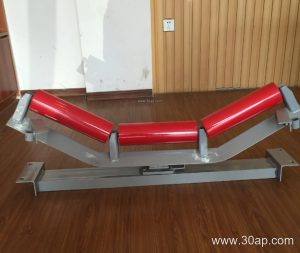
An idler bracket is the structural component that holds conveyor idlers in position along the carrying and return sides of a conveyor frame. It fixes the spacing, the trough angle and the height of each idler roller so the belt keeps a stable profile from loading point to discharge. In a quarry, a cement plant or a power plant coal yard, a loose or misaligned bracket quickly shows up as belt wander, spillage or edge damage, so this small part carries a large share of the conveyor’s mechanical stability.
The bracket is not a pulley component. Drive pulleys, tail pulleys and bend pulleys transmit or redirect belt tension at the ends and curves of the conveyor, while the idler bracket works along the run, supporting the belt and the material load through the idlers it carries. The two families of parts are selected for different duties and should not be substituted for one another.
How the Bracket Is Built
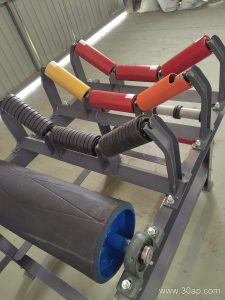
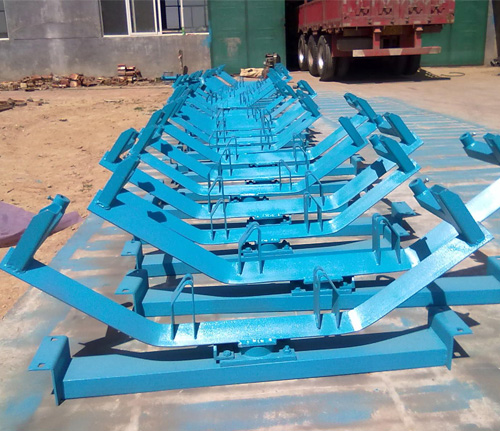
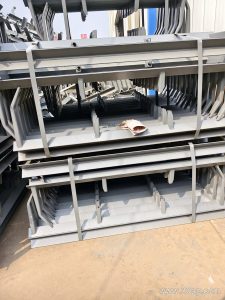
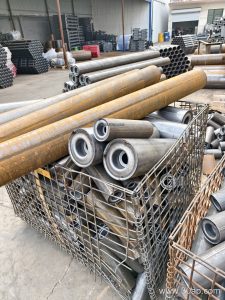
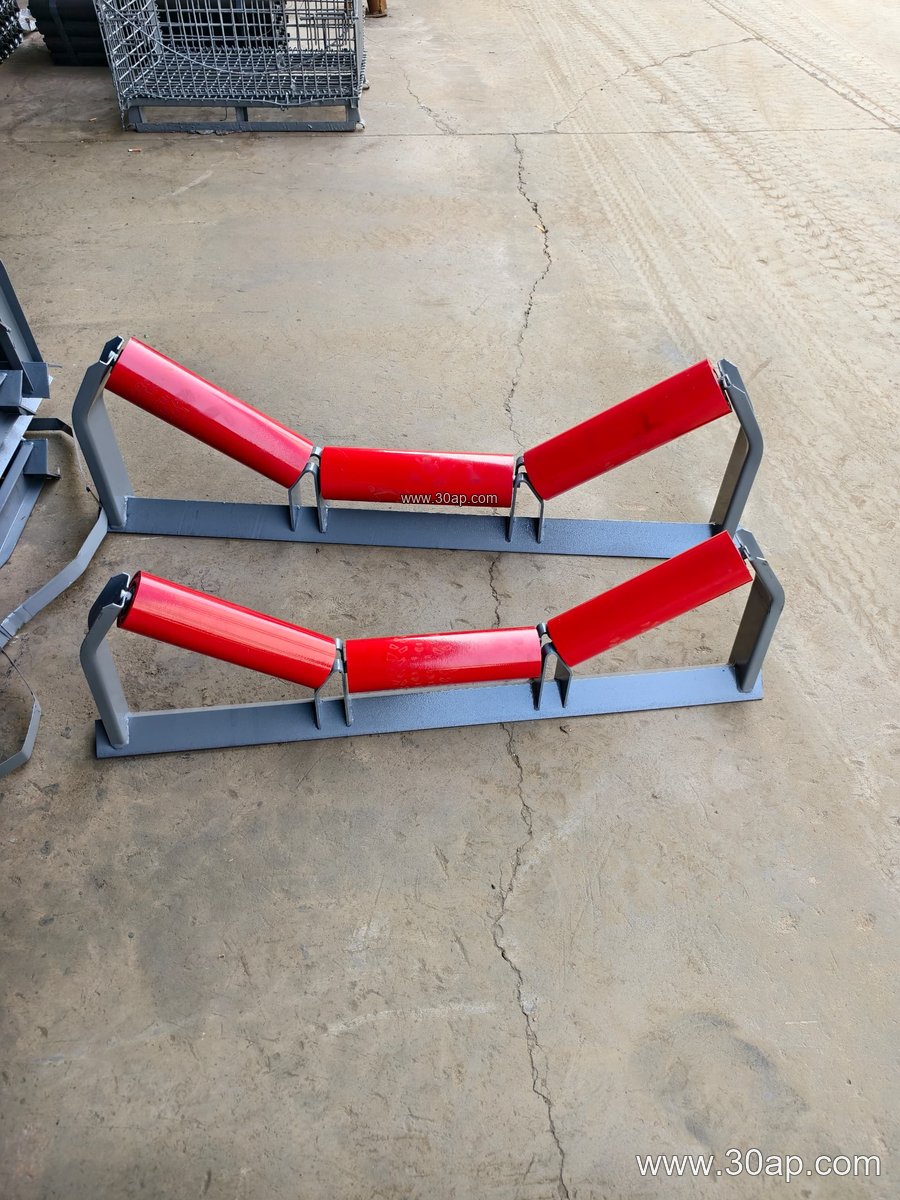
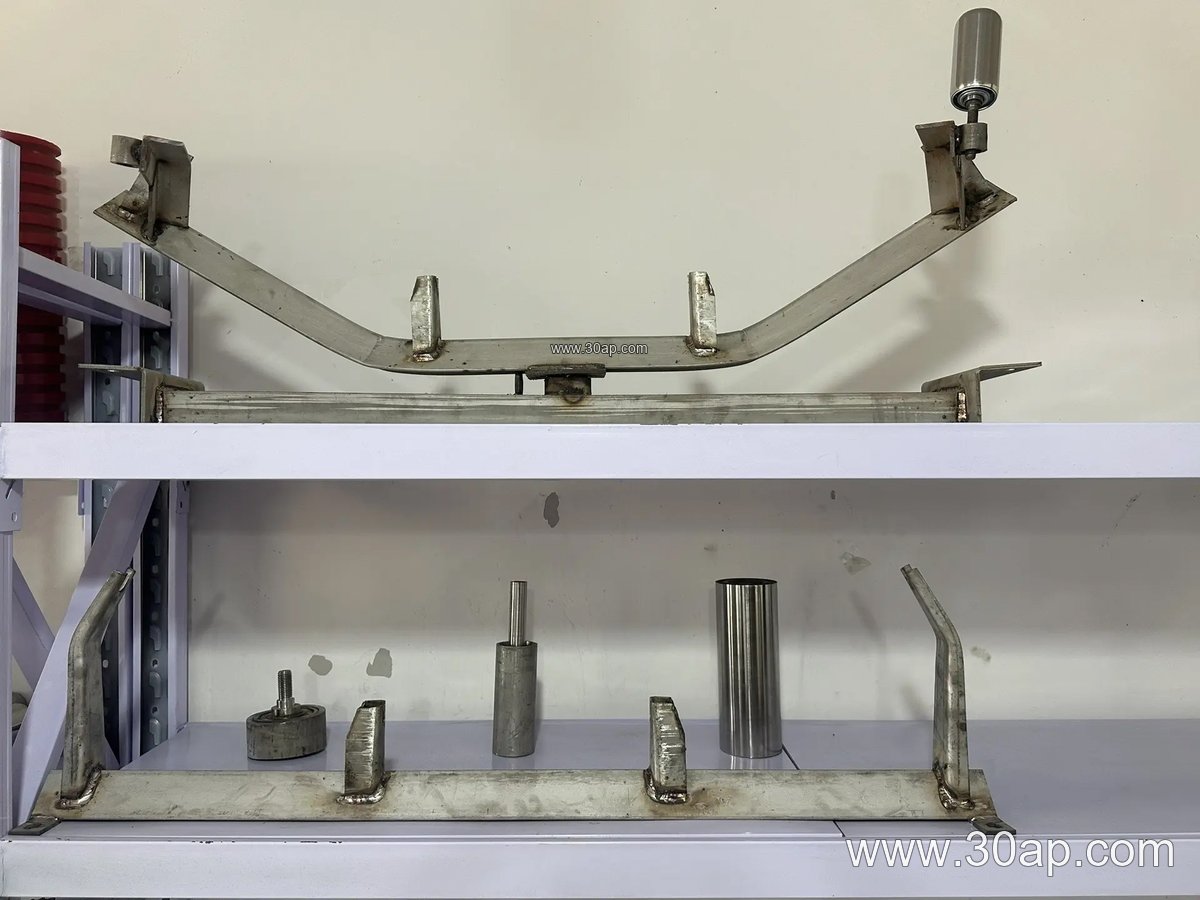
Most brackets are fabricated from angle steel, channel steel or folded steel plate, then drilled or punched for the idler shaft ends. A carrying bracket usually has two or three mounting positions that set the trough angle, and some designs allow the outer rolls to be adjusted so the same frame can serve different belt profiles. Return brackets are flatter and often simpler, holding a single flat roll or a pair of rolls in a V arrangement.
Common construction details include welded gussets for stiffness, slotted holes for field alignment, and a finish suited to dusty or damp conditions. On a coal mining conveyor or an underground mining conveyor, brackets are often specified together with flame retardant conveyor belt and anti-static conveyor belt so that the whole support system meets the same safety intent.
Common Types and Where They Fit
- Troughing brackets on the carrying side, usually set at 20, 30, 35 or 45 degrees.
- Transition brackets near pulleys, where the belt changes from flat to troughed.
- Return brackets, including flat and V-type designs, under the returning belt.
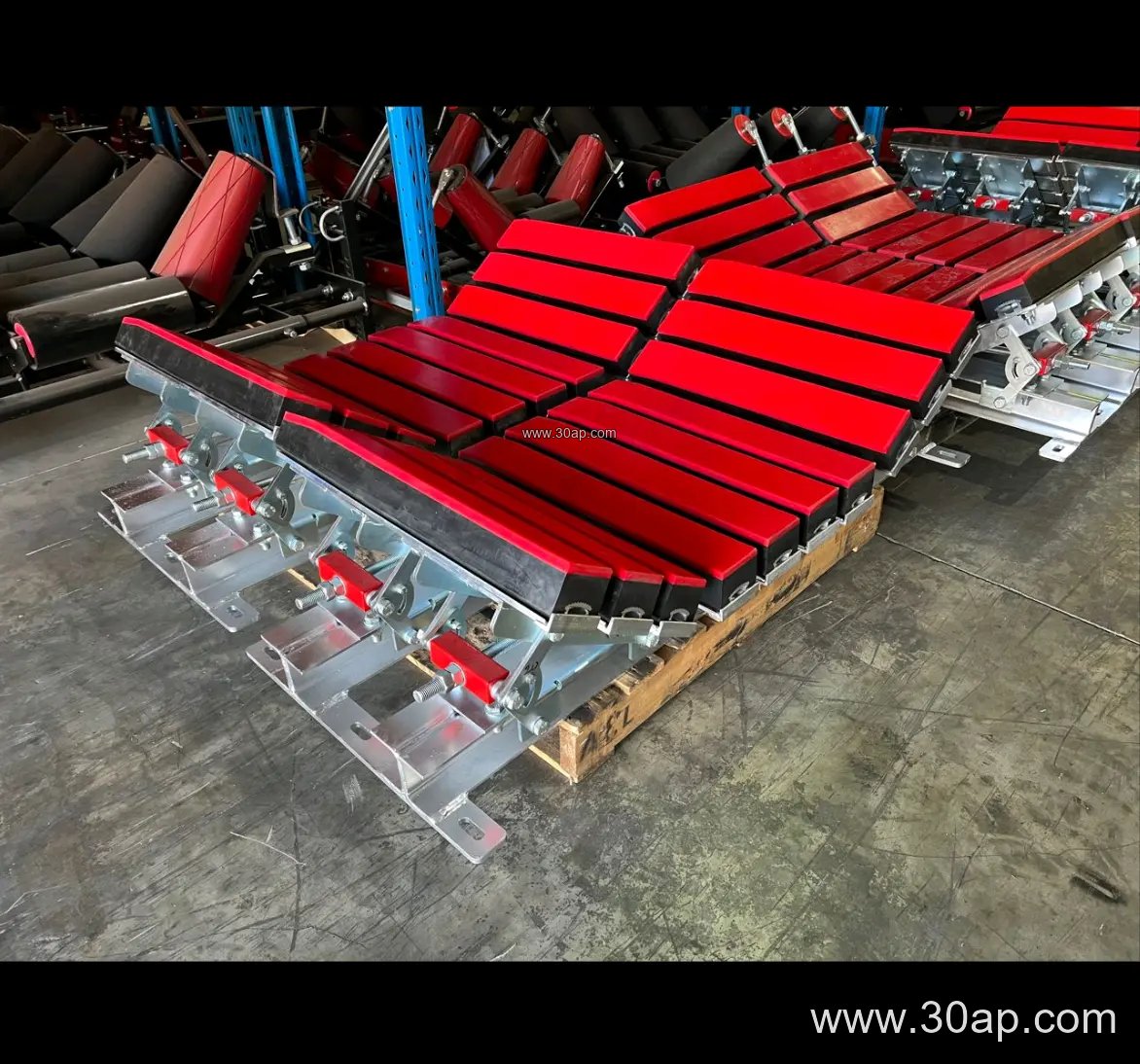
- Impact brackets under loading points, paired with impact idlers.
- Self-aligning and forward-leaning brackets that help correct belt wander.
- Adjustable and suspended brackets for frames that need field fine-tuning.
Forward-leaning brackets commonly use an angle of about 1.5 to 2 degrees to encourage centering. Adjustable brackets let maintenance crews change the trough angle between the common settings without replacing the frame.
Matching Bracket, Belt Width and Roll Diameter
Bracket selection starts with belt width and the idler diameter the frame will carry. Typical reference combinations include B800 with 35 degrees and Ø108 idlers, B1200 with 45 degrees and Ø133, or B650 with 30 degrees and Ø89. These are examples, not fixed rules: the same belt width can be paired with different trough angles and roll diameters depending on load, speed and material. Installation hole spacing and beam length change with belt width and trough angle, so they should be confirmed from the drawing rather than assumed.
| Reference Parameter | Common Range |
|---|---|
| Belt width | B500 to B2200 |
| Trough angle | 20, 30, 35, 45 degrees |
| Idler diameter | Ø89, Ø108, Ø133, Ø159, Ø194 |
| Material | Angle steel, channel steel, folded plate |
A heavy-duty mining conveyor belt carrying iron ore or copper ore at high tonnage usually calls for a stiffer bracket and larger roll diameter than a light aggregate conveyor belt on a sand and gravel line. Where a steel cord conveyor belt or a high strength conveyor belt runs at high tension, bracket spacing and frame rigidity deserve extra attention.
Application Notes Across Industries
In a limestone mine or crushing and screening plant, troughing brackets take constant impact and abrasion, so wear inspection should be part of the weekly walk. In a cement plant, dust build-up around the bracket can restrict idler rotation and should be cleared. In a port ship loading system or a steel plant sinter line, alignment of the bracket row matters as much as the bracket itself, because a single high or low unit can steer the belt.
Brackets also work alongside skirted conveyor belt, corrugated sidewall conveyor belt and pipe conveyor belt designs, where the frame geometry is adapted to the belt profile rather than chosen from a standard catalogue.
Buyer Checklist
- Confirm belt width, trough angle and idler diameter as a set, not separately.
- Ask for the mounting hole spacing and beam length on the drawing.
- State the environment: dust, moisture, heat or cold, and whether fire resistance is required.
- Decide between fixed and adjustable brackets based on how often the profile may change.
- Check that spare brackets match the existing idler shaft ends.
For coordinated supply of conveyor belt, idler roller and conveyor bracket, buyers can review options at www.beltconveyorparts.com and confirm frame details with the conveyor designer before ordering.