What a Bend Pulley Assembly Does
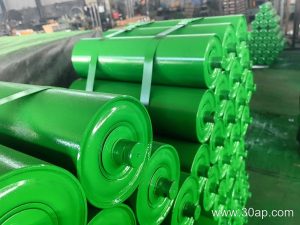
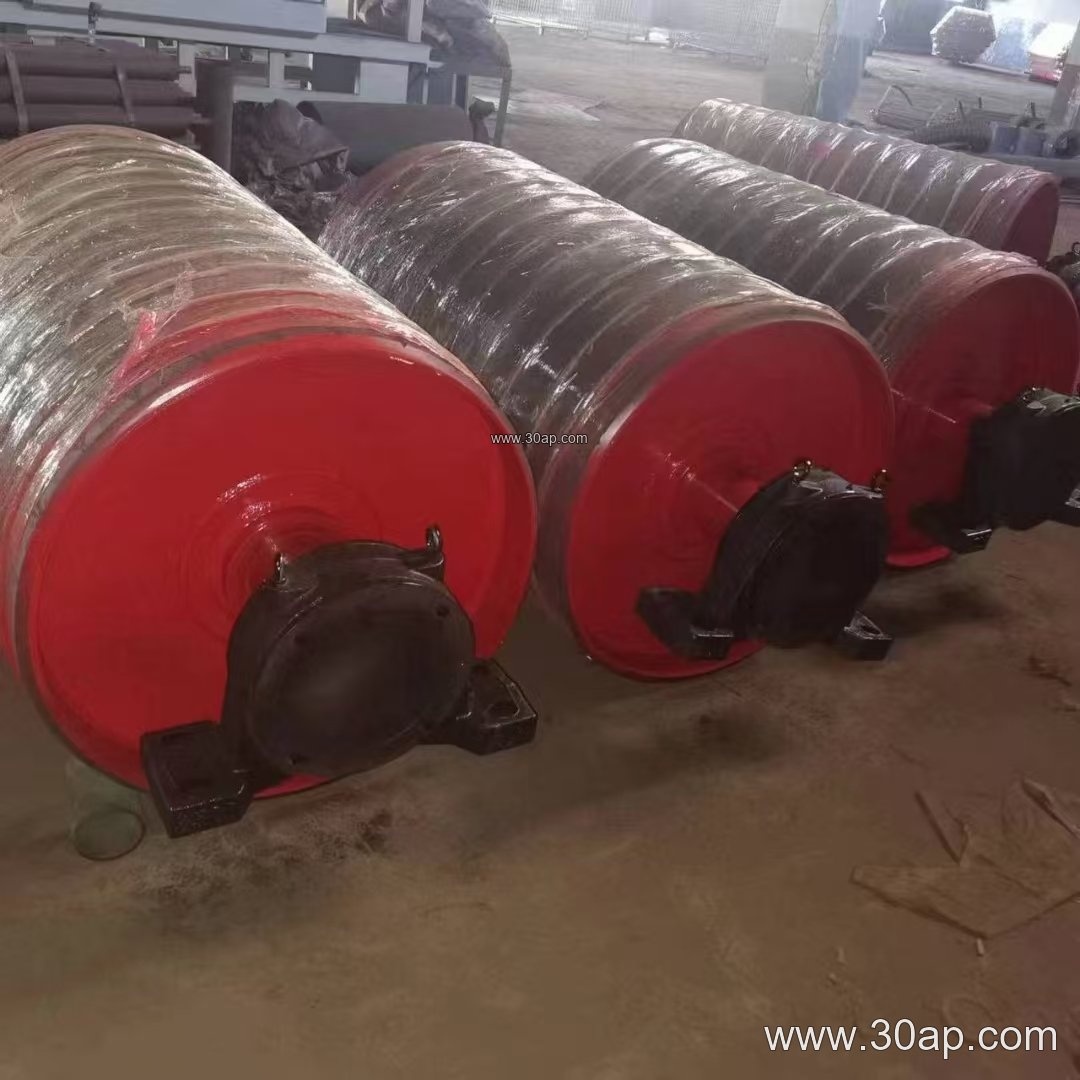
A bend pulley assembly is the redirecting unit that guides the conveyor belt through a change of direction, typically at the tail end, tensioning station, or along the return run. It is not a drive pulley and not a tail pulley; it carries belt tension and sets the belt path without transmitting drive torque. In a typical conveyor pulley arrangement, the bend pulley works together with the drive pulley, tail pulley, and idler rollers to keep the belt tracking correctly. The assembly usually includes the pulley shell, shaft, bearings, bearing housings, and a support frame or conveyor bracket that mounts to the conveyor structure.
Because the bend pulley only redirects the belt, its design focuses on smooth rotation, adequate load capacity, and protection of the belt cover. In hard-rock operations such as an iron ore or copper ore site, the return-side bend pulley often sees fines and moisture, so sealing and lagging choices matter as much as shell thickness.
Construction and Key Components
A standard bend pulley assembly is built around a welded steel shell with machined end discs, a through shaft, and either plummer block or flanged bearing housings. The shaft diameter is determined by torque and radial load, not by belt width alone. Common shaft sizes include Ø50, Ø60, Ø70, Ø80, Ø90, Ø100, Ø120, Ø140, Ø160, Ø180, and Ø200 mm, selected per design calculations. The shell is usually wider than the belt: for example, a B800 belt commonly runs on a shell around 950 mm wide, while a B1200 belt may use a shell near 1400 mm. These are reference relationships, not fixed pairings.
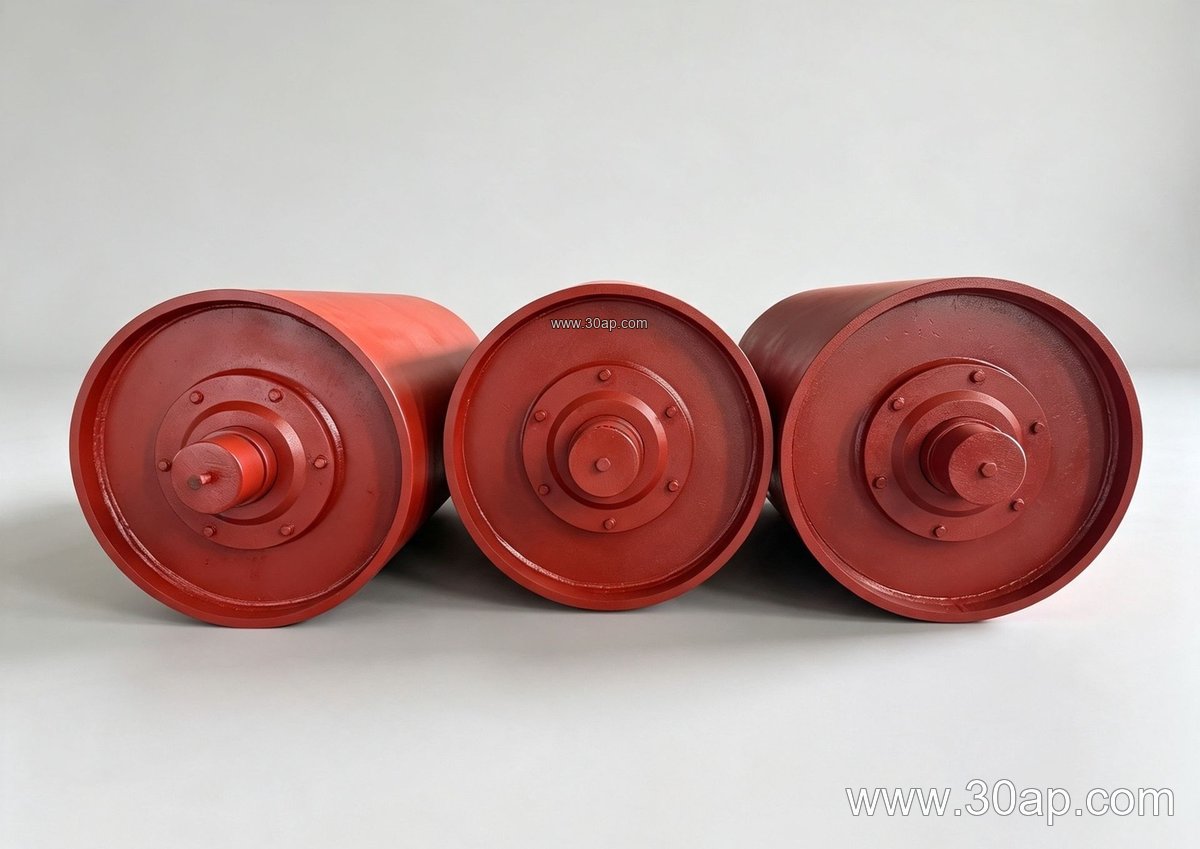
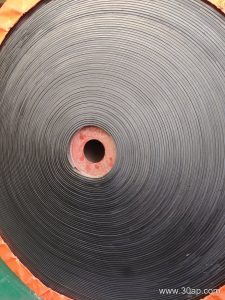
Surface options include plain steel, hot-vulcanized rubber lagging, cold-bonded rubber, diamond grooving, and ceramic lagging. Lagging thickness is commonly 8, 10, 12, 15, or 20 mm. In a coal mining conveyor or a power plant coal handling line, a flame retardant conveyor belt may be used, and the bend pulley lagging should be selected to avoid excessive slip while remaining compatible with the belt cover. A rubber conveyor belt with good abrasion resistance helps extend pulley life in quarry and aggregate duty.
Where the Assembly Fits in a Conveyor
Bend pulley assemblies appear in several positions. At the tail area, a bend pulley can increase belt wrap on the tail pulley or route the return strand. In a tensioning station, a bend pulley paired with a take-up carriage maintains belt tension. Along the return run, bend pulleys and idler rollers support and guide the belt. In a cement plant clinker line or a limestone quarry, the return-side assembly often handles dusty, abrasive conditions, so bearing protection and lagging wear resistance are practical concerns.
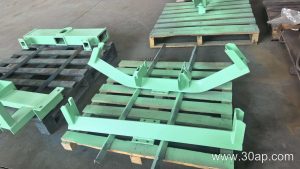
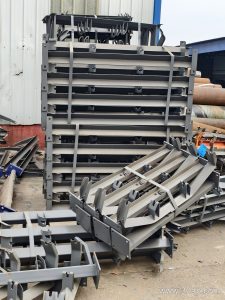
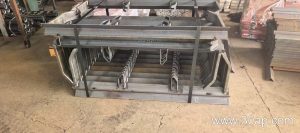
The assembly must be aligned with the conveyor centerline and with the adjacent pulleys. Misalignment causes edge wear, belt mistracking, and premature bearing failure. The support frame, sometimes called a conveyor bracket, should be rigid enough to resist the resultant belt pull without deflection.
Matching the Bend Pulley to the Belt
Belt width and pulley diameter are related through belt stiffness and wrap angle, but one belt width does not dictate a single pulley diameter. A B650 belt may run on a Ø400 or Ø500 bend pulley depending on tension and space; a B1400 belt might use Ø800 or Ø1000. The table below shows common reference combinations, not mandatory matches.
| Belt Width | Typical Shell Width | Example Diameter Range |
|---|---|---|
| B500 | about 600 mm | Ø250 to Ø400 |
| B650 | about 750 mm | Ø315 to Ø500 |
| B800 | about 950 mm | Ø400 to Ø630 |
| B1000 | about 1150 mm | Ø500 to Ø800 |
| B1200 | about 1400 mm | Ø630 to Ø1000 |
| B1400 | about 1600 mm | Ø800 to Ø1250 |
| B1600 | about 1800 mm | Ø1000 to Ø1400 |
| B1800 | about 2000 mm | Ø1250 to Ø1600 |
For heavy-duty mining conveyor belts, including steel cord conveyor belt and high abrasion resistant conveyor belt constructions, the bend pulley should be sized with sufficient diameter to limit belt bending stress. In underground coal mining conveyor belt applications, flame retardant and anti-static belt properties are specified, and the pulley lagging should be chosen with the same safety intent.
Buyer Checklist
- Confirm the pulley position: tail, tension, or return-side redirect. Do not substitute a drive pulley or tail pulley for a bend pulley assembly.
- Provide belt width, belt type, and approximate belt tension so the supplier can propose shell width and shaft size.
- State the environment: coal dust, cement powder, iron ore fines, or port bulk handling. This guides lagging and sealing choices.
- Specify lagging type and thickness if belt slip or wear is a concern; plain shell may be adequate in light duty.
- Check mounting interface dimensions and confirm the conveyor bracket or frame matches the bearing housing footprint.
- Ask for balancing and runout tolerances, since smooth rotation protects the belt and bearings.
A well-matched bend pulley assembly keeps the belt path stable, reduces wear on the conveyor belt, and supports reliable operation alongside the idler roller and conveyor pulley set. For enquiries, reference the belt width, pulley diameter, shaft size, and lagging requirement so the assembly can be configured to the conveyor design.