What a Ceramic Pulley Actually Is
A ceramic pulley is a conveyor pulley whose shell carries a bonded ceramic lagging instead of plain rubber or bare steel. In practice, it is a conveyor pulley with ceramic tiles set into a rubber or epoxy matrix, and that surface is what gives the component its name. The ceramic pieces sit slightly proud of the backing so the belt rides on many small, hard contact points while water, fines and slurry drain away between them.
This is not a different machine from the rest of the drive line. It is a surface specification applied to a drum that still has to match the belt width, the shaft load and the duty of the conveyor. Buyers in iron ore, copper ore, coal handling and aggregate plants often request it where a standard rubber lagged drum slips or wears too fast.
How the Ceramic Surface Is Built
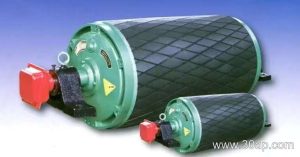
The core is a welded steel shell with end plates, a hub and a shaft, machined so the pulley runs true. The lagging is applied in one of two common ways. In the first, ceramic tiles are vulcanized into a rubber sheet that is then bonded to the shell. In the second, tiles are set into an epoxy or cold-bonded compound. Tile shape varies: square, rectangular and diamond patterns are all used, and some designs include grooves or raised ribs for extra grip.
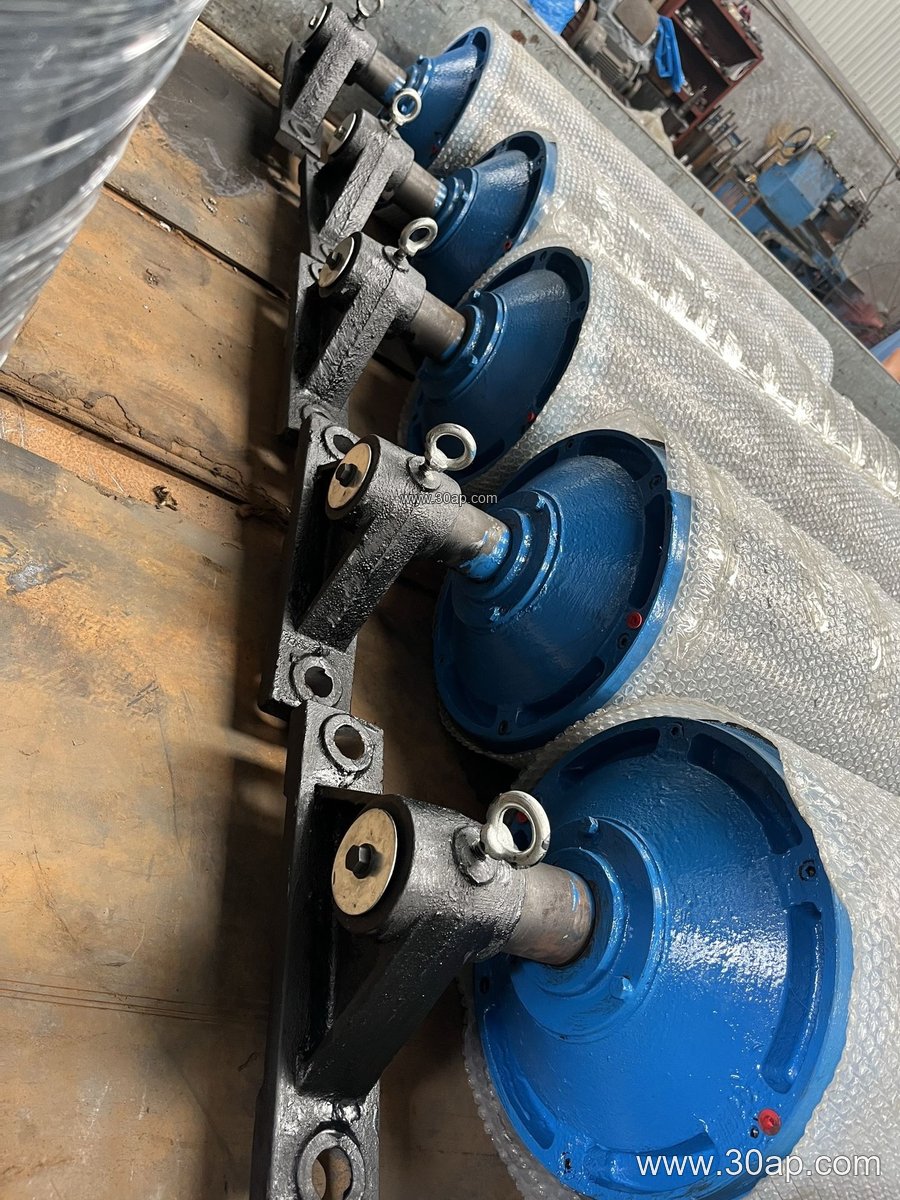
What matters to a buyer is the bond. A ceramic lagging that debonds in service can damage the belt and the structure. Ask how the tiles are fixed, what the backing thickness is, and whether the supplier can show a pull-off or shear test method rather than a marketing claim.
Where It Fits on the Conveyor
The most common position is the drive pulley, where torque has to pass from the drum to the belt. A ceramic surface raises friction and resists polishing, which helps when the belt is wet or coated with fine dust. In coal preparation plants, port bulk terminals and cement plants handling clinker dust, this can reduce slip without adding extra wrap.
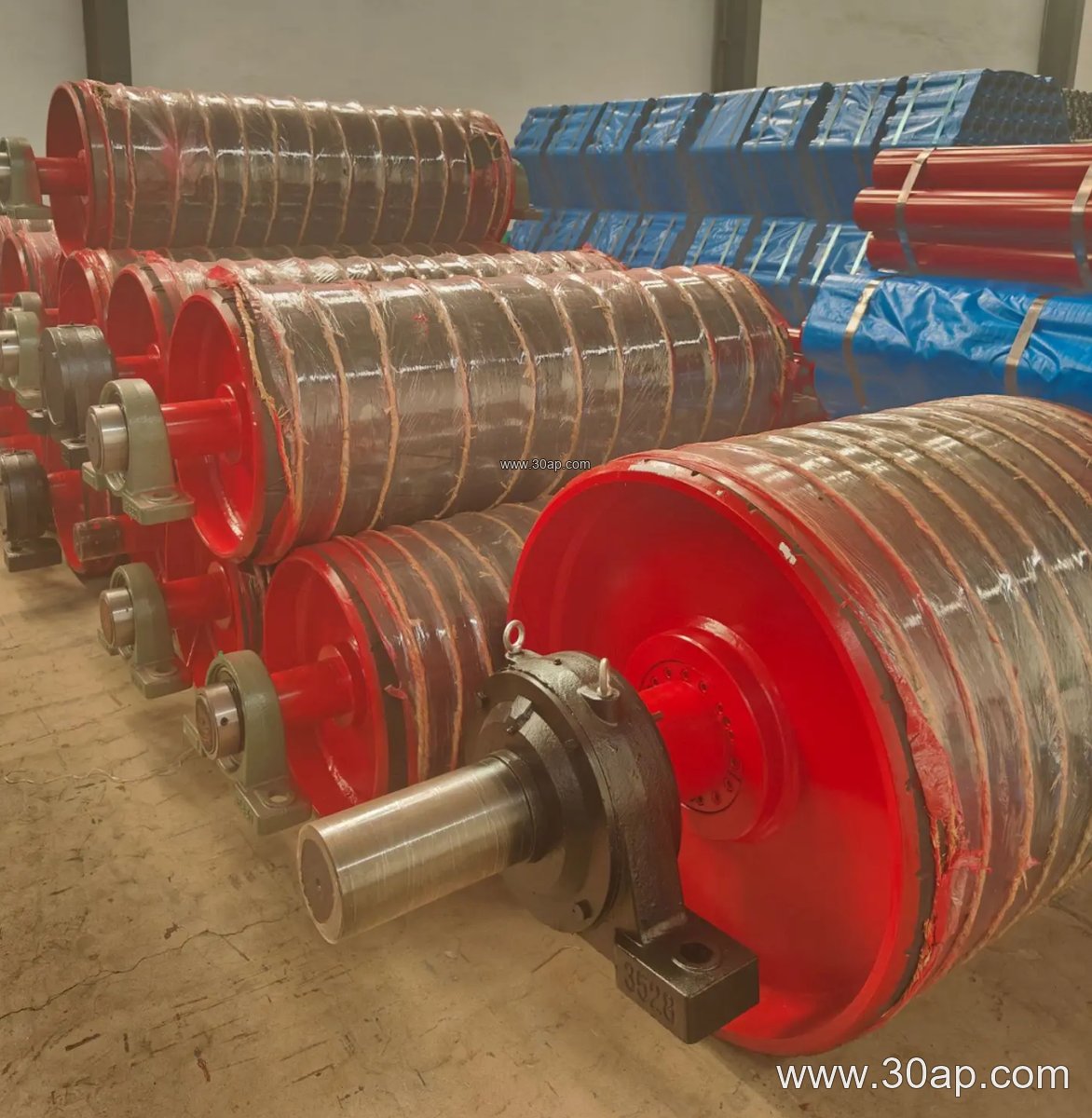
It also appears on bend pulleys and tail pulleys in abrasive service, and on tensioning positions where the belt must stay tracked. The surface is not a substitute for correct take-up travel or alignment. A ceramic pulley will still wear unevenly if the belt is mistracking or if the conveyor bracket and frame are out of square.
Note that drive, tail and bend pulleys are not interchangeable roles. A ceramic lagging can be specified on any of them, but the diameter, shaft and bearing selection follow the position, not the surface.
Typical Reference Dimensions
The table below shows common reference values. They are for orientation only and are not a fixed supply promise. Final sizes are set by the conveyor design.
| Item | Common reference values |
|---|---|
| Belt width B | B400, B500, B650, B800, B1000, B1200, B1400, B1600, B1800, B2000 |
| Pulley diameter | Ø200, Ø250, Ø315, Ø400, Ø500, Ø630, Ø800, Ø1000, Ø1250 |
| Shell face width | Usually wider than the belt, e.g. B800 about 950 mm, B1200 about 1400 mm, B1400 about 1600 mm |
| Shaft diameter | Ø50, Ø60, Ø70, Ø80, Ø90, Ø100, Ø120, Ø140, Ø160, Ø180, Ø200, determined by torque and load |
| Lagging thickness | 8, 10, 12, 15, 20 mm |
| Surface forms | Ceramic lagging, diamond lagging, herringbone lagging, plain rubber, bare steel |
A combination such as B1200 x Ø1000 or B800 x Ø500 is common in catalogs, but no single belt width locks a pulley to one diameter. Shaft size is never derived from belt width alone.
Selection Points for Buyers
- Check the belt tension and wrap angle first. Ceramic lagging improves grip, but it cannot compensate for an undersized drive or a slipping take-up.
- Match the ceramic to the material. Sharp rock and ore favor hard, wear-resistant tiles; sticky material may need a grooved pattern to shed fines.
- Confirm the belt. A heavy-duty mining conveyor belt or a steel cord conveyor belt carries different loads from a light fabric core belt, and the pulley shell, hub and shaft must reflect that.
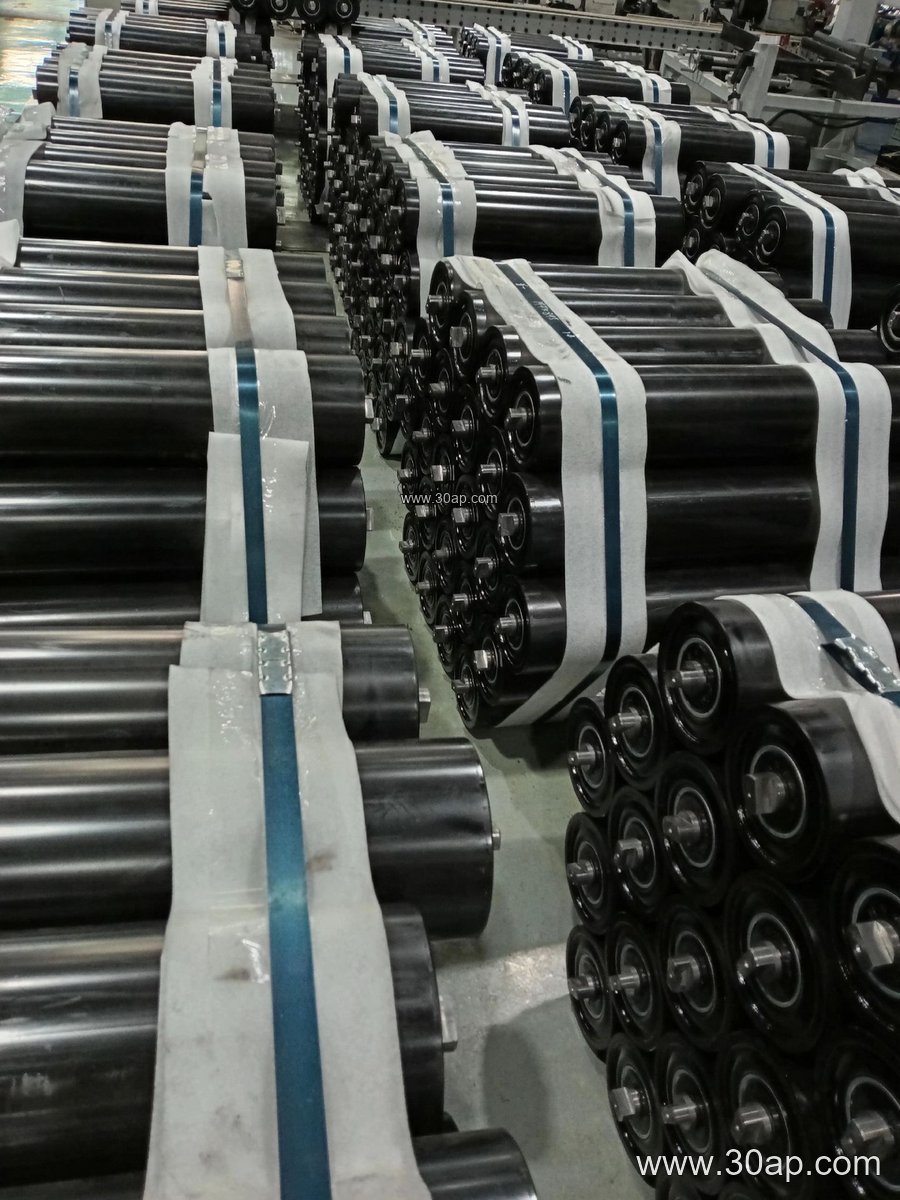
- Consider the full line. An idler roller, conveyor bracket and frame that are misaligned will shorten the life of any lagging.
- Ask about belt cleaning. Ceramic tiles hold fines in the gaps; a belt scraper and good housekeeping keep the surface working.
Maintenance and Service Life
Inspect the ceramic surface at each planned shutdown. Look for missing tiles, cracked backing, polished high spots and rubber undercut at the edges. Small tile losses can be repaired, but a large debonded area usually means the pulley should be re-lagged. Keep the belt tracking straight and the take-up tension within design range, because edge loading is the usual cause of premature ceramic wear.
For plants running abrasive bulk material, a ceramic pulley can be a practical upgrade over plain rubber, provided the specification is tied to real belt tension, belt speed and material conditions rather than to a catalog picture.