What the Three-Roll Idler Bracket Does
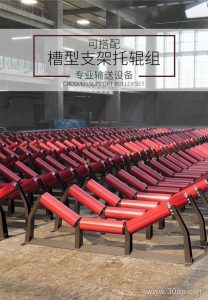
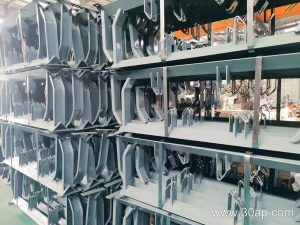
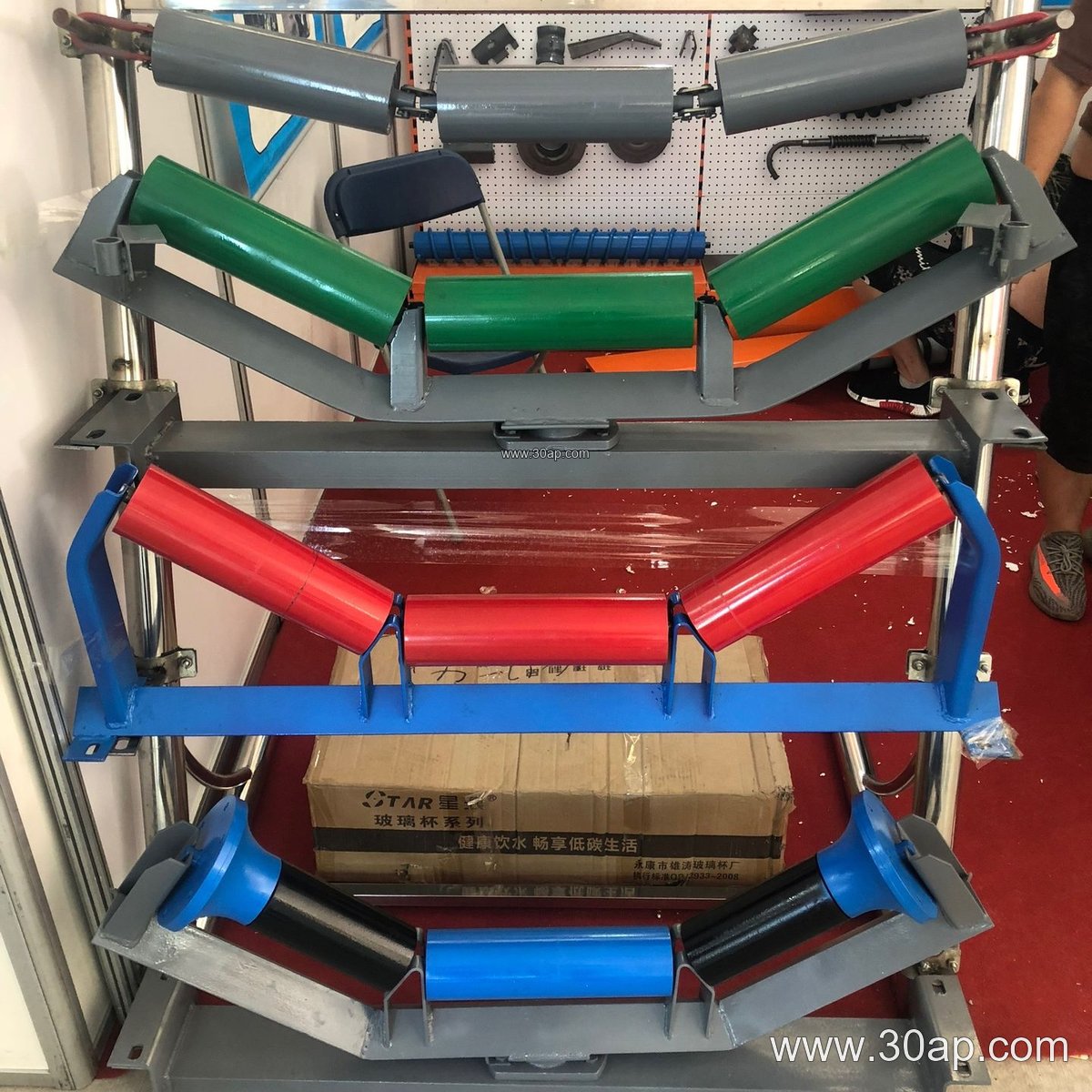
A three-roll idler bracket is the steel support that holds three idler rollers in a trough shape under the carrying side of a conveyor belt. The two outer rollers sit at an angle while the centre roller stays flat, so bulk material settles into a stable cradle instead of spilling over the edges. In a quarry or a cement plant, this bracket is often the part that decides whether the belt tracks cleanly or wanders. It works together with the conveyor belt, the idler roller set and the conveyor pulley, but its own job is simple: keep the rollers in the right position, at the right angle, and at the right spacing.
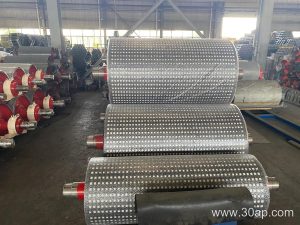
The same component is also called a troughing idler bracket or a three-roller support frame. Those names describe one product, not different ones. A drive pulley, a tail pulley and a bend pulley are separate items at the ends and curves of the conveyor, and none of them replaces this bracket.
How It Is Built
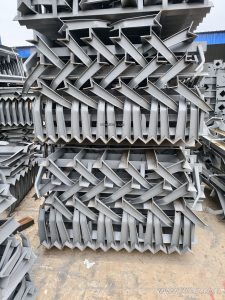
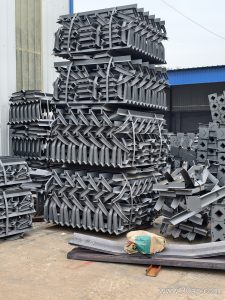
Most brackets are fabricated from angle steel, channel steel or folded steel plate. The frame carries three mounting positions, with the outer two set at the trough angle and the centre one horizontal. Slots or drilled holes allow the rollers to sit at the correct height, and the crossbeam length follows the belt width and the chosen trough angle. On adjustable versions, the outer arms can be set between common trough angles, usually 20, 30, 35 or 45 degrees. A small forward tilt of about 1.5 to 2 degrees is sometimes built in to help the belt centre itself.
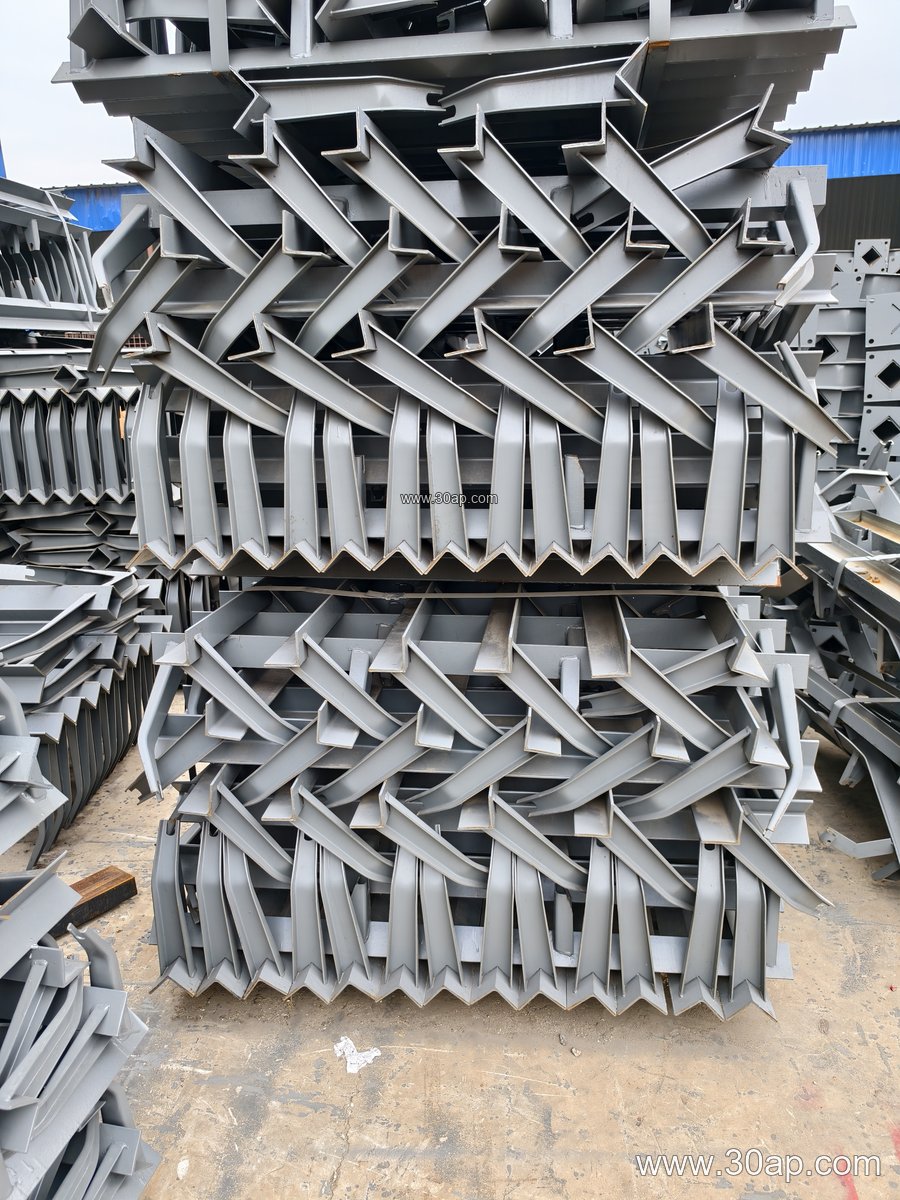
Mounting hole spacing and beam length are not fixed numbers. They change with belt width, trough angle and roller diameter, so a buyer should always confirm the drawing rather than assume a standard fit.
Common Configurations and Reference Sizes
The table below shows typical combinations used in bulk handling. These are reference values, not a rule that one belt width can only match one roller diameter or one trough angle.
| Belt width | Typical trough angle | Roller diameter | Bracket style |
|---|---|---|---|
| B500 | 20° / 30° | Ø89 | Fixed troughing bracket |
| B650 | 30° / 35° | Ø89 / Ø108 | Fixed or adjustable |
| B800 | 30° / 35° / 45° | Ø108 / Ø133 | Adjustable troughing bracket |
| B1000 | 35° / 45° | Ø108 / Ø133 / Ø159 | Adjustable troughing bracket |
| B1200 | 35° / 45° | Ø133 / Ø159 | Heavy troughing bracket |
| B1400 | 35° / 45° | Ø133 / Ø159 / Ø194 | Heavy troughing bracket |
| B1600 | 35° / 45° | Ø159 / Ø194 | Heavy troughing bracket |
| B1800 | 35° / 45° | Ø159 / Ø194 | Heavy troughing bracket |
| B2000 and above | 35° / 45° | Ø159 / Ø194 | Engineered frame |
Other bracket types exist for other positions on the conveyor. A return bracket or a V-return bracket supports the belt on its way back, and an impact bracket with cushion rollers sits under the loading point. These are different products and should not be ordered in place of the troughing bracket described here.
Where It Is Used
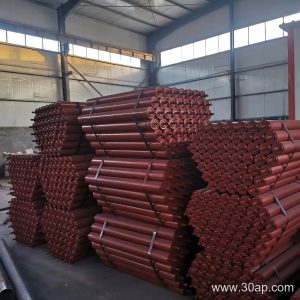
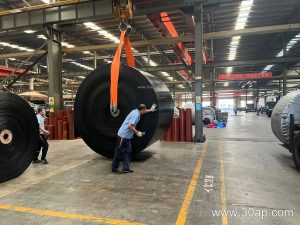
Three-roll idler brackets appear wherever a belt carries loose material. In a limestone mine or a crushing and screening line, they support abrasive rock on an abrasion resistant conveyor belt. In a coal washing plant, they hold a flame retardant conveyor belt on the carrying run. Power plant coal handling and port ship loading systems use the same bracket in larger sizes, often with a steel cord conveyor belt on long runs.
When the load is heavy or the material is sharp, the bracket and its rollers must match the belt. A heavy-duty mining conveyor belt on an iron ore line needs a stronger frame than a light aggregate conveyor belt in a small sand plant. Buyers can check conveyor brackets and related components at www.beltconveyoridler.com before matching a frame to an EP conveyor belt or an NN conveyor belt.
What a Buyer Should Check
- Belt width and trough angle – confirm both, because the frame length and outer arm angle depend on them.
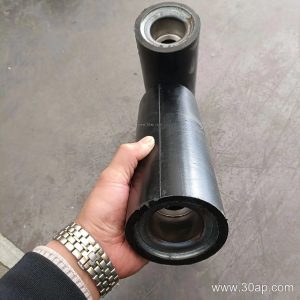
- Roller diameter – the bracket must accept the roller shaft and bearing housing that will be fitted.
- Mounting dimensions – hole spacing and beam height should match the conveyor stringer.
- Fixed or adjustable – adjustable frames cost more but allow the trough angle to be tuned on site.
- Material and finish – a dusty or wet plant may need a coated or galvanised frame.
Maintenance is straightforward. Check that rollers turn freely, look for bent arms and worn mounting holes, and replace a distorted frame before it damages the belt. A correctly fitted three-roll idler bracket keeps the belt centred, reduces edge wear and helps the whole conveyor run quietly.