What a Rubber Disc Return Idler Does
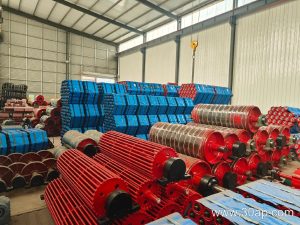
A rubber disc return idler is a lower-run idler roller built with a steel tube core and a series of rubber discs pressed onto the shaft. It sits under the return strand of a conveyor belt, supporting the belt on its way back to the tail pulley while the rubber discs knock off sticky material that would otherwise build up on the belt surface and on the rollers themselves. In a quarry, a coal washing plant or a cement plant, this cleaning action keeps the return side lighter and reduces the chance of material wrapping around the idler body.
The product is also called a rubber disc return roller or rubber-ring return idler in some workshops. These are accurate equivalent names for the same item. It is not a troughing idler, not a V-return idler and not a buffer idler, and it should not be swapped for a bend pulley or a tail pulley in the layout.
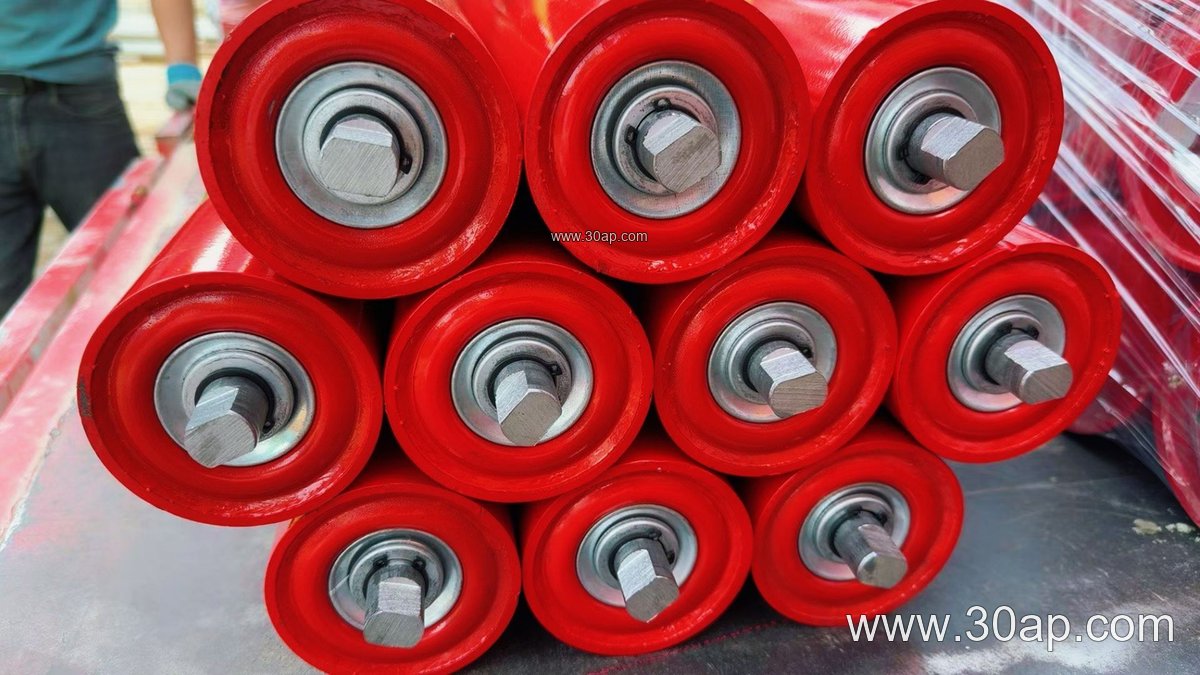
How the Rubber Disc Return Idler Is Built
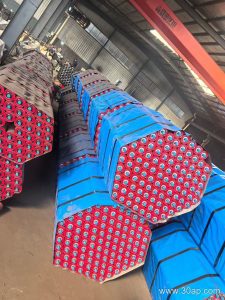
The basic body is a steel tube fitted with a through shaft, sealed bearings and a bearing housing at each end. The rubber discs are spaced along the tube, usually in a staggered or spiral pattern so the belt is supported at many points without a continuous hard surface. Disc diameter, thickness and spacing vary by design. Common roller diameters for return positions include Ø89, Ø102, Ø108, Ø127, Ø133 and Ø159, while bearing sizes such as 6204, 6205, 6305, 6306, 6308 and 6310 appear across different load classes. Bearing selection follows the shaft and load design rather than one fixed diameter, so a given roller diameter can carry more than one bearing size.
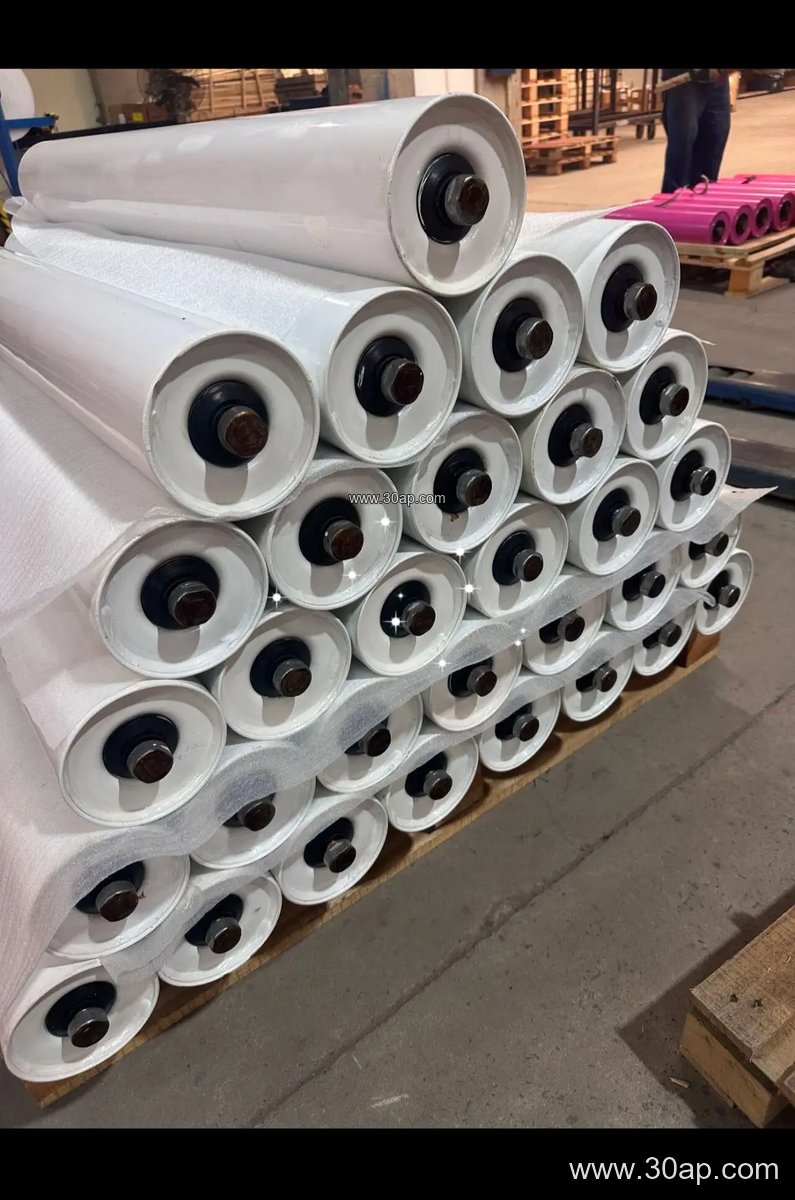
Sealing matters as much as the rubber. Dust from a crusher discharge or a sand and gravel line is fine and abrasive, and a good labyrinth seal with a grease-retaining housing protects the bearing. The rubber compound is usually chosen for abrasion resistance and flexibility; oil resistant or heat resistant grades may be considered where the belt itself carries such properties.
Where It Fits on the Conveyor
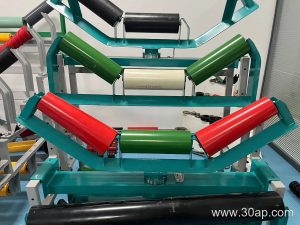
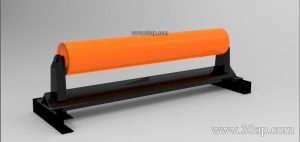
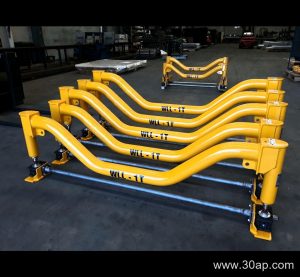
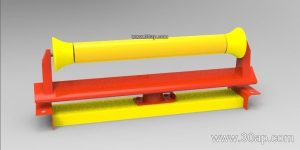
The idler is mounted in the return run using conveyor brackets or a return idler frame. It is often installed just behind the head pulley, where the belt is still carrying fines, and again before the tail pulley so the belt enters the tail clean. In a coal mining conveyor or an underground coal mining conveyor, flame retardant rubber grades are sometimes requested to match the belt specification. In a power plant coal handling system, a rubber disc return idler helps control coal dust carryback.
Other return designs serve different purposes. A plain flat return idler gives steady support, a V-return idler helps centre the belt, and a spiral return roller is used for cleaning in some layouts. The rubber disc type is chosen when sticky or wet material is the main problem.
Common Sizes and Selection Notes
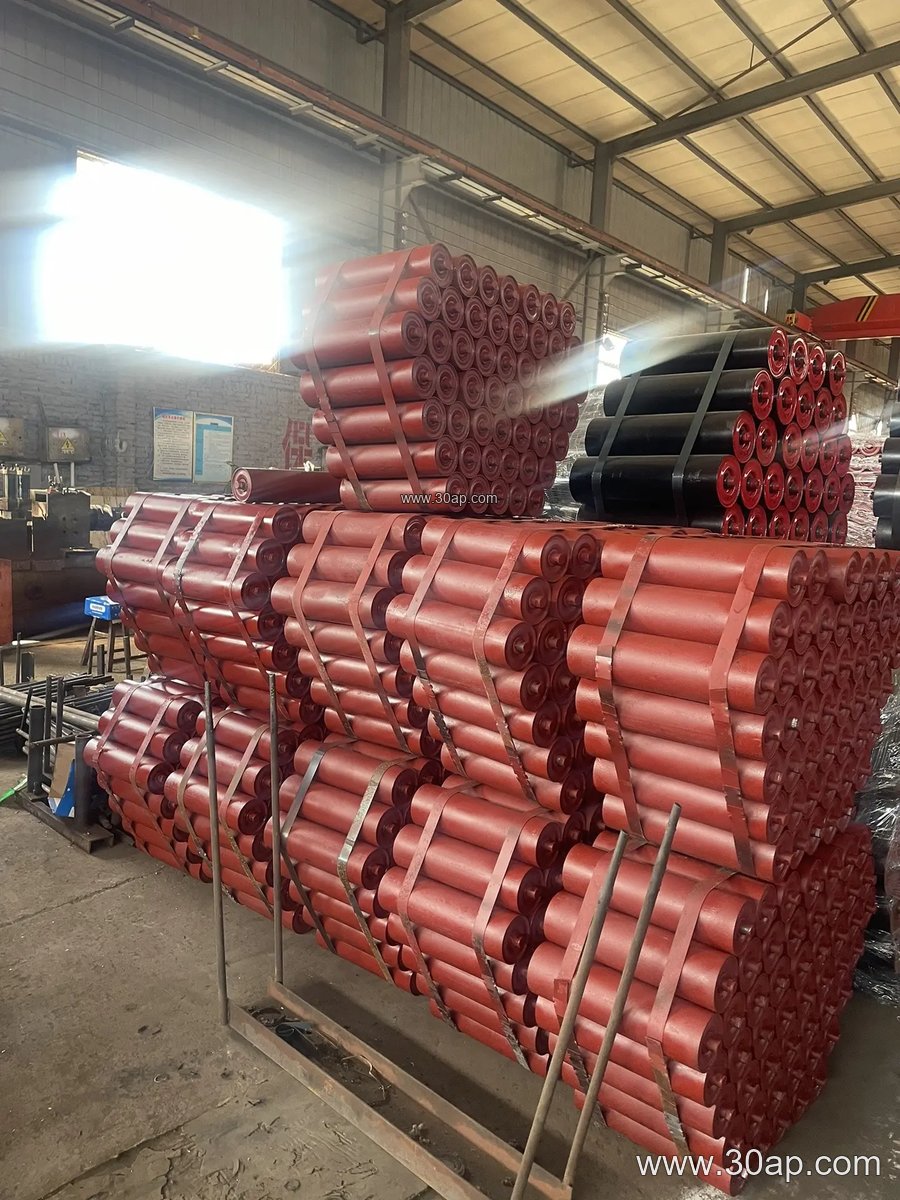
Roller length follows belt width, frame type and the position of the idler. The table below gives typical reference values, not fixed matches.
- B500 belt width, common roller length about 200 mm
- B650, about 250 mm
- B800, about 315 mm
- B1000, about 380 mm
- B1200, about 465 mm
- B1400, about 530 mm
- B1600, about 600 mm
- B1800, about 670 mm
- B2000, about 750 mm
These lengths are examples for return idlers; the actual figure is set by the frame design and the belt width in use. A 1000mm conveyor belt and a 1200mm conveyor belt may use the same roller diameter but different shaft lengths. Buyers should confirm shaft diameter, bearing type, disc hardness and frame hole spacing with the supplier before ordering.
Buyer Checklist
Check the belt width, the return frame type and the available mounting space first. Confirm the roller diameter and bearing size against the load and the shaft. Ask about the rubber compound, disc spacing and seal design, especially for abrasive or wet service. For a conveyor using an EP conveyor belt or a steel cord conveyor belt, the return idler should match the belt speed and load. In a mine or cement plant, keep spare rollers on hand so a worn idler can be replaced before it damages the belt.
Maintenance and Replacement
Inspect the rubber disc return idler at each shutdown. Look for worn or missing discs, seized bearings and material wrapped around the shaft. A roller that no longer turns will wear the belt cover quickly, and on an abrasion resistant conveyor belt the damage may still appear at the edges. Replace the unit when the discs are badly worn or the bearing is noisy. Proper alignment of the return frame and clean belt edges help the idler last longer.