What an EP100 Conveyor Belt Is
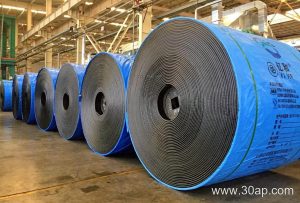
An EP100 Conveyor Belt is a fabric-core rubber belt built on polyester-polyamide (EP) carcass fabric, with a nominal tensile strength of 100 N/mm per ply. It sits at the entry point of the EP range, which continues through EP200, EP315, EP400, EP500, EP630, EP800, EP1000, EP1250, EP1600 and EP2000. Because the EP carcass stretches less than nylon, an EP100 belt holds its training on long centre distances better than a pure NN Conveyor Belt of similar rating, while remaining lighter and more flexible than a Steel Cord Conveyor Belt.
The product is also described as an EP Rubber Conveyor Belt or EP Fabric Core Conveyor Belt. All three names refer to the same article; the number after EP states carcass strength, not belt width or cover thickness.
Construction and Cover Options
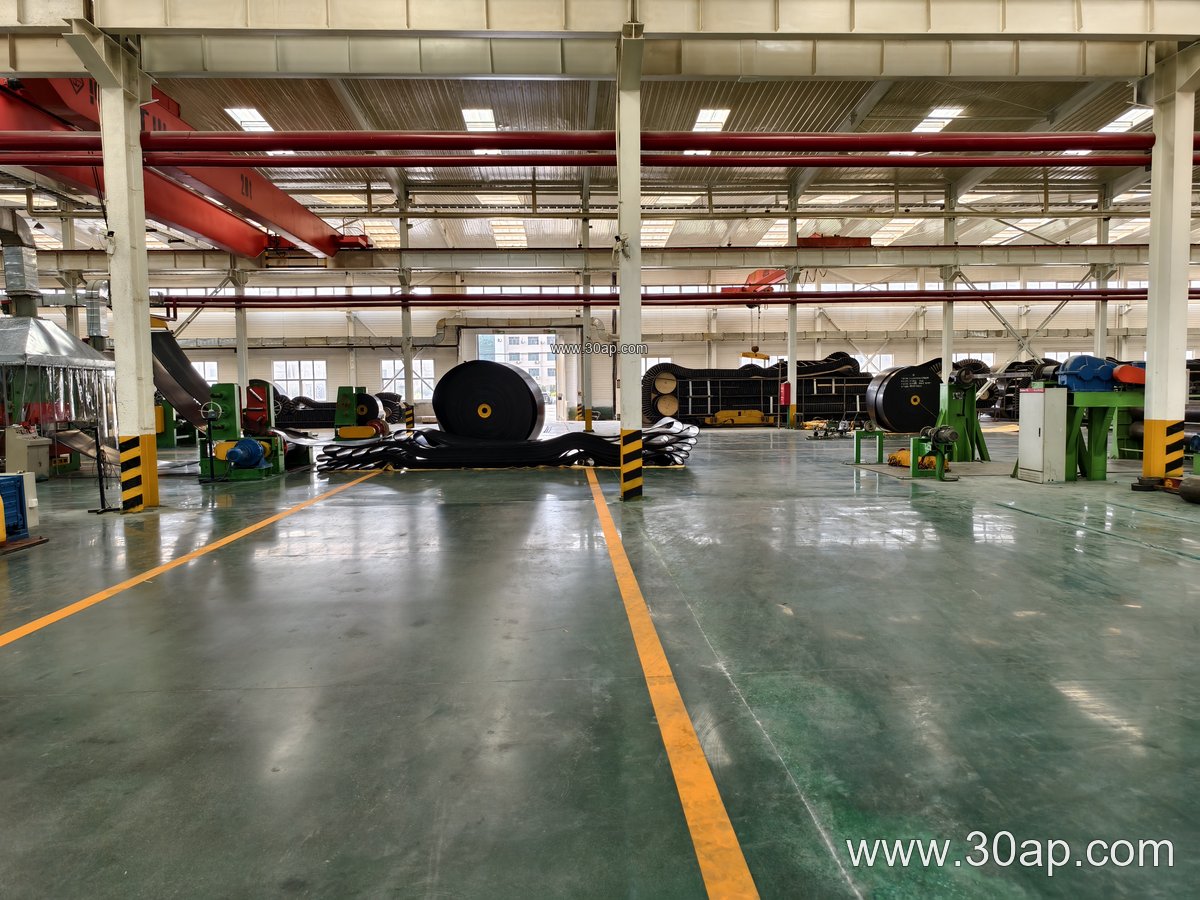
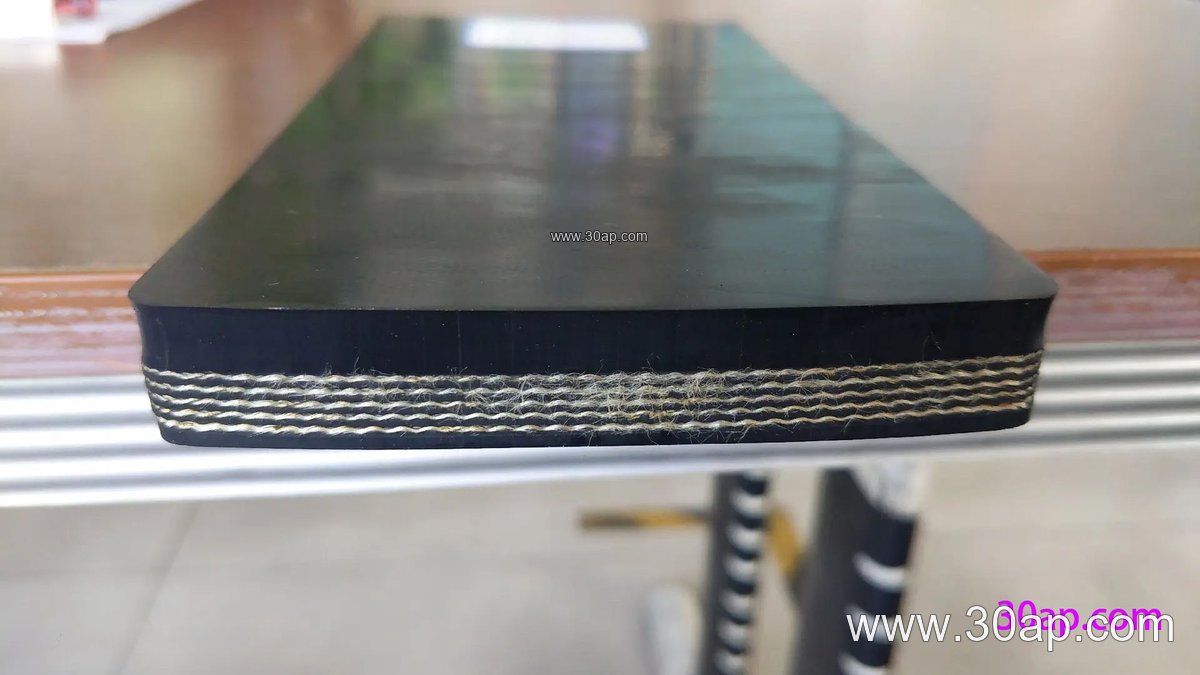
A typical build combines two to six EP fabric plies, skim and friction rubber between plies, and top and bottom covers. Common cover combinations include 3+1.5 mm, 4+2 mm, 5+2 mm, 6+2 mm and 8+3 mm. Cover grade is chosen for the duty, not for appearance:
- Abrasion Resistant Conveyor Belt grade for sand, gravel and crushed stone
- Heat Resistant Conveyor Belt grade for cement clinker and sinter
- Flame Retardant Conveyor Belt or Fire Resistant Conveyor Belt grade for coal handling and enclosed galleries
- Oil Resistant Conveyor Belt grade for recycled material and oily feedstock
- Anti-Static Conveyor Belt grade where static buildup is a concern
- Cold Resistant Conveyor Belt grade for winter operation in cold regions
Edge construction matters as much as the cover. Cut edges suit general service; moulded edges resist fraying on reversing or troughed runs. For inclined transport, a Chevron Conveyor Belt or Corrugated Sidewall Conveyor Belt profile may be preferred, but those are separate designs and should not be treated as substitutes for a flat EP100 belt.
Typical Duty and Industries
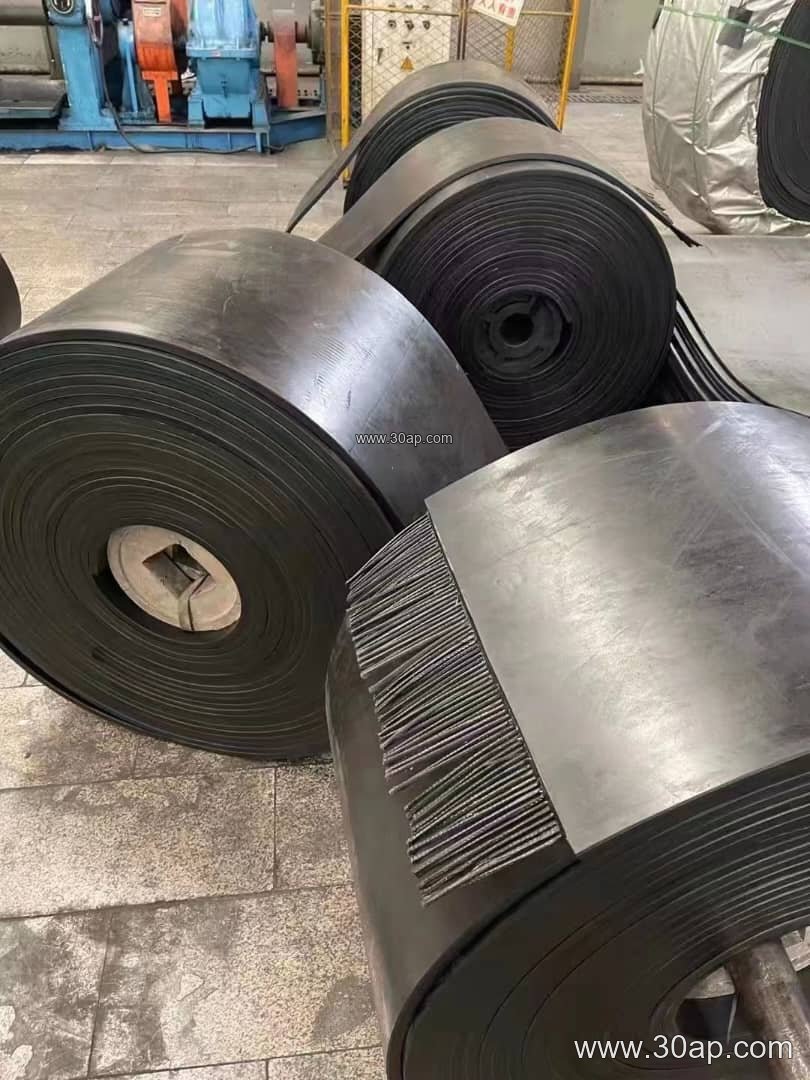
The EP100 rating suits medium-duty flows: a quarry conveyor belt moving screened aggregate, a cement plant conveyor belt feeding raw meal, a power plant conveyor belt handling limestone, or a sand making plant conveyor belt returning fines. In mining, it is often found on secondary and tertiary lines rather than on the main trunk of an underground coal mining conveyor, where higher ratings and flame retardant construction are usually specified.
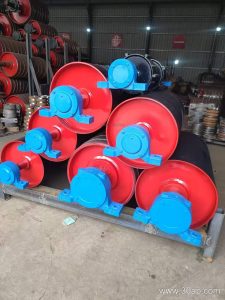
Belt width is matched to tonnage and lump size. Common widths include B500, B650, B800, B1000, B1200, B1400, B1600, B1800 and B2000. A 650mm or 800mm belt may serve a small crusher line, while a 1200mm or 1400mm belt fits a port or ship loading conveyor. Width and pulley diameter are separate design choices; a given belt width does not dictate one fixed pulley size, and shaft diameter must be calculated from torque and load, never guessed from width alone.
Reference Data for Specification Discussions
The table below lists reference values for discussion with a supplier. Actual constructions vary between manufacturers.
| Item | Reference range |
|---|---|
| Carcass strength | EP100 (100 N/mm per ply); higher grades EP200 to EP2000 available |
| Plies | Usually 2 to 6 |
| Cover thickness | 3+1.5, 4+2, 5+2, 6+2, 8+3 mm |
| Belt width | B500, B650, B800, B1000, B1200, B1400, B1600, B1800, B2000 |
| Cover grades | Abrasion, heat, oil, flame retardant, anti-static, cold resistant |
When a job needs more than EP100 can give, the next step is usually EP200 or EP315 within the same EP family, or a steel cord belt for very high tension and long spans.
Selection and Maintenance Notes
Confirm four things before ordering: the calculated maximum belt tension, the lump size and impact energy at the load point, the ambient and material temperature, and any fire or static requirement. Impact Resistant Conveyor Belt grades help at transfer points where large rock falls onto the belt.
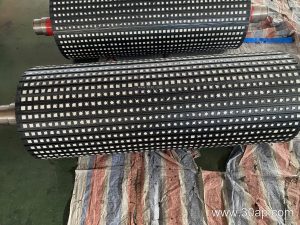
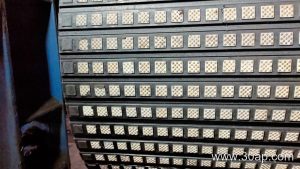
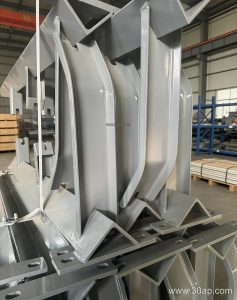
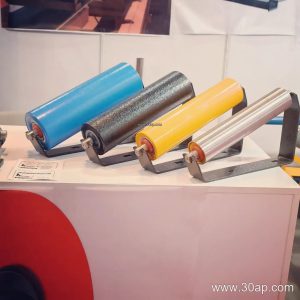
On the conveyor itself, check that idler roller alignment, conveyor pulley lagging and conveyor bracket condition are correct before blaming the belt for mistracking. Worn idlers and a misaligned tail pulley will damage a new belt quickly. Keep the belt tensioned to the manufacturer’s recommendation, inspect splices regularly, and clean spillage from return runs. For a long, heavy-duty mining conveyor belt installation, record cover wear so replacement is planned rather than reactive.