What a Coal Conveyor Idler Does
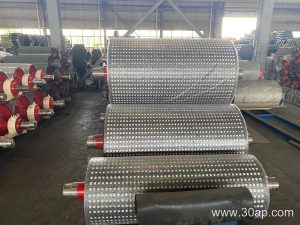
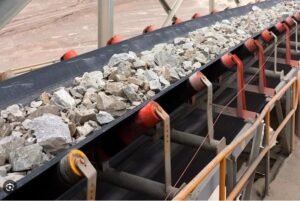
A coal conveyor idler is the rotating roller assembly that supports the conveyor belt along its carrying and return runs. In a coal handling line, these idlers hold the belt in a stable trough, reduce friction between the belt and the frame, and keep coal moving smoothly from the receiving point to the stockpile, bunker, or transfer tower. The same component is often called a conveyor idler roller or belt idler, and the two names describe the same product. One idler alone carries little load, but hundreds of them together define how well a coal conveyor belt tracks, how much power the drive needs, and how often maintenance crews must stop the line.
Construction Details That Matter
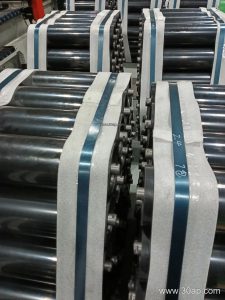
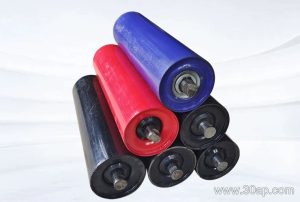
A typical idler consists of a steel tube shell, a shaft, sealed bearings at each end, and a bearing housing pressed into the tube. Surface options include plain steel, nylon, ceramic, and rubber rings. Bearing numbers such as 6204, 6205, 6305, 6306, 6308, and 6310 appear in common designs, but the correct bearing depends on load, speed, and seal arrangement rather than on roller diameter alone. Seal quality is especially important in coal handling, where fine dust and moisture attack bearings quickly. A well-sealed idler on a coal mining conveyor belt can run for years; a poorly sealed one may seize within months.
Where Coal Conveyor Idlers Are Used
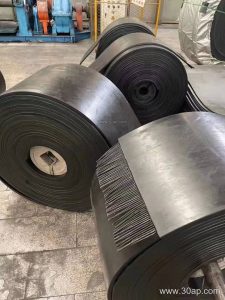
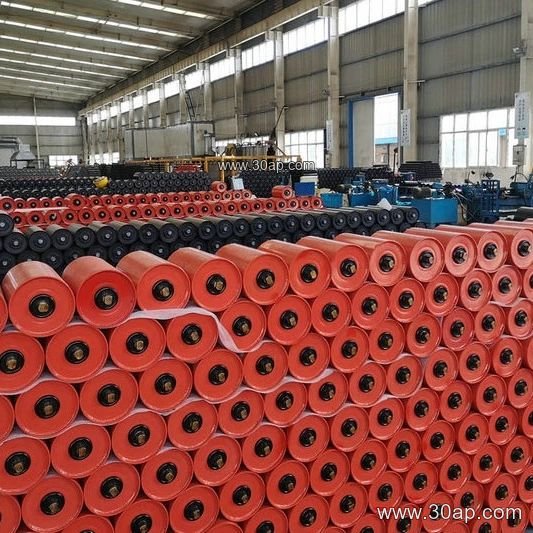
These rollers appear in coal mines, washing plants, power station coal yards, and port coal terminals. In a typical power plant coal handling system, troughing idlers support the loaded belt, impact idlers sit under the loading chute, and return idlers support the empty strand. The belt itself may be a flame retardant conveyor belt or an anti-static conveyor belt in underground sections, while surface lines often use an EP conveyor belt or a steel cord conveyor belt for long distances. Idler choice should match the belt, the coal size, and the environment rather than being treated as a separate decision. In a coal preparation plant, a heavy-duty mining conveyor belt paired with robust idlers handles wet, sticky coal better than light components.
Common Idler Types and Sizes
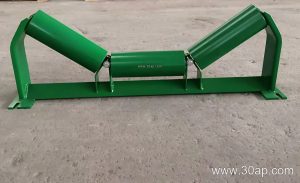
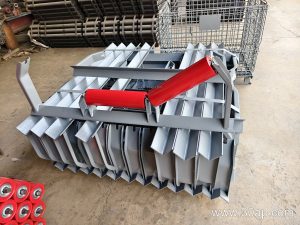
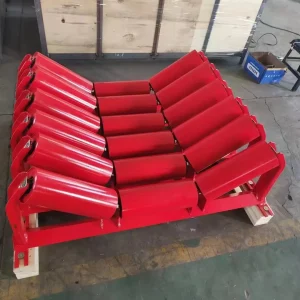
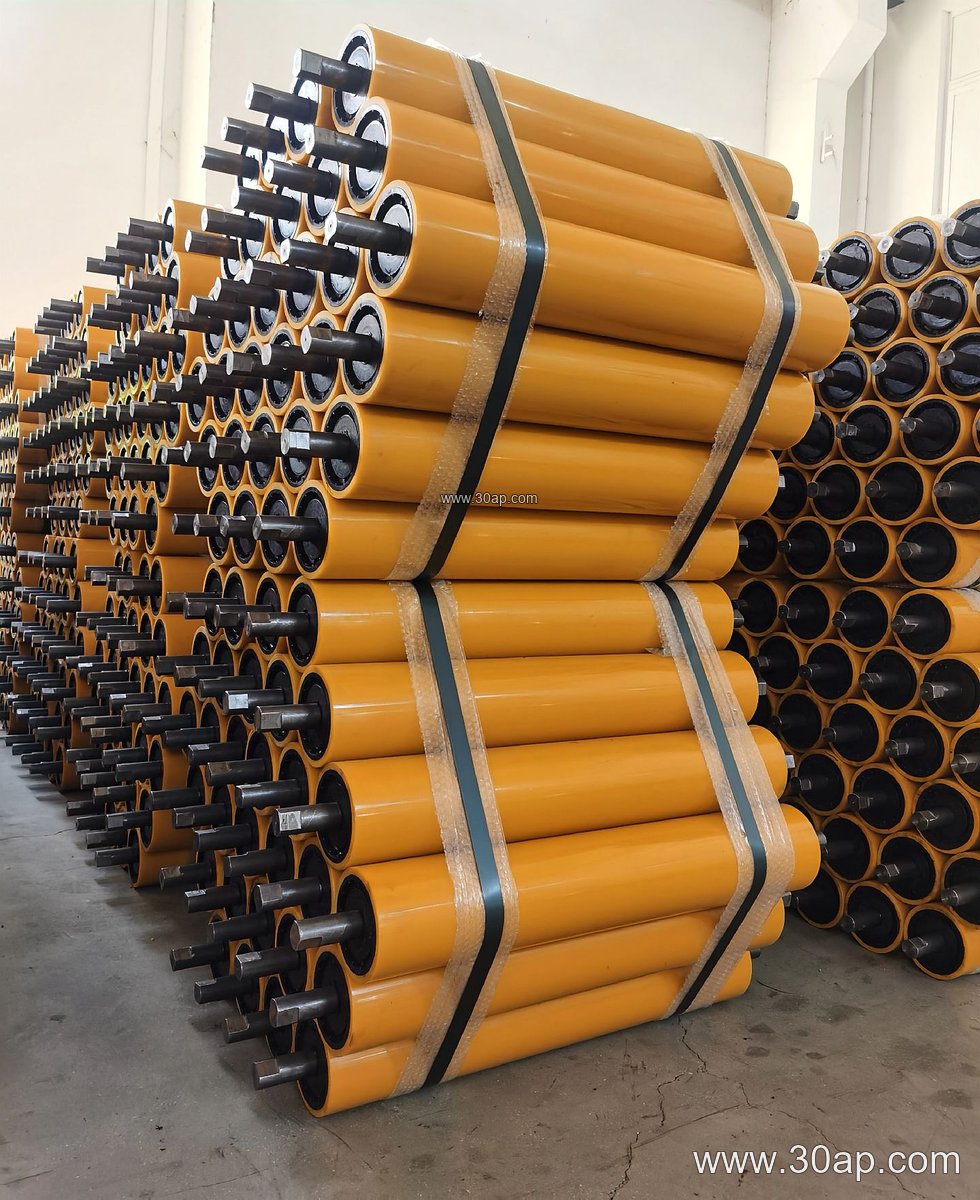
Troughing idlers are usually supplied as single-roller, two-roller, or three-roller sets. Three-roll troughing sets with 20, 30, 35, or 45 degree trough angles are common in coal conveying. Transition idlers ease the belt from flat to troughed, impact idlers absorb shock at load points, and return idlers support the lower run. Self-aligning idlers, including friction and tapered designs, help correct belt drift. The table below shows reference data; actual values are determined by conveyor design.
| Parameter | Common Reference Values |
|---|---|
| Idler diameter | Ø63, Ø76, Ø89, Ø102, Ø108, Ø127, Ø133, Ø159, Ø178, Ø194, Ø219 mm |
| Belt width | B400, B500, B650, B800, B1000, B1200, B1400, B1600, B1800, B2000 mm |
| Trough angle | 20°, 30°, 35°, 45° |
| Roller length (example, three-roll set) | About 200 mm at B500, 250 mm at B650, 315 mm at B800, 380 mm at B1000, 465 mm at B1200, 530 mm at B1400, 600 mm at B1600, 670 mm at B1800, 750 mm at B2000 |
| Bearing examples | 6204, 6205, 6305, 6306, 6308, 6310 |
Note that side rollers and center rollers can differ in length, and a given belt width does not lock in one pulley diameter or one shaft size. The drive pulley, tail pulley, and bend pulley are separate components with their own specifications and are not interchangeable with idlers.
Buyer Checklist
- Match idler diameter and bearing class to belt speed, load, and coal lump size.
- Confirm trough angle and roller length against the actual belt width and frame.
- Choose seals and surface materials for dust, moisture, and temperature at the site.
- Check that the idler frame and conveyor bracket fit the existing structure.
- For long overland lines, review idler spacing and rotation resistance together with the belt tension calculation.
Buyers comparing suppliers should ask for drawings, bearing brands, seal type, and test data rather than relying on a single size chart. A coal conveyor idler that fits the application reduces downtime, protects the conveyor belt, and keeps coal flowing through the plant.