What a Conveyor Parts Pulley Does on the Line
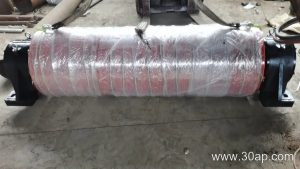
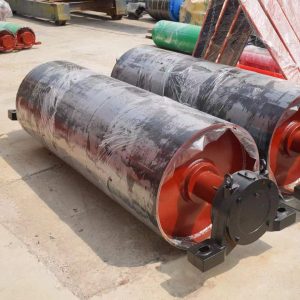
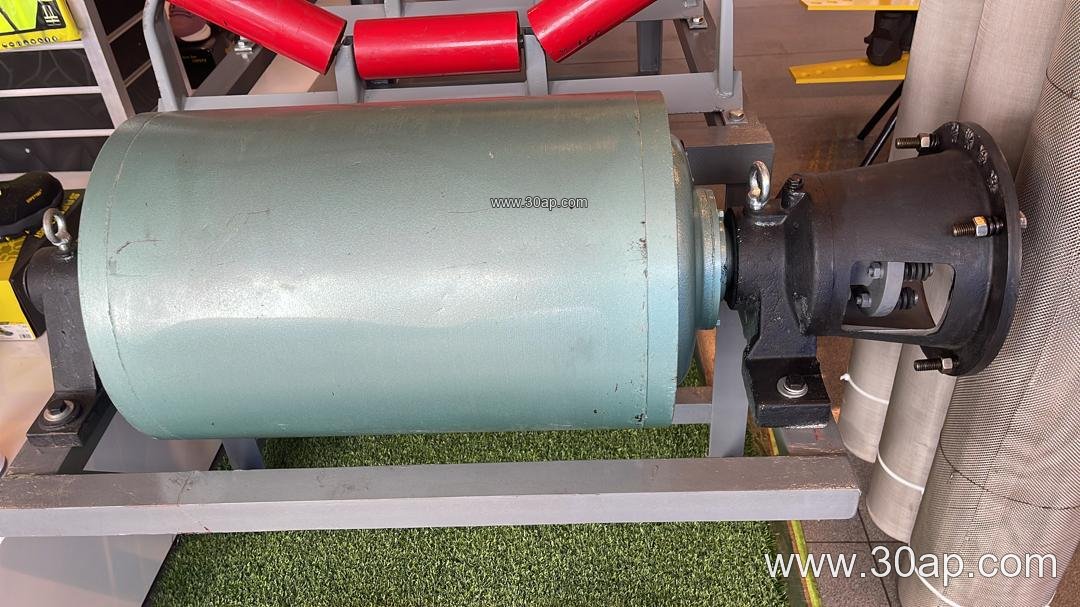
A conveyor parts pulley is the rotating drum that carries the belt, sets its path, and transmits or absorbs the forces along a conveyor. In a quarry, a limestone mine, or a crushing and screening circuit, the belt may run several hundred meters over a series of these drums, each with a defined job. The drive pulley pulls the belt and transfers torque from the gearbox; the tail pulley returns the belt and can act as a tensioning point; bend pulleys redirect the belt around take-up and transition zones. These roles are not interchangeable, which is why the position of a drum matters as much as its size.
Because the drum works together with the belt, idler roller, and conveyor bracket, a mismatch in one component shows up quickly as belt wander, edge wear, or slip. Buyers often treat this part as a simple steel cylinder, but shell thickness, shaft diameter, lagging, and bearing arrangement all influence how long the assembly lasts.
How the Drum Is Built
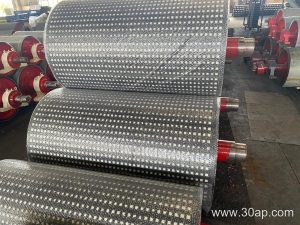
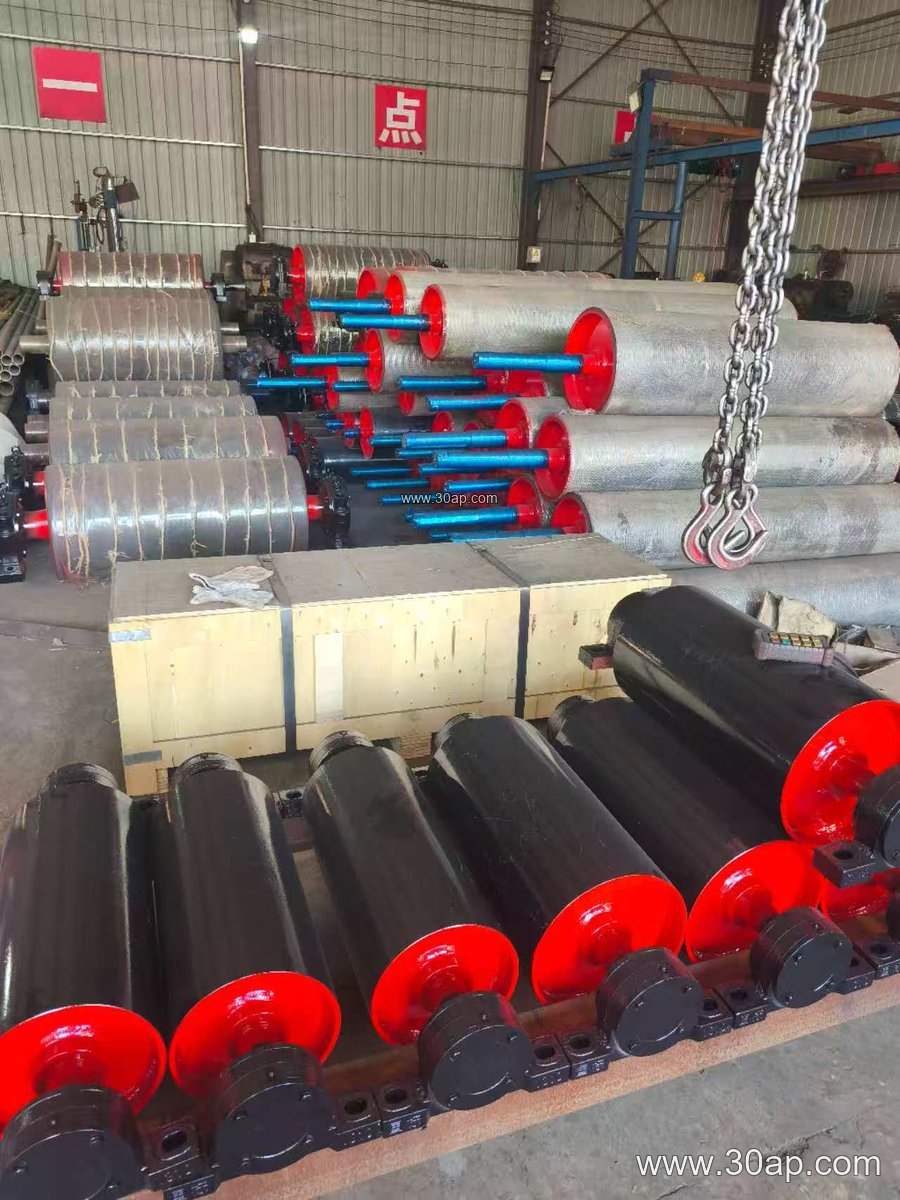
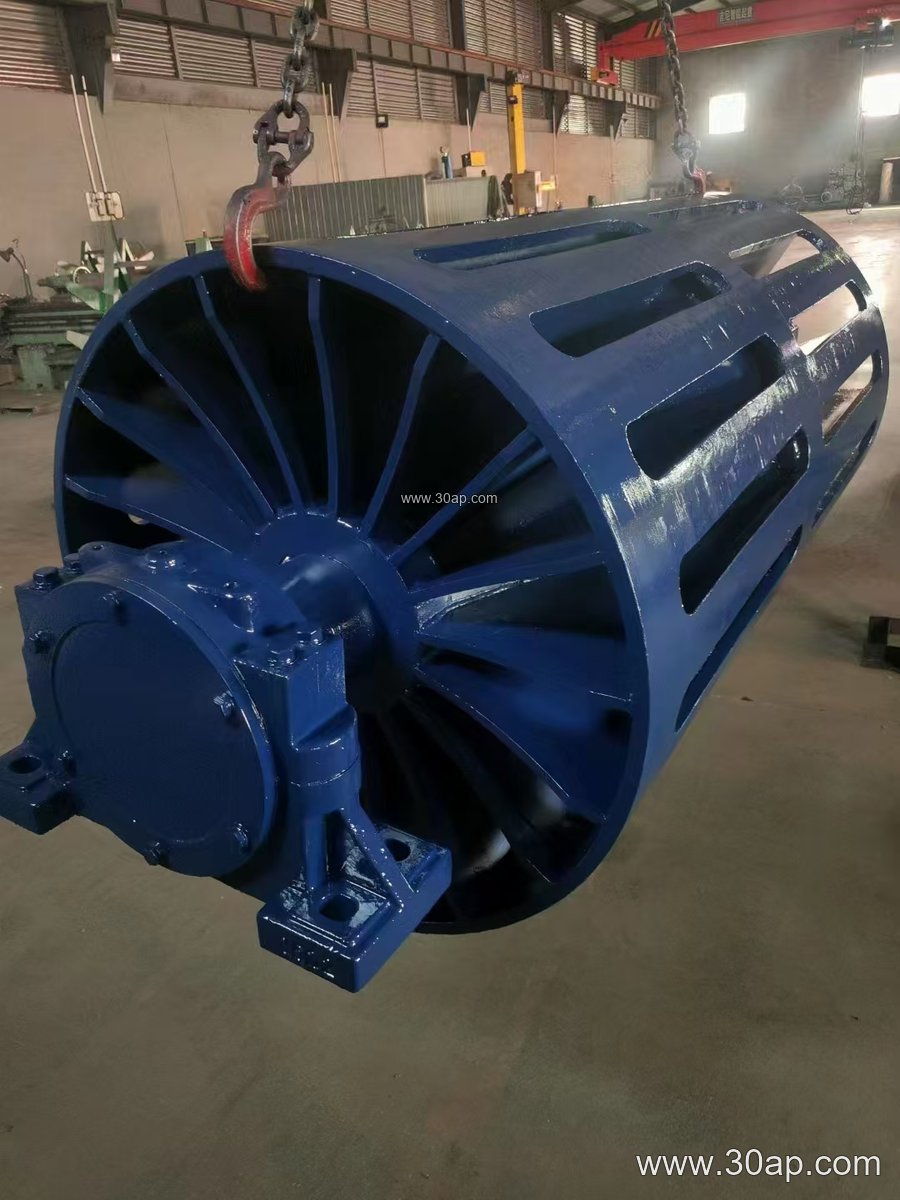
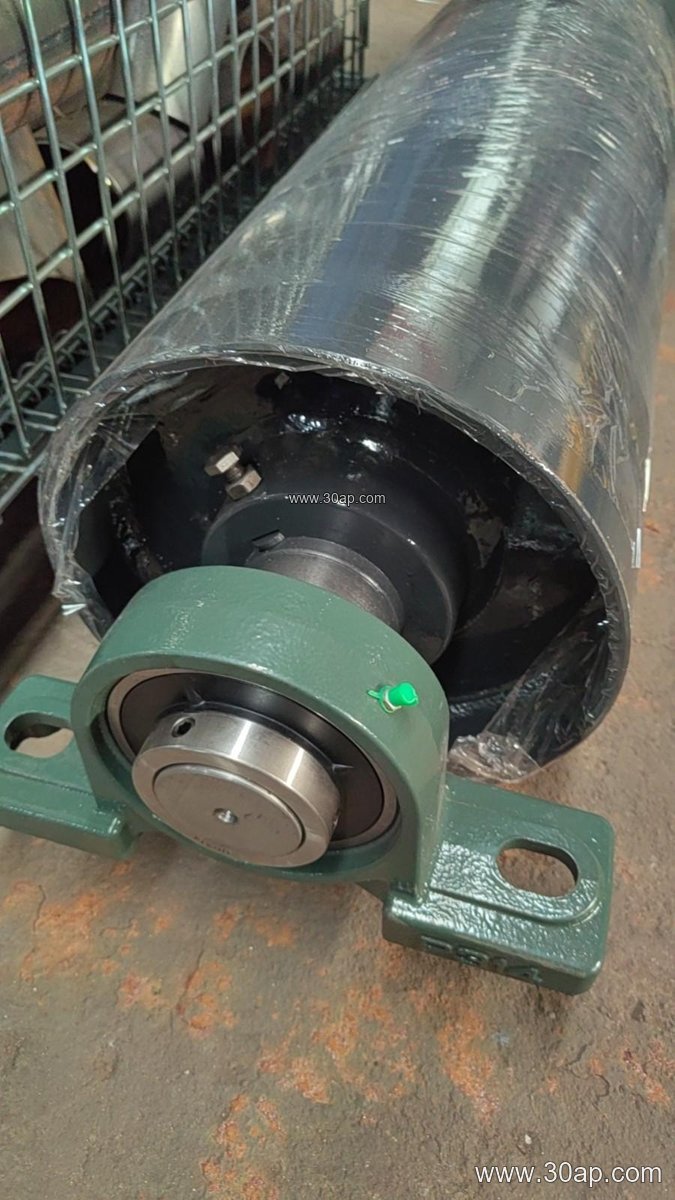
Most industrial pulleys use a welded steel shell with end discs, a through shaft, and bearing housings mounted on a sturdy frame. The shell surface may stay plain or receive lagging to raise friction. Common surface forms include plain finish, cast rubber, cold-bonded rubber, hot-vulcanized rubber, diamond groove, herringbone groove, ceramic lagging, and flat rubber sheet. Lagging thickness is often 8, 10, 12, 15, or 20 mm, chosen according to grip demand and material conditions.
Shaft diameter is determined by torque and load, not by belt width alone. Typical shaft sizes run from Ø50 up to Ø200, and a design may combine a large shell with a moderate shaft or the reverse. For this reason, a buyer should supply the belt pull, the belt speed, the duty cycle, and the ambient conditions rather than a single number.
Face Width and Belt Width
The pulley face is usually wider than the belt so the belt has room to track. Reference values are often about 100 to 200 mm wider than the belt, for example B400 with roughly 500 mm face, B800 with about 950 mm, B1200 with about 1400 mm, and B1800 with about 2000 mm. These are common relationships, not fixed rules, and the final face width is set by design.
Matching the Pulley to the Application
Material and environment decide the surface and the belt family. In a coal preparation plant or an underground coal mining conveyor, a flame retardant conveyor belt and anti-static properties are usually required, and the drum may need ceramic or grooved lagging to keep grip in wet conditions. In a cement plant handling clinker, a heat resistant conveyor belt protects the belt body, while the pulley uses lagging that tolerates warm, abrasive dust. Iron ore and copper ore lines often run a steel cord conveyor belt or a high-strength EP conveyor belt, and the drive drum must be sized for the resulting tension.
Where the belt is steeply inclined, a chevron conveyor belt or a corrugated sidewall conveyor belt may be used, and the pulley face must clear the cleats. In food and grain silo work, a food grade conveyor belt pairs with a smooth, cleanable drum surface. A pipe conveyor belt needs special transition geometry and should be discussed with the drum supplier early, because the bend pulley layout affects how the belt forms the pipe.
Common Sizes and Reference Combinations
The table below groups typical shell diameters and face widths. Treat every figure as reference data for discussion, not as a universal specification or a supply promise.
| Item | Common Reference Values | Notes |
|---|---|---|
| Shell diameter | Ø200, Ø250, Ø315, Ø320, Ø400, Ø500, Ø630, Ø800, Ø1000, Ø1250, Ø1400, Ø1600, Ø1800 | Selected by belt tension, wrap angle, and space |
| Belt width | B400, B500, B650, B800, B1000, B1200, B1400, B1600, B1800, B2000, B2200, B2400 | Face width usually exceeds belt width |
| Face width example | B650 about 750 mm; B1000 about 1150 mm; B1400 about 1600 mm | Confirm with design drawing |
| Shaft diameter | Ø50, Ø60, Ø70, Ø80, Ø90, Ø100, Ø120, Ø140, Ø160, Ø180, Ø200 | Set by torque and load, not belt width |
| Lagging thickness | 8, 10, 12, 15, 20 mm | Diamond or herringbone groove for wet grip |
Combinations such as B800 × Ø500, B1200 × Ø1000, and B1400 × Ø800 appear in real projects, but they are examples only. A wide belt does not force one diameter, and a narrow belt does not rule out a large drum where wrap angle or tension requires it.
Installation Points and Maintenance
A drive pulley at the head end carries the highest torque and usually receives the most attention during inspection. Tail pulleys and take-up bend pulleys affect belt tension and tracking, so their alignment should be checked after any belt splice or idler roller replacement. Worn lagging reduces grip and can lead to slip, heat, and belt damage; grooved or ceramic surfaces are often refreshed before the shell itself is worn out.
- Check lagging wear and groove depth at each scheduled shutdown.
- Verify bearing temperature and lubrication, especially in dusty cement or coal service.
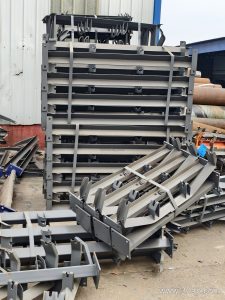
- Inspect the conveyor bracket and frame for movement that could misalign the drum.
- Confirm belt tracking after tensioning or replacing a bend pulley.
For a full replacement or a new line, share the belt type, belt width, expected tension, and site conditions. A drum built for an abrasion resistant conveyor belt in a stone crushing plant may not suit a power plant coal feeder with different dust and fire requirements. Getting these details right at the quotation stage is the cheapest way to avoid a return visit.