What the Sand Making Plant Conveyor Belt Does
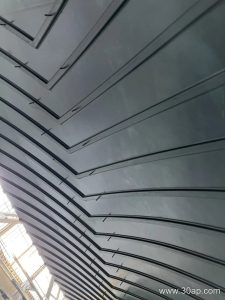
In a sand making plant, crushed stone moves between the jaw crusher, cone or impact crusher, vibrating screen, sand washer and stockpile areas. The Sand Making Plant Conveyor Belt is the continuous loop that carries this abrasive, often dusty and sometimes wet material along the production line. Because the load is heavy and the surface is sharp, the belt is usually a heavy-duty rubber conveyor belt rather than a light-duty style, and its cover compound, carcass and splice quality decide how long the line runs between stoppages.
This belt is a specific duty version of the wider family of industrial conveyor belts. It is not a different product category; it is a belt configured for the loads, widths and speeds common in sand and aggregate plants. Buyers often compare it with a general Aggregate Conveyor Belt or a Crusher Conveyor Belt, and the three descriptions usually point to belts with similar abrasion-resistant covers.
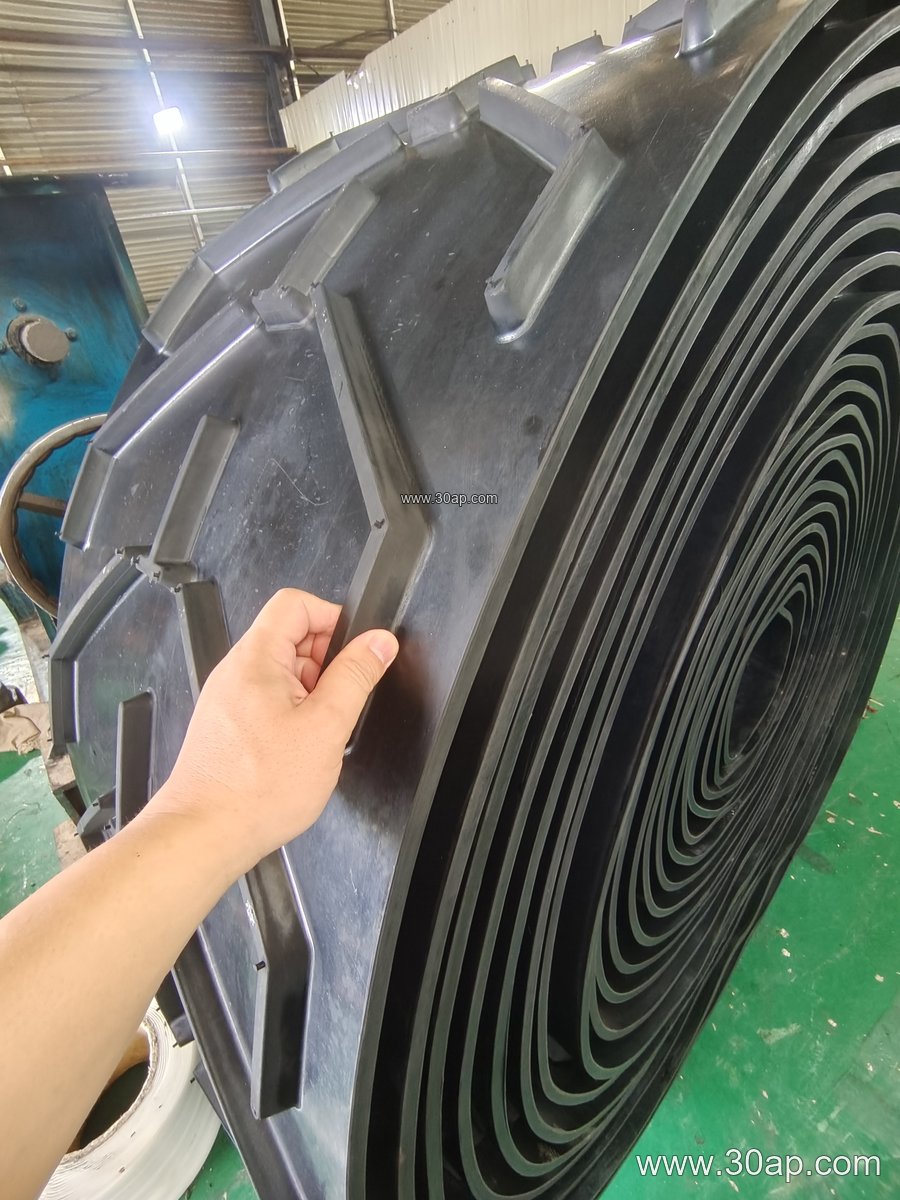
Construction and Common Specifications
The belt body is a fabric core or steel cord carcass covered with rubber on both faces. For most sand plant duties, a multi-ply fabric core is sufficient, while long overland or high-lift conveyors may use a steel cord design. The table below lists reference values that appear in supplier catalogues; actual values are confirmed by the belt designer.
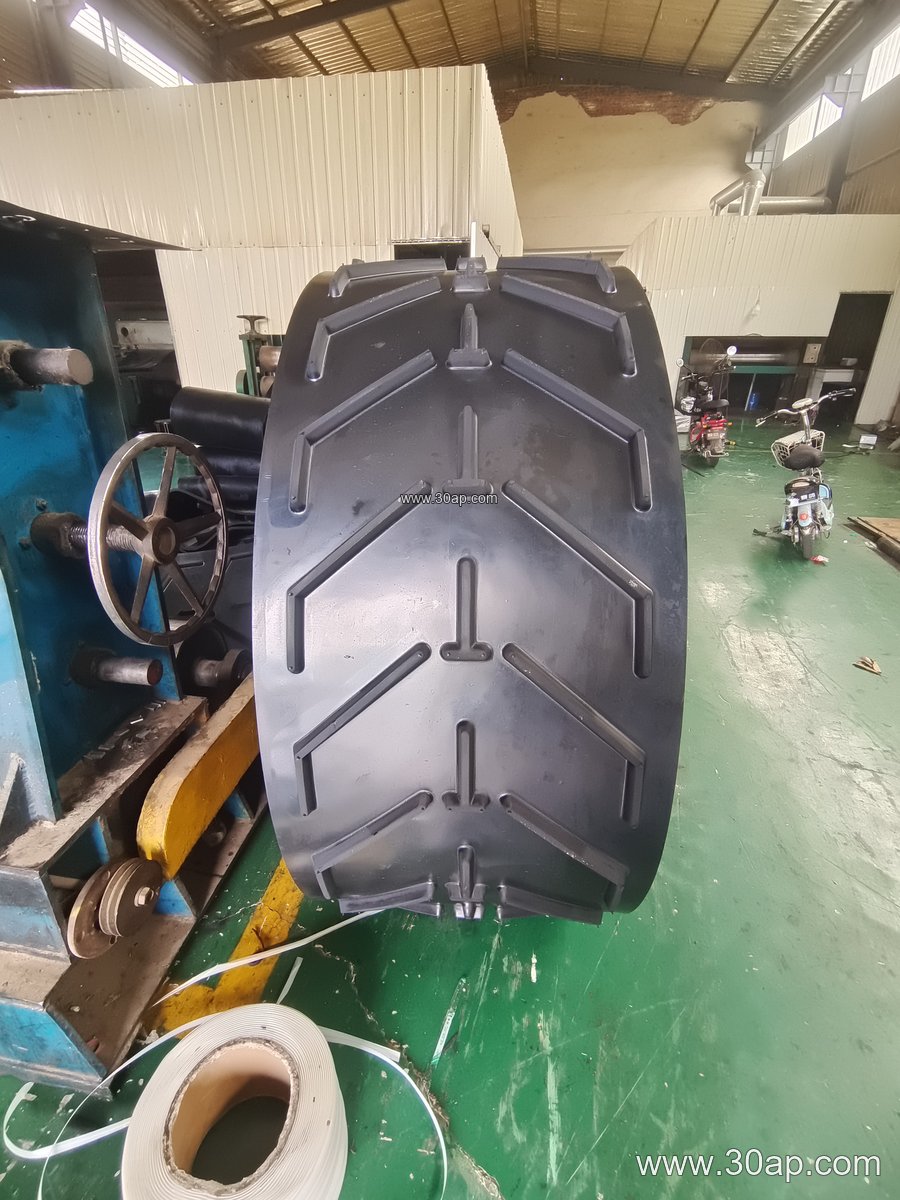
Reference data for sand plant belts
| Item | Common range | Notes |
|---|---|---|
| Belt width | B500, B650, B800, B1000, B1200, B1400, B1600, B1800 | Selected from tonnage and lump size |
| Fabric grade | EP200, EP315, EP400, EP500, EP630, EP800, EP1000 | Higher grade for longer centres |
| Carcass plies | 2 to 6 plies | Multi-Ply Fabric Core Multi-Ply Fabric Core commonly used |
| Top cover | 4 mm, 5 mm, 6 mm, 8 mm | Abrasion Resistant Conveyor Belt cover |
| Bottom cover | 1.5 mm, 2 mm, 3 mm | Driven pulley side |
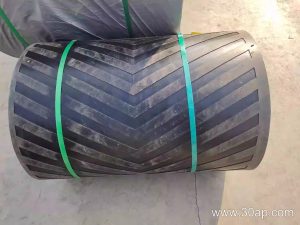
| Surface form | Plain, Chevron Conveyor Belt, Corrugated Sidewall Conveyor Belt | Incline angle decides the form |
The carcass type matters. An EP Conveyor Belt uses polyester warp and nylon weft, while an NN Conveyor Belt uses nylon in both directions. EP fabric is the more common choice for sand lines because it holds length and resists impact. For a very long incline or a heavy primary discharge, a Steel Cord Conveyor Belt may be specified instead.
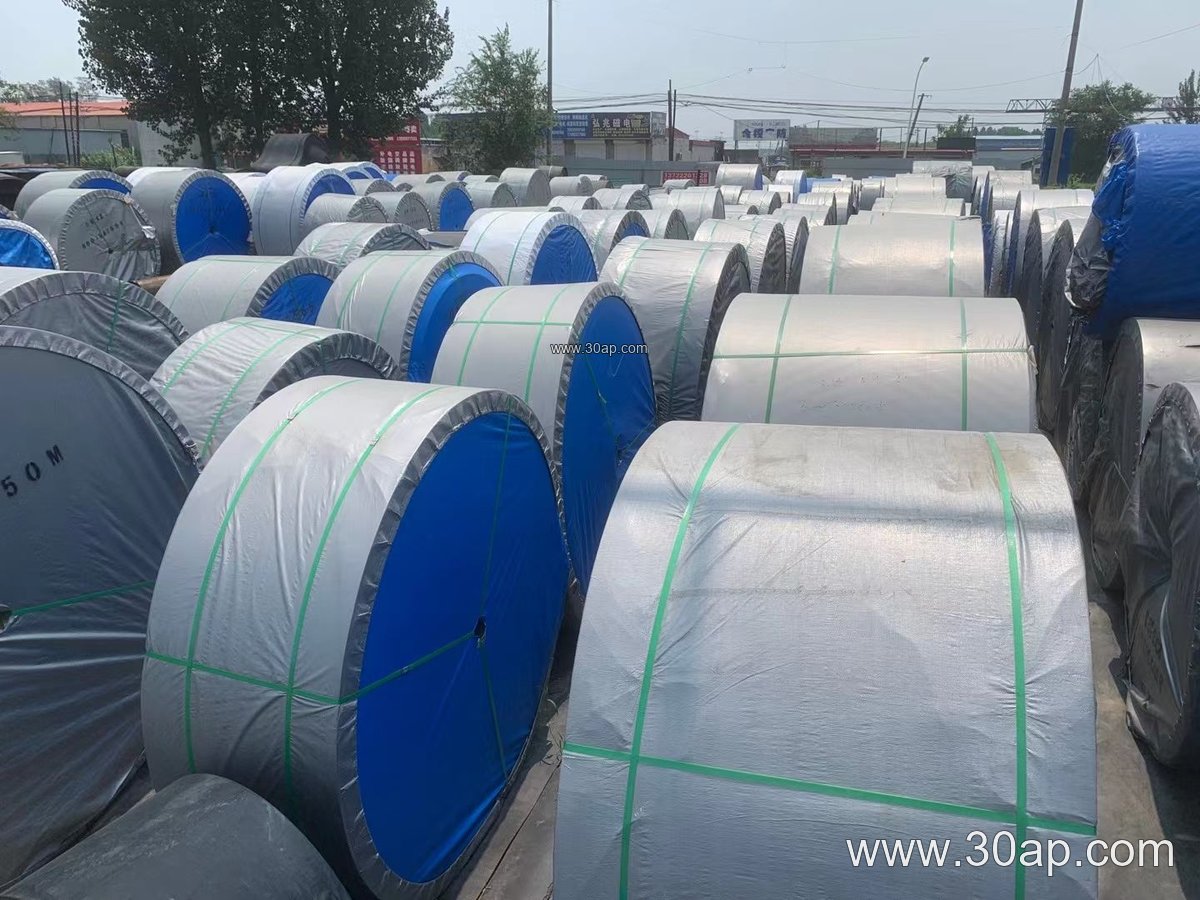
Where It Fits in the Plant
A typical layout uses several belt sections. The primary discharge belt takes run-of-crusher rock; the screen feed belt runs at a steady rate; the return and stockpile belts carry finished sand. Each point has its own demand. The primary belt needs impact resistance and a thick top cover, while the stockpile belt may need a Chevron Conveyor Belt pattern to hold material on a steep incline. A Corrugated Sidewall Conveyor Belt is sometimes chosen where the conveyor must fit into a narrow space and the material must not spill at the edges.
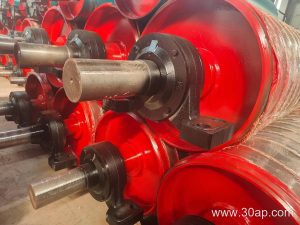
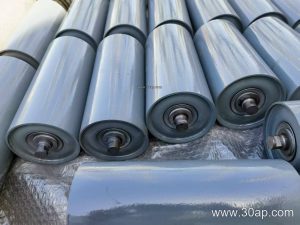
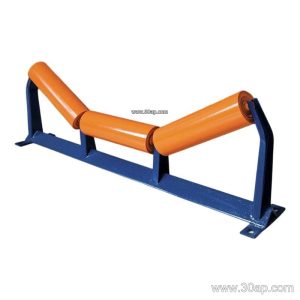
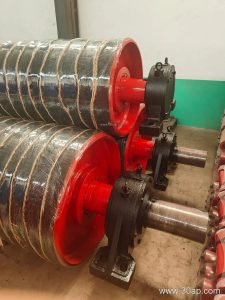
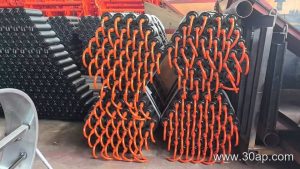
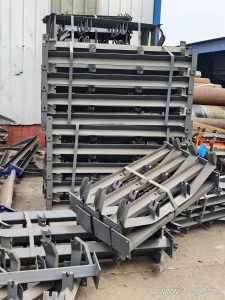
In a quarry or mining site, the same belt family works alongside a Mining Conveyor Belt, Quarry Conveyor Belt and Rock Conveyor Belt. The supporting hardware is equally important: idler roller sets carry the trough, conveyor pulley assemblies drive and tension the loop, and conveyor bracket frames keep alignment. A poorly aligned pulley or a worn idler can damage a new belt within days, so the mechanical parts deserve the same attention as the rubber.
Selection Points for Buyers
- Match belt width to lump size and capacity. A 500mm belt is common on small plant lines, while 1200mm or 1400mm belts suit high-tonnage primary duty.
- Check the abrasion class of the cover. Sand and crushed stone are highly abrasive, so a High Abrasion Resistant Conveyor Belt cover is usually justified.
- Confirm the temperature of the material. Hot clinker or dried sand may call for a Heat Resistant Conveyor Belt.
- For dusty or enclosed plants, an Anti-Static Conveyor Belt may be required, and a Flame Retardant Conveyor Belt is normal in coal-adjacent or underground installations.
- Consider the splice method. An Endless Conveyor Belt splice reduces snag points, but field splicing is often more practical on long lines.
- Keep a spare length of belt and a set of fasteners; a short stoppage is cheaper than a long one.
Do not assume that one belt width fixes the pulley diameter. Pulley size depends on belt tension, cover thickness and the drive design. The belt supplier and the conveyor designer should confirm the combination together rather than by rule of thumb.
Maintenance That Extends Belt Life
Inspect the belt line each shift for spillage, edge wear and cover cuts. Clean the return side, because trapped material between the belt and the tail pulley can cause rapid damage. Check idler roller rotation and replace seized rollers promptly. Re-tension the take-up when the belt slips, and re-check the conveyor pulley lagging for wear. For a plant handling wet sand, an Oil Resistant Conveyor Belt or chemical-resistant cover may be worth considering if the process water carries oils or additives.
Well-chosen rubber and steady maintenance keep a sand making plant conveyor belt running through long shifts in mines, quarries, cement works, power plants and construction material yards.