What Is a Conveyor Welded Pulley
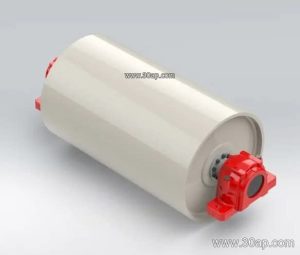
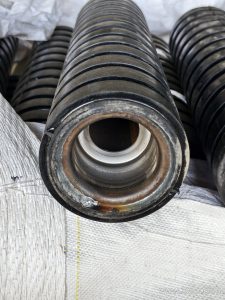
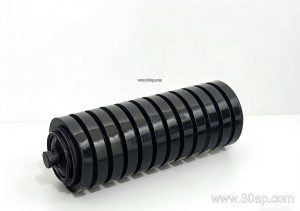
A conveyor welded pulley is a cylindrical drum built by welding steel end discs and a hub assembly to a rolled shell. It serves as the rotating contact point for the conveyor belt, transmitting motion or changing its direction. Unlike cast or bolted designs, the welded construction allows heavier loads and larger diameters to be produced without the risk of joint loosening under continuous vibration. In a typical aggregate plant or cement works, this welded drum works alongside idler rollers and conveyor brackets to keep the belt tracking smoothly.
Construction Details That Matter
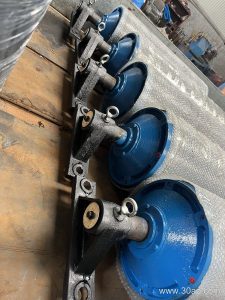
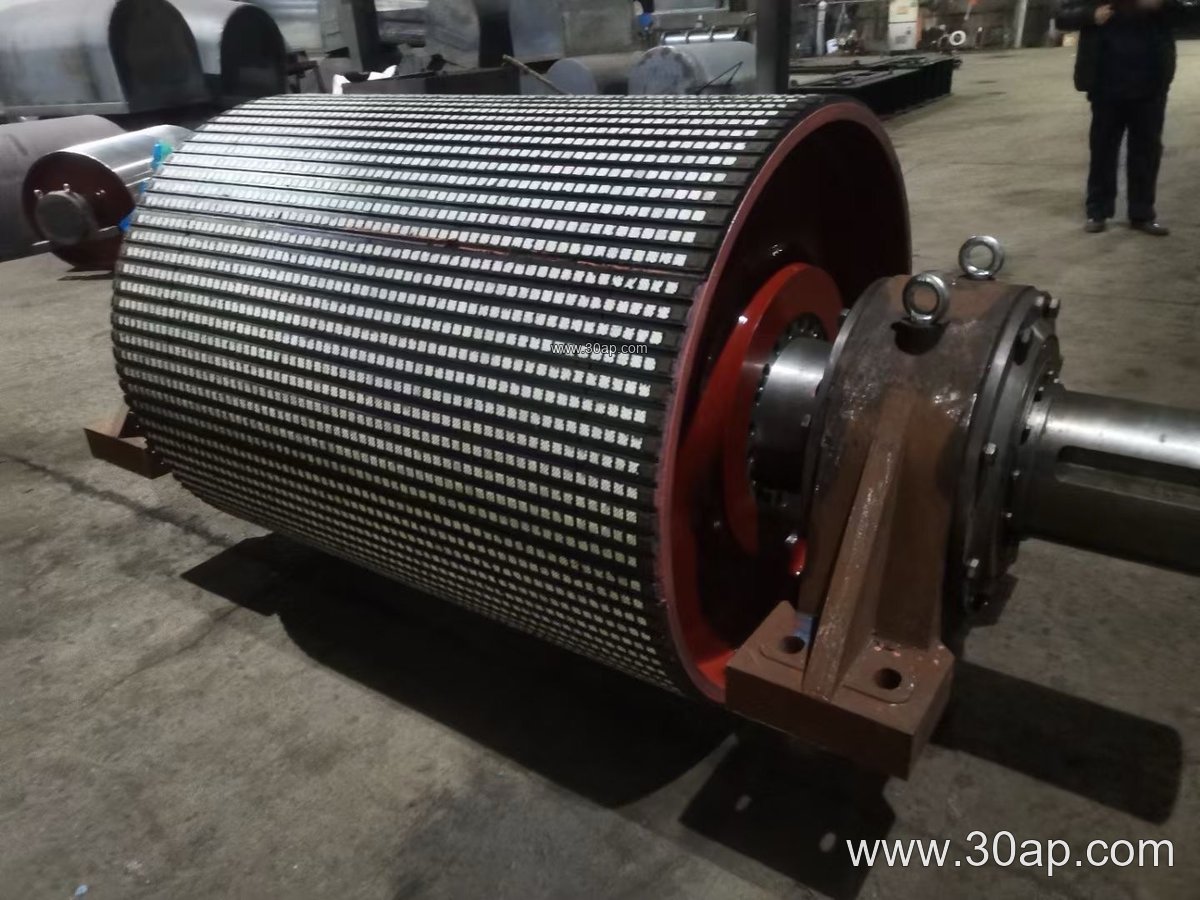
The shell is usually formed from rolled steel plate, with the longitudinal seam and circumferential joints fully welded. End discs are machined to accept the shaft, and the hub is keyed or shrink-fitted. For abrasive service such as a quarry conveyor belt line, the shell may receive a rubber lagging—plain, diamond, or ceramic—applied by cold bonding or hot vulcanizing. The weld quality directly affects concentricity and balance, so a buyer should ask for inspection records of runout and weld penetration.
Common surface options include:
- Plain steel finish for non-drive positions
- Diamond rubber lagging for improved grip in wet conditions
- Ceramic lagging for high-traction drive applications
- Herringbone pattern for centering on long conveyors
Where It Fits in the Conveyor Layout
This welded drum appears in several positions, each with distinct demands. At the head, it drives the belt and must handle the highest torque. At the tail, it redirects the returning belt and often needs a self-cleaning surface. Bend and take-up positions call for lighter shells but reliable bearing seats. In a coal mining conveyor belt system, flame retardant lagging may be specified alongside a flame retardant conveyor belt. For a power plant coal yard, abrasion resistant conveyor belt grades pair with lagged drums to resist coal dust and fines.
Do not confuse these positions: a drive pulley is not interchangeable with a tail or bend pulley. Each has its own load profile and lagging requirement. A welded drum used as a bend pulley may be smaller in diameter than the head drive unit, but both share the same welded shell principle.
Matching Belt Width and Drum Size
Belt width influences the face width of the drum, but it does not dictate a single diameter. Typical combinations include B800 × Ø500 for a medium-duty tail position, B1200 × Ø1000 for a main drive, and B1400 × Ø800 for a bend station. Face width usually exceeds belt width by roughly 100 mm on each side; for example, a B650 belt may run on a 750 mm face. Shaft diameter is determined by torque and bearing load—common sizes range from Ø50 to Ø200—and should never be selected from belt width alone.
| Belt Width (B) | Typical Face Width | Common Diameter Range |
|---|---|---|
| B500 | ≈600 mm | Ø250–Ø400 |
| B800 | ≈950 mm | Ø400–Ø630 |
| B1000 | ≈1150 mm | Ø500–Ø800 |
| B1200 | ≈1400 mm | Ø630–Ø1000 |
| B1600 | ≈1800 mm | Ø800–Ø1250 |
These figures are reference ranges, not fixed rules. Final selection depends on belt tension, speed, and the conveyor profile.
Buyer Checklist for Welded Pulleys
Before ordering, confirm the shaft diameter and keyway dimensions against the bearing housing. Ask for the lagging thickness—8, 10, 12, 15, or 20 mm—and the bonding method. Verify that the weld seams have been stress-relieved if the drum will see reversing loads. For a coal mining conveyor belt or an underground mining conveyor belt, check that the lagging compound meets flame retardant conveyor belt compatibility. In a sand and gravel line, an abrasion resistant conveyor belt running over a ceramic-lagged welded drum reduces slip and wear.
Also review the balancing grade, especially for high-speed drives. A poorly balanced welded pulley can cause belt mistracking and premature bearing failure. Request a runout report and confirm that the face width matches your belt specification. Whether the application is a cement plant clinker line, a copper ore conveyor, or a port ship loader, the welded pulley should be treated as a precision component, not a generic steel drum.