What a Tail Bend Pulley Does
A tail bend pulley is a directional pulley mounted near the tail end of a belt conveyor, where the belt turns back into the return run. It is not the tail pulley itself. The tail pulley is the terminal drum at the loading end that carries the belt and often works with a take-up device. The bend pulley sits behind or below it and changes the belt path, usually increasing the wrap angle on the tail pulley or routing the belt toward a tensioning arrangement. In practice, the tail bend pulley is a support element for belt routing, while the tail pulley remains the main terminal component. This distinction matters when ordering spares, because a bend pulley and a tail pulley are not interchangeable, even when they share a similar face width.
Construction and Surface Options
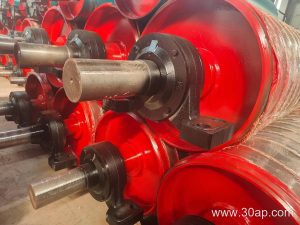
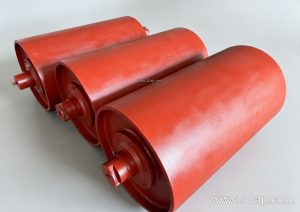
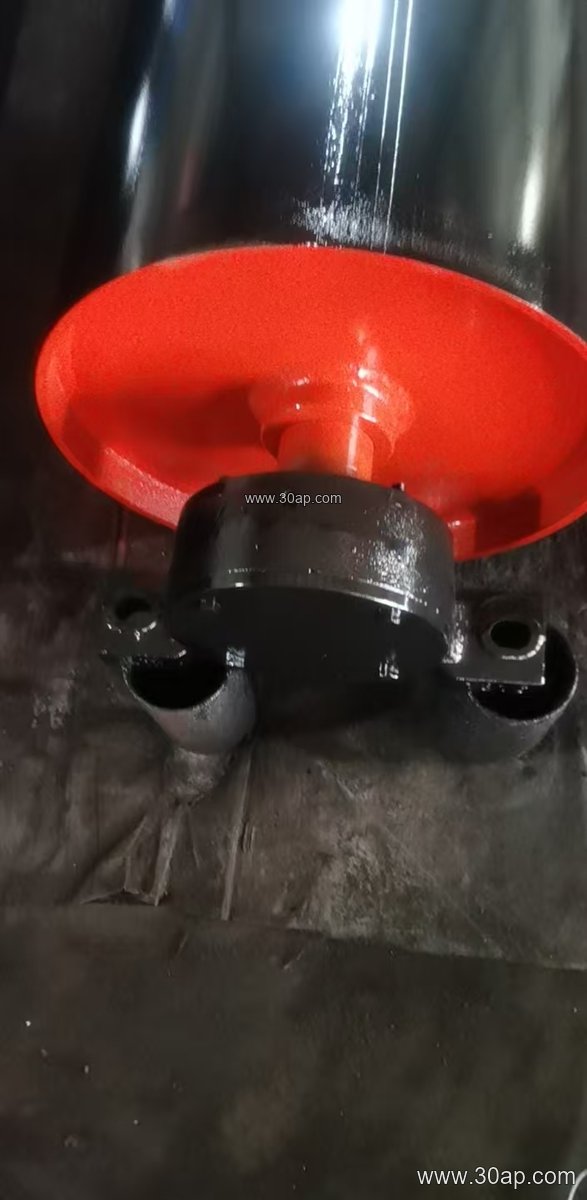
Most units are welded steel drums with a machined shell, dished or flat end plates, and a through shaft supported by bearing housings. The shell is usually wider than the belt it guides, so a B800 conveyor typically uses a pulley face around 950 mm, and a B1200 system often needs roughly 1400 mm of face width. Diameter is selected from belt tension, wrap angle, and the space available at the tail station, not from belt width alone.
Common diameters in this position include Ø320, Ø400, Ø500, and Ø630, with larger sizes used on high-tension conveyors. Surface treatment depends on duty. Plain finish suits light contact and simple routing. Rubber lagging, applied by cold bonding or hot vulcanizing, improves grip and protects the shell. Diamond or herringbone grooving helps shed water and fines. Ceramic lagging is chosen where slip and wear are severe. Lagging thickness is commonly 8, 10, 12, or 15 mm, and 20 mm for heavy service.
| Parameter | Typical Range | Notes |
|---|---|---|
| Face width | 500 to 2200 mm | Usually wider than belt width |
| Diameter | Ø200 to Ø1000 mm | Selected by tension and wrap angle |
| Shaft diameter | Ø50 to Ø200 mm | Determined by torque and load |
| Lagging | Plain, rubber, ceramic | 8 to 20 mm common thickness |
Where It Appears
Tail bend pulleys are common in quarry and aggregate lines feeding a crusher, in cement plant clinker transport, and in power plant coal handling. They also appear in iron ore and copper ore circuits, where abrasion resistant conveyor belts and heavy-duty mining conveyor belts carry sharp, dense material. In a wash plant or coal mining conveyor, a flame retardant conveyor belt is often specified, and the pulley surface should be matched to the same fire-safety expectations. When a pipe conveyor belt or a corrugated sidewall conveyor belt is used, the bend pulley geometry must respect the belt profile and clearance, so the drawing review matters more than the catalog number.
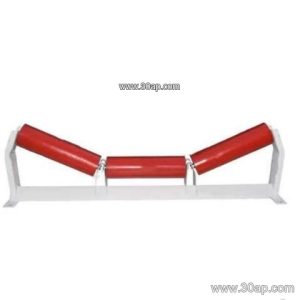
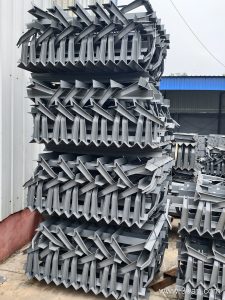
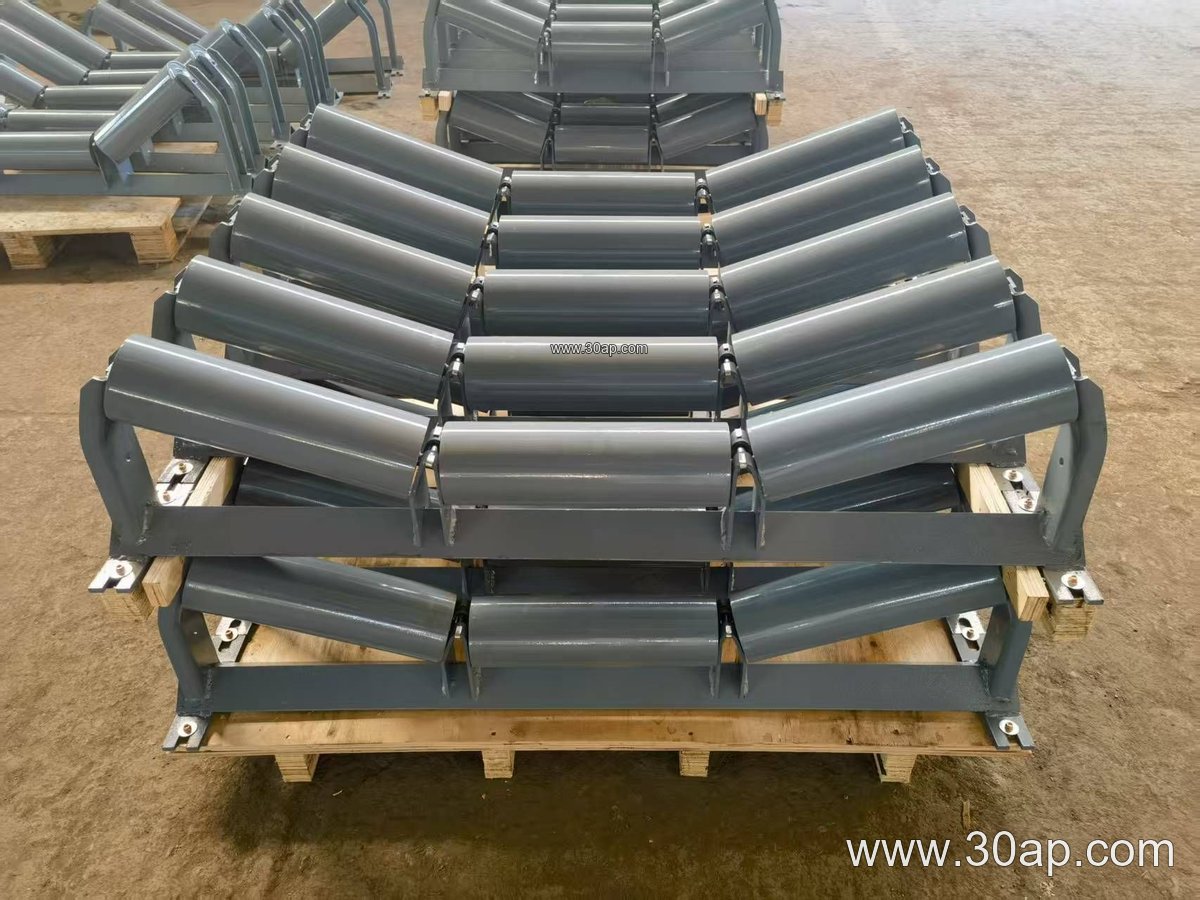
The pulley works together with the conveyor belt, conveyor idler rollers, and the conveyor bracket at the tail frame. Misalignment between these parts causes edge wear and tracking problems. A properly positioned tail bend pulley keeps the belt centered as it enters the tension zone, which reduces load on the idler roller set and lengthens belt life.
Sizing and Matching the Belt
Buyers should provide belt width, belt type, belt tension, shaft load, and the required wrap angle. For example, a B650 conveyor might use a Ø315 or Ø400 bend pulley, while a B1400 conveyor may need Ø630 or Ø800. These are reference combinations, not fixed rules. A wide belt does not automatically require a large shaft, and a narrow belt does not limit the pulley to one diameter. Shaft size follows the calculated torque and bearing load.
- Check that the pulley face is wider than the belt, for example B1000 with about 1150 mm face.
- Confirm lagging type against material: wet fines, oil mist, or high impact.
- Verify bearing housing fit and access to the conveyor bracket.
- Ask for a dimensional drawing before fabrication.
Buyer Checklist
Request the shell thickness, shaft material, bearing type, balancing grade, and lagging specification. For high-abrasion service such as iron ore or quarry rock, specify an abrasion resistant conveyor belt and a wear-resistant lagging. For hot clinker or sinter, a heat resistant conveyor belt may be needed, and the pulley should be shielded from radiant heat. In underground coal mining, flame retardant and anti-static properties are usually required for both belt and lagging. Confirm the interface with the conveyor pulley drive arrangement and the take-up travel so the bend pulley does not foul the frame at full tension.
Finally, treat the tail bend pulley as a routing component, not a substitute for the tail pulley. Review the whole tail station layout, including the conveyor bracket and idler roller positions, before releasing the order.