What a Mining Conveyor Bracket Does
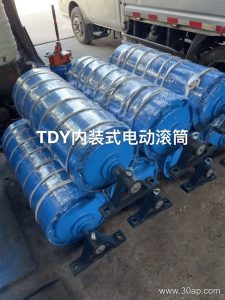
A mining conveyor bracket is the structural support that holds idler rollers in the correct position along a belt conveyor. In hard-rock mines, coal preparation plants, and aggregate crushing circuits, these brackets carry the weight of the belt and material while keeping the belt profile stable. The bracket itself is often called a conveyor bracket or idler frame, and it is a separate component from the conveyor pulley, drive pulley, or tail pulley. The drive, tail, and bend pulleys serve different functions and are not interchangeable with brackets.
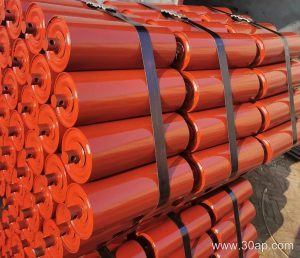
Without a properly aligned bracket, even a heavy-duty mining conveyor belt will track poorly and wear unevenly. The bracket works together with the idler roller and the belt to maintain trough shape and absorb impact at load points.
Construction and Common Materials
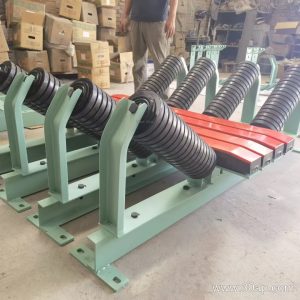
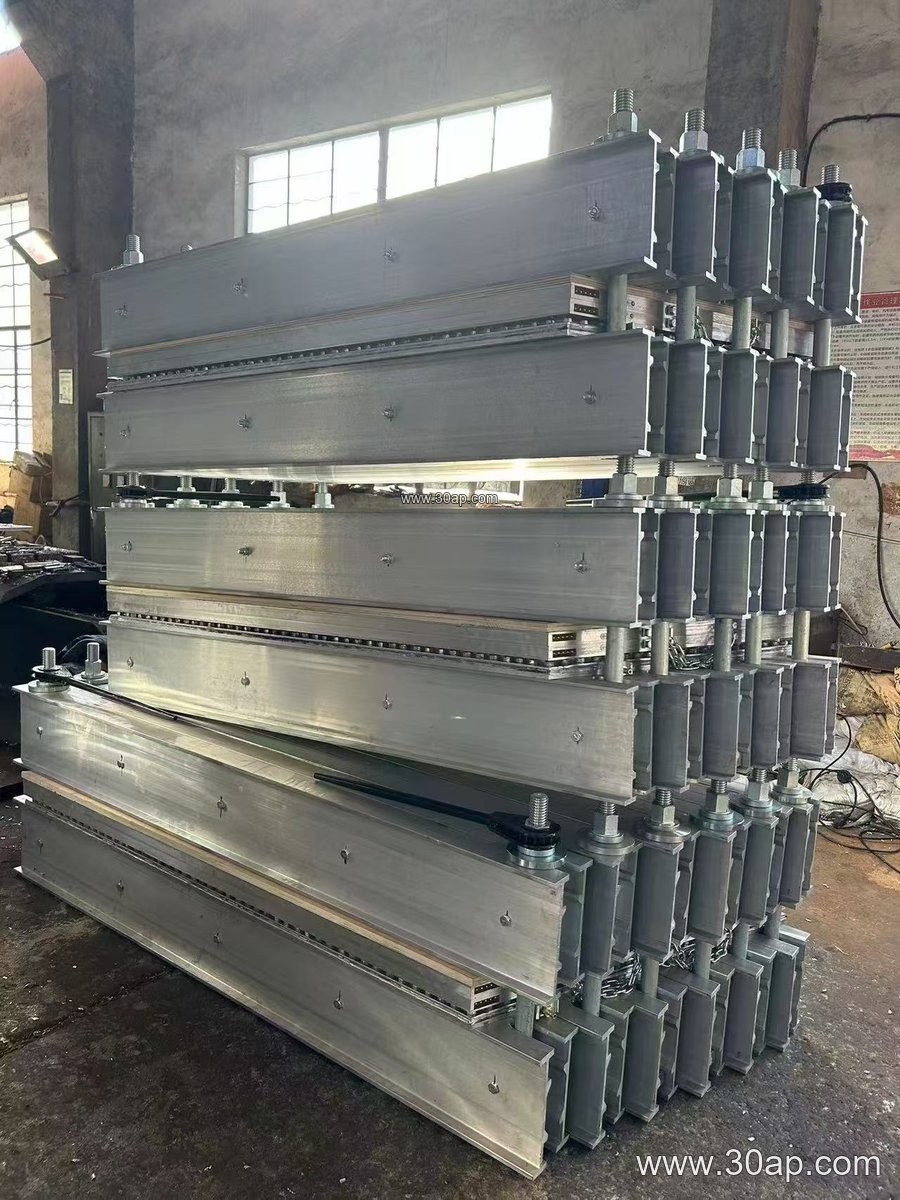
Most mining conveyor brackets are fabricated from angle steel, channel steel, or folded steel plate. The choice depends on load and environment. In a limestone quarry or a cement plant, standard channel steel brackets are common; in a coal mine with corrosive water, galvanized or painted versions may be specified. The bracket includes mounting slots or holes for the idler shaft, and the hole spacing typically changes with belt width and trough angle.
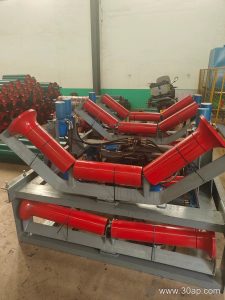
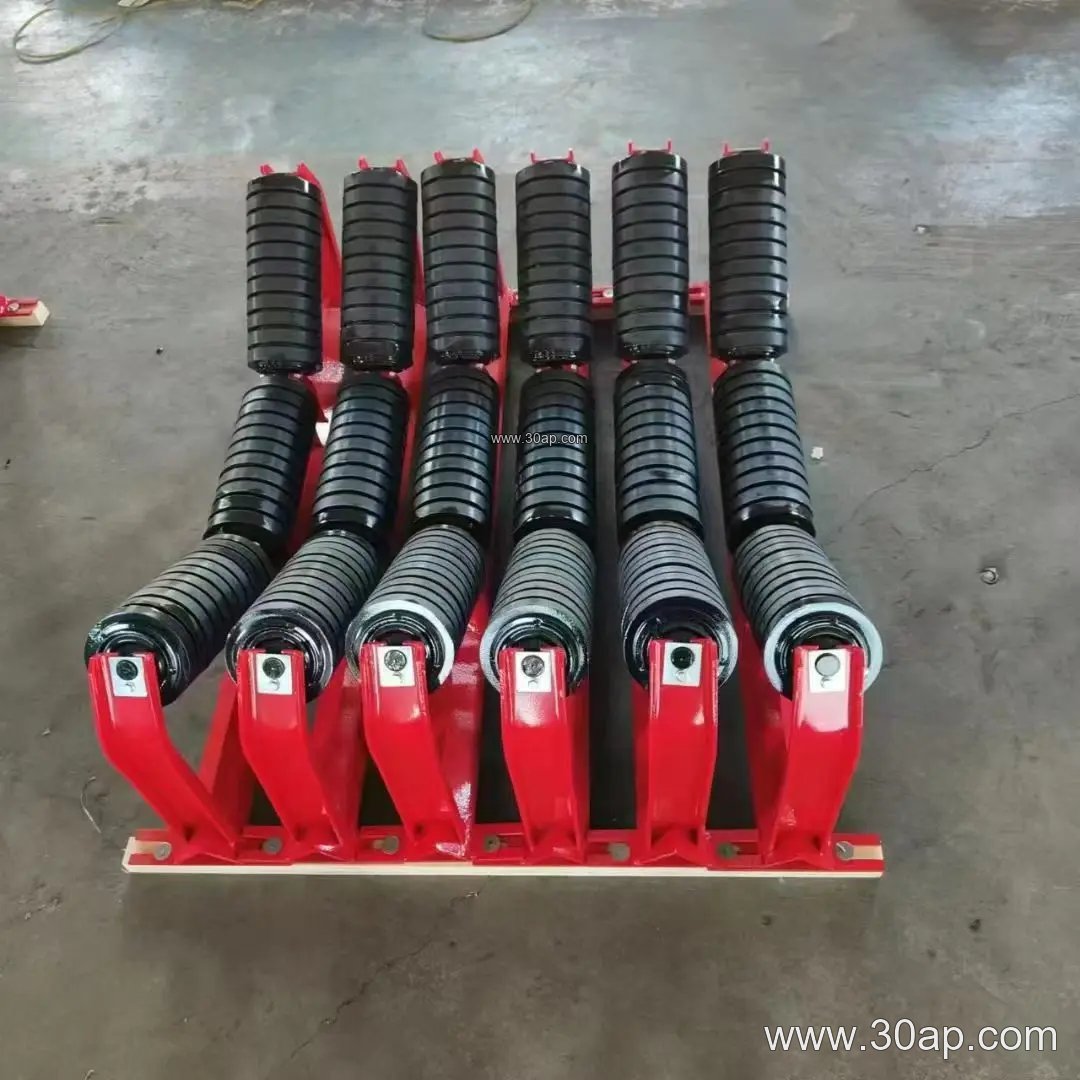
Typical bracket types include troughing brackets, transition brackets, return brackets, V-return brackets, impact brackets, self-aligning brackets, and adjustable brackets. An adjustable bracket allows the trough angle to be set between common values such as 20, 30, 35, or 45 degrees. Forward-leaning brackets often use a small tilt of about 1.5 to 2 degrees to help belt training.
Where It Fits in the Conveyor Line
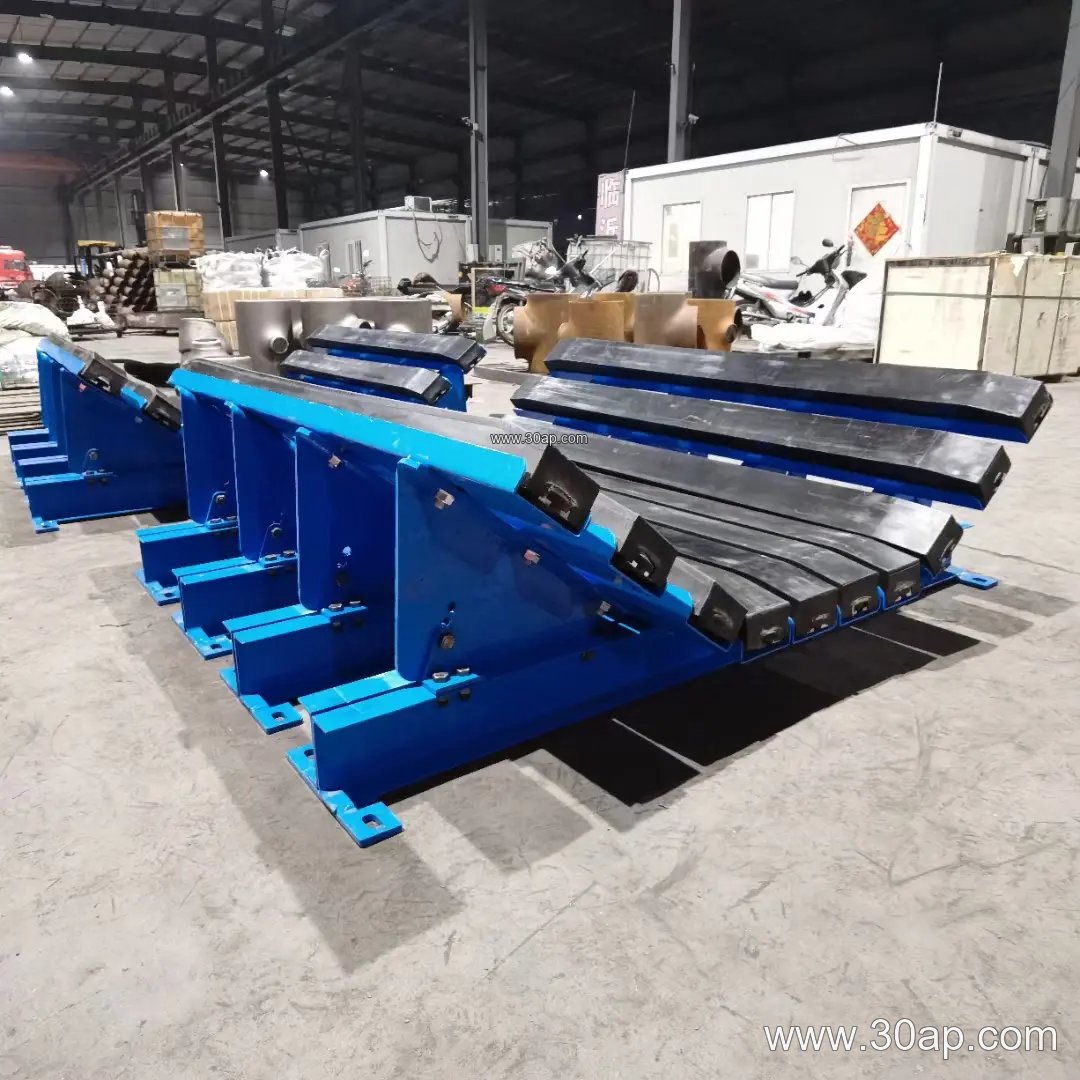
In a crushing and screening plant, troughing brackets support the carrying side of the belt right after the crusher discharge. Impact brackets with rubber or spring cushions are placed under the loading zone to protect the belt from falling rock. Return brackets and V-return brackets support the belt on the return strand. In a power plant coal handling system, self-aligning brackets help correct belt misalignment before the transfer tower.
A typical arrangement for a B800 belt might use a 35-degree trough angle with Ø108 idler rollers, while a B1200 belt in an iron ore application might use a 45-degree trough angle with Ø133 rollers. These are reference examples, not fixed rules; final selection depends on belt width, material lump size, and conveyor design.
Belt Width, Trough Angle, and Roller Diameter
Belt width, trough angle, and roller diameter are related but not locked together. A wider belt does not automatically require a specific trough angle, and a given belt width can work with more than one roller diameter. The table below shows common reference combinations; actual mounting hole spacing and beam length are determined by the conveyor design.
| Belt Width | Trough Angle | Roller Diameter | Typical Bracket Note |
|---|---|---|---|
| B650 | 30° | Ø89 | Light to medium duty, aggregate conveyor |
| B800 | 35° | Ø108 | General mining and quarry use |
| B1000 | 35° or 45° | Ø108 or Ø133 | Adjustable bracket often chosen |
| B1200 | 45° | Ø133 | Heavy-duty mining conveyor bracket |
| B1400 | 35° to 45° | Ø133 or Ø159 | High capacity, coal or ore |
| B1600 | 45° | Ø159 | Large lump size, impact zone |
| B1800 | 35° to 45° | Ø159 or Ø194 | Extra-wide belt, mine main line |
For a steel cord conveyor belt or a thick EP conveyor belt, the bracket must be sized to handle the extra belt tension and weight. In underground coal mining, flame retardant conveyor belt and anti-static conveyor belt are common, and brackets should be selected to suit the restricted space and support spacing.
Buyer Checklist
- Confirm belt width and trough angle before ordering; state whether an adjustable bracket is needed.
- Match bracket strength to the conveyor duty: impact brackets at transfer points, standard troughing brackets elsewhere.
- Check mounting hole spacing and beam length against the conveyor frame drawing; these are not universal.
- Consider the environment: wash-down, dust, or corrosive water may affect material finish.
- Remember that the bracket supports the idler roller, not the conveyor pulley; drive, tail, and bend pulleys are separate items.
Whether the project is a gold mining conveyor line, a port ship loading system, or a tunnel spoil removal conveyor, the mining conveyor bracket is a small but critical part of reliable belt operation. For related components such as the conveyor belt, idler roller, and conveyor pulley, specify each item against the same conveyor design data so the whole system works together.