What a Q355 Conveyor Bracket Does on a Belt Line
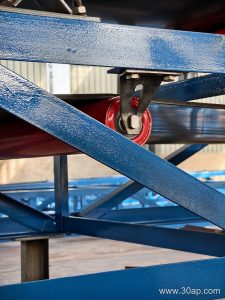
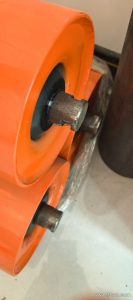
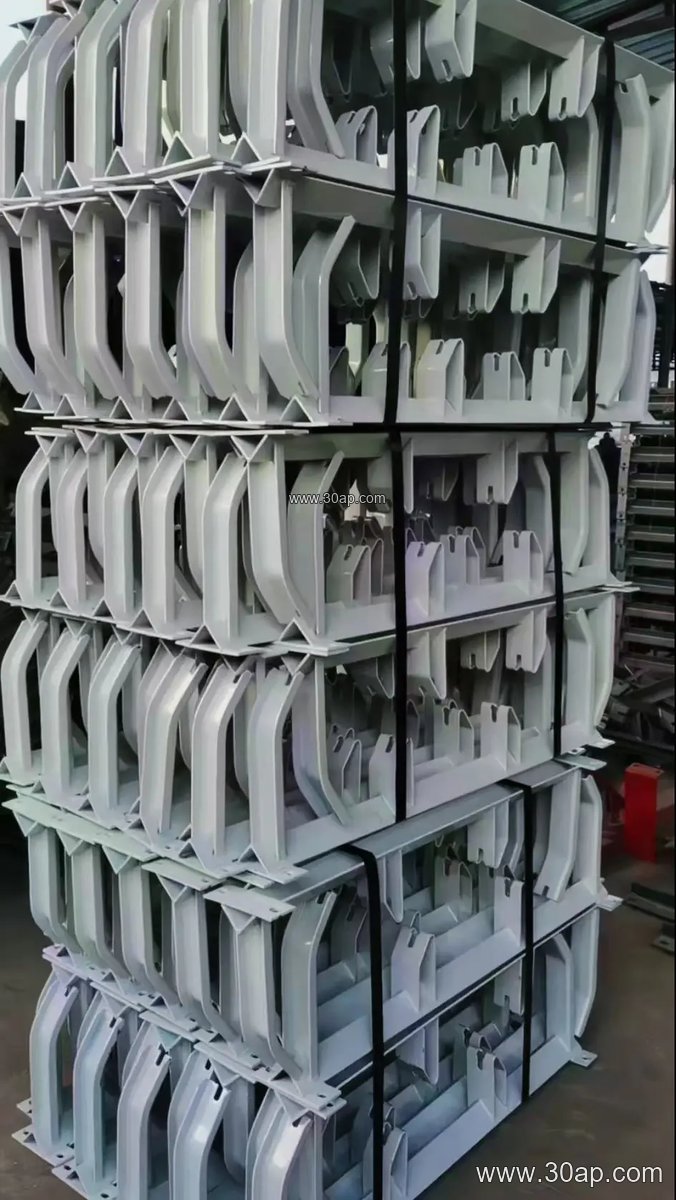
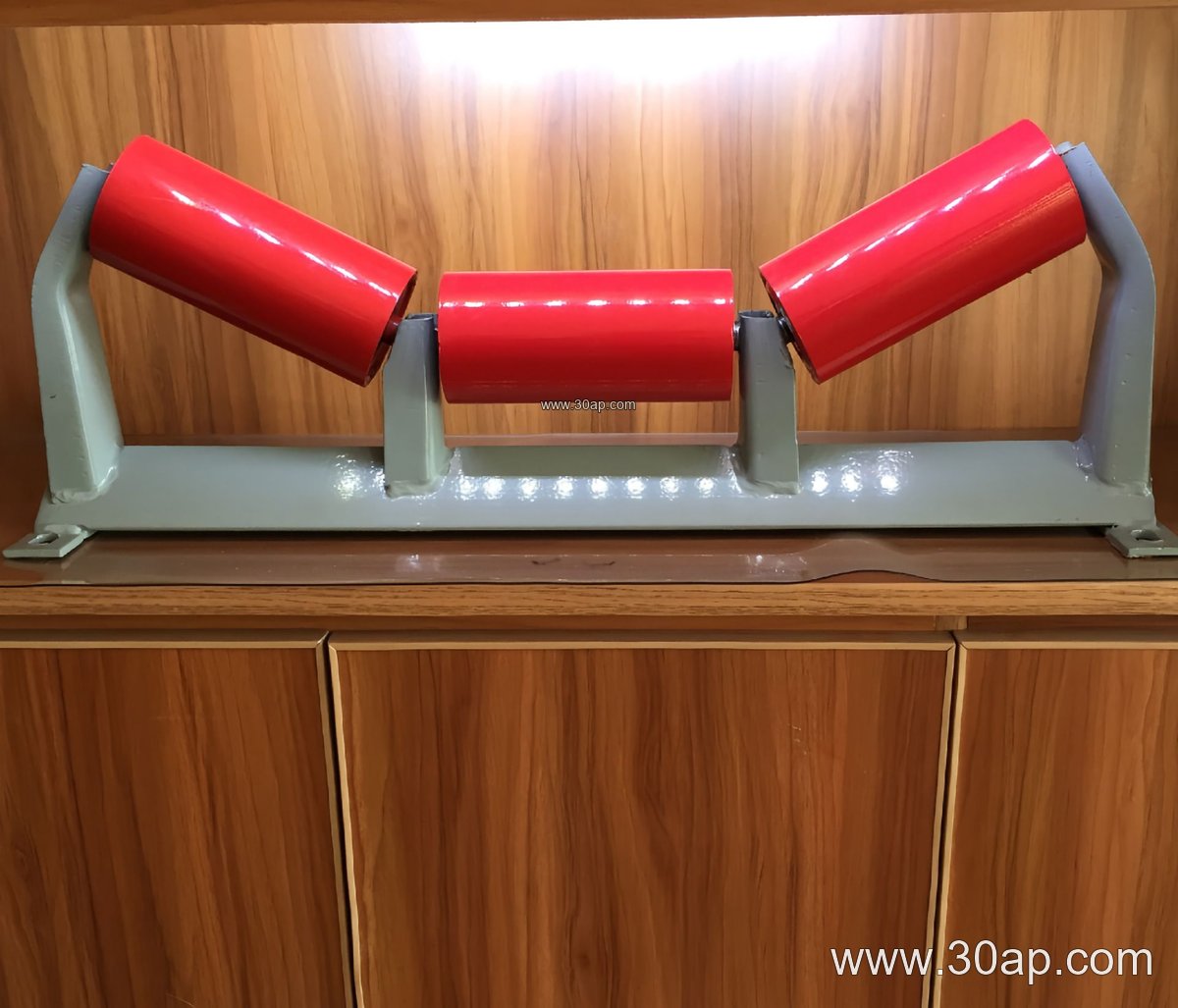
A Q355 Conveyor Bracket is the steel support that holds idler rollers in the correct position under or beside a conveyor belt. It carries the roller shafts, sets the trough angle on the carrying side, and keeps the belt profile stable from the loading point to the discharge end. Because the bracket ties the rollers to the conveyor frame, its stiffness and geometry directly affect belt tracking, roller life, and the amount of spillage along the line.
The material is the low-alloy structural steel Q355, which offers a higher yield strength than common Q235 grades. On a long overland line, a quarry conveyor, or a crusher discharge, that extra strength lets the bracket resist bending and fatigue without excessive weight. Fabricators can supply the same product as a Q355B conveyor bracket or a Q355 conveyor idler support, and these names refer to the same item.
Construction, Types and Mounting Position
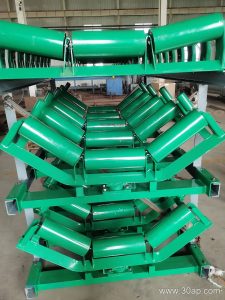
Most brackets are built from angle steel, channel steel, or folded steel plate. The forming method matters: folded plate gives a clean profile and fewer welds, while channel sections suit heavy loads and simple bolted assembly. Common forms include trough brackets, transition brackets, return brackets, V-return brackets, impact brackets, self-aligning brackets, and adjustable brackets.
- Trough and upper trough brackets set the carrying idlers at a chosen trough angle.
- Transition brackets guide the belt from flat to troughed near pulleys.
- Return and V-return brackets support the empty belt.
- Impact brackets carry extra rollers at transfer points.
- Adjustable brackets allow the trough angle to be changed on site.
Trough angles are usually 20, 30, 35, or 45 degrees; an adjustable bracket can move between these settings. Forward-tilted brackets often use about 1.5 to 2 degrees to help tracking. Hole spacing and beam length are determined by belt width and trough angle, so they should never be treated as fixed figures.
Matching Belt Width, Trough Angle and Roller Diameter
Belt width and roller diameter are chosen together with the bracket. Typical widths run from B500 to B2200, and common roller diameters are Ø89, Ø108, Ø133, Ø159, and Ø194. A combination such as B800, 35 degrees, Ø108 suits a medium-duty line, while B1200, 45 degrees, Ø133 may fit a wider, more heavily loaded conveyor. These are examples, not mandatory pairings, and one belt width can work with more than one trough angle or roller diameter.
| Reference item | Common range | Note |
|---|---|---|
| Belt width | B500 to B2200 | Bracket length follows the width |
| Trough angle | 20, 30, 35, 45 degrees | Adjustable versions cover several settings |
| Roller diameter | Ø89, Ø108, Ø133, Ø159, Ø194 | Selected with load and belt speed |
| Material | Q355 steel | Angle, channel, or folded plate |
When the bracket is ordered, the belt width, trough angle, roller diameter, and mounting hole pattern should all be confirmed against the drawing. On a rubber conveyor belt line, a small mismatch in hole spacing can cause roller misalignment and edge wear.
Where These Brackets Are Used
Q355 Conveyor Brackets appear wherever bulk material moves continuously. In a limestone quarry or aggregate plant, they support the belt after the crusher and through the screening section. In a coal preparation plant or a power plant coal yard, they hold flame retardant and anti-static belts in place on long inclined runs. They are also common in cement plants, steel plants, port loading systems, and tunnel muck removal lines.
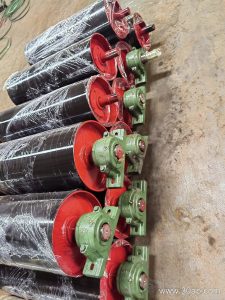
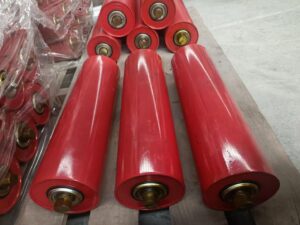
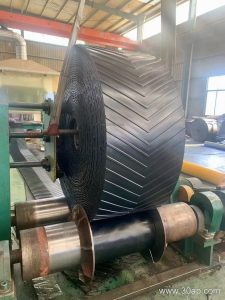
The bracket works as part of a system: the conveyor belt carries the load, the idler roller rotates under it, and the conveyor pulley drives or redirects the belt at each end. A well-built bracket keeps all three aligned, which reduces belt wander and roller seizure. For heavy-duty mining conveyor belts or long-distance steel cord conveyor belts, heavier bracket sections and closer support spacing are usually specified.
What Buyers Should Check Before Ordering
Buyers should confirm the drawing package, steel grade certificate, surface treatment, and welding quality. Galvanizing or painting should match the site conditions, especially in wet washing plants or coastal ports. It is also worth checking whether the bracket is fixed or adjustable, because an adjustable version costs more but simplifies alignment during commissioning.
Spare parts planning matters too. Keeping a few brackets in the most common widths and angles shortens downtime when a roller or frame is damaged. For more information on matching conveyor brackets with rollers and belts, visit www.mkconveyorbelt.com and review the bracket and roller ranges together. A bracket that fits the frame, the roller, and the belt profile will always outperform a generic substitute.