What a Head-End Belt Tracker Does
A head-end belt tracker is a belt alignment device installed near the discharge pulley at the head of a conveyor. Its job is to keep the conveyor belt centered as it approaches the head pulley, where belt tension is highest and any misalignment becomes most visible. In mines, cement plants, power stations, quarries and aggregate yards, a drifting belt at the head end can cause edge damage, spillage and unplanned downtime. The head-end belt tracker, also called a head-end belt alignment idler, corrects this by steering the belt back toward the centerline through controlled contact with the belt edge or surface.
It is not a substitute for correct pulley alignment, proper belt splicing or adequate take-up tension. It is a corrective aid, and its value depends on good conveyor design underneath it.
Construction and Working Principle
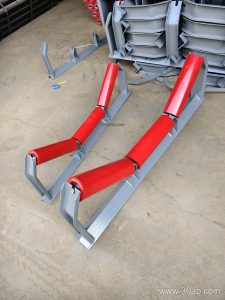
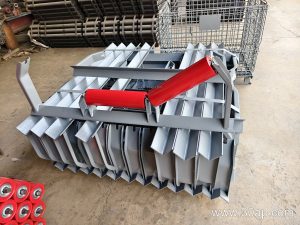
A typical unit consists of a pair of angled rollers or a pivoting frame carrying a short idler roller, mounted on a bracket that bolts to the conveyor frame near the head pulley. When the belt moves off-center, it contacts a guide roller or sensing arm. The resulting force rotates the frame slightly, and the angled rollers apply a small lateral force that nudges the belt back. Some designs are mechanical and self-acting; others use sensors and a control cabinet to drive an actuator.
Common build features include:
- Pivoting frame with sealed bearings
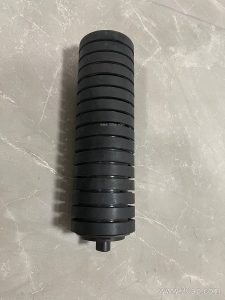
- Replaceable rubber or polyurethane guide rollers
- Heavy-duty conveyor bracket for bolted installation
- Adjustable mounting slots for fine positioning
- Corrosion protection for wet or dusty service
The device works together with the conveyor belt, the idler roller set and the head conveyor pulley. A worn or seized idler roller elsewhere on the line can defeat even a well-installed tracker, so check the whole carrying and return side before blaming the tracker.
Where It Fits in a Conveyor Line
Head-end tracking is especially relevant where the belt discharges into a crusher, screen, silo or transfer chute. Off-center loading at the tail and material buildup on the head pulley both push the belt sideways near the discharge. In a coal mining conveyor belt or an underground mining conveyor belt, space is tight, so a compact tracker frame is easier to fit than a long training idler station. In a cement plant or power plant, dust and heat may call for sealed bearings and heat-resistant roller compounds.
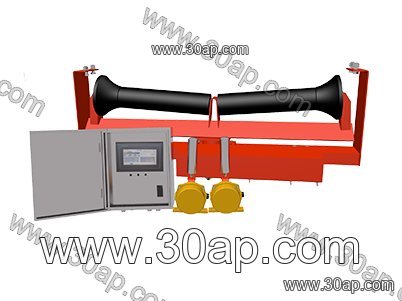
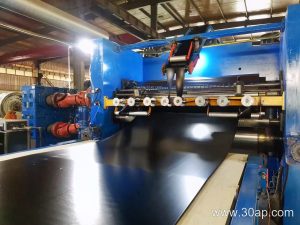
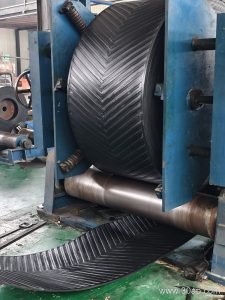
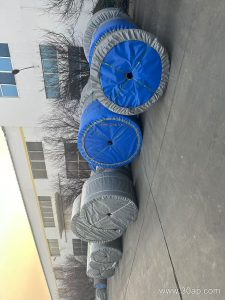
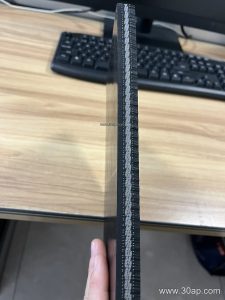
The belt itself matters too. A heavy-duty mining conveyor belt, a steel cord conveyor belt or a thick multi-ply fabric core conveyor belt behaves differently from a light EP conveyor belt. Stiffer belts need more careful tracker positioning and may respond slowly; flexible belts can over-react. Chevron conveyor belt and corrugated sidewall conveyor belt profiles can interfere with edge-sensing rollers, so confirm the guide roller clears the profile.
Selection Points a Buyer Should Check
There is no universal size chart. Belt width alone does not determine roller diameter, shaft size or the number of devices needed. Collect the following before ordering:
- Belt width and belt type, for example EP conveyor belt or steel cord conveyor belt
- Belt speed and running direction, including reversible operation
- Mounting position: carrying side or return side, distance from head pulley
- Frame dimensions and available bolt holes
- Belt edge condition and any profiles such as chevron or sidewall
- Site conditions: dust, water, temperature, corrosion
For reference only, alignment devices are often discussed alongside belts in the 600 mm to 2000 mm range, and frame hardware may be sized to match the conveyor bracket already in place. These are examples, not a compatibility table. A 1200 mm wide conveyor belt does not automatically dictate one particular roller diameter or shaft size.
Installation and Maintenance Notes
Always stop and lock out the conveyor before installing or adjusting a head-end belt tracker. Confirm the head pulley and tail pulley are square to the frame and that the belt is spliced straight. Mount the tracker per the supplier drawing, then observe the belt from a safe distance during a slow, empty run. Adjust in small steps and recheck with a loaded run, because empty and loaded tracking can differ.
Routine checks include roller rotation, bearing play, frame looseness and material buildup. Replace worn guide rollers before they score the belt edge. If the belt still drifts after a correctly installed tracker, look for off-center loading, a skewed idler roller, a crowned or damaged pulley, or insufficient take-up travel.
For belt alignment inquiries, send the belt width, belt construction, conveyor drawing and a description of the drift pattern so the right head-end tracker can be specified.