What a Heavy-Load Idler Does on a Conveyor
A heavy-load idler is the rotating support that carries a fully loaded conveyor belt between the tail and head of a conveyor. In a quarry, a limestone mine, or a crushing and screening line, the belt may be moving coarse rock at high tonnage, and every idler under that belt has to absorb steady weight plus impact and vibration. The heavy-load idler is built for that duty rather than for light package handling. It is a distinct item from the drive pulley, tail pulley, and bend pulley; those pulleys transmit power and change belt direction, while the idler only supports the belt and the material on it.
Where the load is abrasive and the belt is a heavy-duty mining conveyor belt or an abrasion resistant conveyor belt, idler life often decides how long a conveyor run can stay in service without stoppage.
How the Roller Is Built
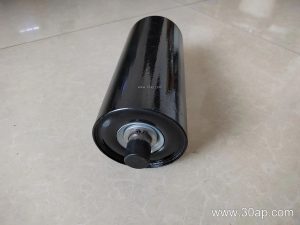
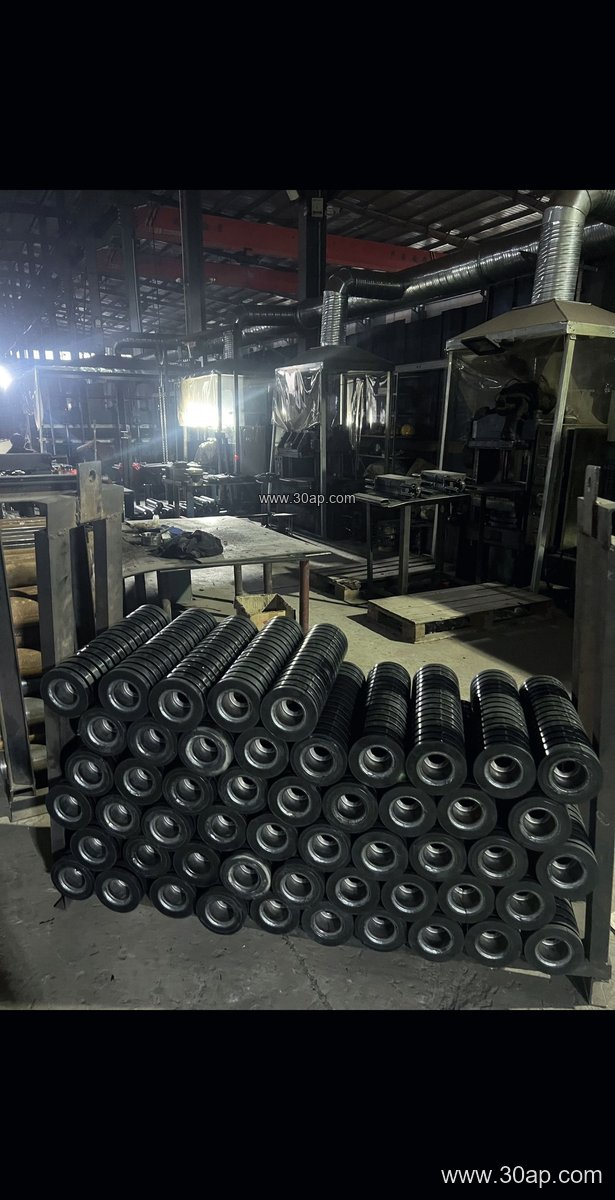
The core of a heavy-load idler is a steel tube shell fitted over a shaft, with bearings at each end and a sealing arrangement to keep out dust and water. Roller diameter, wall thickness, bearing size, and seal design all scale with the expected load. Shell surfaces vary: plain steel for general service, rubber rings for impact zones, nylon or ceramic where build-up and wear are concerns.
Typical reference values for roller diameter and belt width are shown below. They are common examples, not fixed matches, and the final selection is confirmed by the conveyor design.
| Roller diameter (mm) | Ø63, Ø76, Ø89, Ø102, Ø108, Ø127, Ø133, Ø159, Ø178, Ø194, Ø219 |
|---|---|
| Belt width (mm) | B400, B500, B650, B800, B1000, B1200, B1400, B1600, B1800, B2000, B2200, B2400 |
| Trough angle | 20°, 30°, 35°, 45° |
| Bearing reference | 6204, 6205, 6305, 6306, 6308, 6310 |
Roller length changes with belt width, trough angle, and the number of rollers in the set. For a three-roll troughing set, common side-roller lengths are roughly 200 mm for B500, 250 mm for B650, 315 mm for B800, 380 mm for B1000, 465 mm for B1200, 530 mm for B1400, 600 mm for B1600, 670 mm for B1800, and 750 mm for B2000. Center rollers and side rollers may differ, so these figures are guides only.
Troughing, Return, and Impact Positions
On the carrying side, a heavy-load idler usually works in a three-roll troughing set, sometimes two-roll, with a trough angle that keeps bulk material centered. A 35° set is common on aggregate and ore belts; a 45° set suits wider belts where material must be held firmly. Transition idlers near the pulleys ease the belt from flat to troughed shape and reduce edge stress.
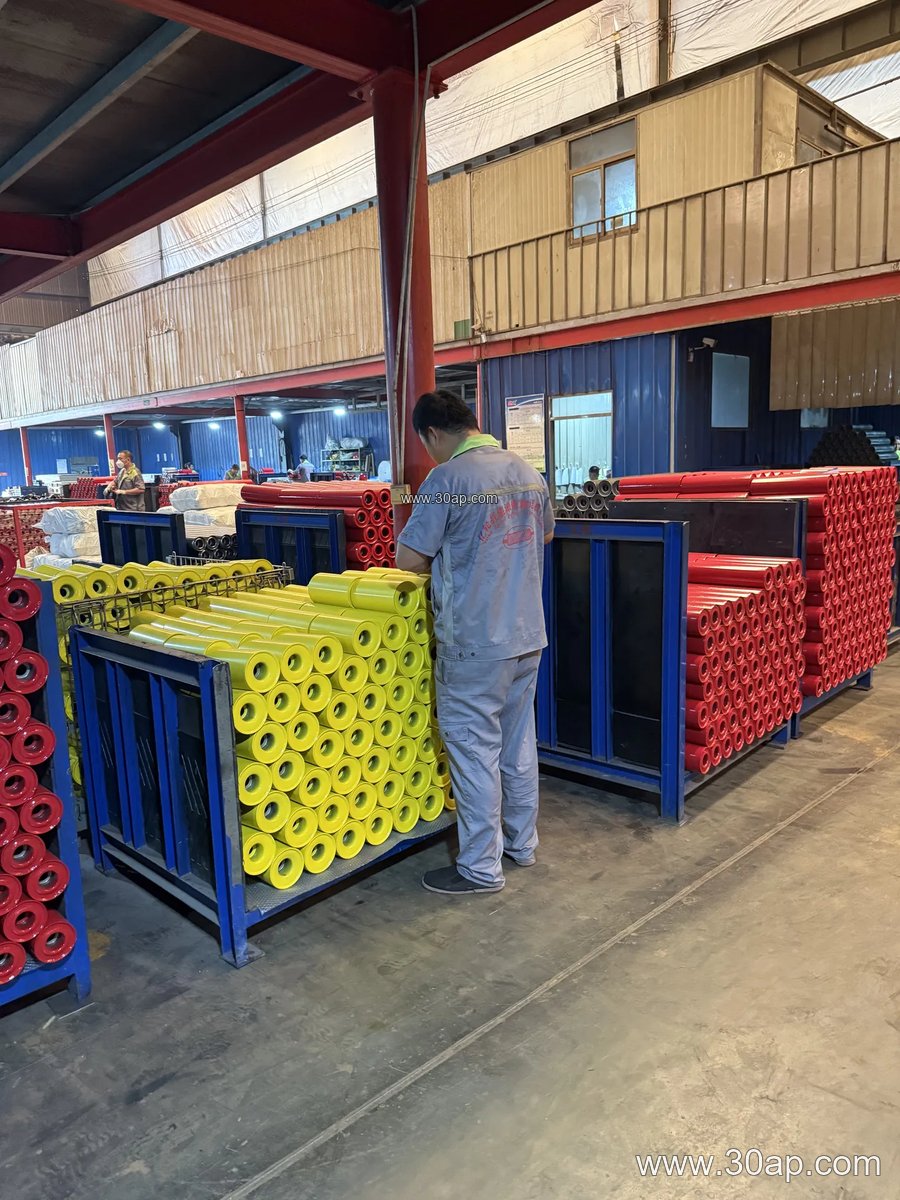
On the return side, flat return idlers or V-return idlers support the empty belt. At transfer points, impact idlers with rubber rings absorb the drop of rock from a crusher or chute. Self-aligning idlers help correct belt drift on long runs. Each of these is a variant of the heavy-load idler family, chosen for its position rather than as a substitute for the main carrying roller.
Where These Idlers Are Used
Heavy-load idlers appear wherever a belt moves dense bulk material. In an iron ore or copper ore operation, they support ore conveyor belts on long overland runs. In a coal washing plant or power plant coal yard, they carry coal on flame retardant conveyor belts and fire resistant conveyor belts. Cement plants use them under clinker and raw meal, where heat resistant conveyor belts and abrasion resistant conveyor belts are common. Ports and ship loading terminals rely on them under wide belts, and concrete mixing plants use them on short, heavily loaded runs.
The belt itself matters too. An EP conveyor belt, an NN conveyor belt, or a steel cord conveyor belt each has a different stiffness, and the idler spacing and trough angle should suit the belt rather than the other way around. A pipe conveyor belt or a corrugated sidewall conveyor belt has its own support needs, and a skirted conveyor belt or chevron conveyor belt can affect how material sits on the trough.
What Buyers Should Check Before Ordering
- Confirm the belt width and the trough angle, then match the roller length and set form to the conveyor drawing.
- State the material, lump size, and tonnage so the roller diameter and bearing class can be checked against the load.
- Choose the shell surface for the position: rubber rings at impact points, ceramic or nylon where wear and build-up are severe.
- Review the seal and bearing arrangement for dusty or wet conditions, especially in underground mining or wash plants.
- Ask for the idler spacing plan across the whole run, not just a single roller, since spacing affects belt sag and pulley load.
A heavy-load idler is a small part of the conveyor, but it sits under the belt all day. Getting the diameter, length, bearing, and surface right for the actual duty is what keeps a quarry, a coal mine, or a cement line running without repeated stoppages. For matching conveyor belt, idler roller, conveyor pulley, and conveyor bracket details, work from the conveyor layout and the site conditions rather than from a single catalog number.