What a Galvanized Conveyor Bracket Does on a Belt Line
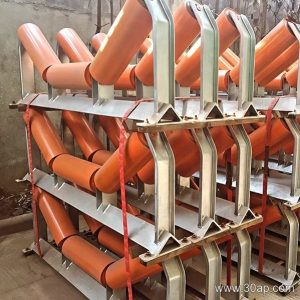
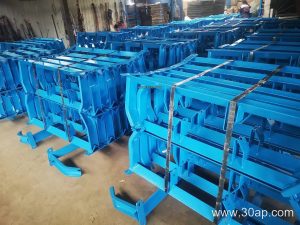
A galvanized conveyor bracket is the steel frame that holds the idlers in position under and along a conveyor belt. It is not a wear part in the same sense as the roller itself, yet it decides how evenly the belt is supported, how freely the idlers turn and how quickly a maintenance team can replace a failed roller. In a quarry or a coal handling plant, a bracket that sags or rusts away quietly shortens roller life and disturbs belt tracking. Hot-dip galvanizing gives the frame a zinc coating that resists moisture, dust and the mildly corrosive washdown common in aggregate and coal circuits.
Buyers often describe the same item as a galvanized conveyor support bracket or a galvanized idler frame. These are accurate equivalents for the same product family, and the coating is the defining feature rather than the shape alone.
How the Frame Is Built
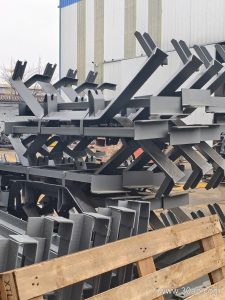
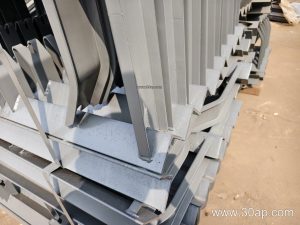
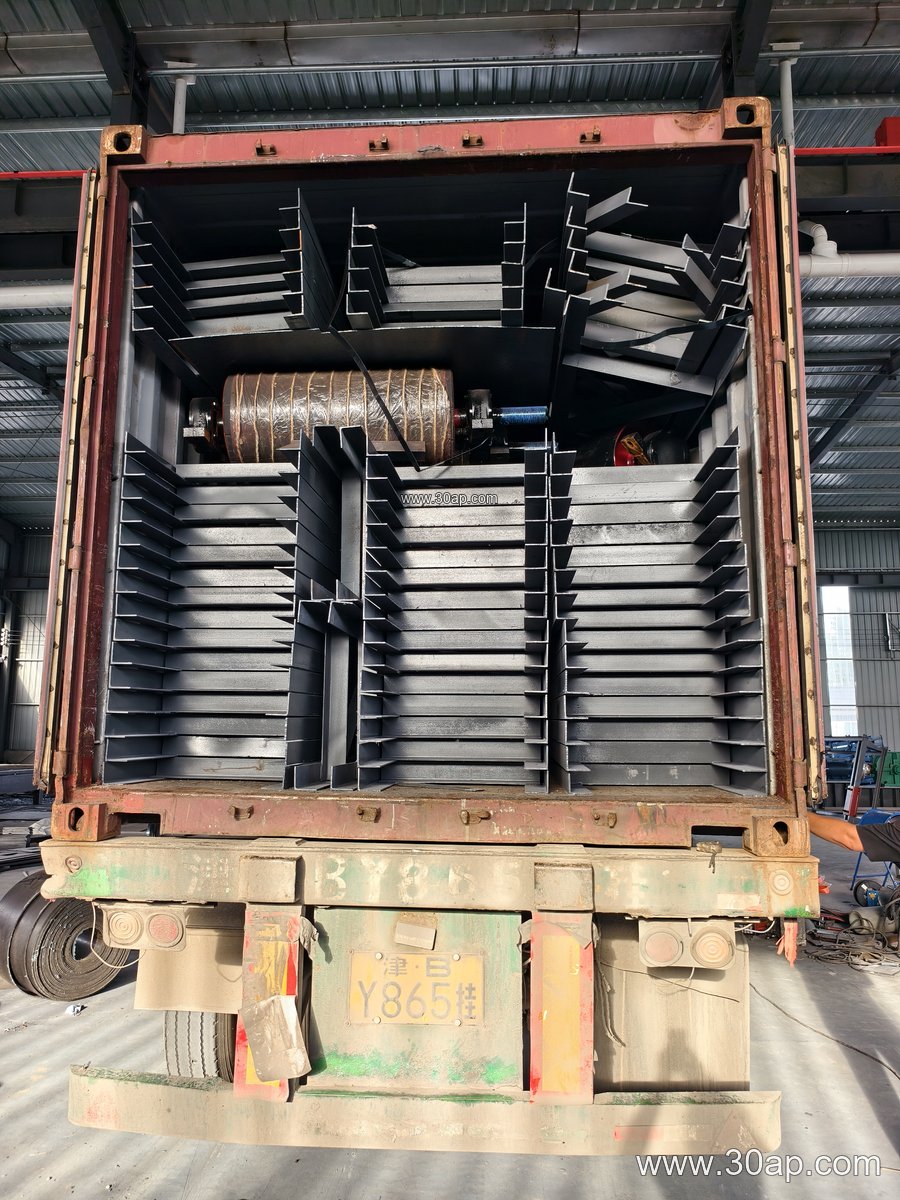
Most brackets are fabricated from angle steel, channel steel or folded steel plate, cut and drilled to match the idler spacing required by the belt width and trough angle. After fabrication the frame is cleaned and galvanized, so the zinc reaches cut edges and bolt holes as well as the flat surfaces. The result is a stiff, weather-resistant base for troughing idlers, return idlers and transition sets.
Because the bracket is a structural interface, its mounting hole spacing and beam length are usually determined by design rather than fixed by a catalogue. A frame for a B800 belt at 35 degrees will not have the same dimensions as one for a B1400 line at 45 degrees, even when both carry the same roller diameter. This is why drawings and belt width should be confirmed before ordering.
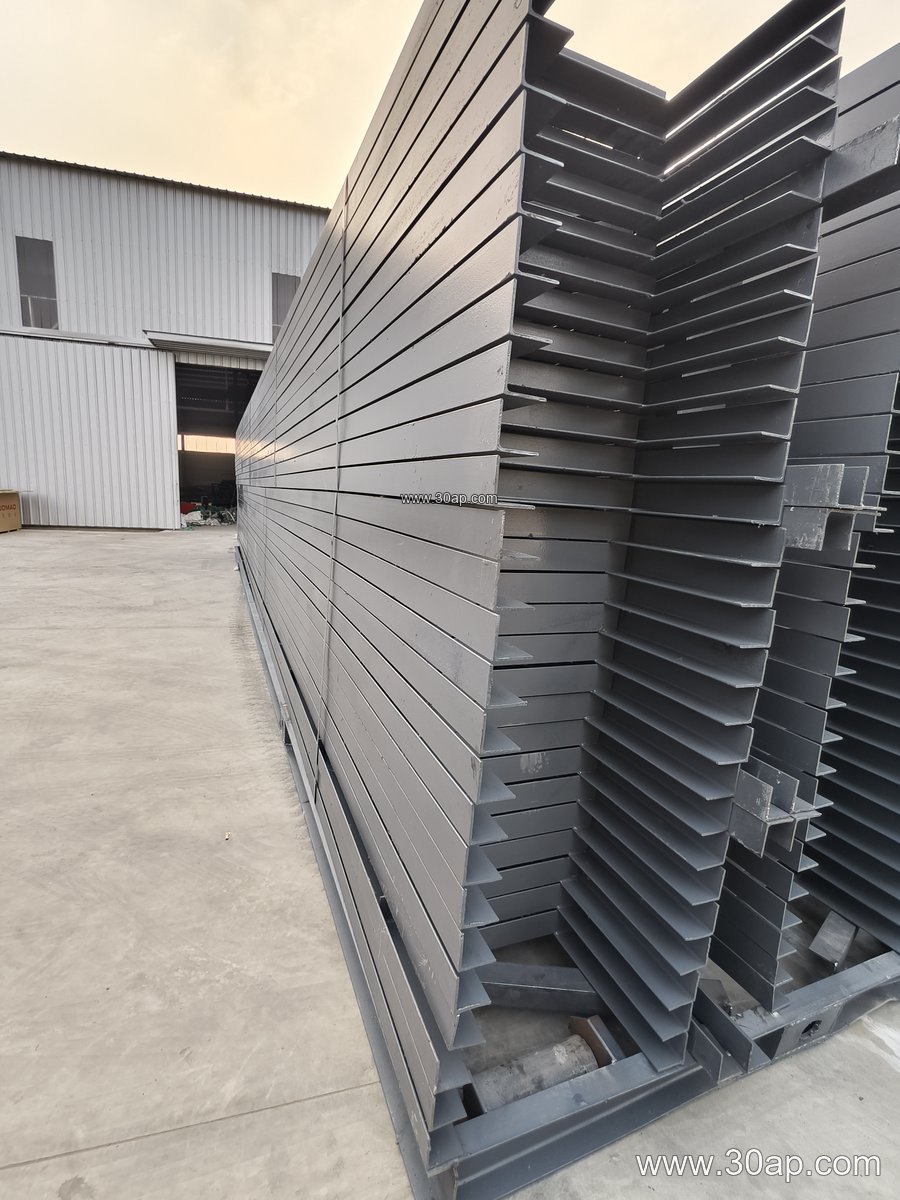
Common Frame Forms and Where They Sit
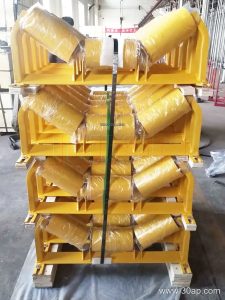
- Troughing bracket – carries the three-roller set on the carrying side; typical trough angles are 20, 30, 35 and 45 degrees.
- Transition bracket – eases the belt from a flat pulley profile into the full trough, reducing edge stress near the head and tail.
- Return bracket and V-return bracket – support the belt on its clean side; the V form helps centre the belt on long runs.
- Impact bracket – positioned under the loading point, usually with cushion rollers, to absorb the drop of ore or crushed rock.
- Self-aligning bracket – mounts training idlers that correct slight belt drift.
- Adjustable bracket – allows the trough angle to be set within a range on site.
These forms are not interchangeable. A return bracket cannot substitute for a troughing bracket, and a transition frame is not a replacement for a standard carrying frame. Each has a defined position along the conveyor.
Typical Sizes and Reference Data
The table below shows common combinations used when specifying a galvanized conveyor bracket. The values are reference points for discussion, not fixed pairings; a B1000 belt may run at 30 or 35 degrees, and roller diameter follows load and belt speed rather than width alone.
| Belt width | Trough angle | Common roller diameter | Typical duty |
|---|---|---|---|
| B500 | 20–30 degrees | Ø89 | Light aggregate, sand |
| B650 | 30 degrees | Ø89–Ø108 | Sand and gravel lines |
| B800 | 35 degrees | Ø108 | Quarry and cement feed |
| B1000 | 35–45 degrees | Ø108–Ø133 | Coal handling, crusher discharge |
| B1200 | 35–45 degrees | Ø133 | Iron ore, power plant coal |
| B1400 | 35–45 degrees | Ø133–Ø159 | Heavy bulk material |
| B1600 | 35–45 degrees | Ø159 | Port and steel plant conveyors |
| B1800–B2000 | 35–45 degrees | Ø159–Ø194 | High-capacity ore and coal |
Frames may also be produced for B2200 lines where the conveyor design calls for it. Forward-leaning idler sets, often around 1.5 to 2 degrees, are sometimes used with these brackets to improve belt training.
Where Galvanized Frames Fit Best
Two settings show the value of the zinc coating clearly. In a limestone quarry, dust and rain alternate through the year, and a painted frame at the transfer point can chip and rust within a season. In a coal preparation plant, washdown water and fine coal slurry attack the frame edges; galvanized steel keeps the structure serviceable for far longer.
The bracket also has to work with the belt it supports. A heavy-duty mining conveyor belt carrying sharp rock needs firm, evenly spaced support, while an abrasion resistant conveyor belt on a crusher discharge line benefits from impact frames that protect both belt and rollers. On curved or inclined routes, a pipe conveyor belt or a corrugated sidewall conveyor belt may call for custom frame geometry, so the bracket should be specified together with the belt and idler layout rather than in isolation.
What to Confirm Before Ordering
- Belt width and required trough angle, plus whether adjustment on site is needed.
- Roller diameter and idler fixing centres, since these set the hole positions.
- Coating thickness and finish expectations for the galvanizing.
- Loading conditions at impact points, which may call for a cushioned frame.
- Mounting interface with the conveyor stringer or structure.
A well-chosen galvanized conveyor bracket is a small part of the capital cost but a large part of the conveyor’s day-to-day reliability. Matching frame, roller and belt as one system is the practical way to keep a quarry, coal plant or cement line running.