What a Loading Point Impact Idler Does
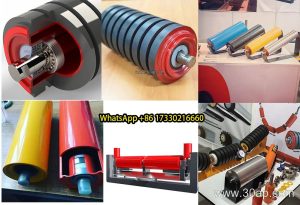
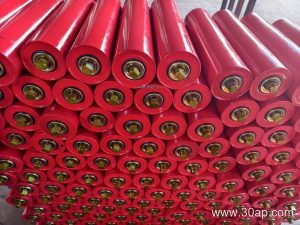
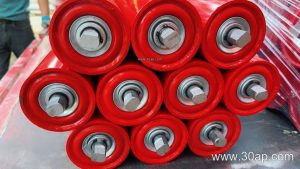
A loading point impact idler is a heavy-duty idler roller installed directly beneath the chute or transfer point where bulk material lands on the conveyor belt. Its job is simple but demanding: absorb the kinetic energy of falling rock, ore, clinker or aggregate before that energy reaches the belt carcass. Without cushioning at this spot, a mining conveyor belt or quarry conveyor belt can suffer cover gouging, fabric breaker damage and premature splice failure.
The product is also called an impact roller or buffer idler. It is not a substitute for a troughing idler elsewhere on the line, nor for a return roller, and it should never be confused with a drive pulley, tail pulley or bend pulley. Those components transmit and redirect belt tension; the impact idler only supports and protects the belt at the load zone.
Construction and Typical Materials
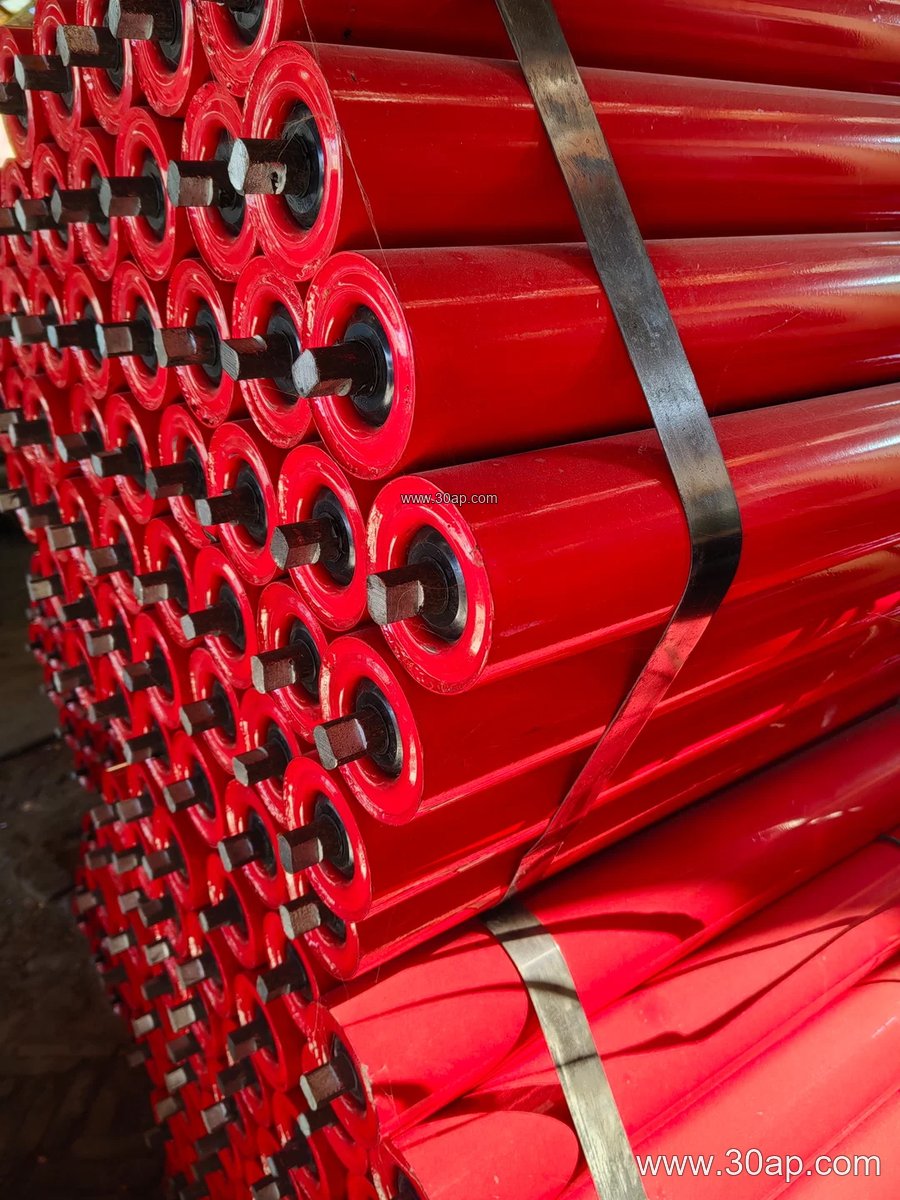
Most designs use a steel tube body fitted with a thick rubber ring surface, sometimes called a rubber disc impact roller. The rubber rings are spaced along the shell so fines fall through the gaps instead of packing. Some plants prefer nylon or ceramic faced rollers where sticking is a problem, but rubber remains the common choice for high abrasion resistant conveyor belt systems.
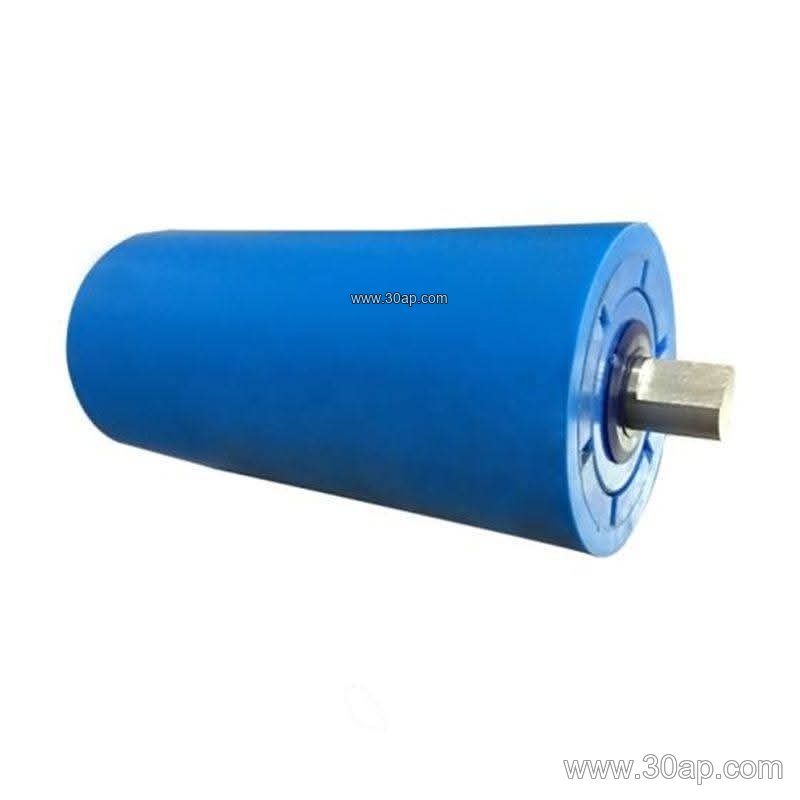
Inside, the shaft runs through sealed bearings. Bearing selection follows load and speed rather than belt width alone. Common bearing numbers include 6204, 6205, 6305, 6306, 6308 and 6310, and more than one bearing size can suit the same roller diameter. Roller diameters commonly seen at load zones are Ø89, Ø102, Ø108, Ø127, Ø133, Ø159 and Ø178 mm, while larger diameters may appear on very heavy transfer points.
| Parameter | Typical Range | Notes |
|---|---|---|
| Roller diameter | Ø89 to Ø178 mm | Selected by drop height and tonnage |
| Belt width | B500 to B2400 | Roller length follows belt width and trough form |
| Trough angle | 20°, 30°, 35°, 45° | Impact sets often mirror the adjacent troughing angle |
| Roller surface | Rubber rings, nylon, ceramic, steel | Rubber most common at load points |
| Bearing | 6204 to 6310 | Matched to load and speed, not width alone |
| Roll length example | 200 mm at B500, 380 mm at B1000, 600 mm at B1600 | Common examples only; side and centre rolls may differ |
Where It Fits on the Conveyor
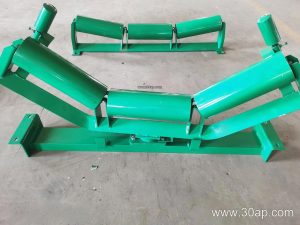
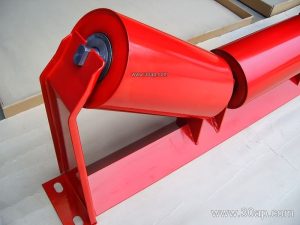
The idler sits in a frame or conveyor bracket set just downstream of the skirt rubber, usually in a three-roll trough arrangement that matches the carrying idlers. In a coal mining conveyor belt transfer house, a cement plant clinker line or a power plant coal handling system, the impact bed may run for several metres so the belt is fully supported until the material settles.
Drop height, lump size and throughput decide how many impact idlers are needed. A crusher conveyor belt receiving run-of-mine rock needs a longer cushion zone than an aggregate conveyor belt fed by a small chute. Where the belt also carries heat, a heat resistant conveyor belt may require a different rubber compound on the roller rings, and in dusty or gassy tunnels a flame retardant conveyor belt is normally paired with anti-static components.
Selection and Maintenance Points for Buyers
- Confirm belt width, trough angle and the existing roller diameter so the impact set matches the line.
- State the material, lump size and fall height; these drive rubber thickness and roller spacing.
- Check shaft and bearing arrangement against the bracket design, not against belt width alone.
- Ask whether the roller rings are replaceable, which extends service life in abrasive service.
- Inspect for seized bearings, flattened rubber and shell wear at every shutdown.
A worn impact idler transfers shock to the belt, and a damaged belt costs far more than the roller. Matching the cushion zone to the duty, keeping seals intact and replacing worn rings early will protect the belt carcass and keep the transfer point running. For related components such as the conveyor pulley, idler roller frames and belt specification, consult the full conveyor datasheet before ordering. More details on belt and roller matching are available at https://www.jsconveyorbelt.com/impact-idler-roller and https://www.jsconveyorbelt.com/conveyor-belt.