What a Sand and Gravel Production Line Idler Does
In a sand and gravel plant, material moves from the primary crusher through screening and washing to stockpiles. The sand and gravel production line idler is the rotating component that supports the conveyor belt along this route. It carries the weight of the belt and the load, keeps the belt tracking, and reduces friction so the drive system can run efficiently. Unlike a drive pulley, tail pulley, or bend pulley, which transmit power or change belt direction, an idler roller only supports the belt. This distinction matters when ordering spares, because each component has a different function and cannot be swapped for another.
Depending on the section of the conveyor, the idler may be a carrying idler on the top run, a return idler underneath, or a special type such as an impact idler at the loading point. The right choice depends on belt width, material size, tonnage, and the environment.
How the Idler Is Built
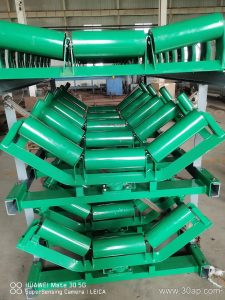
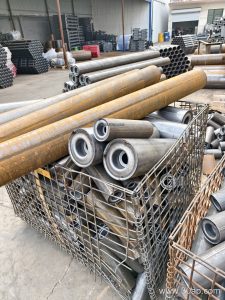
A typical sand and gravel production line idler consists of a steel tube shell, a shaft, bearing housings, bearings, and a sealing system. The shell is often made from steel pipe, but rubber discs or ceramic sleeves may be added for impact absorption or wear resistance. Common roller diameters include Ø89, Ø108, Ø127, Ø133, Ø159, and Ø178 mm, with larger sizes used for higher loads. Bearing sizes such as 6204, 6205, 6305, 6306, 6308, and 6310 are matched to the roller diameter and load rating; there is no fixed rule that one bearing fits only one roller size.
Sealing is critical in dusty aggregate operations. Labyrinth seals and contact seals help keep fine sand and stone dust out of the bearings. The roller surface may be plain steel, nylon, rubber, or ceramic, depending on whether the goal is general support, impact resistance, or extended wear life.
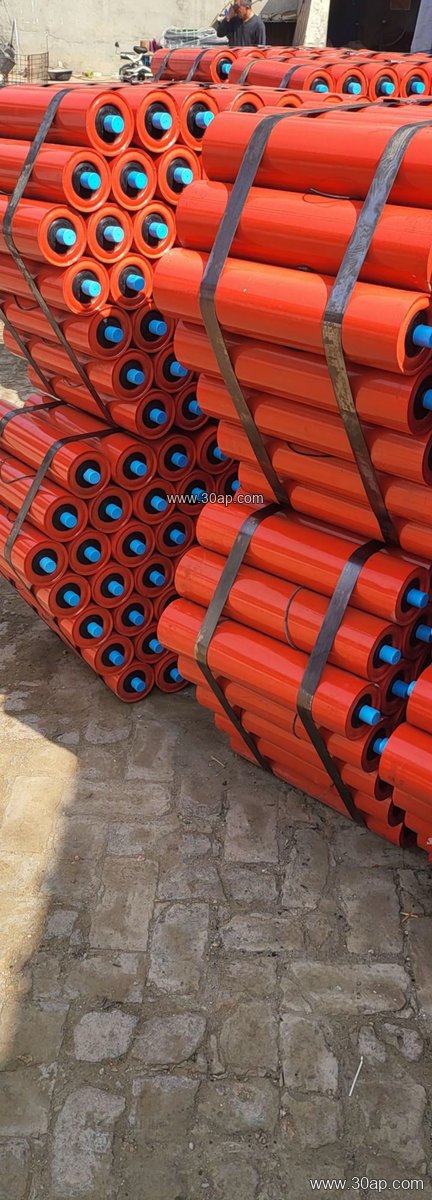
Common Idler Types in Aggregate Handling
For a sand and gravel production line, the following idler types are frequently used:
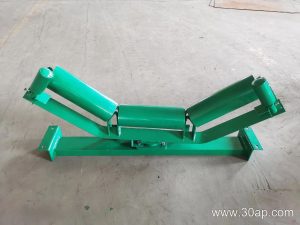
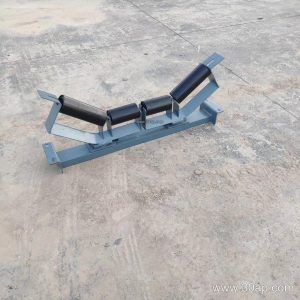
- Carrying idlers – troughing sets with two or three rolls, usually set at 20°, 30°, 35°, or 45° trough angle to shape the belt and contain the load.
- Return idlers – flat or V-shaped rollers that support the empty belt on the return side.
- Impact idlers – used under crusher discharge or transfer points where large lumps fall onto the belt. Rubber-disc impact rollers absorb shock and protect the belt.
- Training idlers – friction or tapered self-aligning rollers that correct belt misalignment on long conveyors.
- Transition idlers – placed near pulleys to gradually change the belt from flat to troughed.
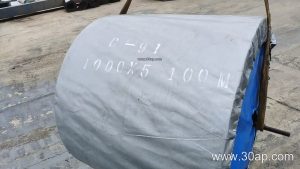
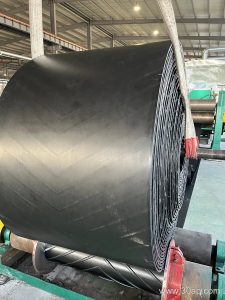
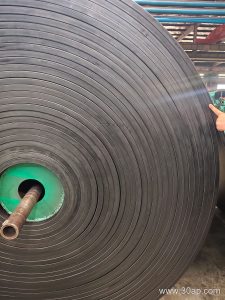
The belt itself may be a rubber conveyor belt, an EP conveyor belt, an NN conveyor belt, or a steel cord conveyor belt, and the idler selection should consider belt stiffness and load. In gravel plants, abrasion resistant conveyor belts and impact resistant belts are common, and the idler spacing and roller diameter should match the belt width and material lump size.
Where the Idler Fits in the Plant
Sand and gravel production line idlers appear throughout the process: under the primary jaw or impact crusher discharge, along the screen feed conveyor, on the oversize return belt, and on the stockpile conveyor. In a quarry or aggregate yard, dust, water, and temperature swings are constant, so sealed bearings and corrosion protection help extend service life. The same idler design principles apply in cement plants, power plant coal handling, and port bulk terminals, but the loading conditions and belt speed may differ.
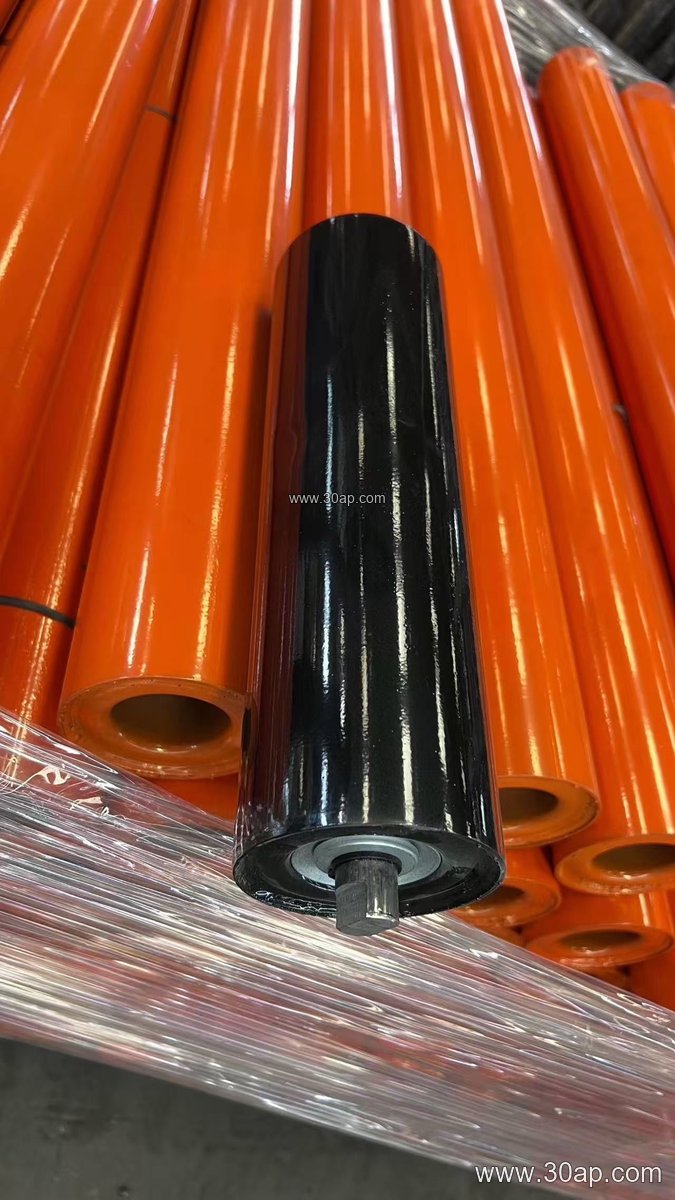
Matching Roller Diameter, Belt Width, and Roll Length
Roller length changes with belt width, trough angle, and idler arrangement. The table below gives common examples for three-roll troughing sets; side rollers and center rollers can differ, so these are not fixed combinations.
| Belt width | Common roll length for three-roll troughing (example) | Typical roller diameter range |
|---|---|---|
| B500 | 200 mm | Ø63–Ø89 mm |
| B650 | 250 mm | Ø76–Ø108 mm |
| B800 | 315 mm | Ø89–Ø127 mm |
| B1000 | 380 mm | Ø108–Ø133 mm |
| B1200 | 465 mm | Ø108–Ø159 mm |
| B1400 | 530 mm | Ø127–Ø178 mm |
| B1600 | 600 mm | Ø133–Ø178 mm |
| B1800 | 670 mm | Ø159–Ø194 mm |
| B2000 | 750 mm | Ø159–Ø219 mm |
For wider belts such as B2200 and B2400, heavier rollers and larger bearings are usually required. The belt width alone does not determine shaft diameter; load, speed, and idler spacing must be calculated by the conveyor designer.
Buyer Checklist for Sand and Gravel Idlers
Before ordering, confirm the conveyor belt width, the idler type (carrying, return, impact, training), roller diameter, roll length, trough angle, bearing size, and seal type. Check whether the idler will be used in a wet washing section or a dry crushing section, because moisture affects bearing protection. Ask for the shaft material and surface finish, and verify that the idler frame or conveyor bracket matches the existing conveyor structure. Spare parts should be interchangeable with the original installation. Keep a small stock of the most heavily loaded idlers, especially at transfer points.
Regular inspection of idler rotation, noise, and belt tracking helps prevent belt damage. A seized roller can wear through a belt quickly, so replacing worn idlers on schedule is cheaper than replacing a full rubber conveyor belt or an EP conveyor belt.