What a Conveyor Support Bracket Does
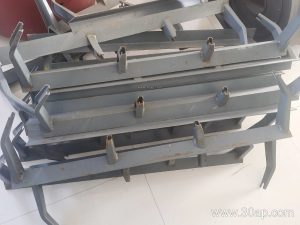
A conveyor support bracket is the steel frame component that holds idler rollers at the correct position and angle beneath the belt. It is not a single part but a family of structures: troughing brackets on the carrying side, return brackets underneath, transition frames near pulleys, and self-aligning or impact brackets at specific points along the line. In a quarry, a cement plant, or a power plant coal yard, these brackets carry the weight of the belt and the material while keeping the roller axes square to the belt path.
Because the bracket sets the geometry, a poorly chosen or worn conveyor support bracket shows up quickly as belt misalignment, edge wear, and spillage. The belt and the idler roller do most of the moving work, but the bracket decides whether that work happens smoothly.
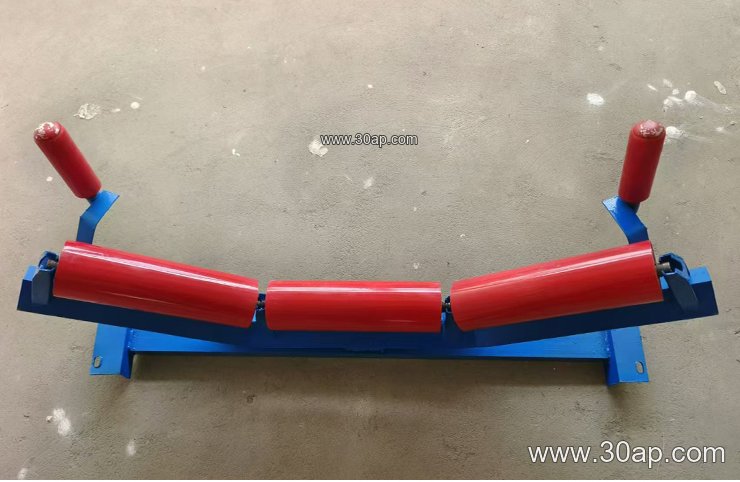
How the Bracket Is Built
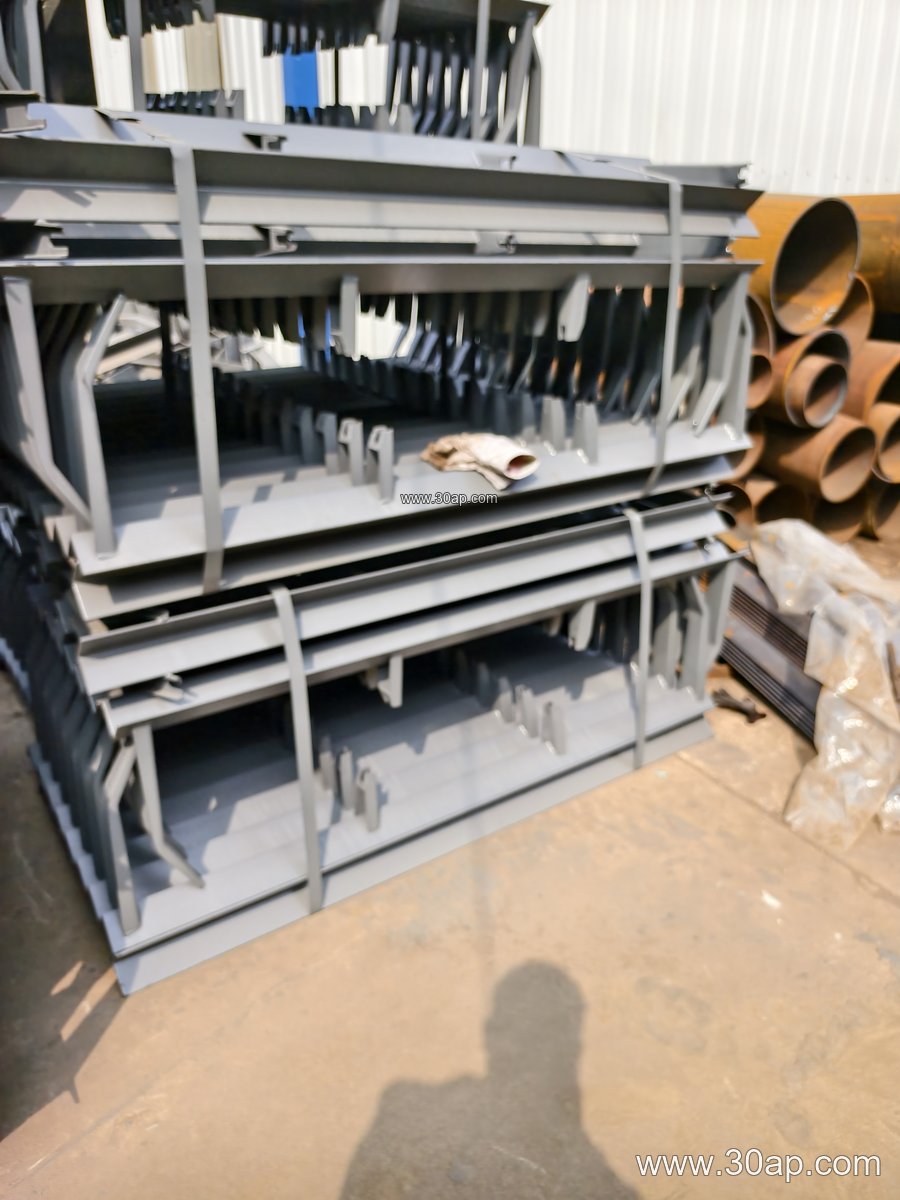
Most brackets are fabricated from angle steel, channel steel, or folded steel plate, then drilled or punched for mounting holes. A troughing bracket usually has two or three roller seats set at a fixed trough angle, while an adjustable version allows the angle to be changed on site. Return brackets are flatter, often forming a V shape to help center the belt on its way back.
Key dimensions are tied to belt width and roller diameter rather than being universal. Common belt widths run from B500 up to B2200, trough angles are usually 20, 30, 35, or 45 degrees, and roller diameters such as Ø89, Ø108, Ø133, Ø159, and Ø194 cover most duties. The mounting hole spacing and crossbeam length change with belt width and trough angle, so these should always be confirmed against the actual conveyor drawing.
| Parameter | Typical Range |
|---|---|
| Belt width | B500 to B2200 |
| Trough angle | 20°, 30°, 35°, 45° |
| Roller diameter | Ø89, Ø108, Ø133, Ø159, Ø194 |
| Material | Angle steel, channel steel, folded plate |
| Mounting | Bolted to stringer or frame |
Where Brackets Fit on the Line
Troughing brackets sit on the carrying side and are the most numerous. Transition brackets appear where the belt changes from flat to troughed near a conveyor pulley. Return brackets and V-return brackets support the belt on its lower run. Impact brackets with resilient rollers are placed under loading points in a crusher circuit or at a transfer chute. Self-aligning brackets are used on long runs where the belt tends to wander.
In a sand and gravel line, a B800 conveyor with 35 degree troughing and Ø108 rollers is a familiar combination, while a heavy iron ore or coal mining conveyor may use B1400 or B1600 frames with Ø133 or Ø159 rollers. A cement plant clinker line and a port ship loading system each have their own loading patterns, so the bracket type should follow the duty rather than a catalogue default.
Matching the Bracket to the Belt and Roller
The bracket must suit the belt it carries. A heavy-duty mining conveyor belt or a steel cord conveyor belt with high tension needs a stiffer frame and carefully aligned roller seats. A chevron conveyor belt or a corrugated sidewall conveyor belt may require extra clearance around the bracket, while a pipe conveyor belt uses a completely different support arrangement. When a skirted conveyor belt is used at a transfer point, the bracket layout has to leave room for the skirt rubber and the sealing system.
Roller diameter should be selected from load, speed, and belt width together. A wider belt does not automatically mean one fixed roller size, and no single trough angle fits every installation. The bracket, roller, and belt should be treated as one assembly, checked against the conveyor design rather than assembled from isolated numbers.
Buyer Checklist
- Confirm belt width, trough angle, and roller diameter from the conveyor drawing.
- Check mounting hole spacing and crossbeam length, since these vary with width and angle.
- Specify fixed or adjustable brackets where belt training or future changes matter.
- Match material and finish to the environment, especially in washdown or corrosive areas.
- Ask for the bracket drawing with the idler roller seat dimensions before ordering.
For a reliable installation, the conveyor support bracket should be ordered with the roller positions and belt path already defined. More details on matching frames with conveyor belt and conveyor pulley layouts are available at our site, and our team can review bracket drawings against your conveyor layout.