What a Conveyor Take-Up Pulley Does
A conveyor take-up pulley is the rotating component that maintains the correct tension in a conveyor belt loop. It is part of the take-up system, usually located near the tail end or in a separate tensioning station, and it moves along a guided track to compensate for belt stretch and load changes. Without proper tension from this pulley, a conveyor belt can slip on the drive pulley, wander off the idler roller, or fail to carry material efficiently. In quarry and aggregate lines, a well-adjusted take-up pulley keeps the belt tracking stable even when feed rates vary.
This pulley is not the same as a drive pulley, tail pulley, or bend pulley. The drive pulley transmits power, the tail pulley redirects the belt at the loading point, and a bend pulley changes direction. The take-up pulley has the specific job of applying and holding tension, and it is often paired with a gravity take-up tower, a screw take-up, or a hydraulic tensioning device. It can be a plain pulley or a rubber-coated one, depending on the belt and the environment.
Construction and Common Configurations
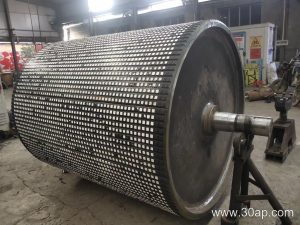
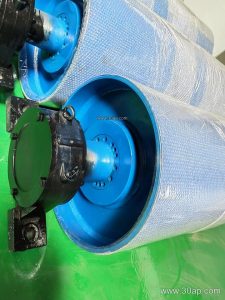
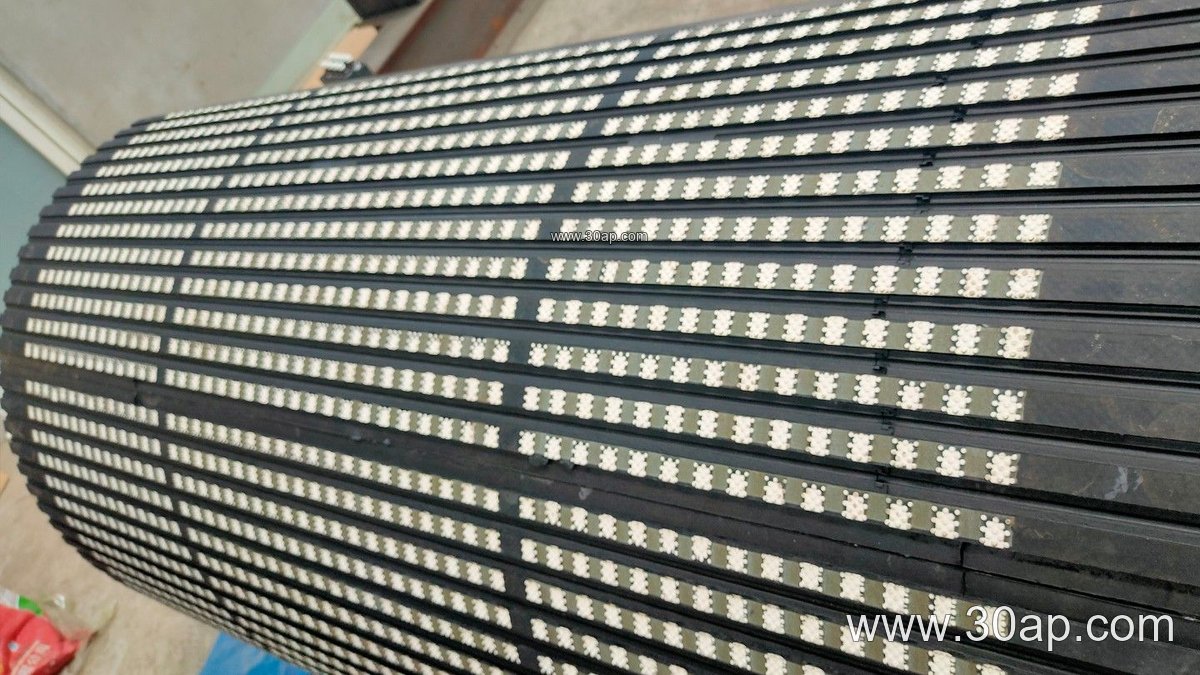
Most take-up pulleys are built with a steel drum, welded end discs, and a shaft that runs through bearing housings. The drum surface may be plain, or it may carry lagging to improve grip and protect the belt. Common surface options include plain, cold-bonded rubber, hot-vulcanized rubber, diamond lagging, and ceramic lagging. Lagging thickness is often 8, 10, 12, 15, or 20 mm, selected according to belt tension and abrasion conditions. The pulley face width is usually slightly wider than the belt width. For example, a B650 belt often uses a pulley face around 750 mm, while a B1000 belt may use about 1150 mm. These are typical references, not fixed rules.
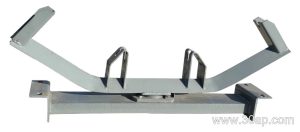
Diameter and shaft size are determined by the belt tension, torque, and load. A B800 conveyor might use a Ø500 take-up pulley in one design and a Ø630 in another, depending on the take-up travel and the belt construction. Shaft diameters such as Ø80, Ø100, or Ø120 are common, but the final choice depends on the calculated torque and bearing selection. A conveyor bracket or take-up frame must be strong enough to carry the pulley and the tension load without deflection.
Where It Fits in Bulk Handling
In a coal mining conveyor, the take-up pulley is often part of a gravity take-up system that keeps a flame retardant conveyor belt at the right tension as the load changes. In a cement plant, a take-up pulley may be installed near the tail of a clinker conveyor, working with a heat resistant conveyor belt and a series of idler rollers. In a power plant coal yard, the take-up pulley helps maintain tension on a long overland belt that may be an EP conveyor belt or a steel cord conveyor belt. In a port ship loading system, the take-up pulley is usually located in a compact tensioning station to save space.
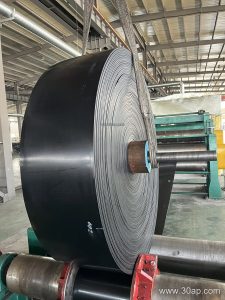
The take-up pulley also works with the conveyor belt in a direct way. If the belt is a multi-ply fabric core conveyor belt, it may stretch more than a steel cord belt, so the take-up travel must be sufficient. For a chevron conveyor belt or a corrugated sidewall conveyor belt, the take-up pulley should be sized to avoid interference with the cleats or sidewalls. In a pipe conveyor belt system, the take-up pulley is often part of a special tensioning arrangement that keeps the belt formed into a pipe shape.
Buyer Checklist for Take-Up Pulleys
Before ordering a conveyor take-up pulley, confirm the belt width, the required take-up travel, the belt type, and the environment. A belt width of 1200 mm may pair with a pulley face of about 1400 mm, but the diameter and shaft size should be calculated from the actual tension. Check whether the pulley needs lagging and what surface form suits the application. For a quarry conveyor belt or an aggregate conveyor belt, a diamond lagging or ceramic lagging may help with grip and wear. For a food grade conveyor belt, a plain or smooth rubber surface may be preferred.
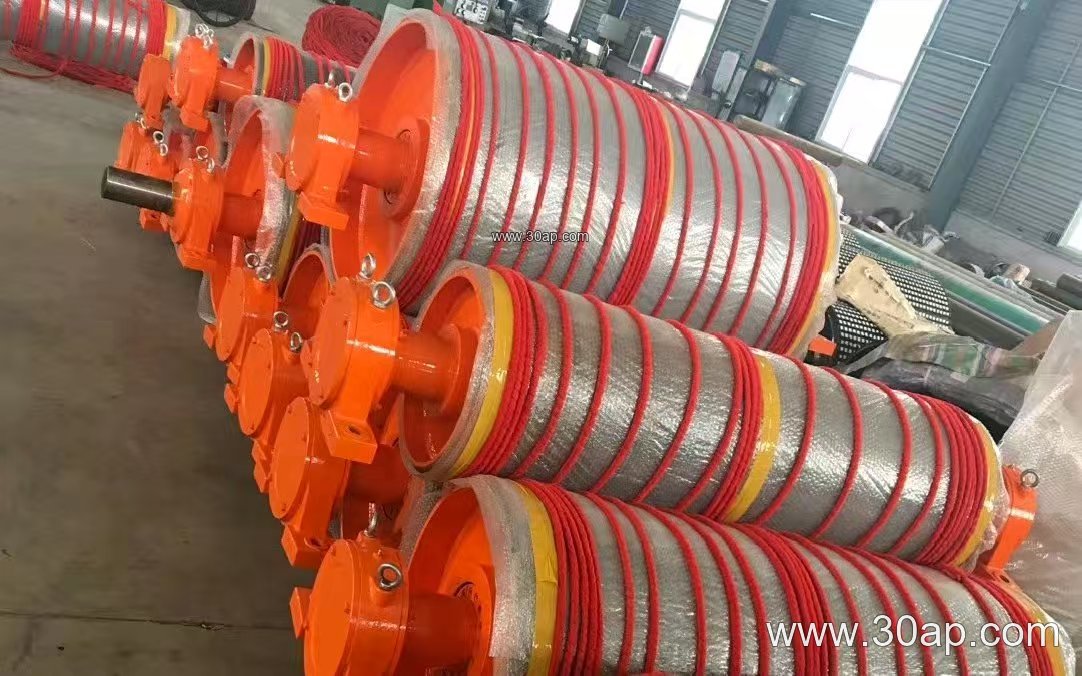
Also consider the bearing type, the mounting arrangement, and the accessibility for maintenance. A take-up pulley should be easy to inspect and lubricate. If the conveyor is in an underground mining conveyor or an underground coal mining conveyor, the pulley may need anti-static and flame retardant properties to match the belt. The take-up frame and conveyor bracket should be designed to handle the full tension without distortion. Finally, ask for the pulley drawing, the lagging specification, and the balancing grade so that the pulley runs smoothly at the intended belt speed.
Typical Reference Dimensions
The following table gives common reference values, not mandatory combinations. Always confirm with the conveyor design.
- Belt width B400: pulley face about 500 mm
- Belt width B650: pulley face about 750 mm
- Belt width B800: pulley face about 950 mm
- Belt width B1000: pulley face about 1150 mm
- Belt width B1200: pulley face about 1400 mm
- Belt width B1400: pulley face about 1600 mm
- Belt width B1600: pulley face about 1800 mm
- Belt width B1800: pulley face about 2000 mm
- Common diameters: Ø200, Ø250, Ø315, Ø400, Ø500, Ø630, Ø800, Ø1000
- Common shaft diameters: Ø50, Ø60, Ø70, Ø80, Ø90, Ø100, Ø120, Ø140, Ø160
For a heavy-duty mining conveyor belt or a high abrasion resistant conveyor belt, a larger diameter and thicker lagging may be beneficial. For a cold resistant conveyor belt in a cold climate, choose a lagging material that remains flexible. For an oil resistant conveyor belt, check that the lagging is compatible with the oil. These choices should be made with the pulley manufacturer and the conveyor designer.
Maintenance Points
Inspect the take-up pulley regularly for lagging wear, build-up of material, and bearing condition. Clean the pulley face and check that the belt tracks centrally. Verify that the take-up travel is not at its limit; if the belt has stretched beyond the available travel, the belt may need to be shortened or replaced. Lubricate the bearings according to the schedule, and check the shaft for wear at the bearing seats. In a dusty environment such as a lime kiln or a crushing plant, use sealed bearings and keep the take-up frame clean. A well-maintained take-up pulley supports the life of the conveyor belt and the idler roller set.