Where an 800mm Diameter Conveyor Pulley Fits
An 800mm diameter conveyor pulley is a large-diameter drum used at key transfer and drive points on bulk handling conveyors. In a cement plant clinker line or a copper ore crushing circuit, engineers often choose this diameter when the conveyor belt is wide, the tension is high, and the pulley must carry heavy radial loads without excessive bending of the shell. The same drum may appear as a head or discharge pulley at the transfer tower, a tension pulley on a take-up arrangement, or a snub pulley where wrap angle needs to be increased.
Diameter, face width, shaft size and surface covering are separate decisions. A Ø800 drum is not tied to one belt width, and no single shaft diameter is correct for every B800 or B1200 installation. The final geometry should follow the actual torque, belt tension and bearing load calculation for the conveyor.
Construction and Surface Options
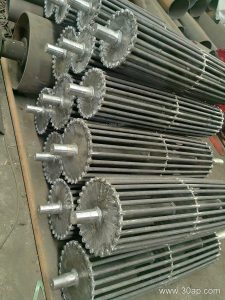
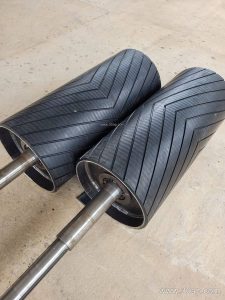
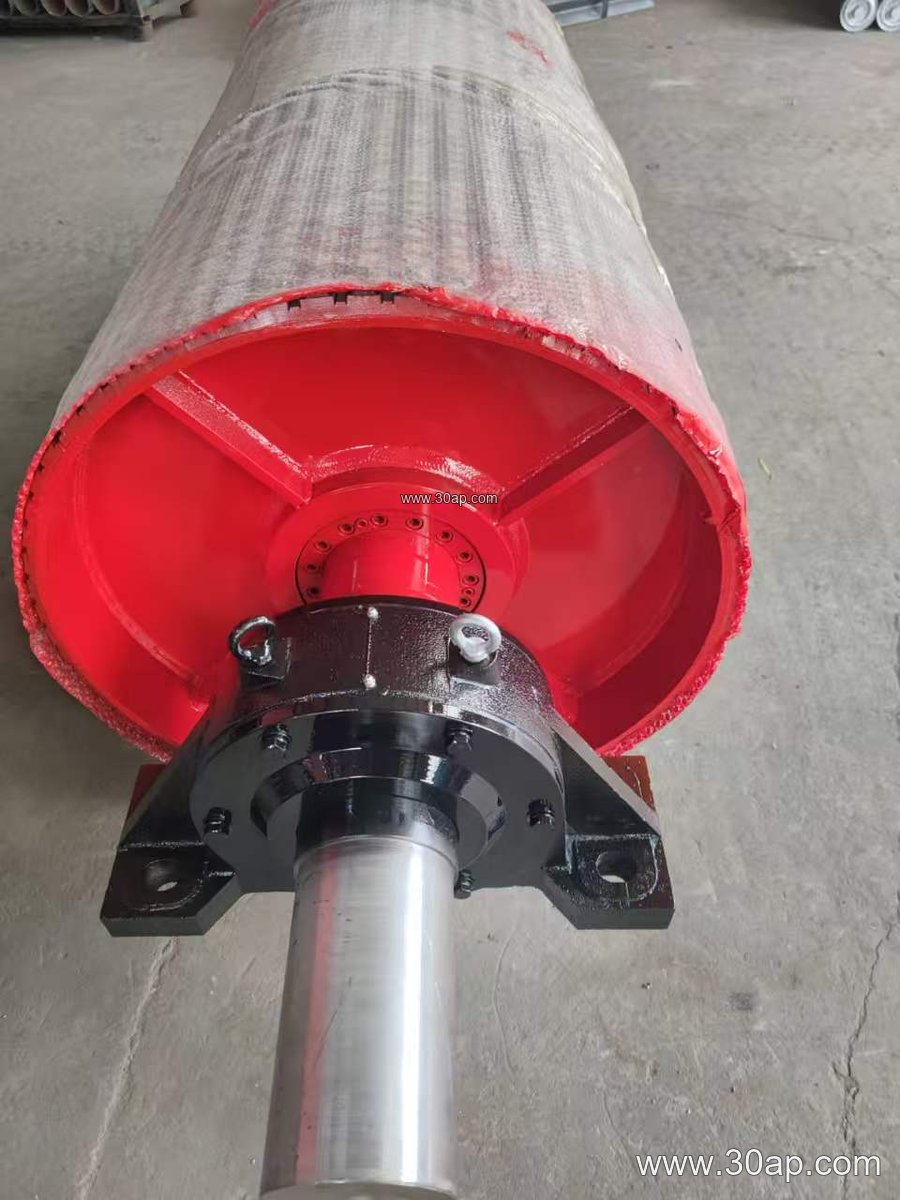
The pulley body is normally a rolled steel shell welded to end discs, with a shaft keyed or shrink-fitted through the hub. Larger units frequently use a turbine or diaphragm end plate to reduce stress concentration. Common surface treatments include plain finish, hot-vulcanized rubber lagging, cold-bonded rubber, diamond grooving and ceramic lagging. Lagging thickness is often specified at 8, 10, 12, 15 or 20 mm depending on grip requirements and abrasion severity.
- Shell and end disc: welded steel fabrication, machined for concentricity
- Shaft: sized by torque and bearing load, not by belt width alone
- Lagging: plain, rubber, diamond, chevron or ceramic, selected for grip and wear
- Bearings and housing: pillow block or flange type, matched to the conveyor bracket
For a conveyor carrying abrasive ore or sinter, a ceramic or thick rubber lagging on the drive drum helps maintain friction between the drum and the conveyor belt. On a reversing conveyor, diamond lagging is often preferred because it works in both directions.
Typical Working Positions
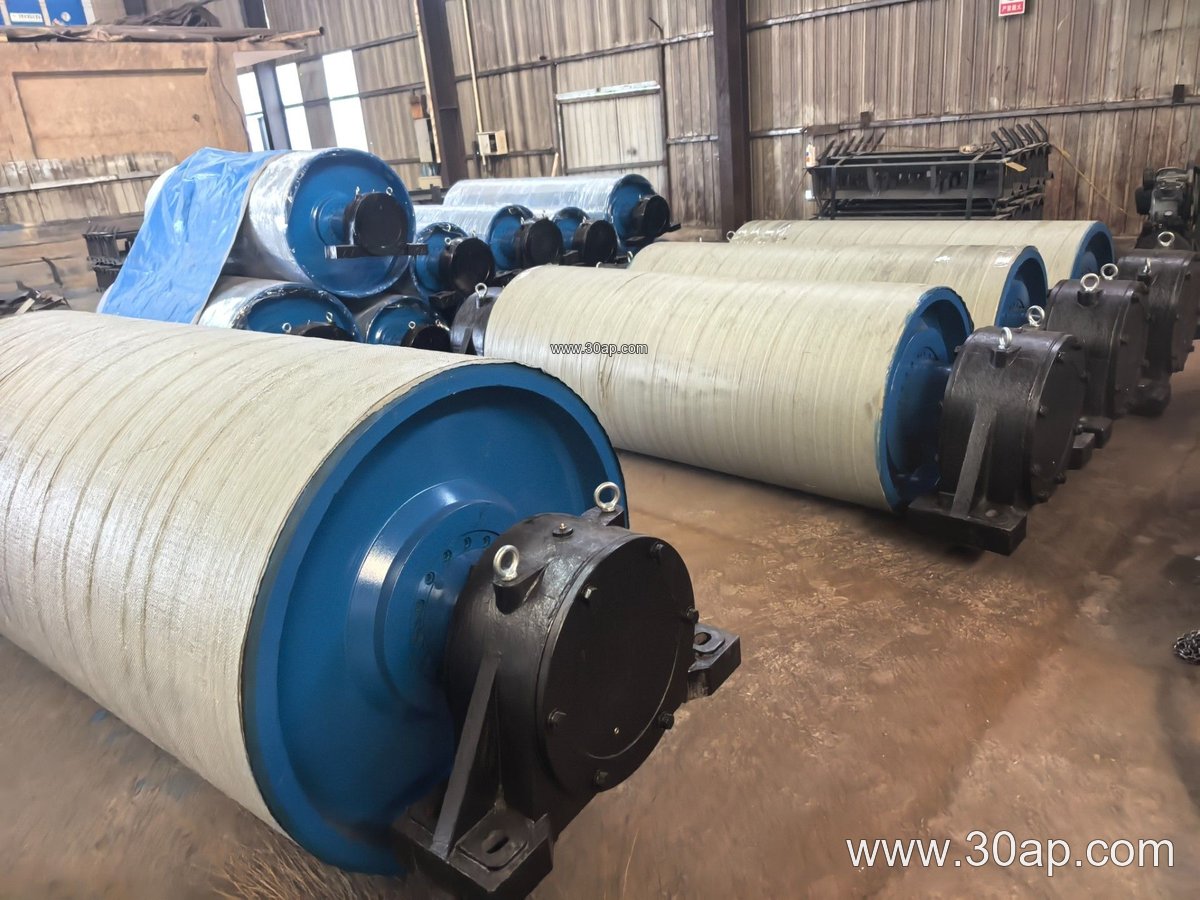
The same 800mm diameter drum can serve different duties. As a head pulley it discharges material and transmits drive torque. As a tail pulley it returns the belt and supports the carrying side. As a bend or snub pulley it corrects belt path or increases wrap angle around the drive drum. These roles are not interchangeable, so the specification should name the position rather than treat every drum as a generic replacement.
In a coal preparation plant or a power station coal yard, an 800mm diameter conveyor pulley is often paired with a heavy-duty conveyor belt, such as a flame retardant conveyor belt or an abrasion resistant conveyor belt, and supported by idler rollers along the carry and return runs. The pulley bracket and bearing seats must be aligned with the conveyor frame to avoid edge loading on the belt.
Matching Belt Width and Face Width
Face width is usually a little wider than the belt. Reference values commonly used in design include the following, but each project should confirm its own dimensions.
| Belt width | Typical pulley face width |
|---|---|
| B800 | about 950 mm |
| B1000 | about 1150 mm |
| B1200 | about 1400 mm |
| B1400 | about 1600 mm |
A Ø800 pulley might be combined with B800, B1000 or B1200 belts in different layouts; combinations such as B1200 x Ø1000 or B800 x Ø500 also exist in practice. What matters is that the belt does not overhang the lagging and that the shaft and bearings are rated for the resulting tension.
Buyer Checklist
- Confirm the pulley position: head, tail, bend, take-up or snub
- Provide belt width, belt type and maximum operating tension
- State lagging type and thickness, for example 12 mm diamond rubber
- Specify shaft diameter from the torque calculation, not from belt width
- Check bearing size, bracket dimensions and available space
- Ask for dynamic balance and runout data on large drums
When the conveyor handles wet or oily material, an oil resistant conveyor belt may be used together with a suitable lagging. In cold climates, a cold resistant conveyor belt and low-temperature-tolerant lagging should be reviewed together. For long overland or high-lift conveyors, a steel cord conveyor belt may call for a larger drum diameter to limit bending stress, so the 800mm size should be checked against the belt manufacturer’s recommended minimum pulley diameter.
Maintenance is straightforward but important: inspect lagging wear, check bolt tightness on bearing housings, monitor belt tracking at the drum and verify that idler rollers and brackets remain aligned. A well-matched 800mm diameter conveyor pulley helps keep the belt centered, reduces slip at the drive and supports stable operation in quarry, mining and cement duty.