What a Conveyor Idler Quotation Covers
A conveyor idler quotation is more than a price per piece. It defines the roller type, tube diameter, bearing seat, shaft end, sealing arrangement and surface finish that will keep a conveyor belt running on a quarry line, in a cement plant or at a power plant coal yard. Because idlers are consumables that wear with every ton carried, the quotation should match the actual duty: a heavy-duty mining conveyor belt needs a different roller build from a light aggregate conveyor.
Buyers often compare offers on unit price alone, then discover that one quotation covers a standard steel tube with a common bearing while another includes a reinforced shell and a multi-stage seal. The cheapest line item is not always the lowest cost per operating hour.
How the Idler Is Built and Where It Sits
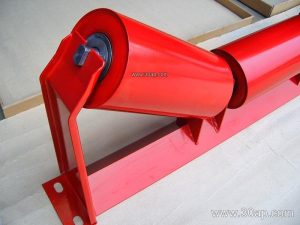
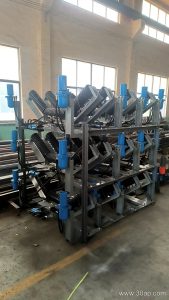
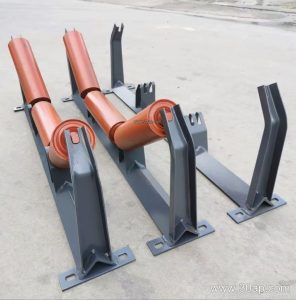
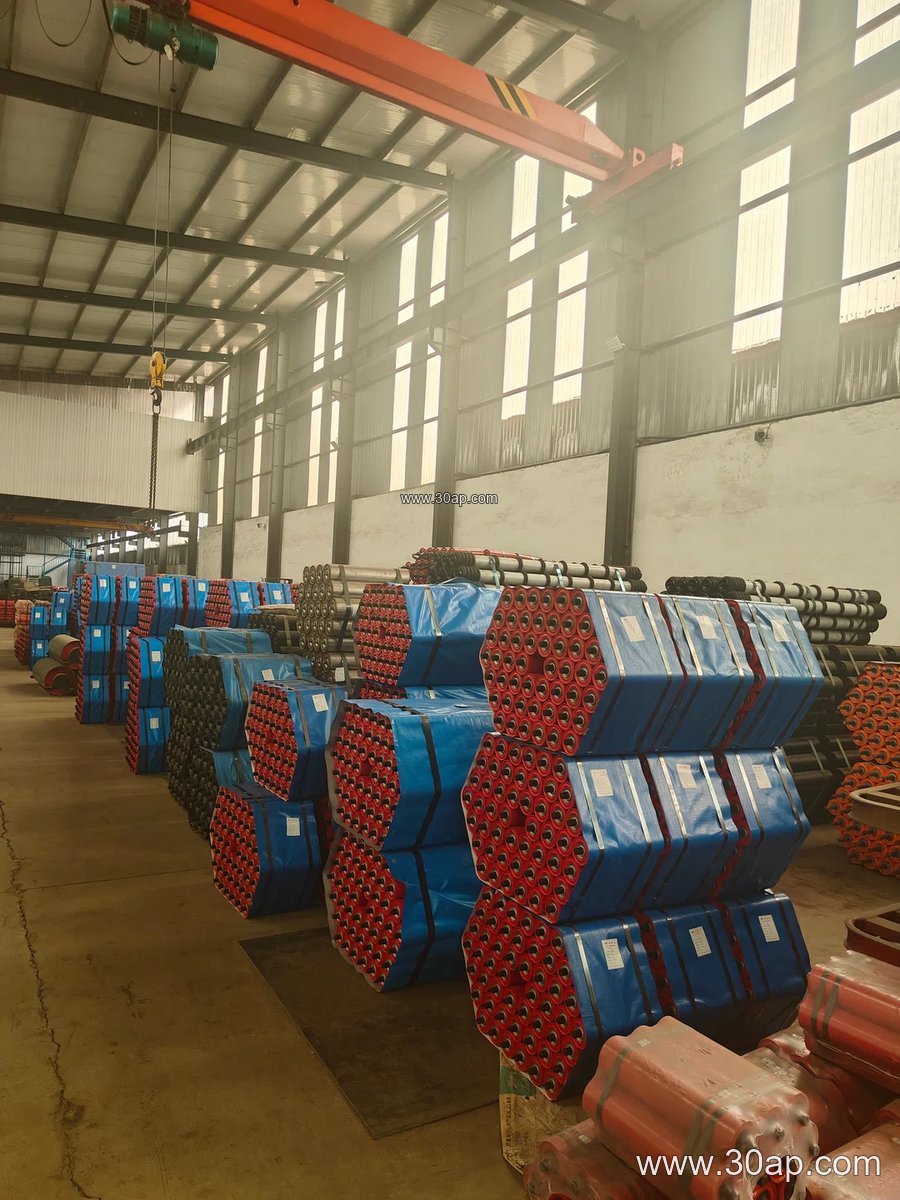
Troughing idlers support the loaded side of the belt, usually in two- or three-roll sets with a trough angle. Return idlers support the empty side, and impact idlers or rubber-disc impact rollers sit under the loading point to absorb falling material. Self-aligning idlers, including friction and tapered types, help keep the belt centered on long runs.
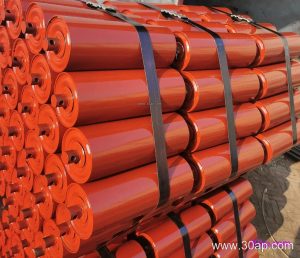
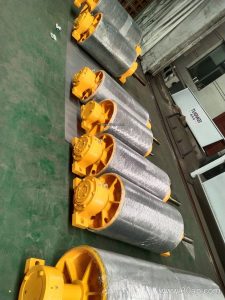
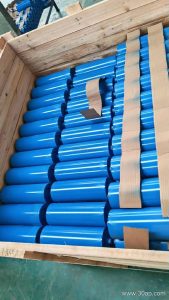
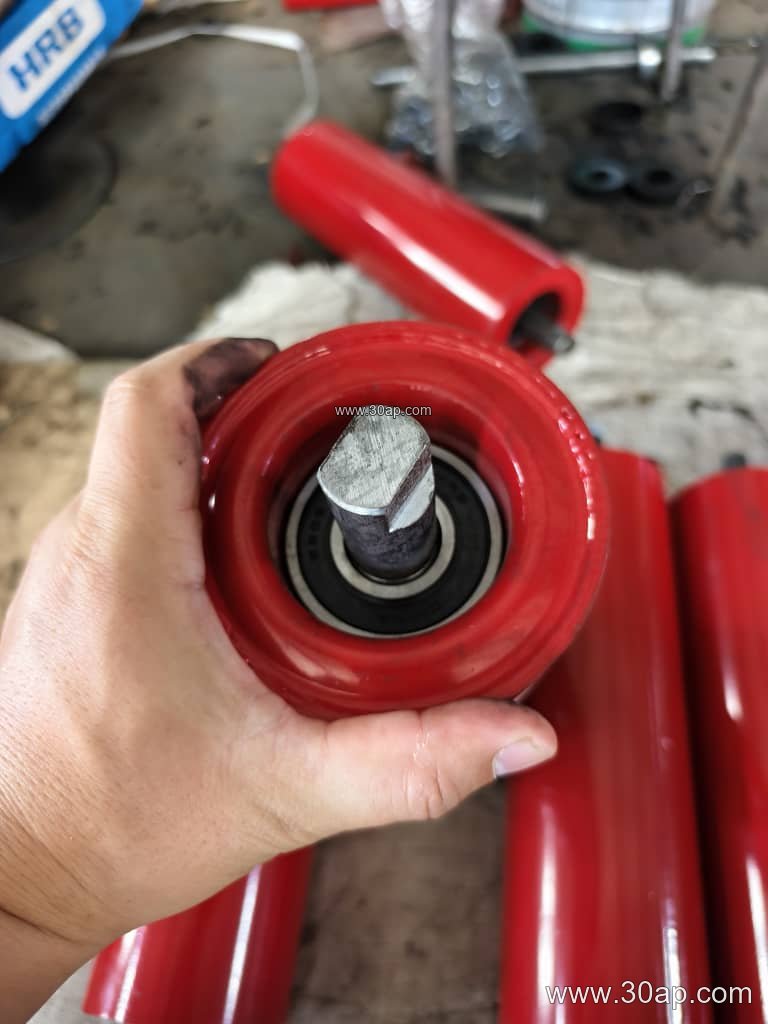
The main parts are the roller shell, the bearing housing, the shaft, the bearing and the seal. Roller diameter and length follow the belt width and the idler arrangement, but they are not a fixed pairing. A quotation should state the actual dimensions rather than assume them.
Reference Dimensions That May Appear in an Offer
The values below are common reference examples, not mandatory specifications. Final sizes are confirmed by the conveyor design.
| Item | Common reference values |
|---|---|
| Roller diameter | Ø63, Ø76, Ø89, Ø102, Ø108, Ø127, Ø133, Ø159, Ø178, Ø194, Ø219 mm |
| Belt width | B400, B500, B650, B800, B1000, B1200, B1400, B1600, B1800, B2000, B2200, B2400 |
| Trough angle | 20°, 30°, 35°, 45° |
| Roller surface | Steel tube, nylon, ceramic, rubber disc |
| Bearing reference | 6204, 6205, 6305, 6306, 6308, 6310 |
For a three-roll troughing set, common roller lengths are roughly 200 mm at B500, 250 mm at B650, 315 mm at B800, 380 mm at B1000, 465 mm at B1200, 530 mm at B1400, 600 mm at B1600, 670 mm at B1800 and 750 mm at B2000. Side rollers and center rollers can differ, so these figures should not be treated as a fixed rule.
Where the Quotation Matters Most
In a limestone quarry or sand and gravel line, abrasive dust attacks the seal and the roller shell. A quotation that specifies a good labyrinth seal and a wear-resistant surface is worth more than a lower price with a basic seal. In a coal handling system at a power plant, flame retardant conveyor belt and anti-static properties of the belt are separate from the idler, but the idler still has to tolerate fine coal dust and occasional washdown.
For a cement plant, heat and fine powder are the usual concerns. In an iron ore or copper ore application, impact at the transfer point often calls for impact idlers or rubber-disc rollers. The same quotation format can serve all of these sites, but the details should change with the duty.
Details That Should Be Written Down
A clear offer usually states:
- Idler type and arrangement, such as three-roll troughing, return, impact or self-aligning
- Roller diameter, roller length and shaft end type
- Bearing model and sealing method
- Tube material and surface form
- Paint or finish, and how the idler is packed
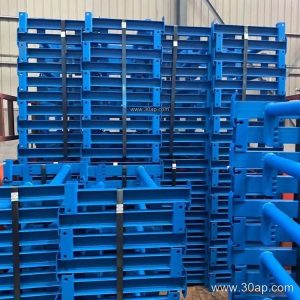
- Whether the frame and conveyor bracket are included
It also helps to mention the conveyor belt width and the belt speed, because these affect the load on the roller. For a long overland run with a steel cord conveyor belt, the idler spacing and roller diameter are usually set by the conveyor designer, and the quotation should follow that design rather than a generic catalog page.
How to Compare Offers Fairly
Ask each supplier to quote on the same drawing or data sheet. Check whether the bearing is a known brand or an equivalent, whether the seal is a single lip or a multi-stage design, and whether the roller is balanced for the belt speed. A quotation for an EP conveyor belt system and one for a heavy-duty mining conveyor belt may look similar on paper, but the idler duty is not the same.
Delivery terms, minimum order quantity and spare-part availability also belong in the comparison. A roller that is easy to replace keeps a crushing plant running when a single idler fails.
Final Check Before You Approve
Confirm the roller diameter and length against the conveyor drawing, confirm the bearing and seal against the environment, and confirm that the quotation names the idler type rather than a vague description. For more guidance on idlers, belts and pulleys, visit www.yourdomain.com/conveyor-idler-quotation and www.yourdomain.com/conveyor-belt. A well-written conveyor idler quotation is a maintenance plan as much as a price sheet.