What a Self-Centering Idler Does
A self-centering idler is a carrying or return roller assembly designed to bring a drifting conveyor belt back toward the center line of the structure. Instead of being fixed square to the frame, the idler is mounted so it can pivot slightly, and its roller surfaces are shaped or angled to create a correcting force when the belt wanders. Operators in a quarry, a coal preparation plant or a cement clinker line often add these units at points where misalignment is most likely, such as long straight runs, curves and transfer zones.
The same product is also called a self-aligning idler or training idler. These names describe the same function: automatic belt tracking without constant manual adjustment.
How the Assembly Is Built
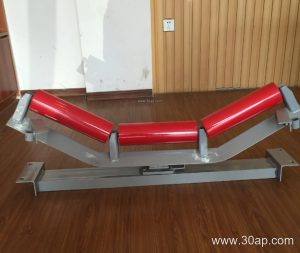
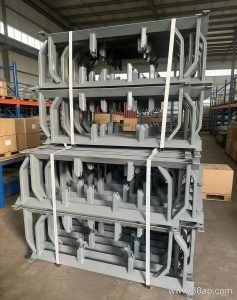
A typical self-aligning idler uses a central pivot or a pair of side rollers set at an angle. When the belt touches a side roller, the resulting friction turns the frame, and the roller pushes the belt back toward the middle. Common designs include:
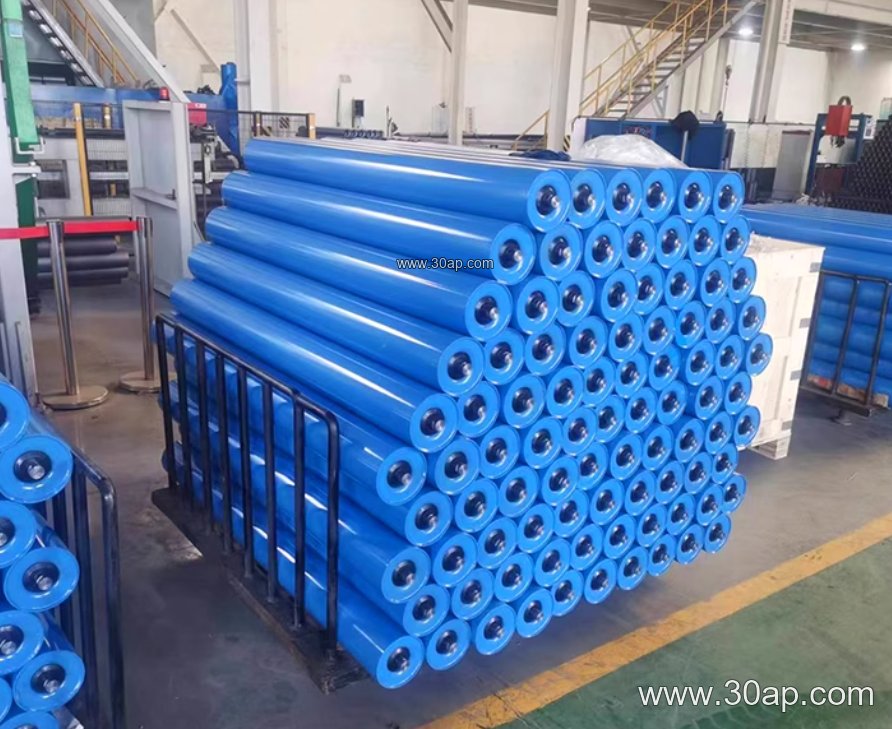
- Friction self-aligning idler, turned by contact with the belt edge
- Tapered self-aligning idler, with conical rollers that steer the belt
- Return-side V-type or flat training idler for the lower strand
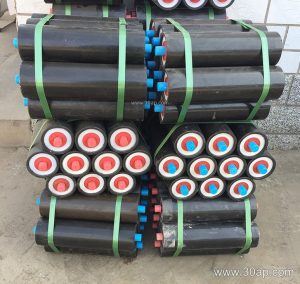
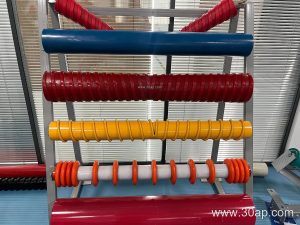
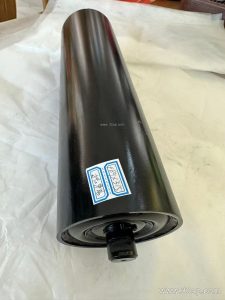
Roller shells are usually steel tube, sometimes with nylon, ceramic or rubber rings. Bearings are commonly 6204, 6205, 6305, 6306, 6308 or 6310, matched to the load and shaft design rather than to belt width alone. Sealing matters in dusty service, so labyrinth seals and grease retention are worth checking on any unit going into a crusher or screening circuit.
Where It Fits on the Conveyor
Training idlers are most useful on the carrying side of a long conveyor belt, especially before and after a curve or a discharge point. On the return strand, a V-type self-aligning idler helps keep the belt from rubbing the frame. In a limestone mine or an iron ore plant, a few well-placed units can reduce edge damage and spillage. They are not a substitute for correct pulley alignment; drive pulleys, tail pulleys and bend pulleys still need to be square and level, and the conveyor bracket and frame must be straight.
Where material is loaded, an impact idler or rubber-ring buffer idler is often used alongside the training idler, because impact and tracking are separate problems. A self-aligning idler does not replace a buffer idler, and a troughing idler set does not correct belt wander by itself.
Sizes and Selection Notes
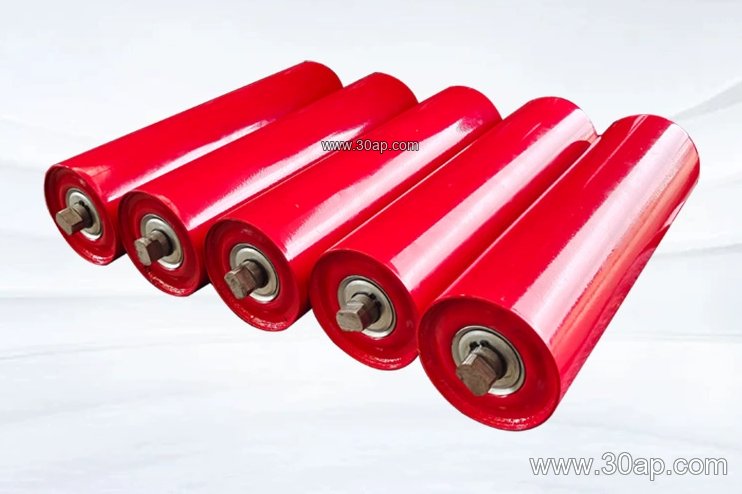
Roller diameter and belt width should be chosen together with the conveyor design. Common roller diameters include Ø63, Ø76, Ø89, Ø102, Ø108, Ø127, Ø133, Ø159, Ø178, Ø194 and Ø219 mm. Belt widths range from B400 to B2400, and trough angles of 20, 30, 35 or 45 degrees are common. The table below shows typical reference values; final dimensions are set by the conveyor designer.
| Belt width | Common three-roll length (example) | Typical trough angle |
|---|---|---|
| B500 | about 200 mm | 20 to 35 degrees |
| B650 | about 250 mm | 20 to 35 degrees |
| B800 | about 315 mm | 30 to 35 degrees |
| B1000 | about 380 mm | 30 to 35 degrees |
| B1200 | about 465 mm | 30 to 45 degrees |
| B1400 | about 530 mm | 30 to 45 degrees |
| B1600 | about 600 mm | 35 to 45 degrees |
| B1800 | about 670 mm | 35 to 45 degrees |
For a heavy-duty mining conveyor belt carrying ore, a larger roller diameter and heavier bearing are usually preferred. For a lighter aggregate conveyor belt, a smaller dia roller may be enough. The belt itself also matters: an EP conveyor belt, an NN conveyor belt or a steel cord conveyor belt each behaves differently under tension, and a flame retardant conveyor belt used underground may need a different seal and roller material. Buyers should confirm the shaft size, bracket spacing and mounting hole pattern before ordering.
Buyer Checklist
- Confirm belt width, trough angle and roller diameter
- State the mounting style: fixed bracket or pivoting frame
- Check bearing number, seal type and grease provision
- Match roller surface to the duty: steel, nylon, ceramic or rubber ring
- Ask for the correct side, carrying or return, and the required quantity
On sites such as a coal mining conveyor line, a power plant coal yard or a port ship loading system, a small number of self-centering idlers placed at the right spots can extend belt life and reduce downtime. Regular inspection of the idler roller, the conveyor bracket and the belt edge is still the best way to keep tracking stable. More conveyor components, including idler roller and conveyor pulley options, can be reviewed against the same layout drawing.