What a Heavy-Duty Welded Pulley Is
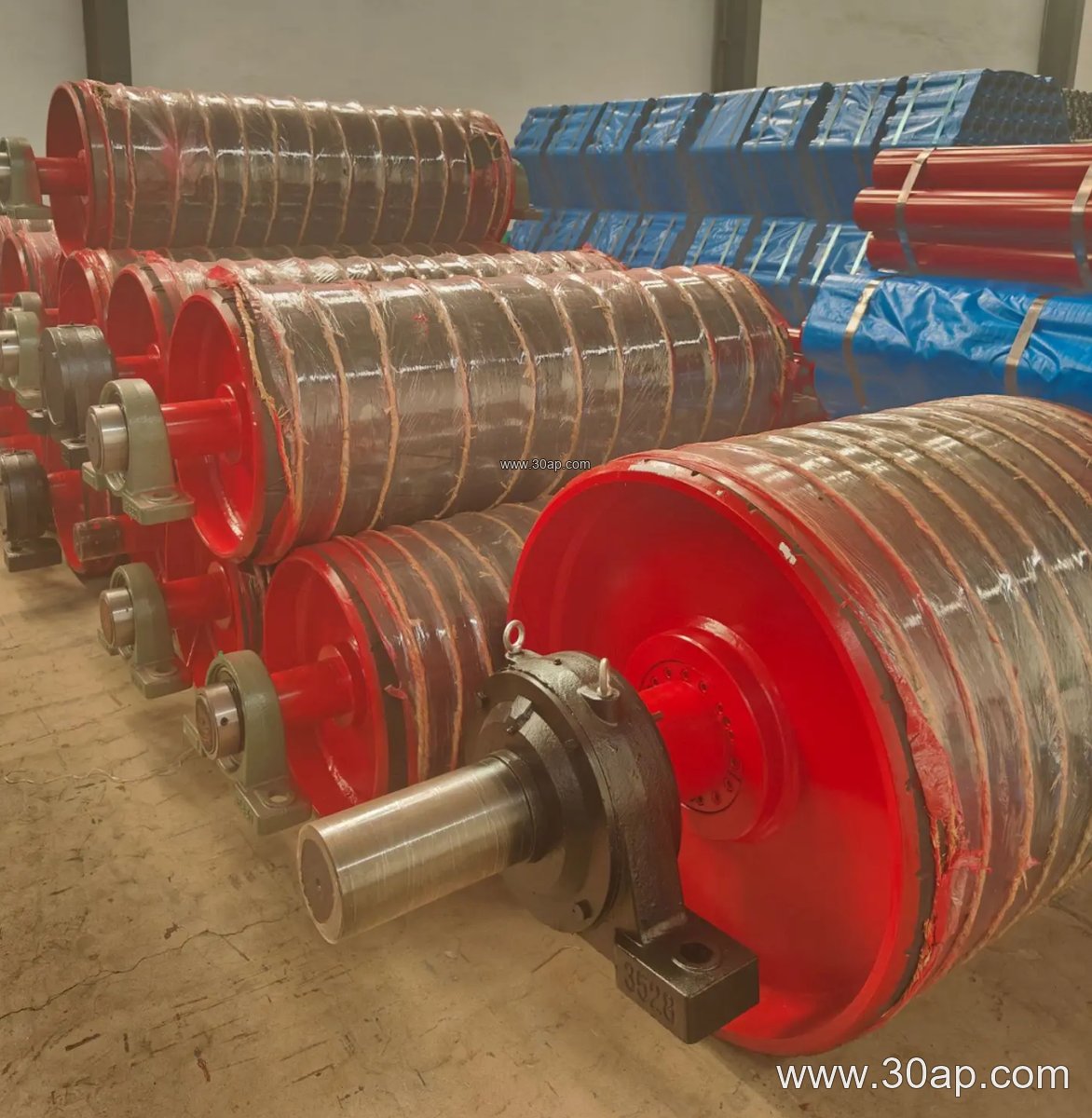
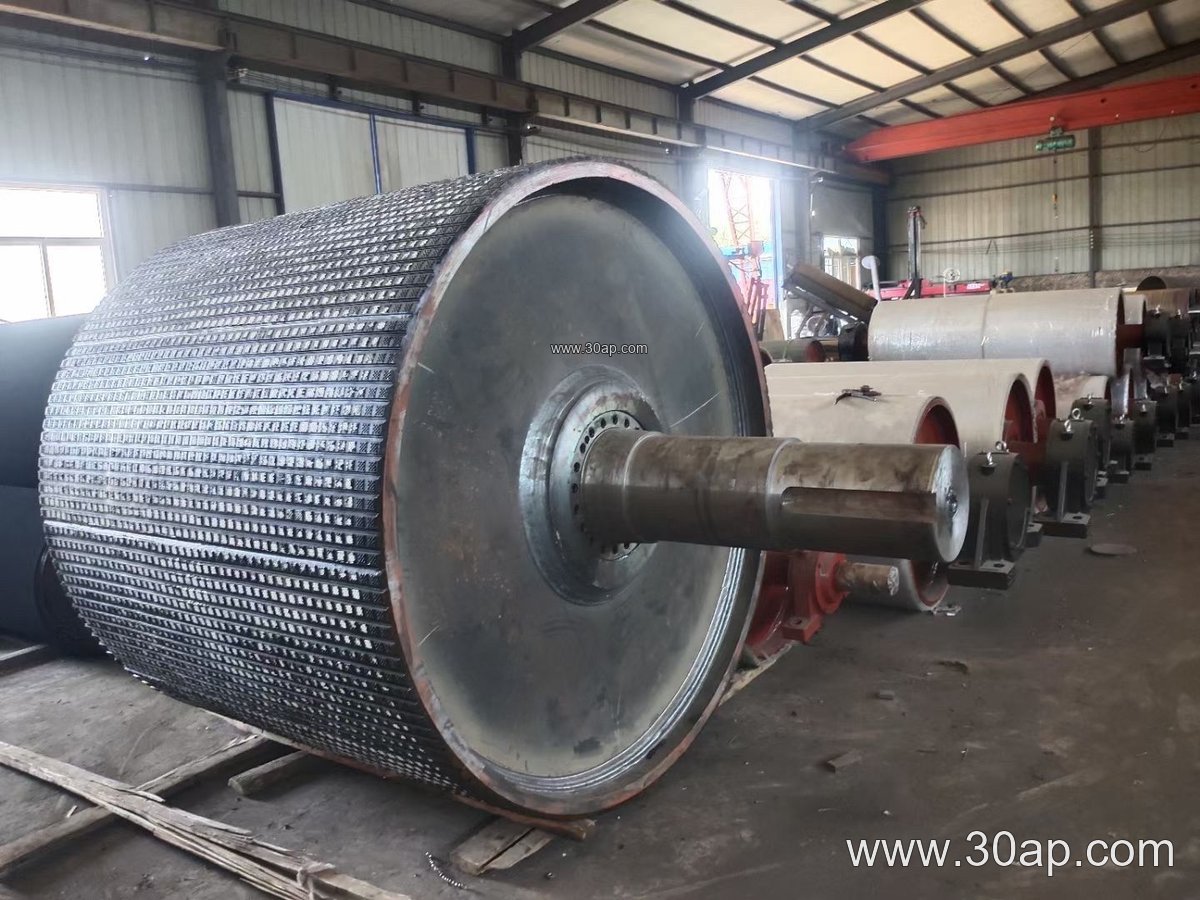
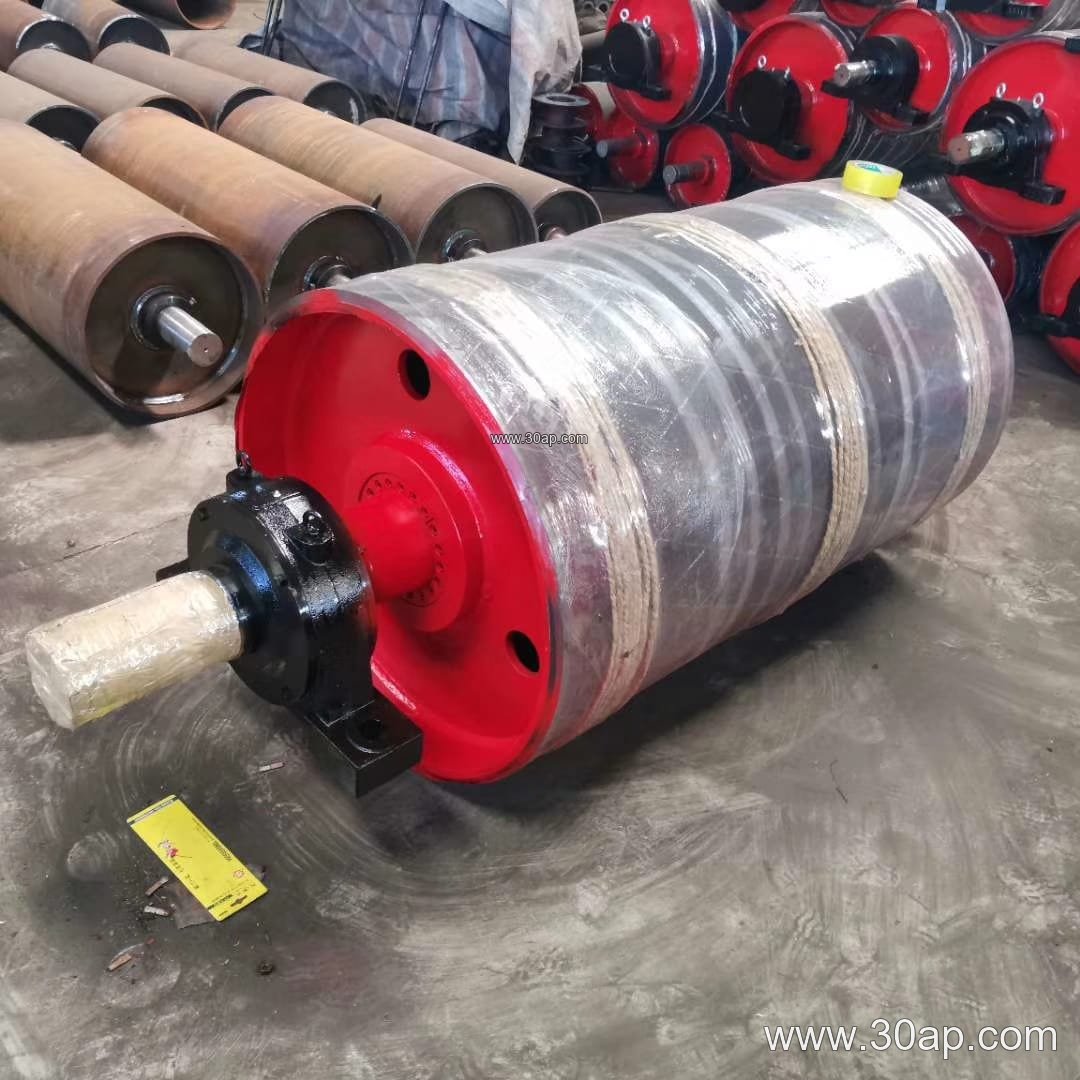
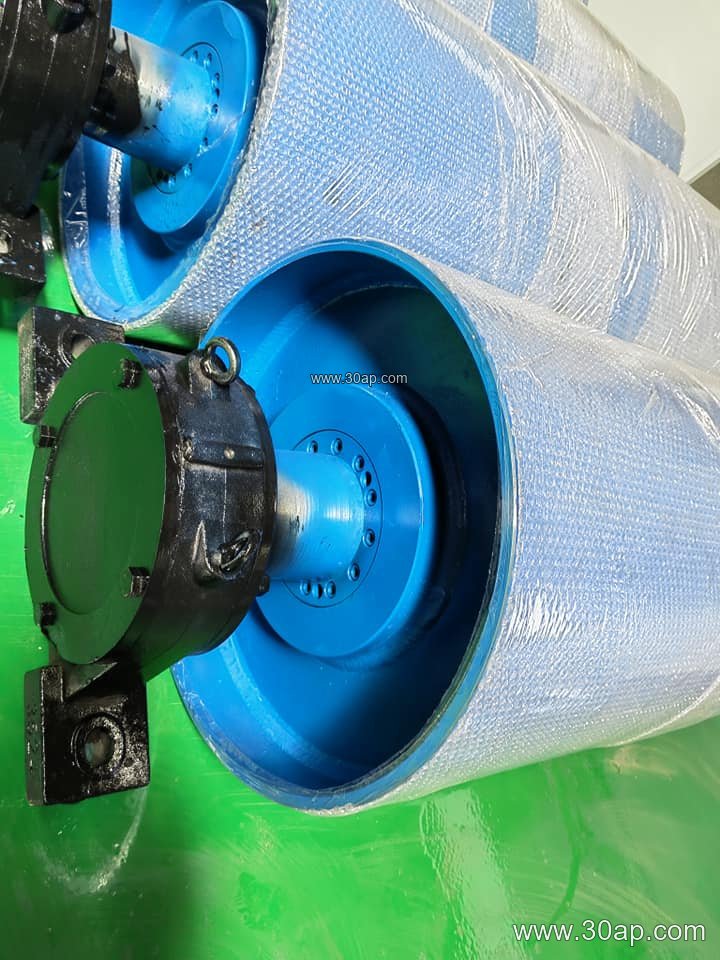
A heavy-duty welded pulley is a conveyor pulley built from a rolled steel shell joined to end discs and a shaft by continuous welding, then machined and balanced for reliable rotation under high tension. In many plants it is simply called a welded conveyor pulley or a fabricated drum pulley, and it serves as the rotating body that carries and guides the conveyor belt at the head, tail, or bend points of a conveyor.
The welded construction is the key difference from lighter cast or bolt-together designs. The shell, discs, and hub form one stiff unit that resists deflection when the belt pulls hard, which matters in continuous duty circuits handling abrasive or heavy bulk material.
How the Welded Structure Is Built
Production usually starts with a steel shell rolled to the required diameter and face width. End discs are fitted and welded to the shell, and the shaft is joined through the hub with a weld pattern designed for torque transfer. After welding, the pulley is machined so the shell runs true, then dynamically balanced to limit vibration at operating speed.
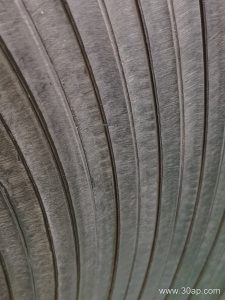
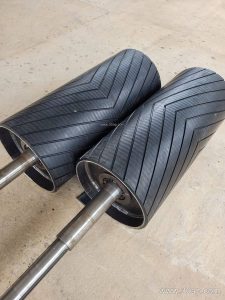
Surface treatment follows the duty. Plain finish suits clean, light belts, while rubber lagging improves grip and protects the shell. Common lagging options include hot vulcanized rubber, cold-bonded rubber, diamond grooved lagging, herringbone lagging, and ceramic lagging, usually in thicknesses of 8, 10, 12, 15, or 20 mm depending on the design.
Where These Pulleys Earn Their Place
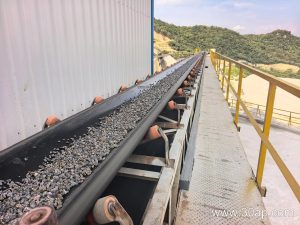
Aggregate and quarry lines use welded pulleys on primary and secondary conveyors where rock and crusher feed create shock loads. Cement plants rely on them for clinker and raw material transport, while power plant coal handling and port bulk terminals need pulleys that hold up through long shifts. In each case the pulley works together with the conveyor belt, idler roller sets, and conveyor bracket assemblies to keep the line running.
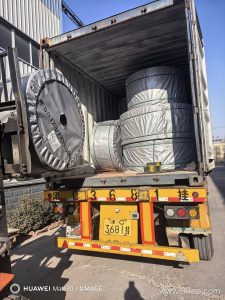
Heavier belts demand more from the pulley. A steel cord conveyor belt or a thick EP conveyor belt used on a long overland run transmits high tension, so the shell stiffness and weld quality of a heavy-duty welded pulley become more important than ever. Abrasion resistant conveyor belt grades in stone crushing circuits also benefit from well-lagged pulleys that reduce slip and belt wear.
Reading Dimensions Without Guessing
Buyers often ask for a pulley by belt width alone, but the face width is normally a little wider than the belt. Typical reference values look like this:
- B400 belt — about 500 mm face width
- B650 belt — about 750 mm face width
- B800 belt — about 950 mm face width
- B1000 belt — about 1150 mm face width
- B1200 belt — about 1400 mm face width
- B1400 belt — about 1600 mm face width
- B1600 belt — about 1800 mm face width
Diameter choices commonly range from Ø200 up to Ø1800, and a combination such as B1200 × Ø1000 or B800 × Ø500 may appear in a specification. These are reference points, not fixed rules. One belt width can work with several pulley diameters depending on belt speed, wrap angle, and tension.
Shaft diameter is set by torque and load, not by belt width. Common shaft sizes include Ø50, Ø60, Ø70, Ø80, Ø90, Ø100, Ø120, Ø140, Ø160, Ø180, and Ø200, but the final value should come from the conveyor designer.
Position Matters in the Conveyor
A drive pulley, also called the head pulley, transmits motion and usually carries the highest tension, so it often gets lagging for grip. A tail pulley at the loading end guides the return belt and may need wing-type or self-cleaning features in dusty service. A bend pulley changes belt direction and is not interchangeable with either of those roles. The same welded construction can serve all three positions, but the lagging, shaft, and bearing selection should match the job.
Buyer Checklist
- Confirm the pulley position and duty cycle before choosing lagging.
- Match face width to belt width with a small allowance, and confirm diameter against belt speed and wrap angle.
- State the belt type, such as a flame retardant conveyor belt in coal mining or a heat resistant conveyor belt near kilns, so the pulley surface suits the environment.
- Ask for weld inspection, balancing, and machining records where the application is critical.
- Plan periodic checks of lagging wear, shell runout, and bearing condition as part of routine maintenance.
For more conveyor components, visit chinaconveyorbelt.com to compare pulley, roller, and belt options for your line.