What a Self-Aligning Idler Bracket Does
A self-aligning idler bracket is the mounting frame that holds a training idler in place and lets it pivot slightly to correct belt drift. On a conveyor, the belt can wander off center because of uneven loading, misalignment, or material buildup. The self-aligning bracket responds by turning the idler carrying it, which gently steers the belt back toward the middle. This is a mechanical correction, not a sensor-driven system, so it keeps working in dusty, wet, and high-vibration environments without extra power.
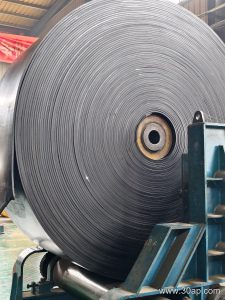
In a quarry or a coal mining operation, a fabric core conveyor belt can track poorly after a splice or when the load shifts. A self-aligning idler bracket installed on the carrying side or return side gives the belt a passive correction point. The same bracket style is used with a rubber conveyor belt on a cement plant clinker line or with a steel cord conveyor belt in a high-tonnage iron ore operation. The bracket does not change belt tension or pulley alignment; it adds local guidance.
Construction and Mounting Position
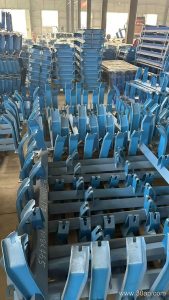
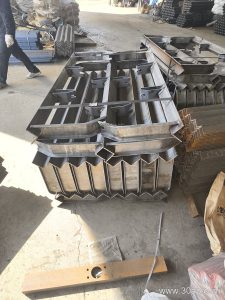
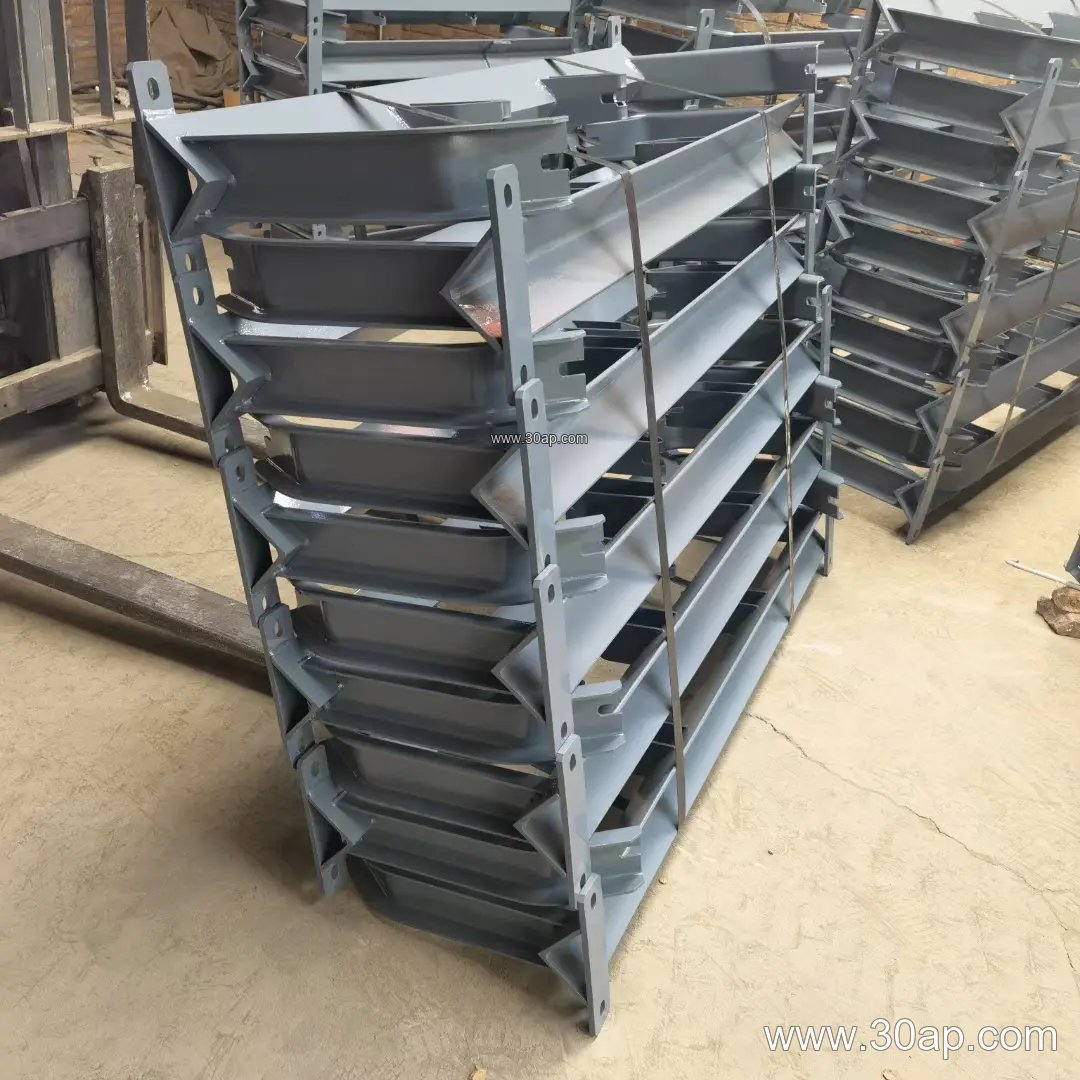
Most self-aligning brackets are built from angle steel, channel steel, or folded steel plate. The frame usually includes a pivot point, a pair of mounting arms, and a stop that limits rotation. The idler sits in the bracket, and the bracket is bolted to the conveyor stringer. Some designs use a vertical pivot post; others use a horizontal hinge. The bracket must be strong enough to carry the idler and the belt load without flexing, so the steel thickness and weld quality matter more than a fancy finish.
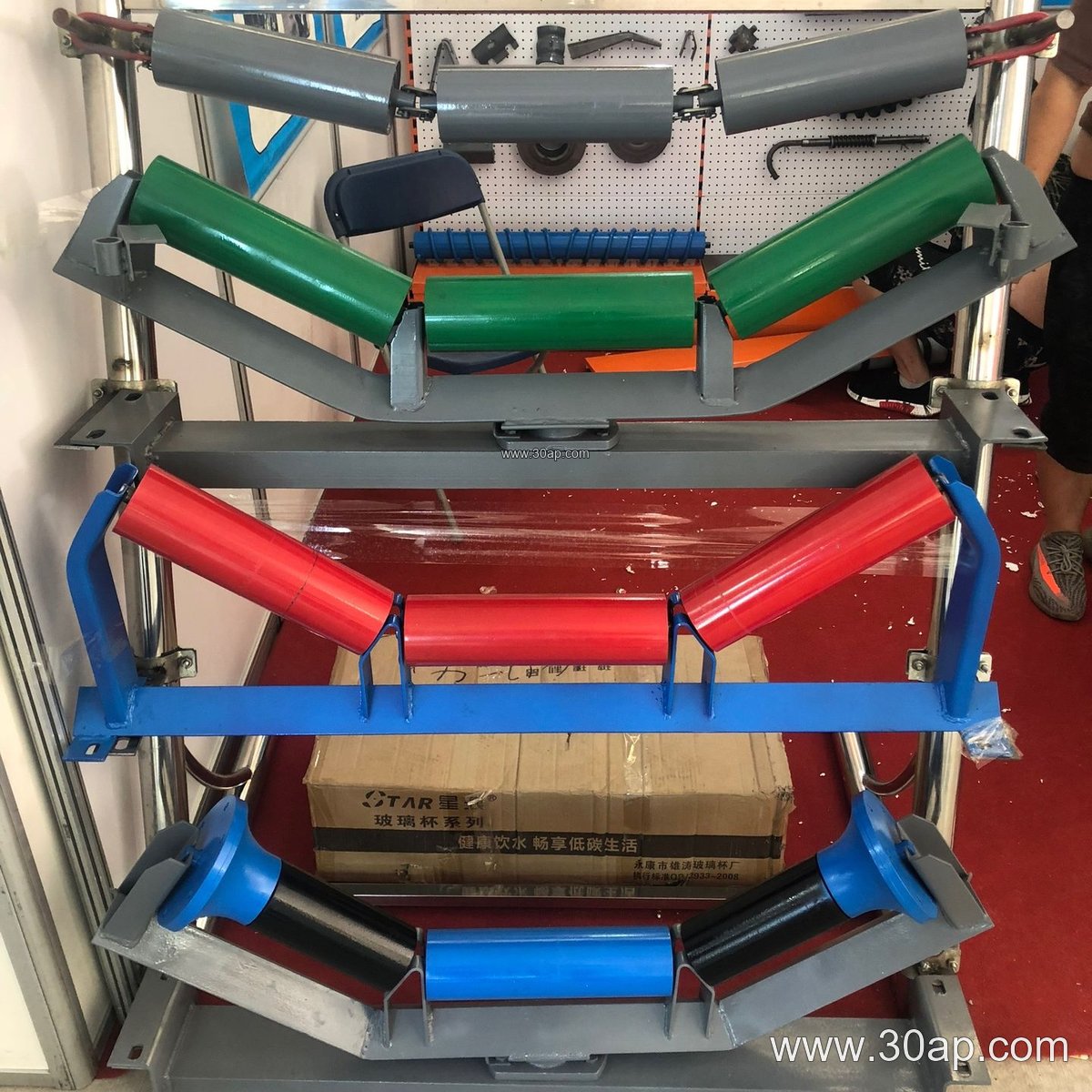
Mounting position depends on the conveyor layout. Training brackets are often placed after the loading point, before a transfer chute, and at intervals along long runs. On a troughed carrying side, a self-aligning idler bracket may hold a 30-degree or 35-degree idler; on the return side, a flat or V-return bracket may be used. The bracket is not a substitute for a bend pulley or a tail pulley; those components change belt direction, while the self-aligning bracket only influences tracking.
Where It Fits in Bulk Handling
In a limestone quarry, a self-aligning idler bracket helps keep an abrasion resistant conveyor belt centered on a transfer conveyor. In a power plant coal yard, it supports a flame retardant conveyor belt that may be exposed to dust and occasional moisture. In a sand and gravel line, a heavy-duty mining conveyor belt can be guided with the same bracket style. The bracket also appears in fertilizer plants, grain silos, and tunnel muck removal, where belt wander causes spillage and edge damage.
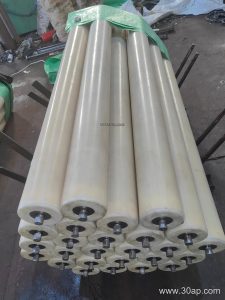
The bracket works alongside conveyor idler rollers and conveyor brackets. A training idler on a self-aligning bracket is not the same as a fixed troughing bracket; the fixed version holds the idler at a set angle, while the self-aligning version can rotate. A transition bracket, buffer bracket, or suspended bracket serves a different purpose, so the self-aligning type should be selected only where automatic correction is needed.
Common Reference Data
The table below shows typical bracket and idler combinations. These are reference values, not universal specifications. Actual mounting hole spacing and beam length are determined by belt width, trough angle, and conveyor design.
| Belt Width | Trough Angle | Idler Diameter | Typical Bracket Material |
|---|---|---|---|
| B500 | 20° | Ø89 | Angle steel |
| B650 | 30° | Ø89 | Angle steel |
| B800 | 35° | Ø108 | Channel steel |
| B1000 | 35° | Ø108 | Channel steel |
| B1200 | 45° | Ø133 | Folded steel plate |
| B1400 | 45° | Ø133 | Folded steel plate |
| B1600 | 35° | Ø159 | Channel steel |
| B1800 | 45° | Ø159 | Folded steel plate |
| B2000 | 35° | Ø194 | Heavy channel |
Adjustable brackets can change trough angle between 20 and 45 degrees. Forward-leaning training brackets often use about 1.5 to 2 degrees of lead. A belt width such as B800 does not lock the bracket to one trough angle or one idler diameter; the conveyor designer matches these values.
Buyer Checklist
- Confirm belt width and idler diameter before ordering a self-aligning idler bracket.
- State the trough angle or the adjustment range you need.
- Check whether the bracket is for the carrying side or return side.
- Match the bracket material to the environment: dusty, wet, or high-impact.
- Ask for mounting dimensions, since hole spacing varies with belt width and angle.
- Remember that a self-aligning bracket corrects tracking but does not replace pulley alignment or belt tension control.
For a reliable setup, pair the bracket with quality conveyor idler rollers and inspect pivot points during routine maintenance. A self-aligning idler bracket is a small component, but it can reduce edge damage on an EP conveyor belt, a multi-ply fabric core conveyor belt, or a heat resistant conveyor belt in a cement plant. Buyers should treat it as a tracking aid, not a cure for every belt problem.