What a Conveyor Idler Frame Does
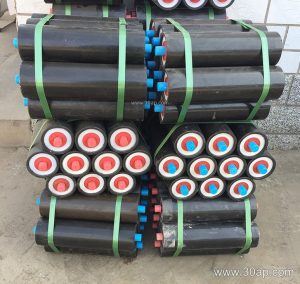
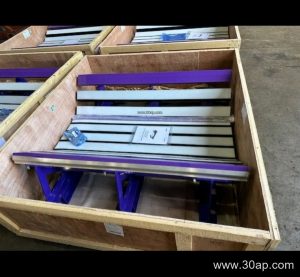
A conveyor idler frame is the structural support that holds idler rollers at the correct position and angle beneath and above a moving conveyor belt. Often called a conveyor idler bracket, roller frame or idler support frame, it carries the weight of the belt and the material, keeps the trough shape consistent, and lets the rollers rotate freely without shifting sideways. In a quarry, cement plant, power station coal yard or sand and gravel line, a single conveyor may use hundreds of these frames, so their alignment and strength matter as much as the belt itself.
The belt rests on idler rollers, the rollers sit in the frame, and the frame is bolted to the conveyor stringer. A small error in frame height or angle shows up as belt wander, material spillage and uneven roller wear.
Construction and Typical Materials
Most frames are fabricated from angle steel, channel steel or folded steel plate. The cross beam is punched or drilled to suit the chosen roller spacing, and the end brackets are shaped to match the stringer. Welded frames are common for heavy loads, while bolted or clamped versions simplify replacement in tight spaces. Surface treatment is usually painted or galvanized, since dust, moisture and wash-down water are constant companions in mineral processing.
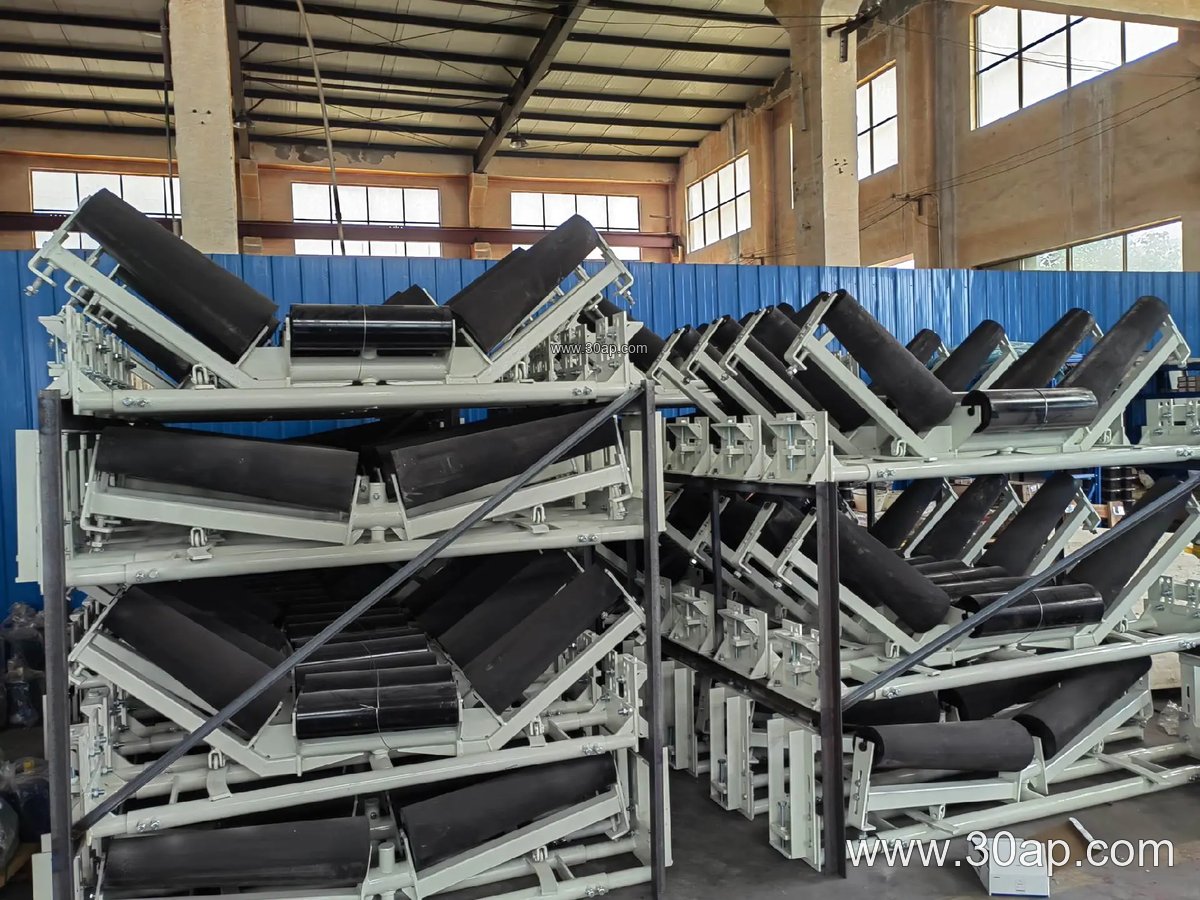
Frame Types at a Glance
- Troughing frames – carry the belt on the loaded side with three or more rollers set at a trough angle.
- Transition frames – ease the belt from flat at the pulley into the full trough profile.
- Return frames – flat or V-shaped, supporting the empty belt on its way back.
- Impact frames – reinforced with cushioning rollers under loading points.
- Self-aligning frames – pivot slightly to correct belt tracking.
- Adjustable frames – allow the trough angle to be changed on site.
Matching Trough Angle, Belt Width and Roller Diameter
Trough angle is a design choice, not a fixed rule. Common values are 20, 30, 35 and 45 degrees. A wider belt on a high-capacity line handling an abrasion resistant conveyor belt may run at 35 or 45 degrees to hold a deeper material load, while a narrower frame on a short transfer might stay at 20 or 30 degrees. Adjustable frames let maintenance teams move between these angles when the material or throughput changes.
Roller diameter usually steps through Ø89, Ø108, Ø133, Ø159 and Ø194, chosen by load and belt speed rather than by belt width alone. A B800 frame can be built around more than one roller size, and a B1200 or B1400 line may use different diameters at different stations. Below are indicative pairings, not universal specifications.
| Frame / Belt Width | Typical Trough Angle | Typical Roller Diameter |
|---|---|---|
| B500 | 20–30 degrees | Ø89 |
| B650 | 30 degrees | Ø89–Ø108 |
| B800 | 30–35 degrees | Ø108 |
| B1000 | 35 degrees | Ø108–Ø133 |
| B1200 | 35–45 degrees | Ø133 |
| B1400 | 35–45 degrees | Ø133–Ø159 |
| B1600–B2000 | 35–45 degrees | Ø159–Ø194 |
Installation hole spacing and cross beam length change with belt width and trough angle, so these should be confirmed against the conveyor drawing rather than assumed.
Where These Frames Are Used
In a limestone quarry or stone crushing circuit, troughing and impact frames sit under the crusher discharge where lumps hit hard and dust is heavy. In a coal-fired power plant, flame retardant and anti-static belts run over long galleries, and frame alignment directly affects fire safety and belt life. Cement plants use them on clinker and raw meal lines, while port bulk terminals rely on wide frames to keep high-tonnage belts centred during ship loading.
Choosing frames alongside the right conveyor pulley and conveyor belt type keeps the whole system efficient. A pipe conveyor belt or a corrugated sidewall belt needs frames made for that specific profile, while a standard EP conveyor belt or steel cord conveyor belt follows conventional troughing geometry.
What Buyers Should Check
- Confirm belt width, trough angle and roller diameter as a set, not separately.
- Ask for the hole spacing and beam length that match your stringer.
- Specify material thickness and finish for the environment — wash-down, coastal air or abrasive dust.
- Decide between fixed and adjustable frames based on how often the duty changes.
- Check that the frame suits the roller end type you already stock.
Good frames are simple parts, but they determine how long the belt, idler roller and pulley last. For more on matching frames with belting and rollers, visit conveyoridlerframe.com or check our guide pages on conveyor bracket selection.