What a Belt Guide Roller Does
A belt guide roller is a small-diameter roller mounted at the edges of a conveyor to keep the belt tracking within the frame. It does not carry the main material load and it is not a drive, tail or bend pulley. Its job is corrective and protective: when a belt begins to drift toward the structure, the guide roller contacts the belt edge and steers it back. In a quarry, a coal handling plant or a cement clinker line, a few well-placed guide rollers can prevent edge damage, spillage and premature wear of the conveyor belt.
The working principle is simple. The roller is set at a slight angle to the belt path so that edge contact produces a small lateral force. Because the roller turns freely, friction is low and the belt edge is not scuffed. On long runs, guide rollers are usually installed in pairs, one on each side, often just ahead of a transfer point or after a curve in the route.
Construction and Mounting
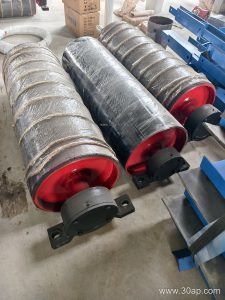
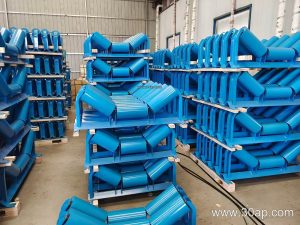
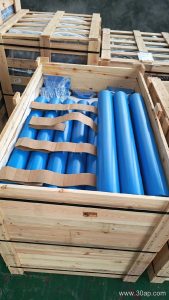
Most units use a steel tube body with sealed bearings at each end, similar in build to a small idler roller. The shell may be plain steel, nylon-coated, rubber-covered or ceramic-faced depending on the duty. Rubber or polyurethane surfaces are common where the belt edge is sensitive or where dust and fines are present. Bearings are typically deep-groove ball types such as 6204, 6205 or 6305, selected by load and shaft size rather than by belt width alone.
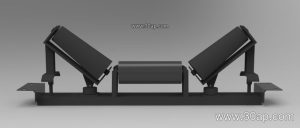
Mounting is normally through a conveyor bracket welded or bolted to the stringer. Slotted brackets allow the roller to be adjusted in height and angle during tracking setup. A vertical or slightly inclined shaft is also used in some designs, with the roller face bearing against the belt edge. The choice depends on belt speed, edge condition and the amount of correction required.
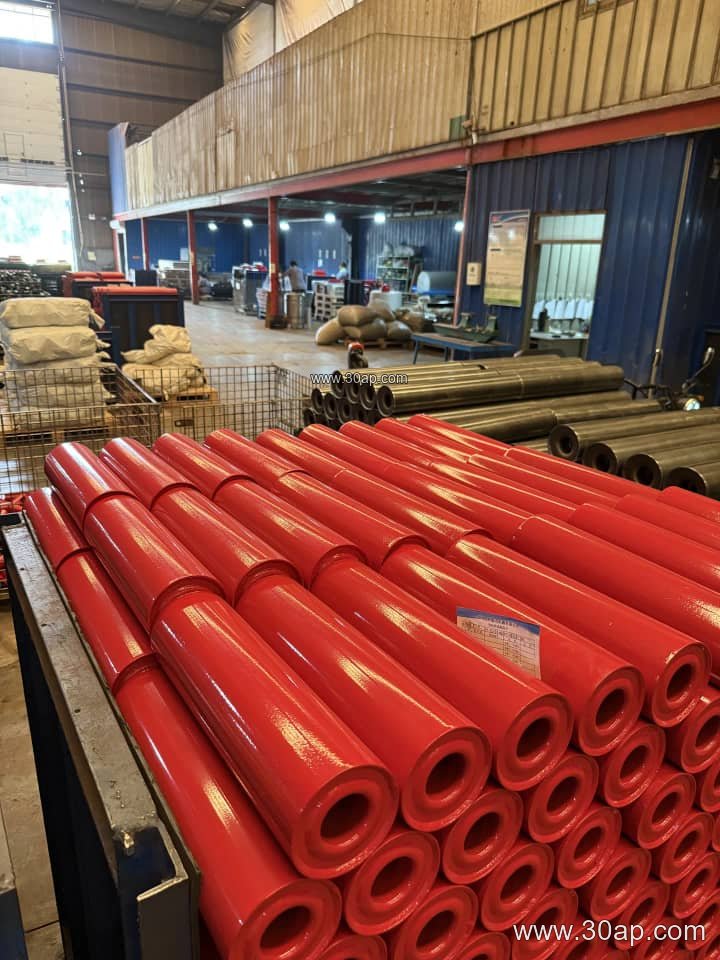
Common reference dimensions
The values below are typical examples for discussion, not fixed rules. Final sizing is set by the conveyor designer.
- Roller diameter: Ø63, Ø76, Ø89, Ø102, Ø108 mm
- Roller length: matched to belt width and bracket position
- Belt width range: B400 to B2400, with B650, B800, B1000 and B1200 the most common in bulk handling
- Bearing options: 6204, 6205, 6305, 6306
- Surface forms: plain steel, nylon, rubber ring, ceramic
A guide roller for a 650mm or 800mm belt is not automatically the same as one for a 1400mm belt. Edge force grows with belt tension and speed, so a wider, heavier belt may need a larger shaft and a sturdier bracket rather than simply a longer roller.
Where Guide Rollers Fit in a Plant
In a limestone quarry or aggregate line, guide rollers are often placed after the crusher discharge and before the first transfer chute, where the belt is most likely to wander. In a coal washing plant or power station coal yard, they help hold the belt on the idlers through load changes. In a cement plant, they are used on clinker and raw meal conveyors where dust build-up can push a belt off line.
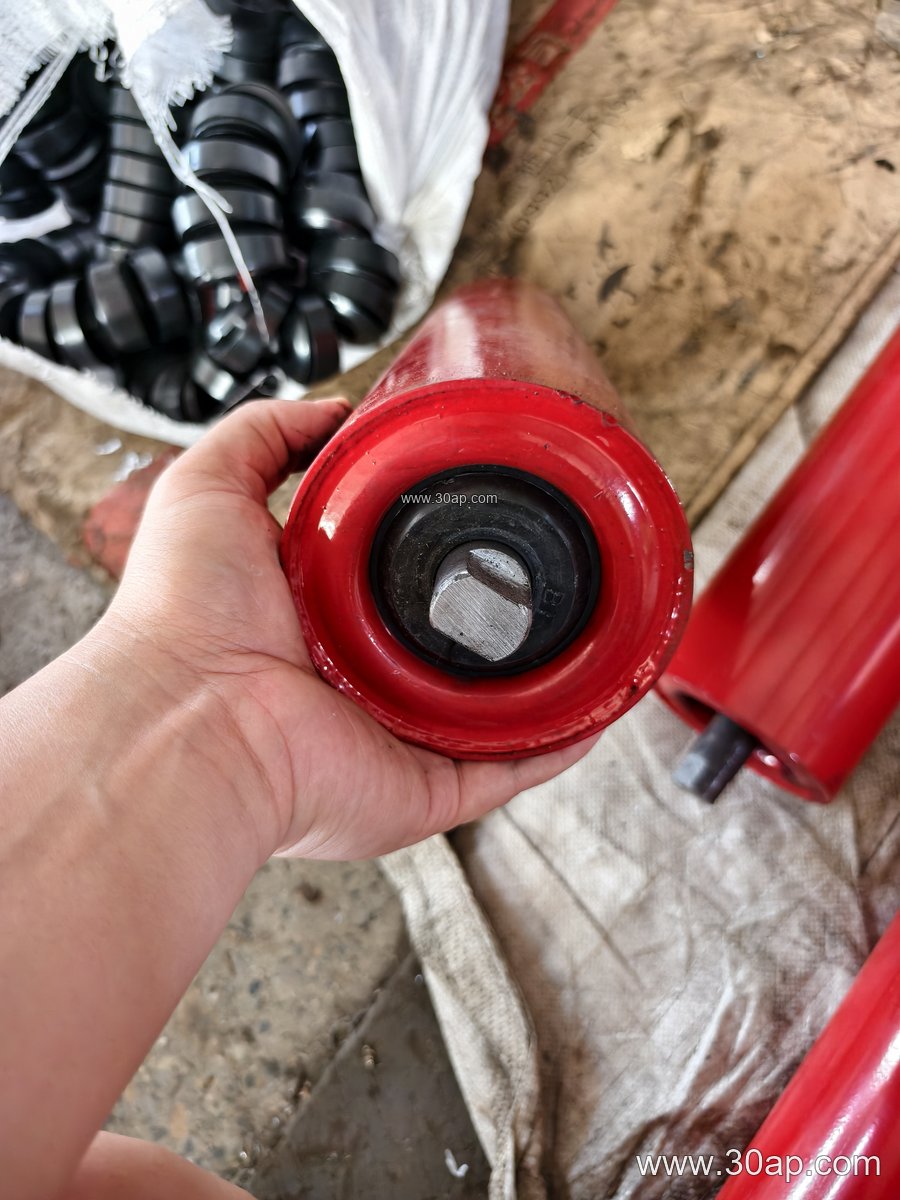
They are also useful on conveyors carrying a heavy-duty mining conveyor belt or a steel cord conveyor belt, where edge damage is expensive. A rubber conveyor belt with a softer edge may benefit from a rubber-faced guide roller, while an abrasive ore conveyor belt may call for a ceramic or hardened steel face. Guide rollers are not a substitute for a properly aligned conveyor pulley or a correctly set troughing idler set; they are a fine-tuning device.
Selection Points for Buyers
Start with the belt width, belt thickness and expected edge load. Confirm the shaft diameter and bracket interface before ordering, and check that the roller can be adjusted after installation. Ask for the bearing type and sealing arrangement, because dust and water ingress are the main causes of early seizure. On conveyors using an EP conveyor belt or a multi-ply fabric core belt, a light guide roller is often enough; on a high-tension steel cord belt, the mounting must be stronger.
- Confirm roller diameter and face length against the actual bracket
- Check bearing size and seal type for the site conditions
- Decide between steel, rubber, nylon or ceramic faces
- Plan for adjustment slots and periodic inspection
- Keep spare rollers on hand for critical conveyors
Maintenance is straightforward. Check for free rotation, listen for bearing noise, and look for flat spots or edge wear on the roller face. A guide roller that has stopped turning will quickly wear a groove in the belt edge. Replacing it early is far cheaper than repairing a damaged belt.
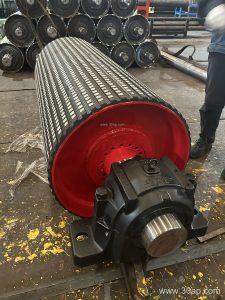
For plant engineers comparing guide rollers with other components, the distinction matters. A drive pulley transmits power, a tail pulley returns the belt, and a bend pulley changes direction. A belt guide roller only corrects tracking. Used correctly, it extends belt life on conveyors handling everything from sand and gravel to iron ore and cement.