What a Non-Standard Conveyor Bracket Really Is
A Non-Standard Conveyor Bracket is a support component made to fit a conveyor line that cannot use off-the-shelf parts. Instead of forcing the structure to accept a catalog bracket, the bracket is built around the actual belt width, trough angle, roller diameter and mounting position on site. It is common in quarry, cement plant and power plant coal handling lines where existing frames, chutes or transfer points leave little room for standard hardware.
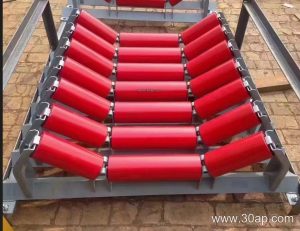
In practice, this part is often called a custom conveyor support bracket or a made-to-order idler support. It carries idler rollers, holds the belt profile and keeps the load path stable. On a line running an EP Conveyor Belt or a Steel Cord Conveyor Belt, small alignment errors at the bracket add up over distance, so fit matters as much as strength.
How the Bracket Is Built
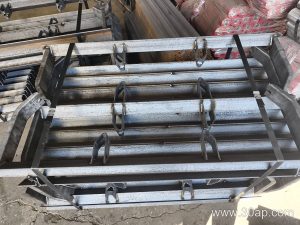
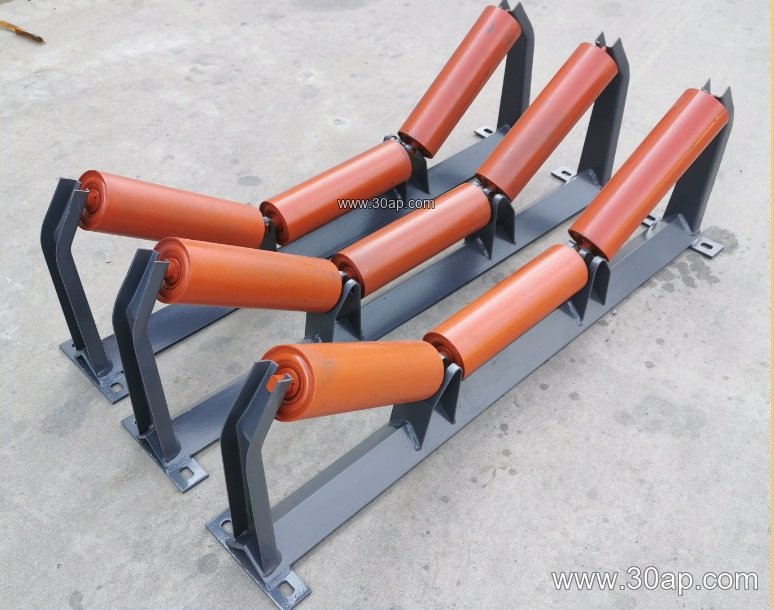
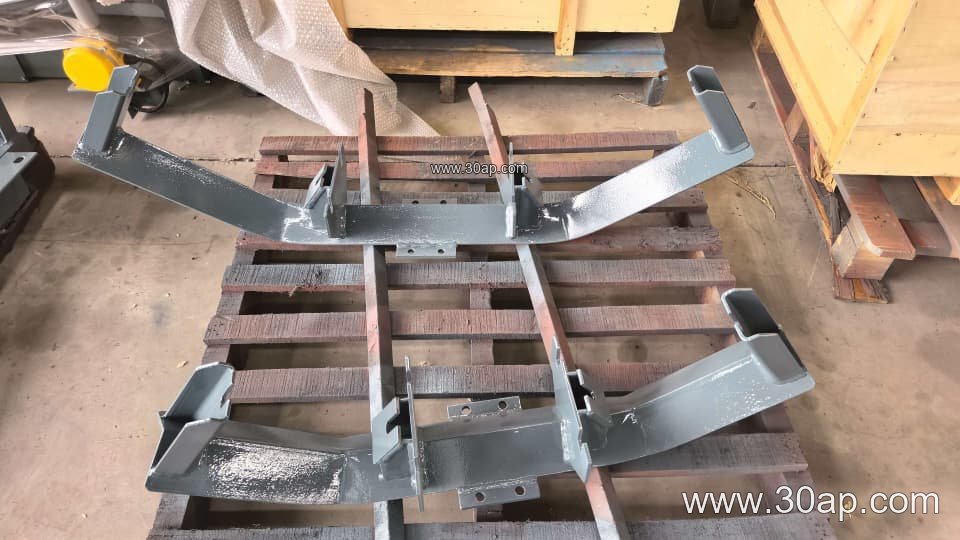
Most units are fabricated from angle steel, channel steel or folded steel plate. The fabricator works from measured hole spacing, beam length, trough angle and roller seat height rather than a fixed drawing. A typical build includes a cross beam, roller seats, mounting feet or hanger tabs, and gussets at the joints.
Because the geometry follows the conveyor, not the other way round, a Non-Standard Conveyor Bracket may combine features that are usually separate parts. A transition support near a head pulley, for example, can be shaped to ease the belt from a troughed profile to a flat one. A bend section may need an asymmetric frame to clear a chute or walkway.
| Parameter | Common Reference Range |
|---|---|
| Belt width | B500 to B2200 |
| Trough angle | 20°, 30°, 35°, 45° (adjustable versions vary between these) |
| Idler diameter | Ø89, Ø108, Ø133, Ø159, Ø194 |
| Material | Angle steel, channel steel, folded plate |
| Mounting hole spacing | Set by belt width and trough angle |
These values are reference data, not fixed combinations. A B800 frame at 35° with Ø108 rollers is a common arrangement, but the same width can be built at another angle or roller size if the design calls for it.
Where It Fits on the Line
The bracket appears wherever a standard support will not sit correctly. In a limestone quarry, it may be used at a transfer point where the belt changes direction. In a cement plant, custom supports often appear around clinker coolers and silo feed points. In a coal-fired power plant, they help route a Flame Retardant Conveyor Belt through tight galleries and around structural steel.
Other placements include:
- Troughing and transition positions where the belt profile changes
- Return-side supports, including V-return and flat-return arrangements
- Impact zones near loading points, paired with buffer rollers
- Self-aligning or forward-leaning seats for belt tracking
- Hanging supports in confined tunnels or underground drifts
On a long overland run, a single custom bracket may sit beside dozens of standard ones. The goal is not to replace the standard system but to solve the few points where the standard frame does not fit.
Choosing Between Adjustable and Fixed Designs
An adjustable Non-Standard Conveyor Bracket lets maintenance teams change the trough angle within a range, usually between the common 20°, 30°, 35° and 45° settings. This helps when a line is modified or when belt tracking needs fine tuning. A fixed design is simpler and stiffer, and is often preferred where vibration or heavy loading could move an adjustment.
Forward-leaning seats, often set at about 1.5° to 2°, are a separate feature and should not be confused with an adjustable frame. They help center the belt but do not change the trough angle. Buyers should state clearly which function is needed.
What Buyers Should Confirm Before Ordering
Accurate dimensions save the most time. A supplier needs the belt width, required trough angle, roller diameter, mounting hole pattern and the available space around the frame. Photos of the existing structure and the position relative to the conveyor pulley help avoid rework.
It also helps to describe the duty. A support under an Abrasion Resistant Conveyor Belt carrying wet aggregate faces different loads from one under a food-grade line. State the material being handled, the ambient conditions and whether washdown or dust is present.
Finally, ask how the bracket connects to the existing structure. Bolted feet, welded tabs and hanging designs are not interchangeable on site. A clear connection detail, combined with the correct belt width and roller seat, is what makes a custom support work as intended.