What a Large-Diameter Pulley Does on a Conveyor
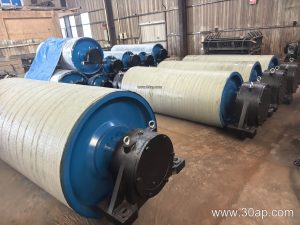
A large-diameter pulley is a conveyor pulley whose shell diameter is sized well above the minimum needed to wrap the belt, typically to reduce bending stress in the belt carcass, improve traction, or handle high-tension duty. In practice, the same component is often called a large conveyor pulley or a heavy-duty drum pulley, and it may serve as a head pulley at the discharge point, a tail pulley at the loading end, or a tension pulley in the take-up section. Diameter is a design outcome, not a label: it follows belt tension, shaft load, pulley face width and the space available in the conveyor frame.
At a quarry or a limestone crushing line, a large-diameter head pulley is common because the belt carries coarse rock and the carcass needs a gentler bend path. The same logic applies in a coal preparation plant or a power plant coal handling system, where a Fabric Core Conveyor Belt or Steel Cord Conveyor Belt may run at high tension.
How the Pulley Is Built
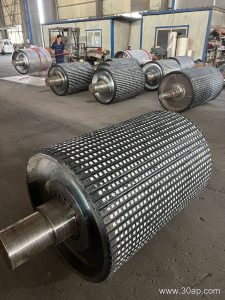
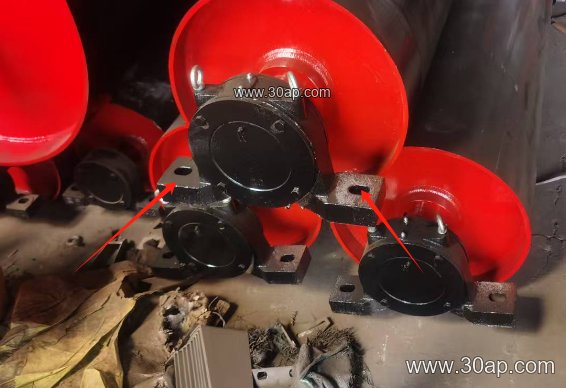
The assembly usually consists of a rolled steel shell, two end discs, a through shaft or stub shafts, bearing housings, and a lagging layer on the face. Key dimensions include shell diameter, face width, shaft diameter and lagging thickness. Face width is normally a little wider than the belt: a B800 belt often runs on a pulley face of about 950 mm, and a B1200 belt on roughly 1400 mm. Diameter and shaft size are set by torque and radial load, not by belt width alone, so a B1000 conveyor may use a Ø630 pulley in one layout and a Ø800 or Ø1000 pulley in another.
| Parameter | Common reference values |
|---|---|
| Shell diameter | Ø200, Ø315, Ø400, Ø500, Ø630, Ø800, Ø1000, Ø1250, Ø1400, Ø1600, Ø1800 |
| Belt width | B400, B500, B650, B800, B1000, B1200, B1400, B1600, B1800, B2000 |
| Shaft diameter | Ø50, Ø60, Ø70, Ø80, Ø90, Ø100, Ø120, Ø140, Ø160, Ø180, Ø200 |
| Lagging thickness | 8, 10, 12, 15, 20 mm |
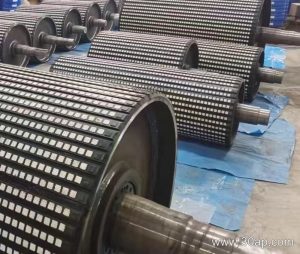
| Surface form | Plain, hot-vulcanized rubber, cold-bonded rubber, diamond grooved, herringbone, ceramic |
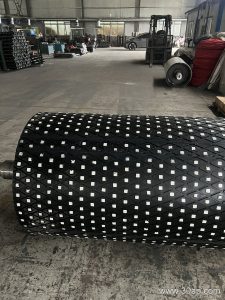
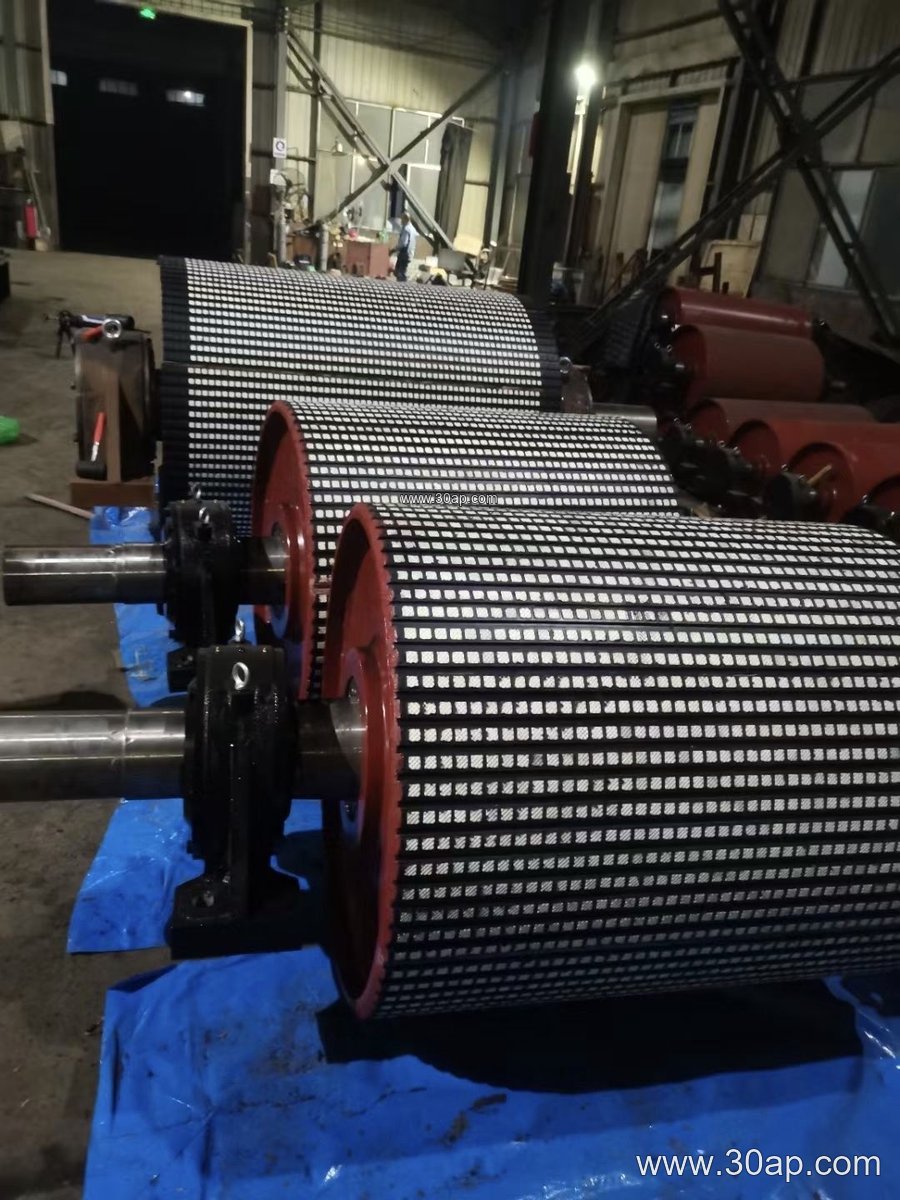
Lagging choice matters. Diamond or herringbone rubber improves grip on a drive pulley in wet conditions, while ceramic lagging suits abrasive service in an iron ore or copper ore terminal. Plain faces are still used where the pulley only guides the belt.
Where Large Diameter Pays Off
Heavy-duty mining conveyors, ship loading lines and cement plant clinker transport all benefit from a bigger shell because the belt flexes less per revolution. That reduces fatigue in the carcass and can extend service life for an Abrasion Resistant Conveyor Belt or a Heat Resistant Conveyor Belt working near a kiln discharge. In an underground coal mining conveyor, flame retardant belting is typical, and the pulley diameter must still respect the minimum bend radius declared for that belt construction.
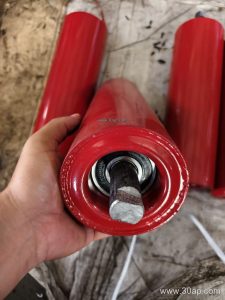
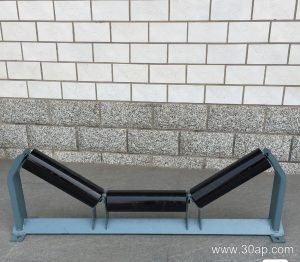
On the return side, an idler roller supports the belt between pulleys, but it cannot replace the pulley at a drive or take-up station. Likewise, a bend pulley changes belt direction, while a tail pulley receives material; these are different functions and should not be swapped in a specification.
Buyer Checklist
- Confirm belt type and tension: an EP Conveyor Belt, NN Conveyor Belt or Steel Cord Conveyor Belt each has its own minimum pulley diameter guidance.
- State the duty position: head, tail, tension or snub, since load direction changes bearing and shaft design.
- Match face width to belt width with a small margin, and confirm lagging thickness and pattern for grip and wear.
- Check shaft diameter against torque and radial load rather than copying a figure from belt width.
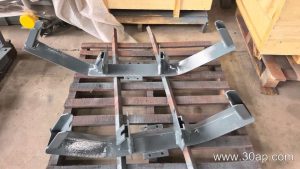
- Review the conveyor bracket and bearing housing interface so the pulley fits the existing frame.
For a new project, share belt width, belt type, speed, tension and the available space with the pulley supplier. A large-diameter pulley sized from those inputs will run cooler and last longer than one chosen by habit. See more conveyor component notes at www.example.com/conveyor-pulley and www.example.com/large-diameter-pulley.