What an Anti-Impact Idler Does
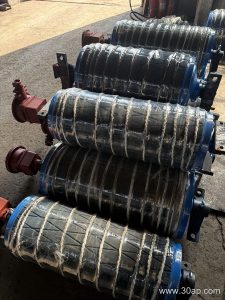
An anti-impact idler is a heavy-duty carrying roller placed where material hits the conveyor belt hardest, usually below the loading chute or at a transfer point. Instead of letting coarse rock, clinker or ore drop straight onto a standard steel roll, the anti-impact idler absorbs part of that energy and spreads it across a wider contact area. Many operators call the same product an impact roller or buffer roller, and all three names describe the same component. Its job is not to carry the full load along the whole line, but to protect the belt and the adjacent idlers in the zone where damage starts.
In a quarry, limestone mine, coal washing plant or crushing and screening circuit, the difference between a protected and an unprotected load point often decides how long a conveyor belt lasts. Fine material is gentle, but a 300 mm lump falling two metres is not.
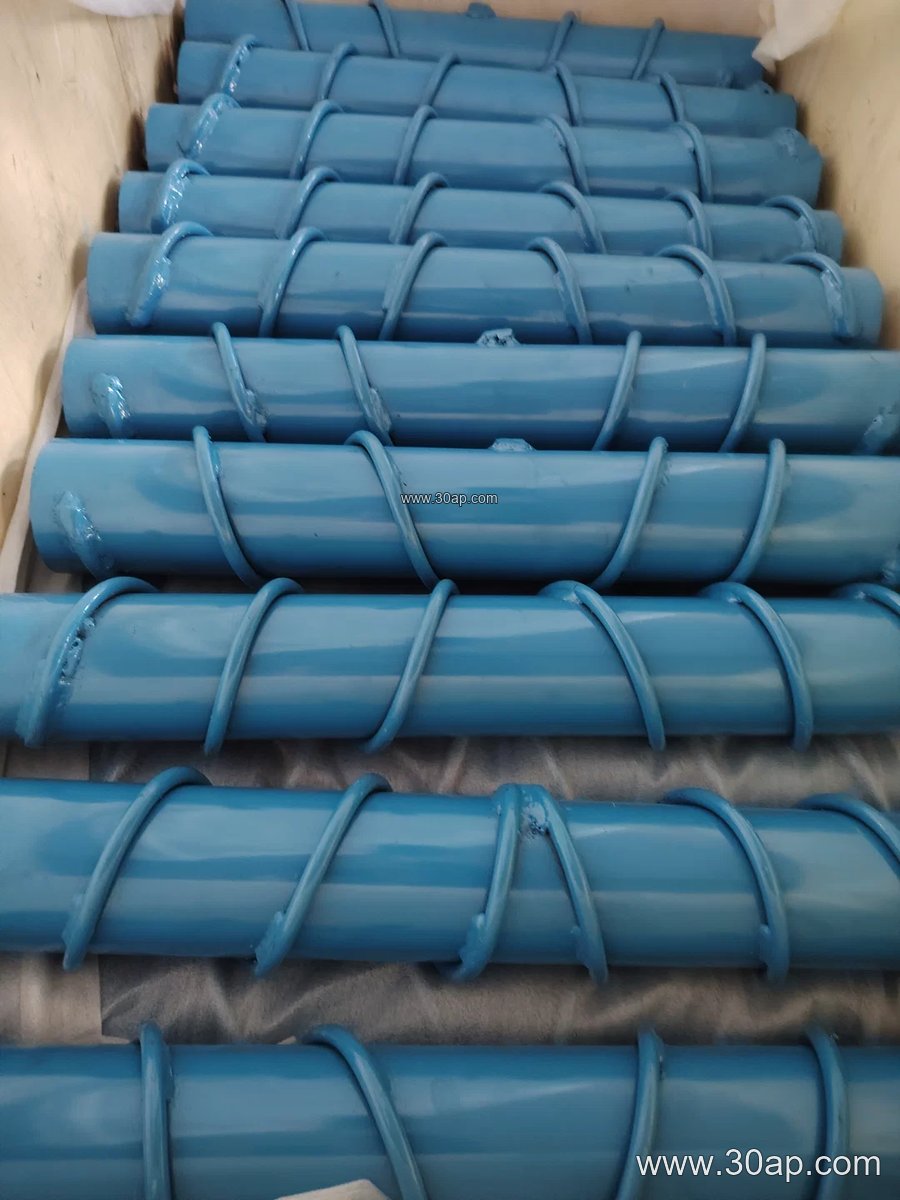
Construction and Materials
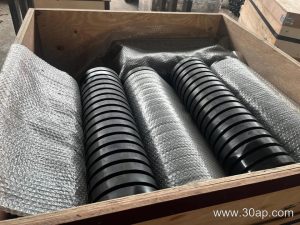
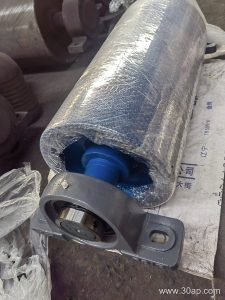
The typical design uses a steel tube or shaft fitted with a series of rubber rings, rubber discs or a rubber-covered shell. The rubber rings flex under impact and return to shape, which reduces peak stress on the belt cover and on the roller bearings. Between the rings, the roll body stays rigid enough to keep its shape under load.
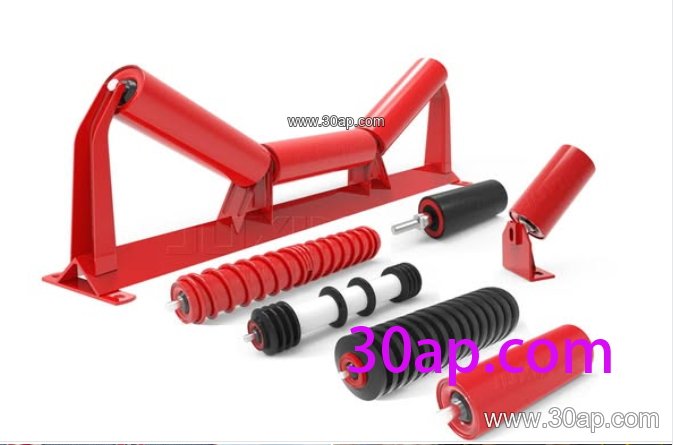
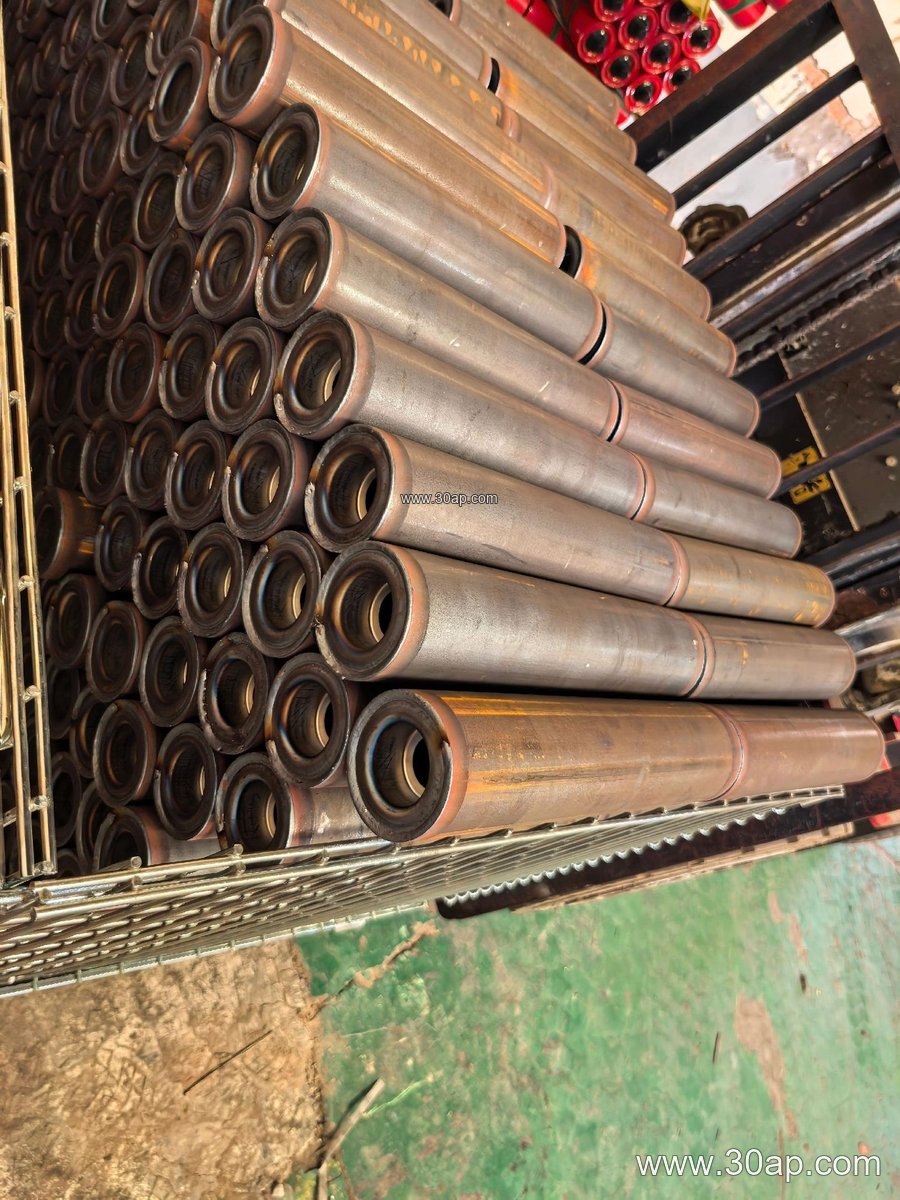
Common roll diameters for this duty include Ø89, Ø108, Ø133, Ø159 and Ø194, with larger sizes used where lumps are heavy and the drop height is significant. Bearing selection usually follows the load rather than the belt width alone; 6205, 6305, 6308 and 6310 are all seen in impact service. Sealing matters as much as the rubber, because dust and water ingress at a transfer point is constant.
- Rubber ring or rubber disc cushioning for energy absorption
- Reinforced shell to resist deformation under repeated shock
- Labyrinth or multi-stage seal to keep out dust and spray
- Greased-for-life or regreasing bearing housing depending on design
Where It Fits on the Conveyor
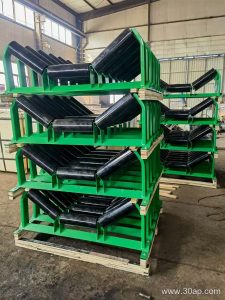
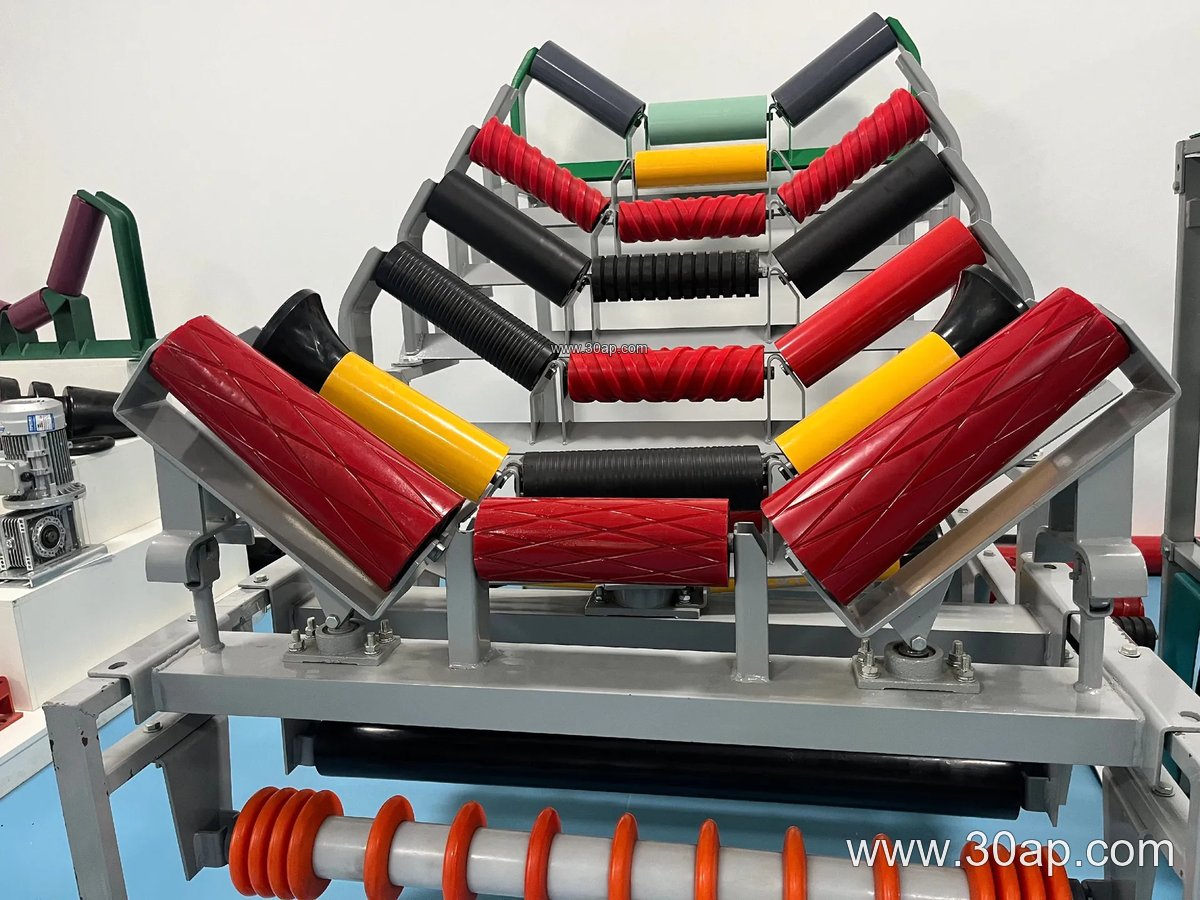
The anti-impact idler is normally installed as a set in a three-roll trough arrangement, directly under the chute. The trough angle is usually 30 or 35 degrees, sometimes 45 degrees for very bulky material. Roll length follows belt width and trough form; for example, a three-roll set on a B800 belt often uses rolls around 315 mm long, while a B1200 line may use roughly 465 mm rolls. These are common reference values, not fixed pairings, and the side rolls and centre roll can differ.
Because the belt is supported by rubber rather than bare steel, the belt cover sees less cutting and gouging. This matters for abrasion resistant conveyor belt grades and for heavy-duty mining conveyor belt used in iron ore, copper ore and gold mining operations. Where coal dust is present, a flame retardant conveyor belt combined with properly earthed, anti-static components is the usual specification route.
Selection Points for Buyers
Start with the material: lump size, drop height, throughput and whether the load is wet or dry. Then confirm belt width, trough angle and the mounting dimensions of the existing conveyor bracket so the new set drops in without frame modification. A buyer should also check the shaft end fixing, since impact sets are often clamped differently from ordinary carrying idlers.
| Parameter | Common Range | Note |
|---|---|---|
| Roll diameter | Ø89 to Ø194 mm | Larger for heavy lumps |
| Belt width | B500 to B2000 mm | Match existing frame |
| Trough angle | 20, 30, 35, 45 degrees | Per design |
| Roll surface | Rubber ring, rubber disc | Cushioning layer |
| Bearing | 6205, 6305, 6308, 6310 | Selected by load |
Do not confuse this item with a bend pulley or a tail pulley. Pulleys redirect or drive the belt; an anti-impact idler only supports it. A return roller or a V-type return set serves the lower run and is a different component. For a transfer point on a steel cord conveyor belt line at a port or power plant, the impact set is still the right protection, but the rubber grade and bearing protection should be chosen for the local dust and humidity.
Installation and Maintenance
Keep the impact set close to the chute so the belt does not sag between the load point and the first support. Check ring wear every few months; worn or flattened rings lose their cushioning and transfer shock to the belt and bearings. Replace rings in complete sets where possible, and confirm that the roller still turns freely by hand. On a long overland line using EP conveyor belt or multi-ply fabric core conveyor belt, a single seized impact roll can wear a groove into the belt cover within weeks.
For more on matching rollers, pulleys and belts as one system, see anti-impact idler and our notes on conveyor idler roller selection.