What a V-Type Idler Does on a Belt Conveyor
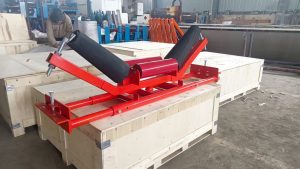
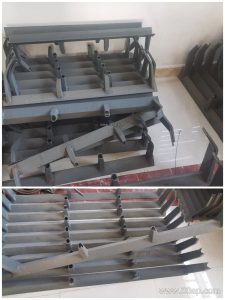
A V-Type Idler is a two-roll return-side idler arranged in a shallow V shape, with the two rolls inclined toward the center of the belt. It sits under the carrying run, on the return strand, and supports the empty or lightly loaded conveyor belt as it travels back toward the tail. Because the rolls form a trough-like profile, the belt tends to center itself as it passes over the idler, which helps reduce edge wander on long runs. In a quarry, a limestone mine, or a sand and aggregate line, this small centering effect can matter as much as the load support itself.
The V-Type Idler is sometimes called a V-return idler or a V-shaped return roller. These are accurate names for the same product, not different equipment. It should not be confused with a troughing idler on the carrying side, nor with a flat return roller, which uses a single horizontal roll.
How the Assembly Is Built
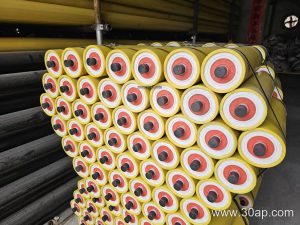
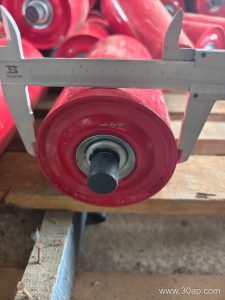
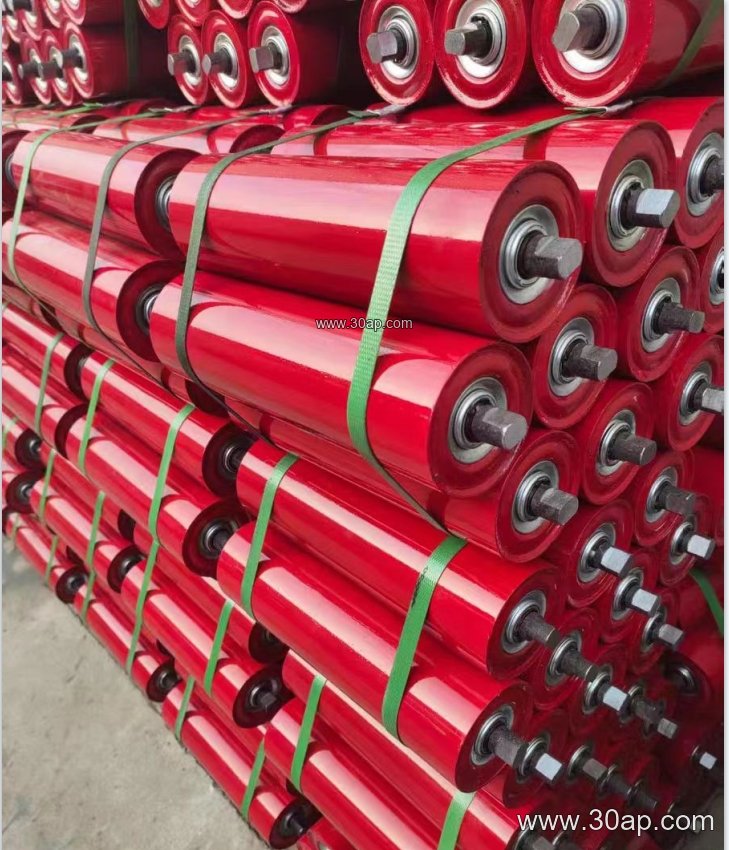
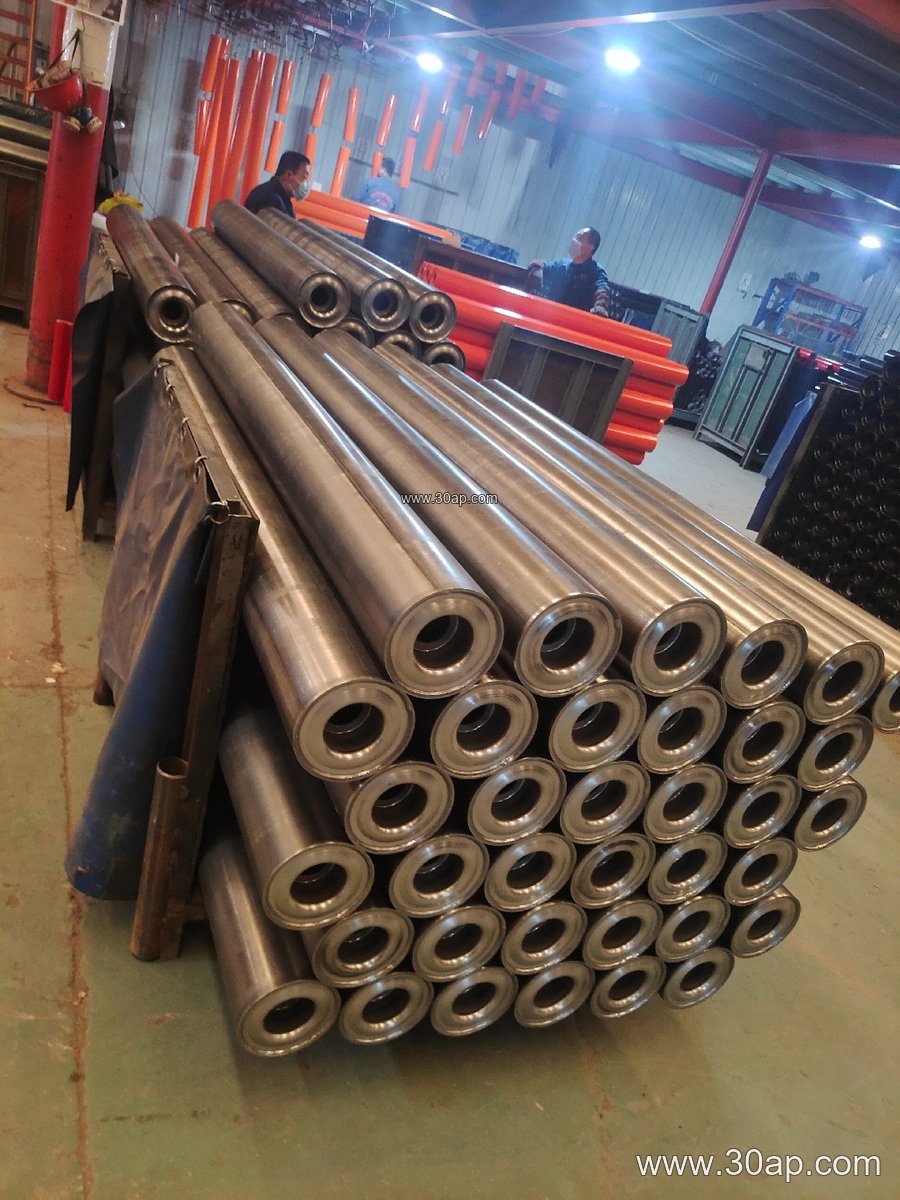
Each V-Type Idler consists of two idler rollers mounted on a common frame or bracket, set at an angle so the pair forms a V. The rolls usually turn on ball bearings housed in sealed end caps, and the shell may be plain steel, nylon, ceramic, or rubber-covered depending on the duty. Common bearing sizes include 6204, 6205, 6305, 6306, 6308 and 6310, matched to roll diameter and load rather than to belt width alone.
Roll diameters for return idlers commonly fall in the range of Ø63 mm to Ø159 mm, with larger sizes such as Ø178, Ø194 and Ø219 mm used on heavy-duty installations. Belt widths from B400 up to B2400 are regularly served, but the roll length and the V angle are determined by the conveyor design, not by a single fixed rule.
Typical Reference Data
| Item | Common Range |
|---|---|
| Roll diameter | Ø63, Ø76, Ø89, Ø102, Ø108, Ø127, Ø133, Ø159 mm; larger sizes for heavy duty |
| Belt width | B400, B500, B650, B800, B1000, B1200, B1400, B1600, B1800, B2000 mm |
| V angle | Typically 10 to 20 degrees per side, set by the frame design |
| Bearing | 6204, 6205, 6305, 6306, 6308, 6310 |
| Roll surface | Steel tube, nylon, ceramic, rubber ring |
These figures are reference examples only. A buyer should confirm the actual roll length, shaft diameter and bearing class against the conveyor drawing.
Where It Fits in the Conveyor Line
The V-Type Idler belongs to the return strand, between the head pulley and the tail pulley. It is often installed at intervals along the return run, especially where the belt is wide or the conveyor is long. In a coal handling system at a power plant, or on a cement plant clinker line, return-side tracking problems can cause belt edge damage and spillage; a well-placed V-return idler helps keep the belt on center without adding a full training station.
It is not a substitute for a bend pulley, a drive pulley or a tail pulley. Those are conveyor pulleys that transmit motion or change belt direction. The V-Type Idler only supports and guides the belt. It also differs from a buffer idler, which is used on the carrying side at loading points to absorb impact, and from a spiral return roller, which is chosen for self-cleaning in sticky material.
Applications Across Industries
V-return idlers appear in a wide spread of bulk handling operations. In an iron ore or copper ore terminal, they support the return strand under a heavy rubber conveyor belt. In a stone crushing and screening plant, they help keep the belt aligned after the discharge point. In a fertilizer or grain handling facility, a smooth steel or nylon roll surface reduces material build-up. For hot service, such as a steel plant sinter line, heat-resistant roll construction may be specified, while a coal mine may ask for flame retardant and anti-static properties in the belt and compatible components.
Because the return side carries no material, the V-Type Idler is usually lighter than the carrying idlers, but it still needs adequate bearing protection against dust and water. Sealed bearings with effective labyrinth or lip seals are common in quarry and underground mining conditions.
What Buyers Should Check Before Ordering
- Belt width and roll length: confirm B650, B800, B1000 or B1200 as marked on the conveyor drawing, and check that the roll length suits the frame.
- Roll diameter and bearing: match the shaft and bearing to the calculated load; do not assume one belt width fixes one shaft size.
- V angle and mounting: check the bracket dimensions and the distance between fixing holes.
- Surface and environment: steel for general duty, rubber ring for reduced wear, ceramic or nylon where build-up or abrasion is a concern.
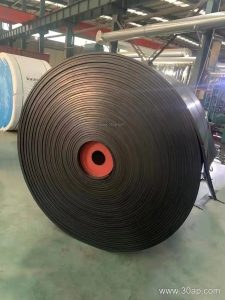
- Belt compatibility: the return idler should suit the belt type in use, whether an EP conveyor belt, an NN conveyor belt, a steel cord conveyor belt or a fabric core conveyor belt.
For a complete conveyor package, buyers often coordinate V-Type Idlers with the conveyor belt, idler roller sets, conveyor pulley assemblies and conveyor bracket details from the same drawing set. On a mining conveyor belt or a heavy-duty mining conveyor belt installation, a small mismatch in roll length or frame angle can cause tracking trouble that shows up later as edge wear. Reviewing the return idler layout together with the belt specification is the simplest way to avoid that.