What the Belt Conveyor Tail Pulley Does
The belt conveyor tail pulley sits at the return end of a conveyor, opposite the drive. It is a non-driven conveyor pulley that turns with the belt, supports the return strand, and helps hold belt alignment as material is loaded. In many arrangements it also carries a tensioning device, so the tail pulley and the take-up system work together to keep the belt from slipping on the drive pulley. It is not a drive pulley, and it is not a bend pulley; each position in the conveyor has a different job, even though all three are conveyor pulleys.
Because the tail end often sits under the loading point, this pulley sees dust, fines, and occasional impact. That is why buyers in a quarry, a coal preparation plant, or a cement clinker line should treat it as a wear part rather than a one-time purchase.
Construction and Common Surface Forms
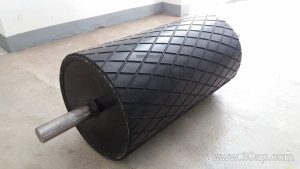
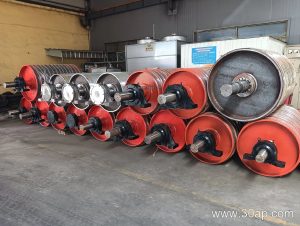
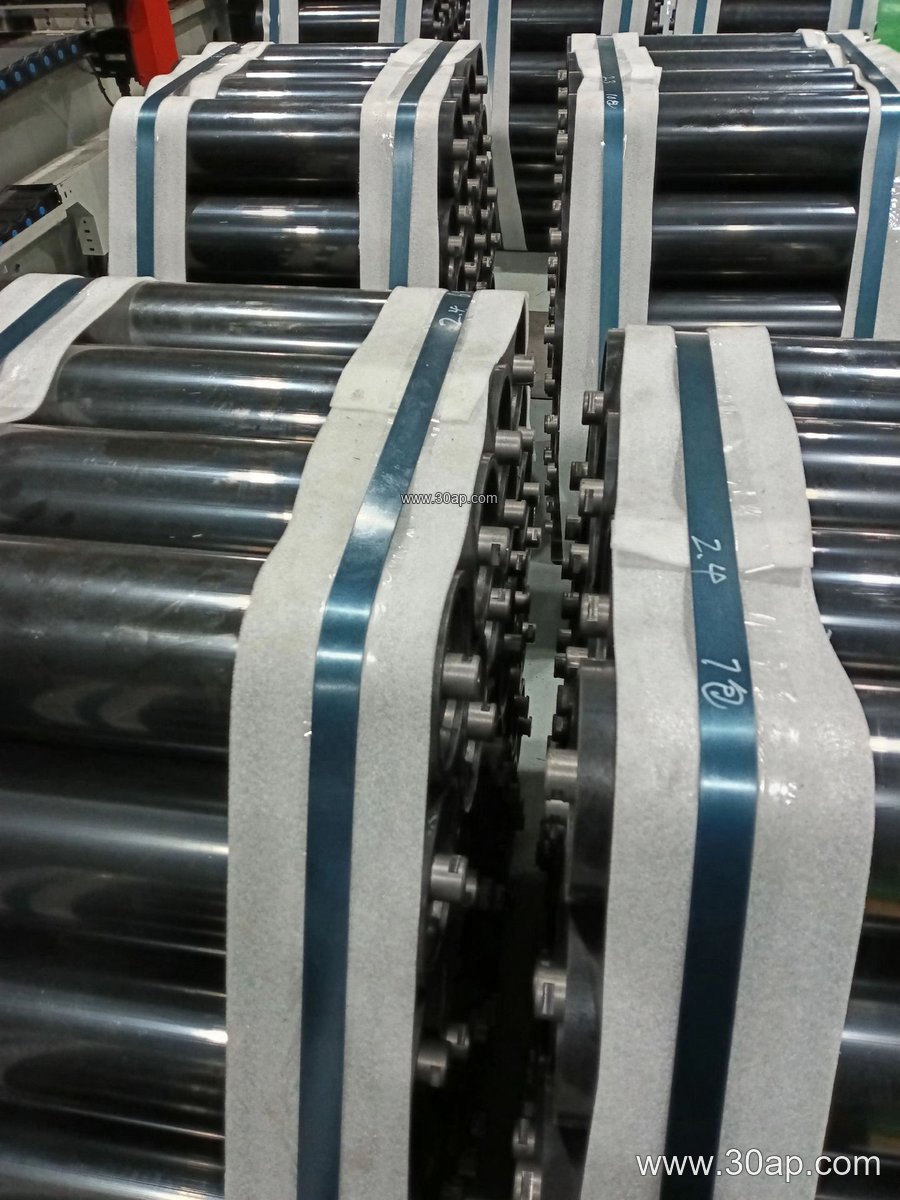
A typical tail pulley is built from a steel shell, end discs, a shaft, and bearing housings mounted on conveyor brackets. The shell may be plain or covered with rubber. Common surface options include plain, cast rubber, cold-bonded rubber, hot-vulcanized rubber, diamond grooving, herringbone grooving, and ceramic lagging. Lagging thickness is often 8, 10, 12, 15, or 20 mm depending on the duty.
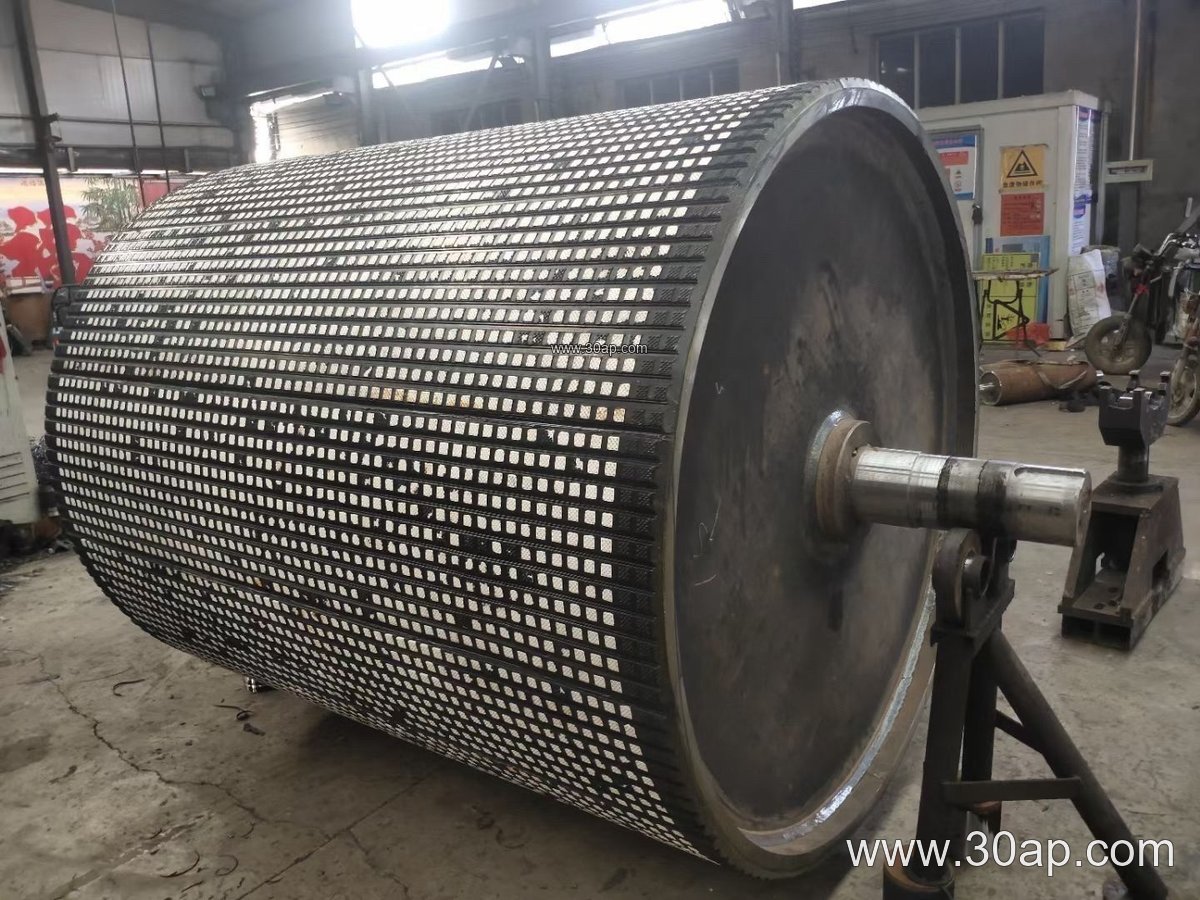
At the tail position, plain or lightly lagged shells are common, because the main goals are guidance and wear resistance rather than torque transmission. Diamond or herringbone lagging can help shed water and fines where the belt is wet. The pulley face width is usually a little wider than the belt, for example about 1150 mm for a B1000 belt or about 1600 mm for a B1400 belt.
Sizes and How They Combine
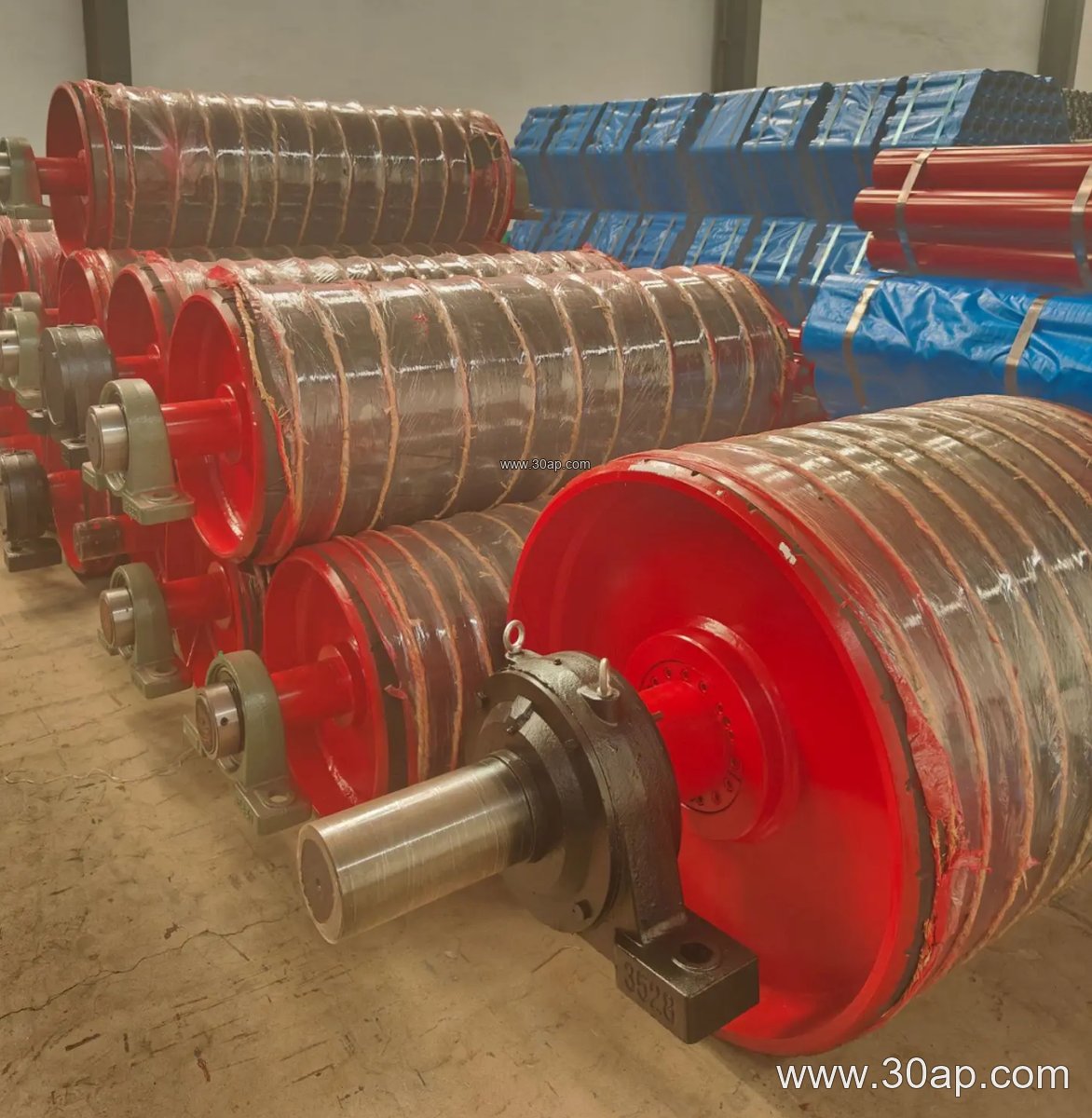
Tail pulleys are commonly ordered by belt width and diameter, but the two figures are not locked together. A B800 conveyor might run a Ø400 or Ø500 tail pulley, while a B1200 unit may use Ø630 or Ø800, depending on belt tension, wrap angle, and the take-up travel available. Shaft diameter is set by torque and load, not by belt width alone. A common shaft range runs from Ø50 up to Ø200.
| Belt width (B) | Typical pulley face width | Example diameter range |
|---|---|---|
| B500 | about 600 mm | Ø250 to Ø400 |
| B650 | about 750 mm | Ø315 to Ø500 |
| B800 | about 950 mm | Ø400 to Ø630 |
| B1000 | about 1150 mm | Ø500 to Ø800 |
| B1200 | about 1400 mm | Ø630 to Ø1000 |
| B1400 | about 1600 mm | Ø800 to Ø1250 |
These figures are reference ranges only; final dimensions should follow the conveyor design. A heavy-duty mining conveyor belt carrying iron ore may need a larger shaft and bearing than a light aggregate line at the same width.
Where It Fits in the Plant
In a sand and gravel plant, the tail pulley is often the first pulley the belt reaches after the loading skirt, so it must tolerate grit. In a power plant coal handling system, flame retardant conveyor belt and anti-static properties may be specified for the belt, and the tail pulley should be matched with a bearing seal that keeps coal dust out. In a cement plant, heat resistant conveyor belt may run near the clinker cooler, but the tail pulley itself is usually placed where temperature is moderate.
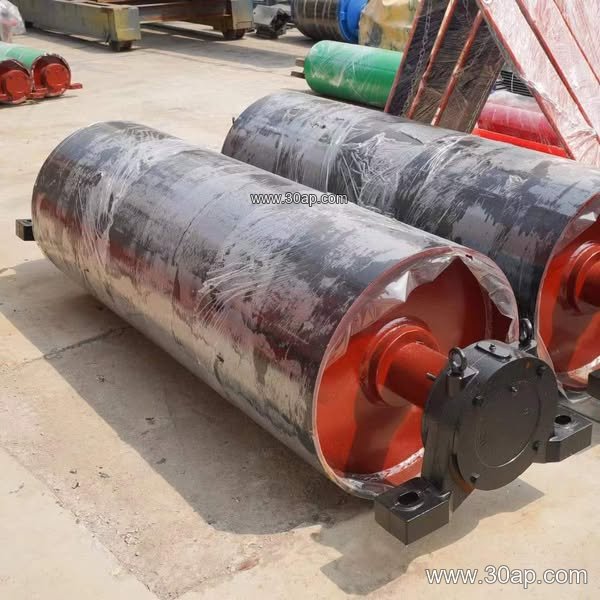
Related equipment matters too: conveyor idler rollers support the belt between pulleys, and the tail pulley alignment should be checked against the last idler set. A misaligned tail pulley quickly causes edge wear on a rubber conveyor belt or an EP conveyor belt.
Buyer Checklist
- Confirm belt width, pulley diameter, face width, and shaft diameter from the conveyor drawing.
- State the material and environment: wet, dusty, abrasive, or oily. This affects lagging choice.
- Decide whether the pulley is fixed or sliding in the take-up frame.
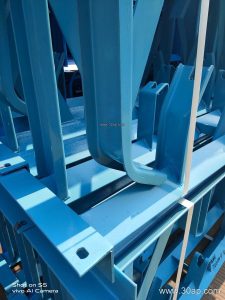
- Ask for bearing type, housing style, and bracket dimensions that match the existing frame.
- Check that the lagging is suitable for the belt cover grade, especially on a heavy-duty conveyor belt.
Maintenance Notes
Inspect lagging wear, check bearing temperature, and verify that the pulley stays square to the belt centerline. Replace worn lagging before it damages the belt edge. Keep the area around the tail pulley clear so spilled material does not build up against the shell. For more conveyor pulley and belt guidance, visit conveyor-pulley.example.com or belt.example.com.