What an HDPE Idler Is
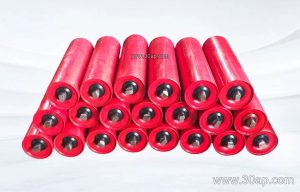
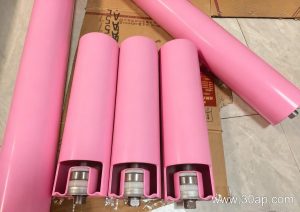
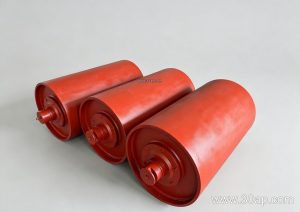
An HDPE idler is a conveyor idler roller whose shell is made from high-density polyethylene rather than steel tube. It sits under the conveyor belt on the carrying or return side and supports the belt and the material load while allowing the belt to move with low rolling resistance. In many plants the same item is simply called a plastic idler roller or PE idler, and those names describe the same product. It is a carrying component, not a drive component, so it is never a substitute for a conveyor pulley at the head, tail or bend position.
The light weight is the first thing maintenance crews notice. A comparable steel roller needs lifting equipment in tight spots; an HDPE shell can often be handled by one person. That matters on long galleries in a coal preparation plant or on the return run of a power plant coal handling line, where dozens of rollers may be replaced during a single shutdown.
How the Roller Is Built
The body is normally an extruded or molded HDPE tube fitted with bearing housings at each end. The shaft is steel, the bearings are sealed and greased for life, and the end caps are pressed or welded in place. Because polyethylene does not rust, the shell keeps its surface smooth in wet or washdown conditions, and sticky material tends to release from it more easily than from painted steel.
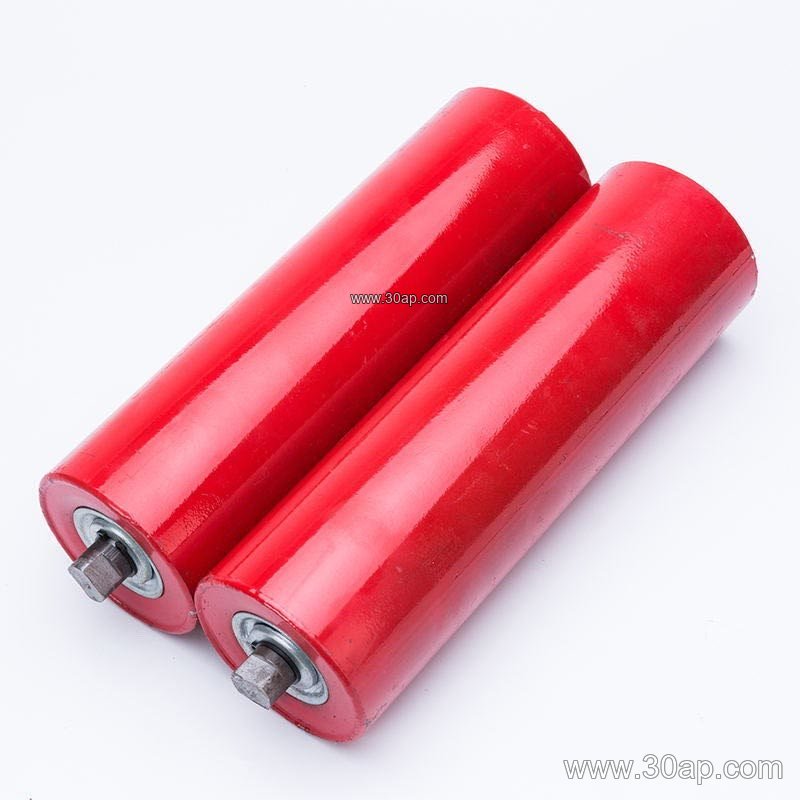
The trade-off is mechanical. HDPE has lower stiffness and a lower working temperature ceiling than steel, so it suits moderate loads and ambient conditions better than hot sinter or high-impact transfer points. The surface form can be plain, or it can carry rubber rings where extra grip or cushioning is needed.
Where It Fits on the Conveyor
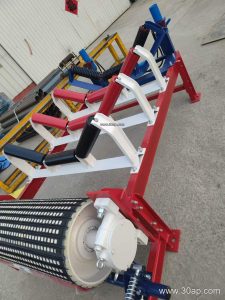
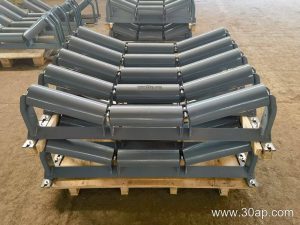
Typical positions are the carrying side of a three-roll troughing set and the return side as a flat or V-return roller. In a quarry or aggregate line, HDPE idlers are often chosen for the fines return and for sections that see washdown. In a cement plant they may appear on additive or clinker transport where buildup is a nuisance. They are also used in fertilizer and grain handling, where a non-corroding, low-friction surface is welcome.
Where the belt carries sharp, heavy rock from a primary crusher, a steel-shell impact idler with rubber rings is usually the better choice at the load point. An HDPE roller can still serve further along the run once the material bed has settled. Matching the roller to the duty, rather than to the whole conveyor, keeps both cost and downtime sensible.
Common Sizes and Configurations
Roller diameter and belt width are selected together with the trough angle and the load, not from a single fixed rule. The table below shows reference values that appear in general practice; final dimensions should follow the conveyor design.
| Item | Common reference values |
|---|---|
| Roller diameter | Ø63, Ø76, Ø89, Ø102, Ø108, Ø127, Ø133, Ø159, Ø178 mm |
| Belt width | B500, B650, B800, B1000, B1200, B1400, B1600 mm |
| Trough angle | 20°, 30°, 35°, 45° |
| Bearing | 6204, 6205, 6305, 6306, 6308 |
| Roller length, three-roll troughing (example) | about 250 mm at B650, 315 mm at B800, 380 mm at B1000, 465 mm at B1200 |
Side rollers and the center roller in a troughing set can differ in length, and a return roller follows its own dimensions. A 1200mm wide conveyor belt does not dictate one shaft size, and no single bearing number belongs to one diameter. Buyers should confirm shaft diameter, bearing seat, fixing centers and end-cap type against the existing conveyor bracket before ordering.
Buyer Checklist
- Confirm the position: carrying, return, or transition, and whether a troughing, flat or V-return arrangement is used.
- Check the belt width and the required roller length, including any gap needed for the conveyor bracket.
- State the material, moisture and temperature so the HDPE shell is not asked to do a steel roller’s job.
- Match the shaft and bearing housing to the frame rather than assuming a standard fit.
- Ask how the seals handle dust; fine abrasive dust is the usual cause of early bearing failure.
Maintenance Notes
Inspect for a seized bearing, a cracked shell or a worn shaft seat. A roller that stops turning will flat-spot the belt cover and can damage an abrasion resistant conveyor belt or a heavy-duty mining conveyor belt running above it. Keep the return strand clear of spilled material, since buildup under the belt loads the roller unevenly. Alignment of the whole idler set matters more than any single component; a misaligned frame will wear out a good roller quickly. For a plant that handles several belt types, from an EP conveyor belt on a secondary run to a steel cord conveyor belt on the main trunk, keeping a small stock of the common HDPE sizes reduces stoppage time. Spare rollers should be stored out of direct sun and away from heat, because polyethylene softens when it gets hot.