What a Trough Idler Bracket Does
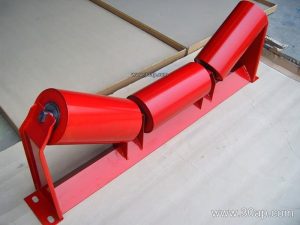
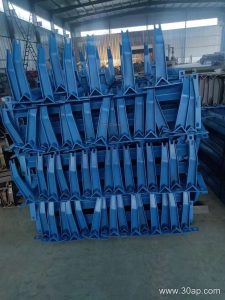
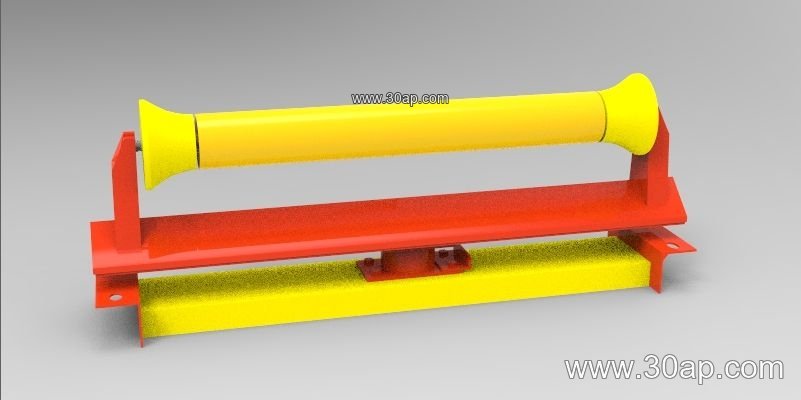
A trough idler bracket is the structural support that holds the inclined and center rollers of a belt conveyor in the familiar trough shape. In a typical carrying run, the bracket carries three idlers: two wing rollers tilted upward and one horizontal center roller. Together they cradle the conveyor belt so that bulk material stays centered during transport. Without a properly aligned bracket, the belt can sag, drift, or spill material along the entire line.
The bracket itself does not turn or carry the load directly. Its job is to position each idler roller at the correct angle and spacing, then transfer the resulting forces into the conveyor frame. Because of this, the bracket’s stiffness, hole spacing, and mounting height all influence belt tracking and roller life.
Construction and Common Materials
Most trough idler brackets are fabricated from angle steel, channel steel, or bent steel plate. The material choice usually follows the duty level of the conveyor. Light aggregate lines may use thinner bent plate, while a heavy-duty mining conveyor or a crusher discharge point often calls for thicker channel sections and reinforced welding.
A bracket generally includes a crossbeam, two or more mounting slots or holes for the idler shafts, and feet or brackets that bolt to the conveyor stringer. Some designs add a slotted connection so the trough angle can be adjusted during installation. The finish may be painted, galvanized, or left as mill finish depending on the environment.
Where These Brackets Are Used
You will find trough idler brackets on nearly any belt conveyor handling bulk material. In a limestone quarry or sand and gravel line, they support the belt after the crusher and before the screen. In a coal washing plant or power station coal yard, they keep coal centered on long inclined runs. Cement plants use them on clinker and raw meal conveyors, while port terminals rely on them for ship loading and stockyard belts.
They are also common in steel plants, fertilizer handling, and tunnel muck removal. In each case, the trough bracket works together with the conveyor belt, idler roller, and conveyor pulley to keep the system running smoothly.
Trough Angle and Size Considerations
The trough angle is one of the most important choices. Common angles are 20, 30, 35, and 45 degrees. A shallow angle suits wide belts and materials that do not need deep containment. A steeper angle helps keep fine or free-flowing material centered, especially on higher-capacity lines.
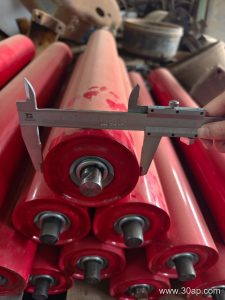
Belt width and roller diameter are selected together with the bracket. Typical belt widths include B500, B650, B800, B1000, B1200, B1400, B1600, B1800, and B2000. Roller diameters often range from Ø89 to Ø194. A B800 bracket with a 35-degree trough and Ø108 rollers is a common combination, but it is not the only valid one. A B1200 line might use 45 degrees and Ø133 rollers, while a smaller B650 conveyor could run 30 degrees with Ø89 rollers.
Reference Examples
- B500, 20 degrees, Ø89
- B650, 30 degrees, Ø89
- B800, 35 degrees, Ø108
- B1000, 35 degrees, Ø133
- B1200, 45 degrees, Ø133
- B1400, 45 degrees, Ø159
- B1600, 45 degrees, Ø159 or Ø194
- B1800, 45 degrees, Ø194
These are reference combinations, not fixed rules. The bracket’s mounting hole spacing and crossbeam length change with belt width and trough angle, so buyers should confirm dimensions against the conveyor drawing.
Fixed, Adjustable, and Transition Brackets
Fixed brackets hold a set trough angle and are simple and rigid. Adjustable brackets let maintenance crews change the trough angle within a range, which is useful when material characteristics vary. Transition brackets are placed near the tail or head pulley to guide the belt gradually from flat to troughed. Impact brackets with cushioning are used below crusher discharge points, while self-aligning brackets help correct belt drift.
For comparison, a return bracket supports the belt on the return run and is a different component. A bend pulley or drive pulley also serves a separate function and should not be confused with the trough bracket.
Buyer Checklist
- Confirm belt width, trough angle, and roller diameter as a set.
- Check mounting hole spacing and crossbeam length against the frame drawing.
- Match steel thickness and finish to the site environment.
- Decide whether fixed or adjustable angle is needed.
- Confirm bracket compatibility with the chosen idler roller and conveyor bracket system.
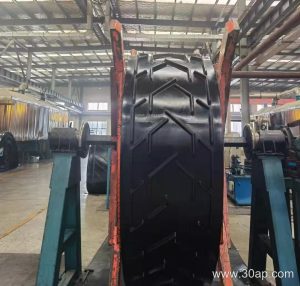
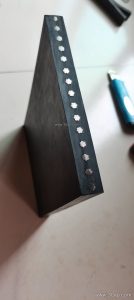
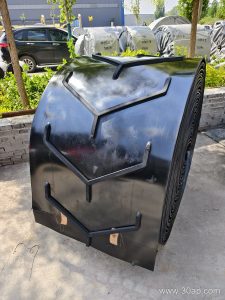
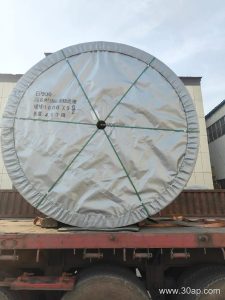
For conveyors carrying abrasive or heavy material, the bracket should be matched with a durable belt such as an abrasion resistant conveyor belt, and in coal or underground work a flame retardant conveyor belt is often specified. A well-matched trough idler bracket keeps the belt supported, the rollers aligned, and the whole conveyor line running with less downtime.