What a Return Idler Bracket Does on a Conveyor
A return idler bracket, also called a return roller bracket or lower idler support, is the structural component that holds the return idlers underneath the conveyor belt. While the carrying side gets most of the attention, the return run needs steady support too, and this bracket provides the mounting point that keeps the belt tracking smoothly on its way back to the tail pulley. In a quarry or sand and gravel line, a loose or misaligned return bracket can cause the belt to wander, edge damage, and premature idler wear, so the part deserves proper attention during both design and maintenance.
Construction and Common Forms
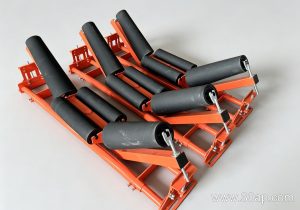
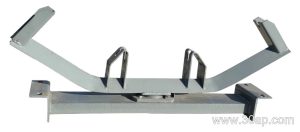
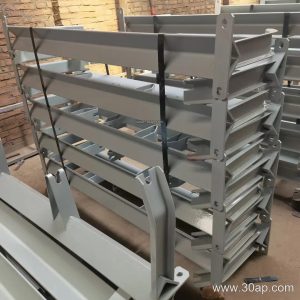
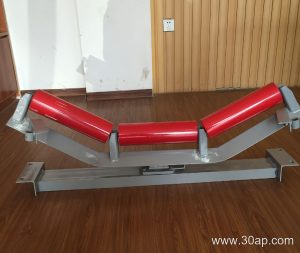
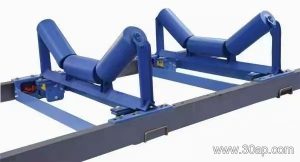
Most return idler brackets are fabricated from angle steel, channel steel, or bent steel plate. The bracket usually bolts to the conveyor frame stringers and carries either a single flat return idler or a V-shaped return set. Fixed brackets hold the idler at a set position, while adjustable brackets allow fine tuning of height and alignment after installation. The mounting hole spacing and crossbeam length are determined by belt width and the specific idler configuration, so these dimensions are not universal. A typical bracket for a B800 conveyor with Ø108 return idlers will differ in hole pattern from one built for a B1200 frame with Ø133 rollers.
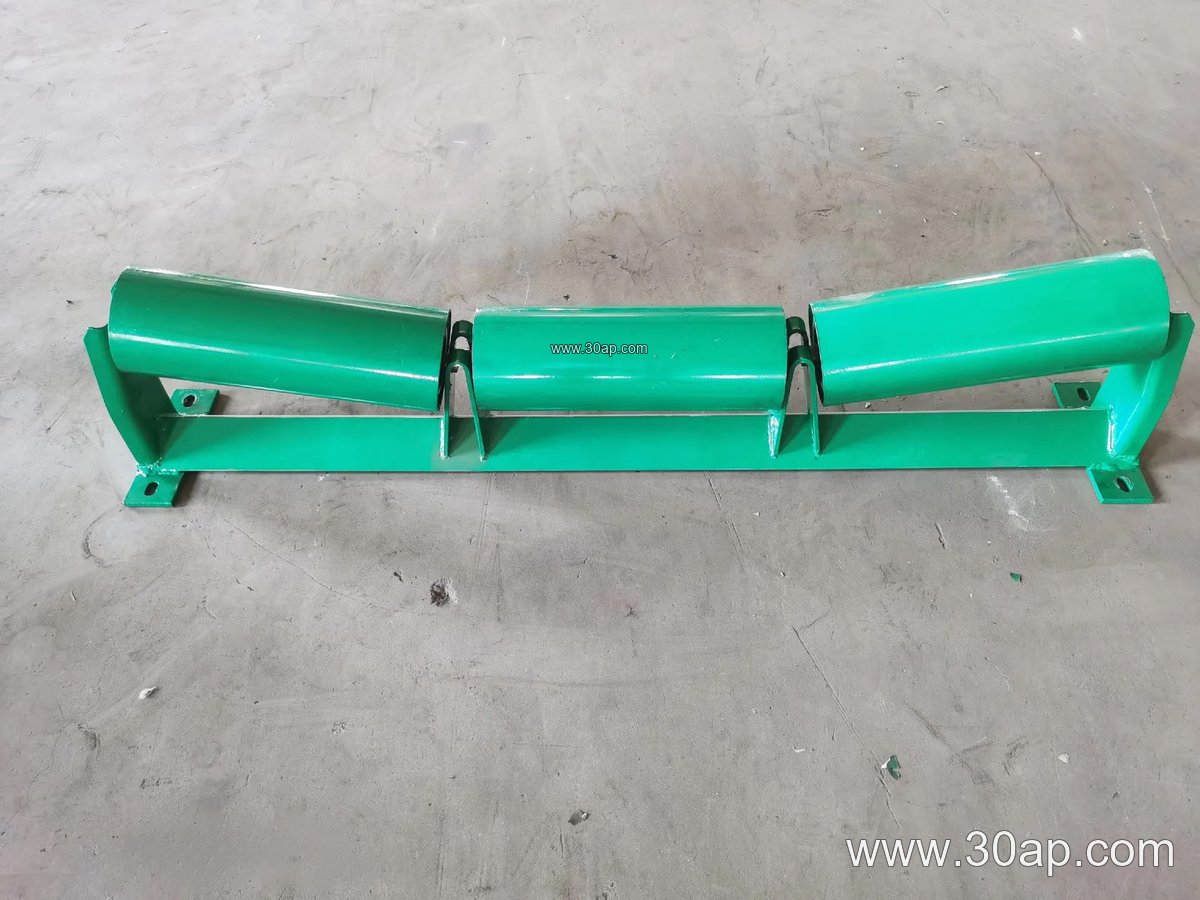
Common bracket configurations
- Flat return bracket for single return idler
- V-return bracket for two-roller V sets
- Adjustable return bracket with slotted mounting holes
- Heavy-duty fabricated bracket for wide belts
Where It Fits in the Conveyor Layout
The return bracket sits below the carrying idlers, spaced along the return strand at intervals set by the conveyor designer. In a coal mining conveyor or a power plant coal handling system, return brackets are often mounted on the same frame as the carrying brackets but on the lower chord. In a cement plant or limestone quarry, dust and fines can build up around the bracket, so access for cleaning matters. The bracket works together with the conveyor belt, the idler roller, and the conveyor pulley to keep the return run stable. On a pipe conveyor or a corrugated sidewall belt system, the return support arrangement may differ, but the basic function of holding the return idlers remains the same.
Matching Bracket to Belt Width and Idler Diameter
Buyers should confirm the belt width, the return idler diameter, and the frame hole pattern before ordering. Common belt widths include B500, B650, B800, B1000, B1200, B1400, B1600, B1800, B2000, B2200, and common return idler diameters include Ø89, Ø108, Ø133, Ø159, and Ø194. These are reference ranges, not fixed combinations. A B650 frame might use Ø89 return idlers in a light aggregate application, while a B1400 conveyor in an iron ore operation could use Ø159 rollers. The bracket must match the actual idler shaft and frame, not just the belt width.
Reference data for bracket selection
| Parameter | Common reference values |
|---|---|
| Belt width | B500, B650, B800, B1000, B1200, B1400, B1600, B1800, B2000, B2200 |
| Return idler diameter | Ø89, Ø108, Ø133, Ø159, Ø194 |
| Bracket material | Angle steel, channel steel, bent steel plate |
| Mounting type | Fixed or adjustable |
Buyer Checklist
Before purchasing return idler brackets, check the conveyor frame drawing for hole spacing and bracket height. Confirm whether the return set is flat or V-shaped, and whether adjustment slots are needed for belt training. Consider the environment: a wash plant or port terminal may need galvanized or painted brackets, while an underground coal mining conveyor may require flame retardant considerations for nearby belting such as PVG800S conveyor belt or flame retardant conveyor belt. The bracket itself is a steel part, but its compatibility with the idler and frame is what keeps the system running. For broader conveyor needs, including rubber conveyor belt, EP conveyor belt, and steel cord conveyor belt options, work with a supplier who can confirm bracket dimensions against your actual frame.
Maintenance Notes
Inspect return brackets for loose bolts, bent ears, and corrosion. A bracket that has shifted can cause the return idler to sit at an angle, which in turn wears the belt edge. In dusty operations such as a stone crushing plant or aggregate yard, clean accumulated material from the bracket area so the idler can rotate freely. Replacing a worn bracket before it damages the return idler is usually simpler than replacing both parts later.