What a Rock Conveyor Belt Does
A rock conveyor belt is the load-carrying component of a bulk handling line that moves crushed stone, ore, aggregate, clinker and similar heavy, sharp-edged material. In a mine, quarry, cement plant, power plant or sand and gravel yard, the belt works together with the conveyor pulley, idler roller and conveyor bracket to keep material flowing between the crusher, screen and stockpile. Because rock is abrasive and often lumpy, this is usually a heavy-duty conveyor belt rather than a light general-purpose belt.
The term describes the duty and application more than a single construction. A rock conveyor belt may be built on fabric plies or steel cord, and the correct choice depends on lump size, drop height, tonnage and the environment.
How the Belt Is Built
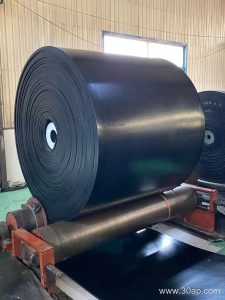
Most rock belts combine three elements: the carcass, the cover rubber and the edge protection. The carcass carries tension and resists impact. Common carcass options include EP conveyor belt (polyester warp, nylon weft), NN conveyor belt (nylon warp and weft), and steel cord conveyor belt for long, high-tension routes. A multi-ply fabric core conveyor belt with two to six plies is typical for medium-duty quarry and aggregate lines, while a steel cord construction suits main haulage from the pit to the plant.
The cover rubber protects the carcass from abrasion, cutting and weathering. An abrasion resistant conveyor belt grade is the usual starting point for crushed rock; heat resistant conveyor belt covers are used where hot clinker or sinter is carried, and flame retardant conveyor belt or fire resistant conveyor belt grades appear in coal mining conveyor belt and underground coal mining conveyor belt service. Oil resistant and cold resistant covers are selected when the site demands them.
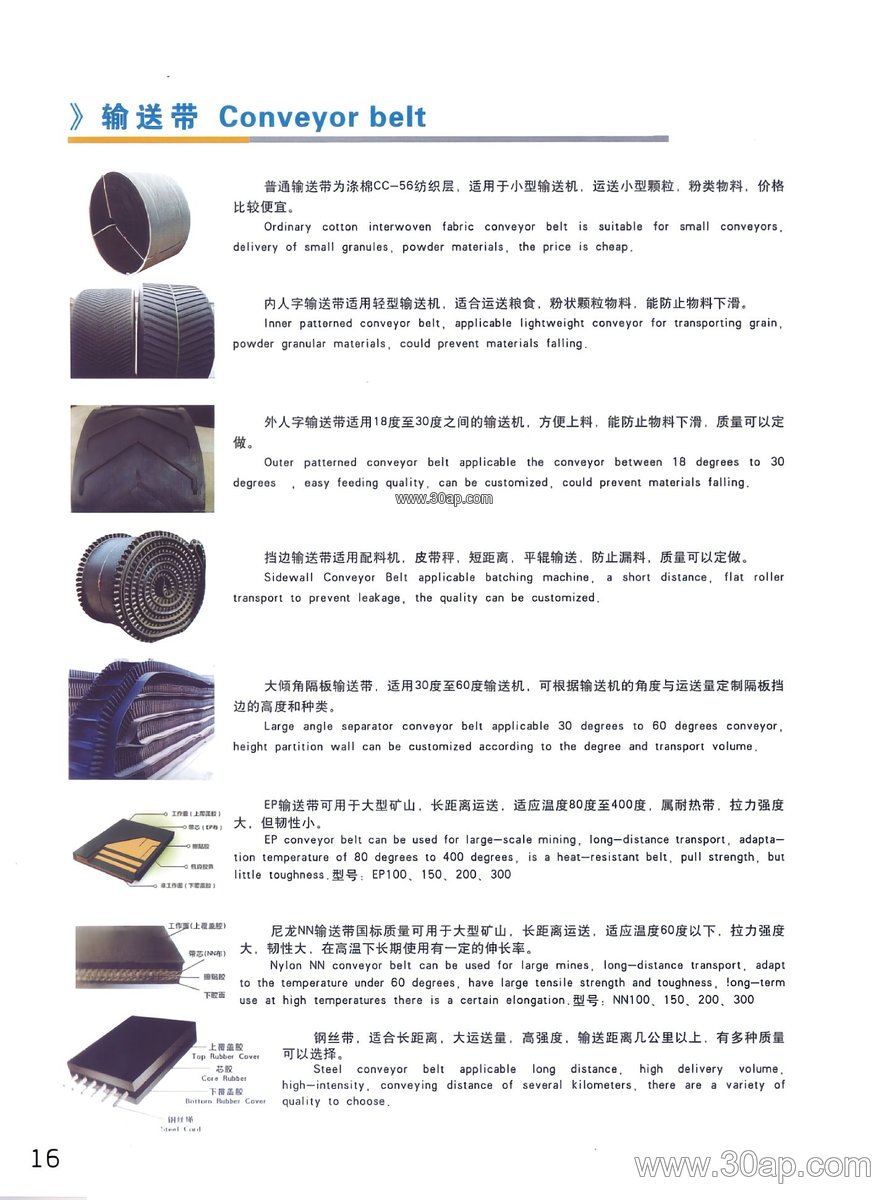
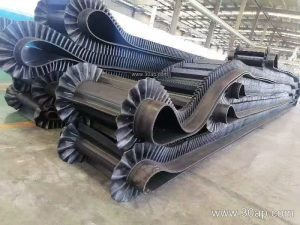
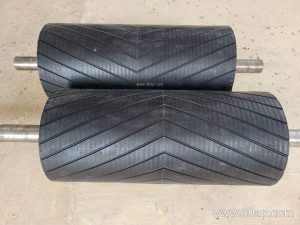
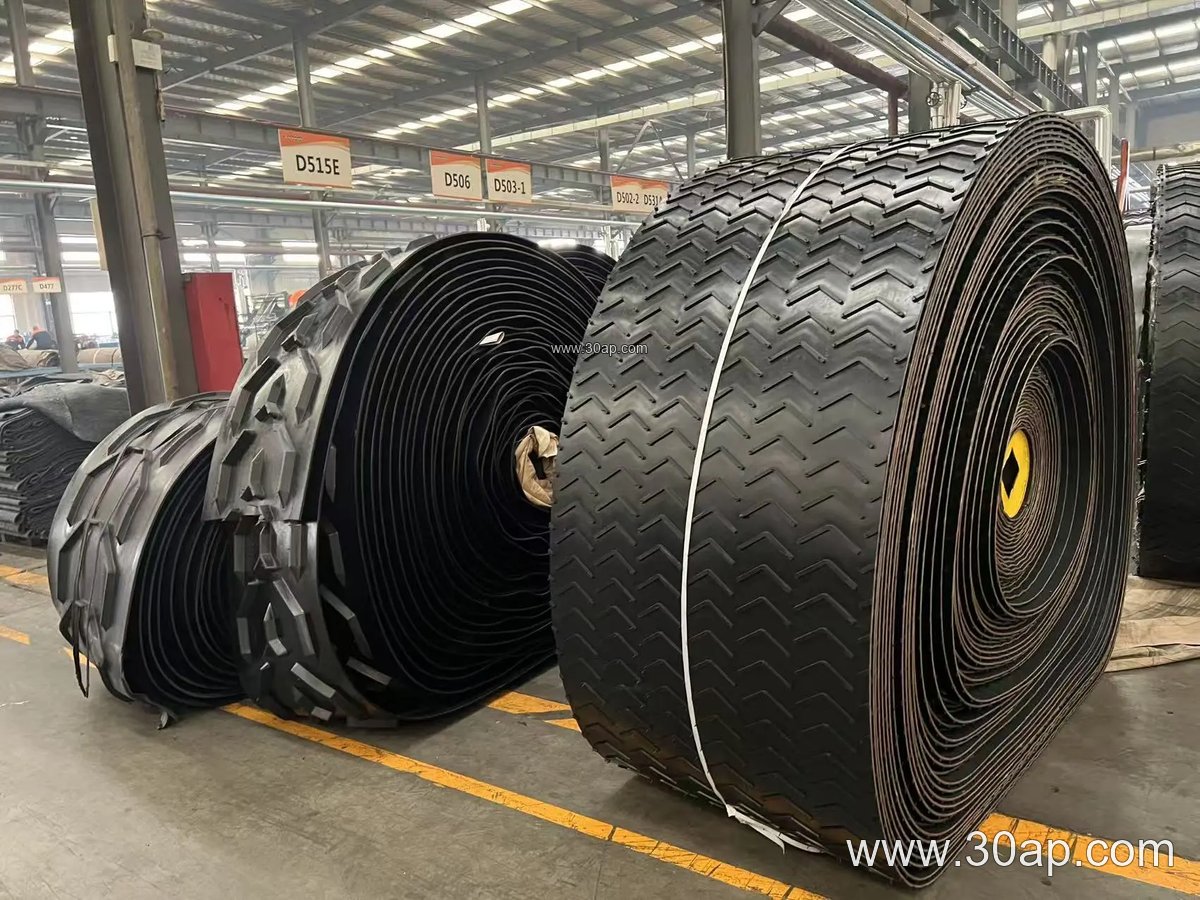
Edge and surface features matter too. A chevron conveyor belt or corrugated sidewall conveyor belt helps on inclines where rock would otherwise roll back, and a skirted conveyor belt keeps material contained at transfer points. These are variants of the same product, chosen for the route rather than replacing the basic rock belt.
Typical Specifications
Values below are common reference ranges, not fixed universal specifications. Actual belt design is confirmed by the manufacturer for each conveyor.
| Parameter | Common reference values |
|---|---|
| Belt width | B500, B650, B800, B1000, B1200, B1400, B1600, B1800, B2000 |
| EP strength grades | EP200, EP315, EP400, EP500, EP630, EP800, EP1000, EP1250, EP1600, EP2000 |
| Cover thickness (top + bottom) | 3+1.5, 4+2, 5+2, 6+2, 8+3 mm |
| Fabric plies | Usually 2 to 6 layers |
| Surface forms | Smooth, chevron, corrugated sidewall, skirted |
Width and strength are matched to the conveyor design, not to each other by a fixed rule. A wider belt does not automatically require a particular pulley diameter, and shaft size follows the pulley and drive design rather than belt width alone. For long overland routes, ST1000 to ST3150 steel cord grades may be considered, while shorter quarry lines often run EP400 to EP1000.
Where Rock Belts Are Used
- Quarry conveyor belt and aggregate conveyor belt lines moving blasted rock and screened stone.
- Crusher conveyor belt sections handling primary and secondary crushed material.
- Cement plant and power plant systems carrying limestone, clinker and coal.
- Iron ore conveyor belt, copper ore conveyor belt and gold mining conveyor belt circuits.
- Port conveyor belt and ship loading conveyor belt routes for bulk material.
- Sand making plant and stone crushing conveyor belt installations.
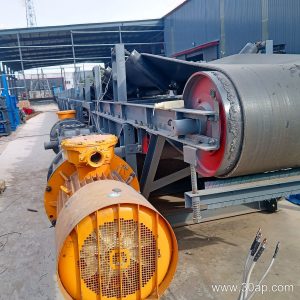
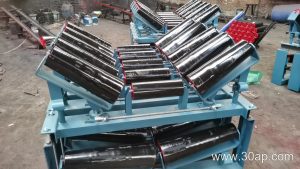
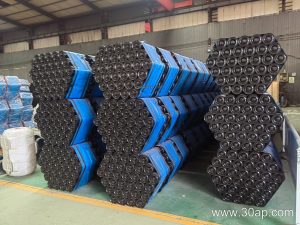
In these settings the belt rarely works alone. The idler roller supports the loaded strand, the conveyor pulley drives and turns the belt, and the conveyor bracket holds the structure together. Matching these components to the belt rating keeps the whole line stable.
Buyer Checklist
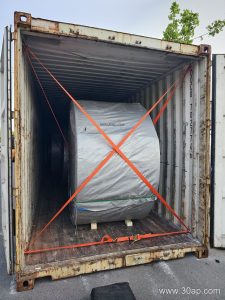
Before ordering, confirm the material type, maximum lump size, drop height at loading points, throughput, incline angle and ambient temperature. State whether the site needs abrasion resistance, heat resistance, flame retardancy, anti-static behavior or oil resistance. Ask for the carcass type and ply count, cover thickness, and whether the belt should be supplied as an endless conveyor belt or in open lengths for splicing. For underground work, confirm the flame retardant and anti-static requirements with the site engineer.
Also review the pulley and idler specifications together with the belt, because impact energy at the feed point and transition distances affect belt life. A belt that is correctly rated for rock duty will usually deliver better service than an oversized general belt chosen on width alone.
Care and Maintenance
Inspect the belt regularly for cover wear, edge damage, ply separation and splice condition. Keep the idler roller turning freely and check the conveyor pulley lagging for wear, since a slipping drive pulley can overheat the belt. Clean spillage from the return strand and align the structure so the belt trains correctly. Small repairs made early prevent a rock conveyor belt from failing at a transfer point where replacement is expensive and slow.