What a High-Speed Conveyor Idler Has to Do
A high-speed conveyor idler is a rotating roller that supports a moving belt on a line running well above ordinary troughing speeds. In a quarry, a cement plant, or a power station coal yard, faster belt travel means every idler under the belt turns more revolutions per hour, so bearing quality, balance, and seal tightness matter more than they do on a slow transfer. The idler does not move material itself; it carries the belt, the load, and the weight of the belt span while keeping friction low.
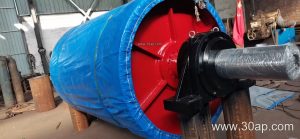
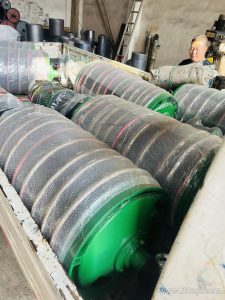
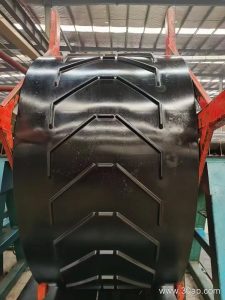
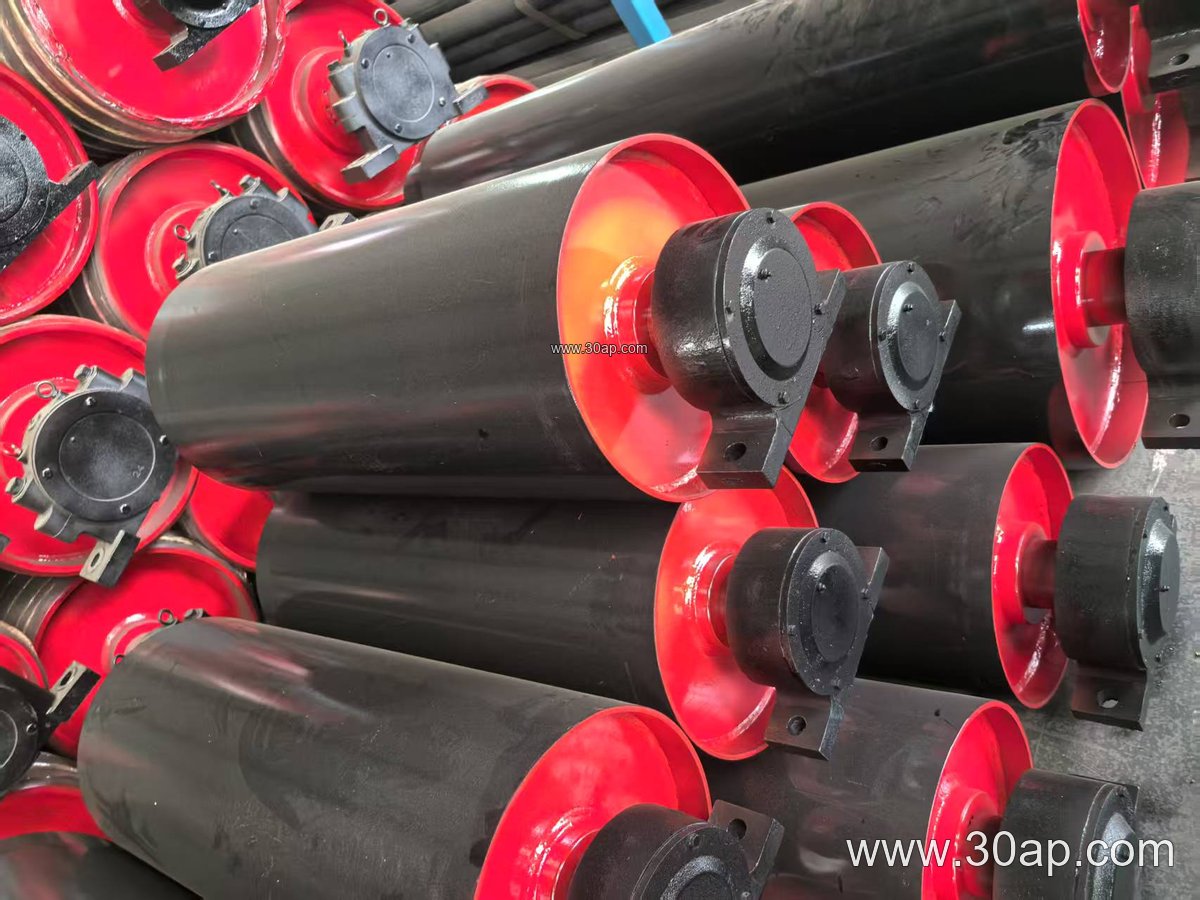
The job is shared with the rest of the line, including the conveyor belt, the conveyor pulley at each end, and the conveyor bracket that fixes each station to the frame. Drive, tail, and bend pulleys all do different work from an idler and should never be treated as substitutes for one another. On a high-speed line, idler choice affects belt life, power draw, and noise, which is why buyers look closely at roller diameter, shell material, and bearing class.
How the Roller Is Built
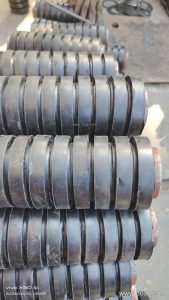
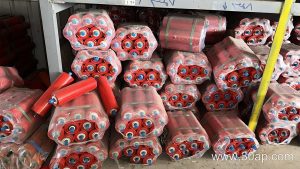
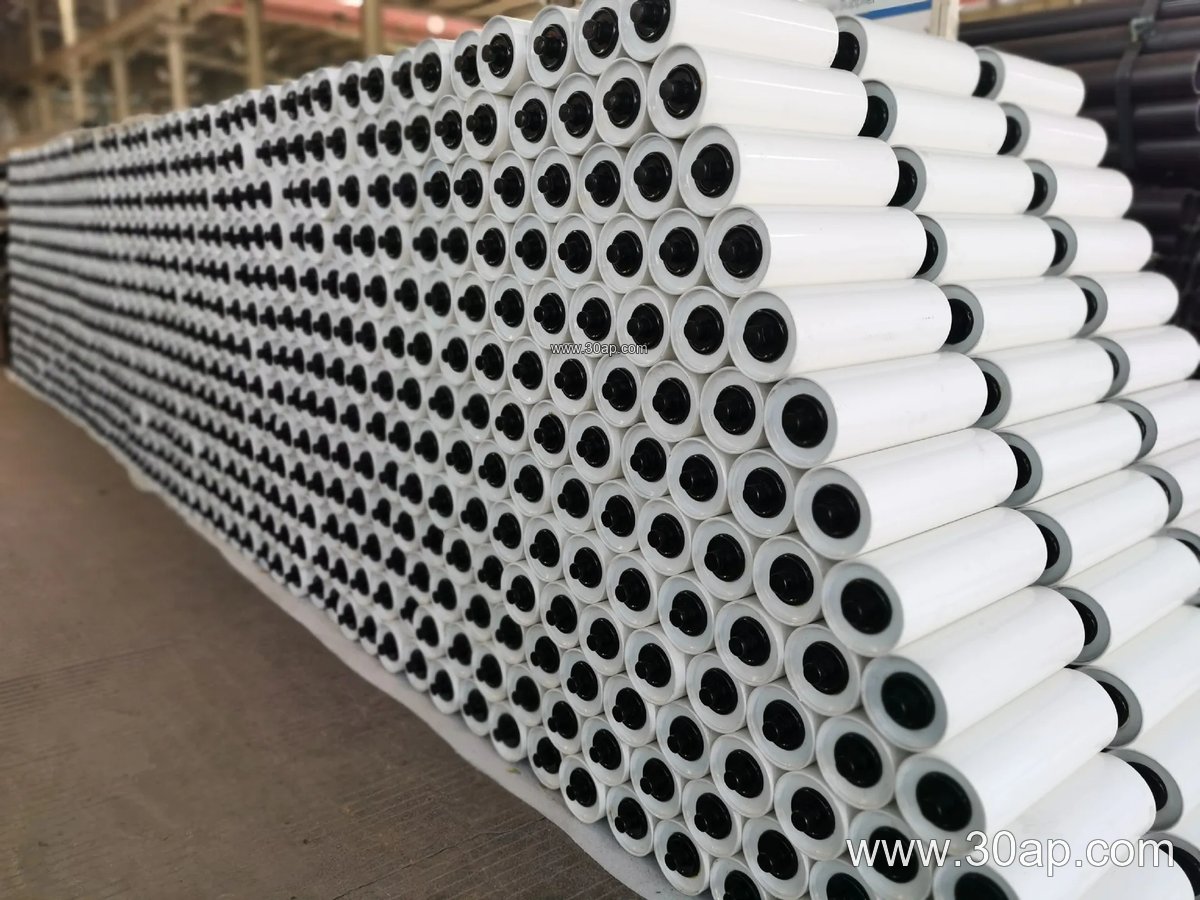
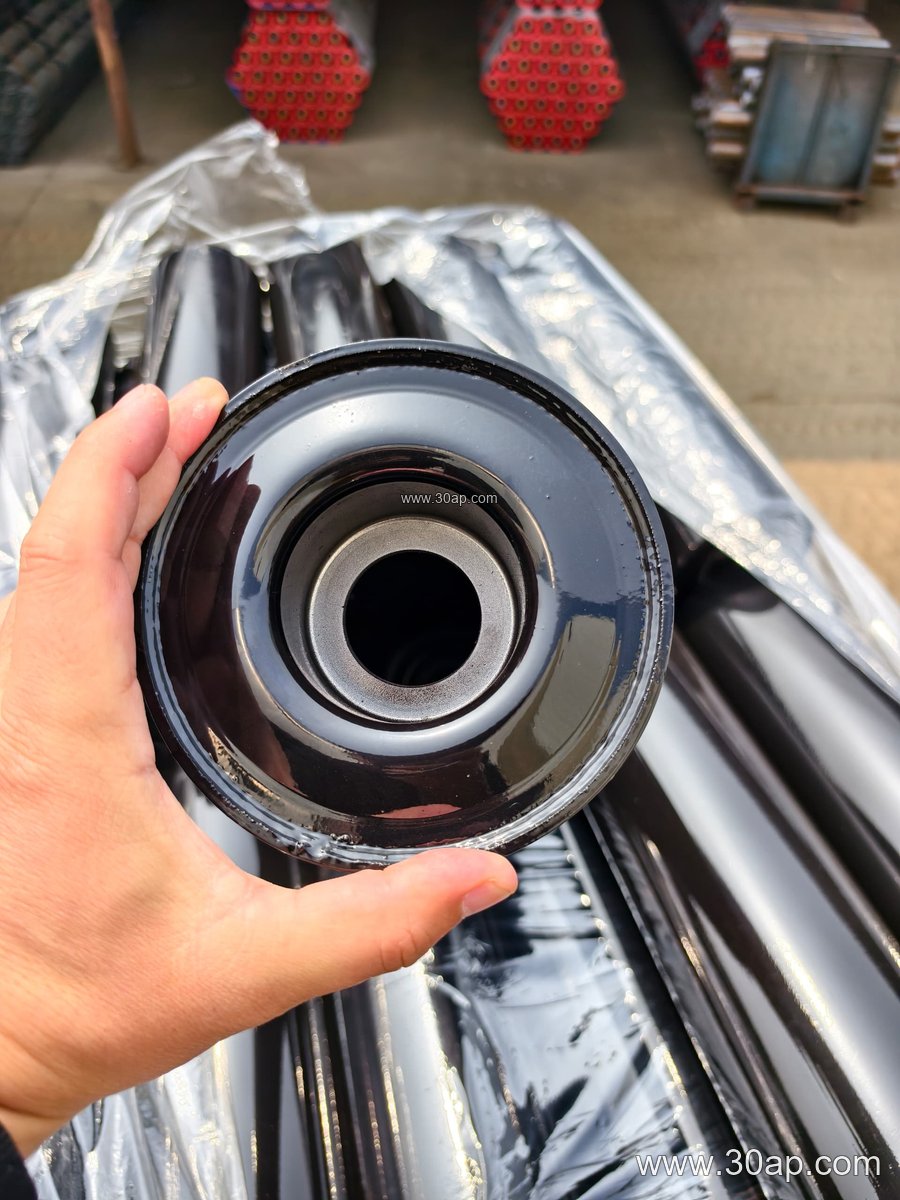
Most units use a steel tube shell with pressed end caps, a through shaft, and a sealed bearing at each end. Roller surfaces may be plain steel, nylon, ceramic, or rubber rings where impact or build-up is a concern. The shell should be straight and balanced, because an out-of-balance roller at high revolutions produces vibration that travels into the frame and the belt.
Sealing is the quiet deciding factor. Dust from limestone, iron ore, or clinker finds its way into any gap, and a labyrinth or multi-stage seal keeps grit away from the bearing. Common bearing sizes include 6204, 6205, 6305, 6306, 6308, and 6310; the correct match depends on load and shaft design, not on one fixed rule.
Where It Fits on the Line
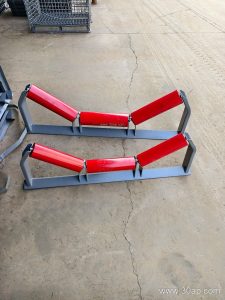
High-speed troughing stations usually carry the loaded strand, with three-roll groups set at 20, 30, 35, or 45 degrees. Return rollers support the empty side, and V-type or flat return units are common where belt tracking needs help. Transition idlers near a pulley ease the belt from flat to troughed without stressing the edges.
Typical service locations include:
- Long overland lines at a limestone quarry or aggregate plant
- Coal handling at a power station, where flame retardant conveyor belt grades are often specified
- Cement plant clinker and raw meal circuits, where heat resistant conveyor belt options may be needed near kiln discharge
In these settings, a heavy-duty mining conveyor belt running at speed puts continuous load on each station, so spacing and roller diameter are set by the belt width, tonnage, and sag limits, not by habit alone.
Reading Diameter, Width, and Roll Length Together
Roller diameter is often chosen from a range such as 63, 76, 89, 102, 108, 127, 133, 159, 178, 194, or 219 mm. Larger diameters turn more slowly for the same belt speed and suit wide, heavy belts. Belt width is a separate decision, commonly from B400 up to B2400, and the two are matched by design rather than by a single fixed pairing.
Roll length changes with belt width, trough angle, and roll group form. The table below gives common examples for three-roll troughing sets; side rolls and center rolls may differ, and final values should follow the design drawing.
| Belt width | Typical center roll length (mm) | Common roller diameter range (mm) |
|---|---|---|
| B500 | 200 | 63 to 89 |
| B650 | 250 | 76 to 108 |
| B800 | 315 | 89 to 133 |
| B1000 | 380 | 108 to 159 |
| B1200 | 465 | 127 to 178 |
| B1400 | 530 | 133 to 194 |
| B1600 | 600 | 159 to 219 |
| B1800 | 670 | 159 to 219 |
| B2000 | 750 | 178 to 219 |
These figures are reference examples only. A buyer should confirm roll length, shaft end type, and bearing size against the actual frame and belt specification before ordering.
What Buyers Should Check Before Ordering
Start with the belt specification. An EP conveyor belt or steel cord conveyor belt has different load behavior, and an abrasion resistant conveyor belt in a crusher circuit may call for thicker covers that change the belt mass per meter. Confirm the belt speed, the material density, and the ambient conditions, since a cold resistant conveyor belt in a northern yard and a heat resistant conveyor belt near a sinter line place different demands on the roller.
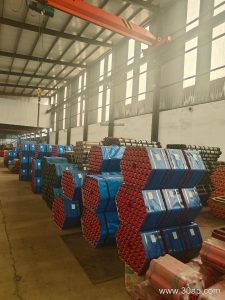
Then check the mounting details: shaft diameter, flat or grooved ends, bracket hole spacing, and frame height. Ask how the seal is arranged and what bearing clearance is supplied. On high-speed lines, request balancing data and confirm that the roller will run true at the intended revolutions. Spare parts planning also matters; keeping a small stock of the most-used diameter and length reduces downtime when a seized roller is found during inspection.
Finally, match the idler to the whole conveyor, not just the belt. The pulley diameters, the take-up arrangement, and the belt tracking all interact with roller choice. For more on compatible belting and components, see the conveyor belt range and the idler roller pages at www.bulkconveyorsolutions.com, where troughing, return, and impact versions are described alongside pulley and bracket options.
Maintenance Notes for Fast Lines
Inspect for seized rollers, worn shells, and loose brackets at each shutdown. A roller that stops turning creates a flat spot on the belt and raises friction on the neighbors. Listen for new noise; on a high-speed line, a failing bearing announces itself early. Replace in sets where wear is uneven, and record the diameter and length used so future orders match the installed frame.