What a Self-Aligning Idler Bracket Does
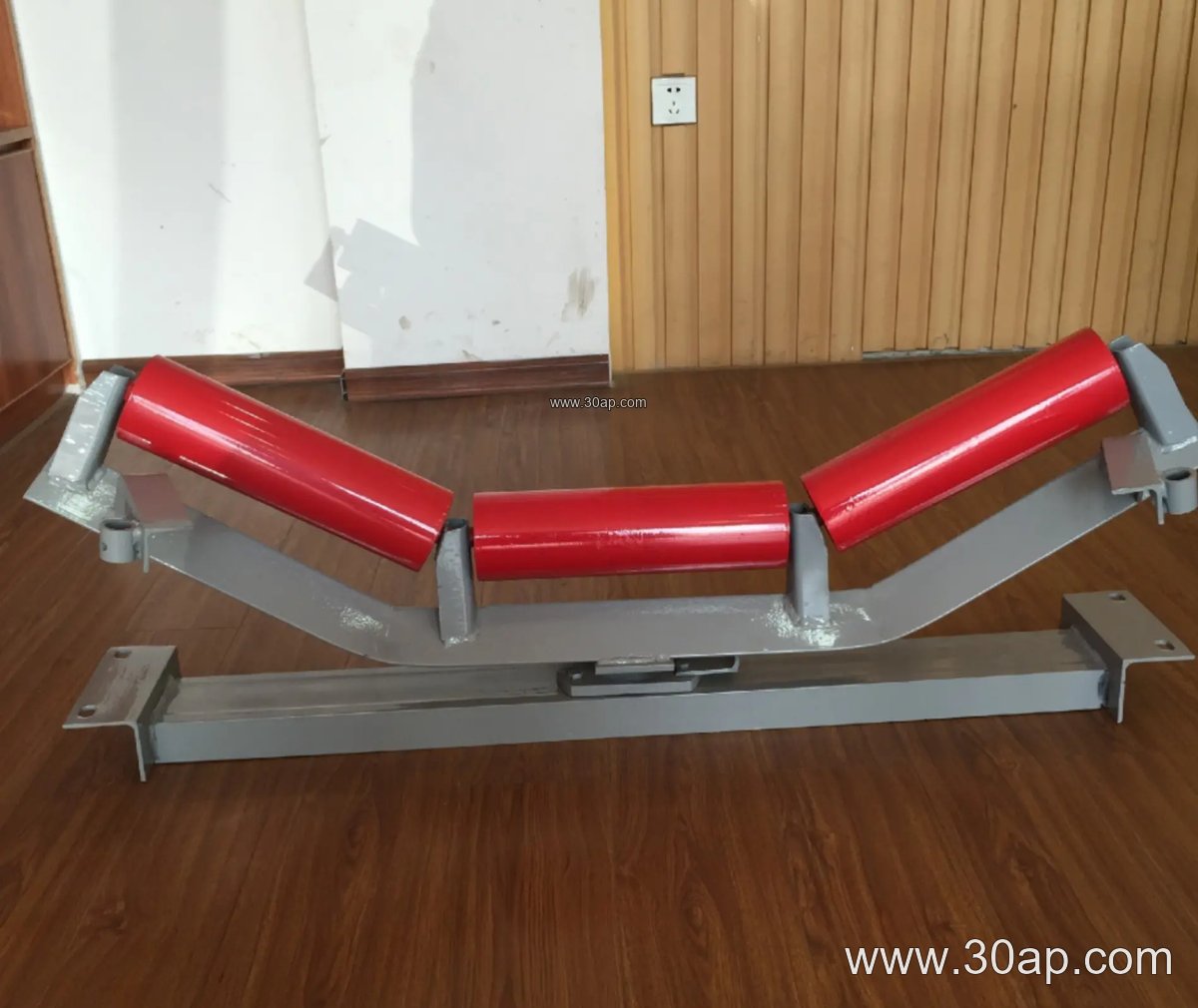
A self-aligning idler bracket is the mounting frame that holds the training idlers on a conveyor and lets them pivot so the belt stays centred. Instead of fixing the rollers rigidly to the stringer, this bracket sits on a vertical pivot or a swivel base, so when the belt drifts sideways the angled idlers steer it back toward the centre line. In a quarry, a coal handling plant or a cement kiln feed line, that small correcting movement is often the difference between a smooth shift and a belt rubbing against the chute.
Also called a self-aligning roller bracket or a training idler frame, it is a distinct component from the fixed troughing bracket, the impact bracket or the return bracket. It is not a substitute for a conveyor pulley at the drive, tail or bend position, and it does not replace the carrying idlers themselves; it is the frame that makes a group of idlers act as a steering station.
How the Bracket Is Built
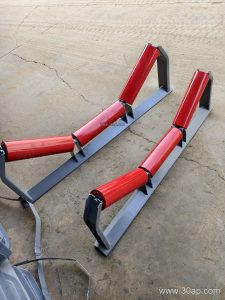
Most units are fabricated from angle steel, channel steel or folded steel plate, welded into a base that carries two or three idler mounts. The base turns on a central pin, and the idler axes are set at an angle to the belt travel so that any contact with an off-centre belt produces a sideways force that pushes the belt back. Common designs include:
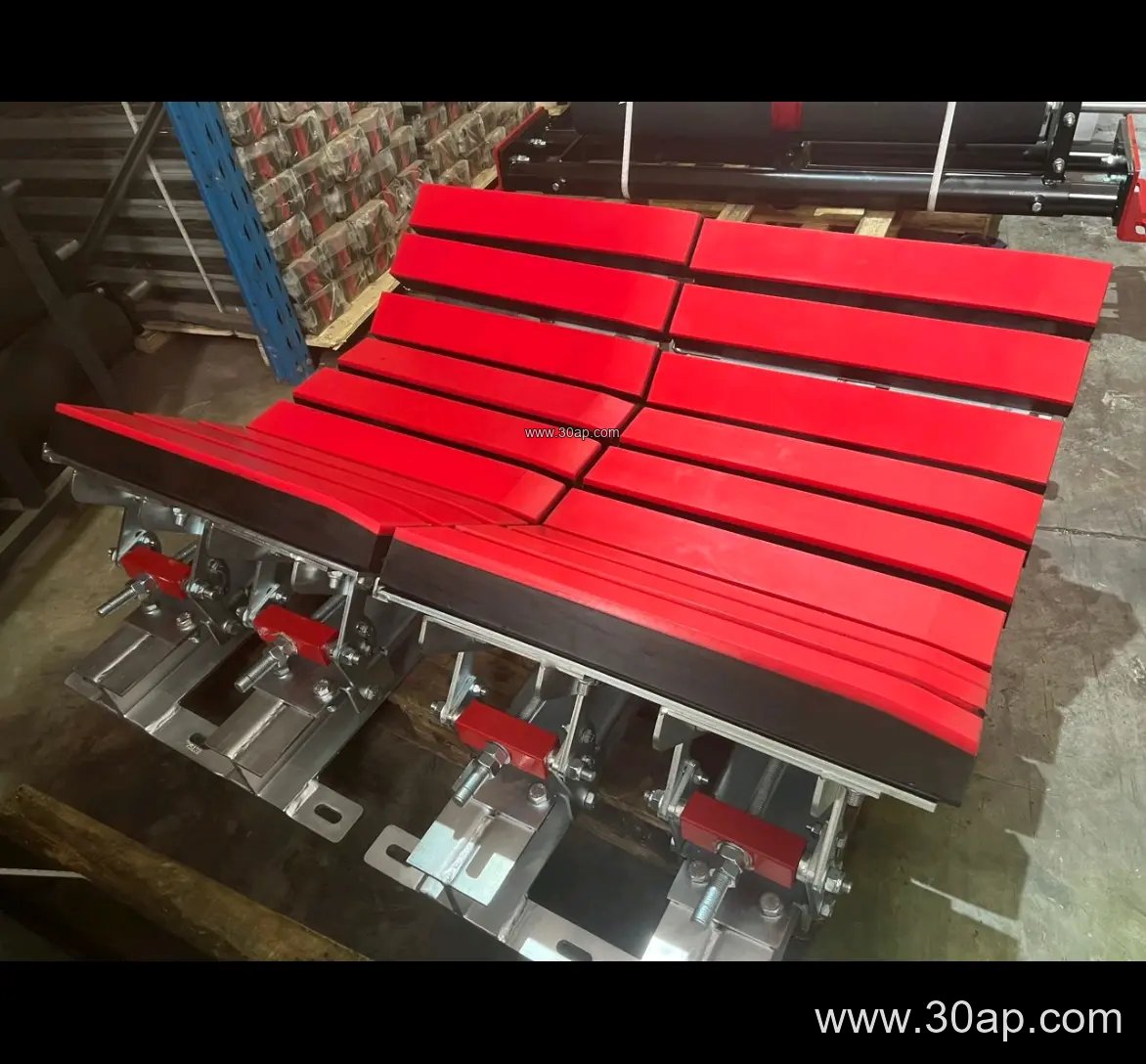
- A vertical pivot bracket with a single swivel pin and a stop to limit rotation.
- A linkage bracket that connects two idler frames so they move together.
- A bracket with an adjustable lead angle, typically around 1.5 to 2 degrees of forward tilt, to fine-tune response.
Surface finish matters in wet or dusty service. Galvanised or painted frames are usual in port and aggregate duty, while heavier plate is preferred where a heavy-duty mining conveyor belt runs at high tension.
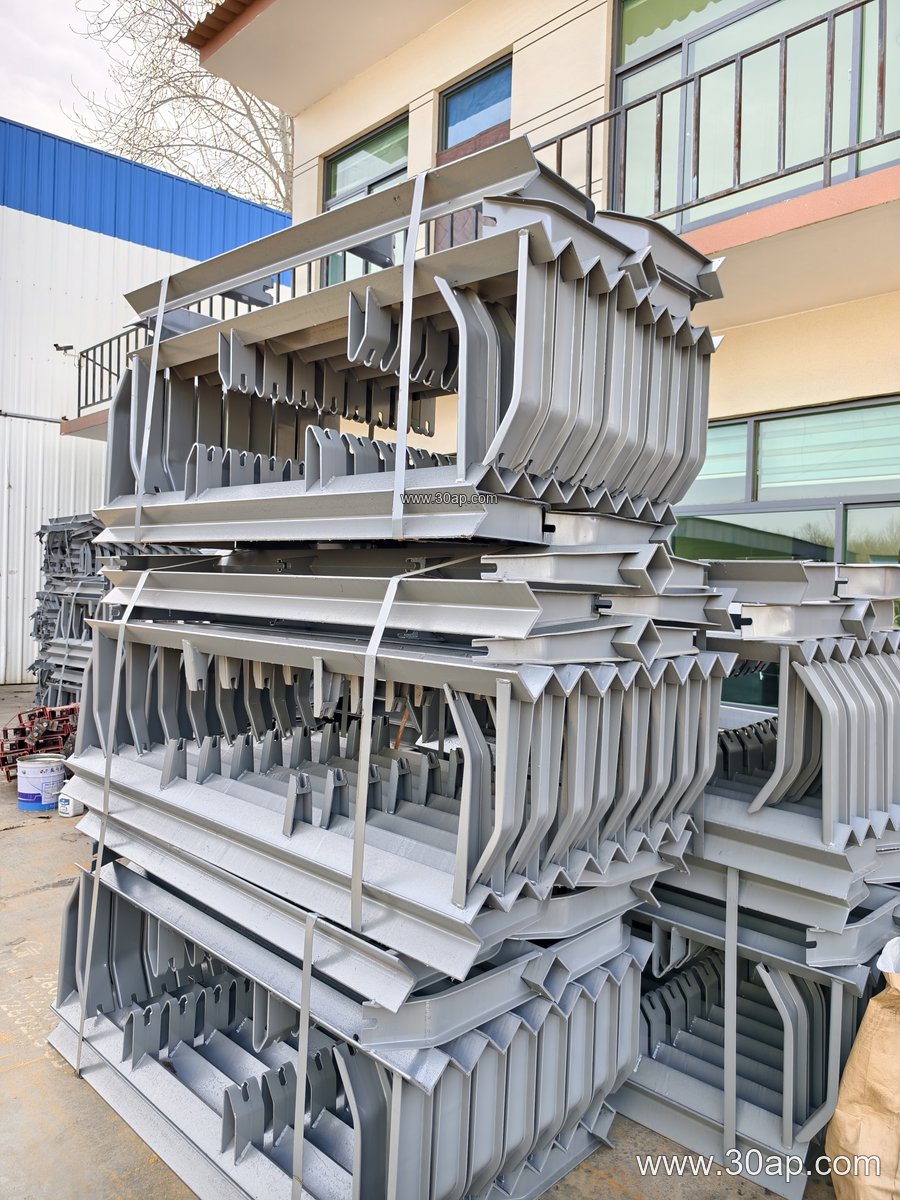
Where It Fits on the Conveyor
The bracket is normally installed on the carrying side, a short distance after the loading point, and again before the head end, where drift is most likely. It can also appear on the return strand as a self-aligning return bracket. On a long overland line in an iron ore mine, several units are spaced along the route; in a tunnel mucking operation, one or two near the transfer point are often enough.
The frame works together with the troughing idlers and the conveyor belt, not in isolation. If the belt is badly spliced or the structure is out of line, no self-aligning bracket can fully compensate, so alignment of the whole stringer should be checked first.
Matching the Bracket to Belt and Idler Size
Bracket geometry follows belt width, trough angle and roller diameter. Belt widths from B500 to B2200 are common, trough angles of 20, 30, 35 and 45 degrees are typical, and roller diameters of Ø89, Ø108, Ø133, Ø159 and Ø194 cover most duties. Installation hole spacing and crossbeam length change with these values and are set by design, so they should not be treated as fixed numbers.
| Belt width | Typical trough angle | Common roller diameter | Typical duty |
|---|---|---|---|
| B650 | 30 degrees | Ø89 | Light aggregate line |
| B800 | 35 degrees | Ø108 | Sand and gravel plant |
| B1000 | 35 degrees | Ø108 / Ø133 | Cement plant, power plant coal |
| B1200 | 45 degrees | Ø133 | Coal mining, ore transfer |
| B1400 | 35 degrees | Ø159 | Heavy-duty mining conveyor |
| B1800 | 45 degrees | Ø159 / Ø194 | Port and large bulk terminal |
These are reference combinations, not mandatory pairs. A B1200 frame can be built for more than one trough angle, and roller diameter is chosen from load and belt speed rather than width alone. Buyers should confirm the stringer hole pattern before ordering.
What Buyers Should Check
Ask for the pivot design and how much rotation the frame allows, the material thickness, and whether the bracket suits the existing idler shaft ends. Confirm the belt width, trough angle and roller diameter in writing, and state whether the frame is for the carrying or return side. For abrasive duty, such as a crusher conveyor belt or an ore conveyor belt, check that the pivot area is protected from dust build-up. A simple grease point and a removable pin make maintenance easier in a wash plant or a fertilizer store.
Finally, treat the self-aligning idler bracket as part of a tracking system. Pair it with well-aligned idlers, a correctly tensioned belt and clean pulleys, and it will keep a bulk material conveyor belt running true for a long time.