What a Conveyor Bend Pulley Does
A conveyor bend pulley is a direction-changing roller that guides the conveyor belt along a different path without driving or tensioning it. Unlike the drive pulley that transmits power or the tail pulley that returns the belt, the bend pulley simply redirects the belt around corners, over obstacles, or into a take-up system. In a quarry conveyor line, for example, a bend pulley might route the belt around a transfer point, while in a coal mining conveyor it could help navigate around a drive station. This pulley is also known as a redirect pulley or angle pulley, but it should never be confused with a drive or tail pulley because their roles are not interchangeable.
Construction and Key Components
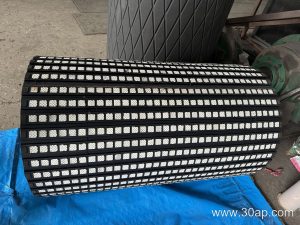
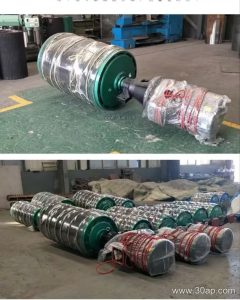
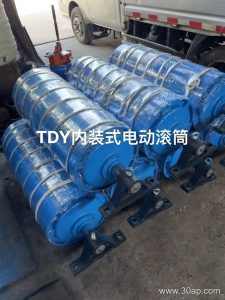
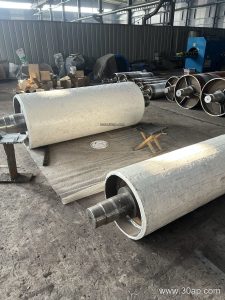
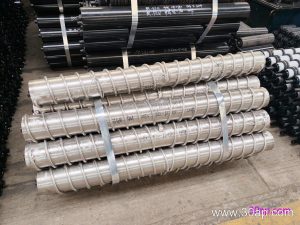
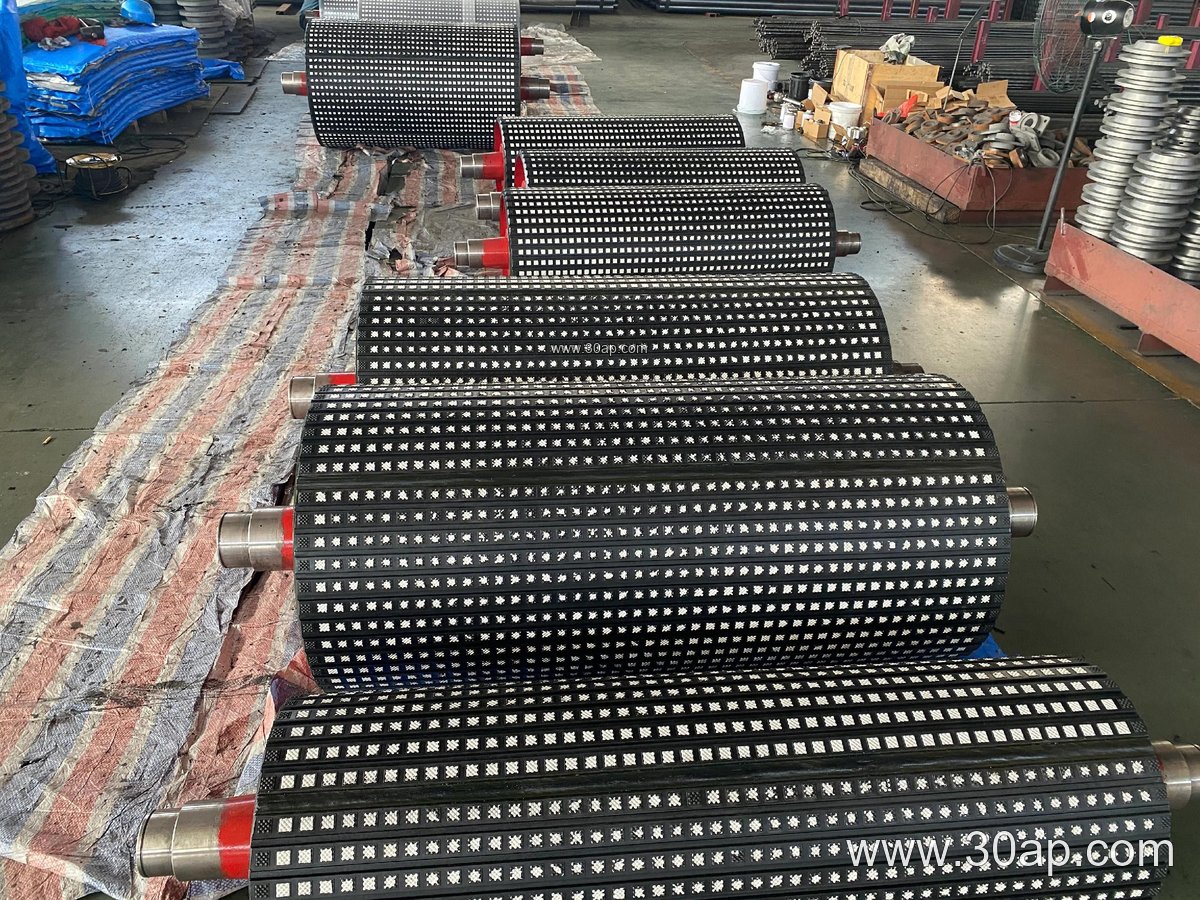
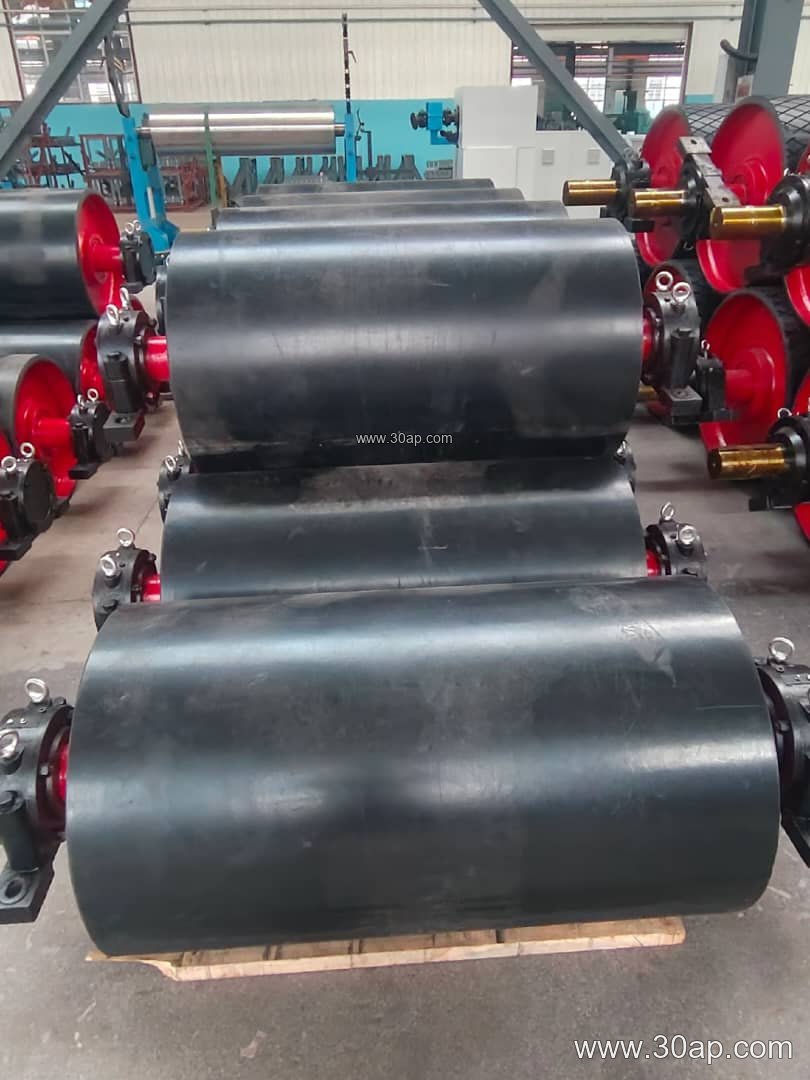
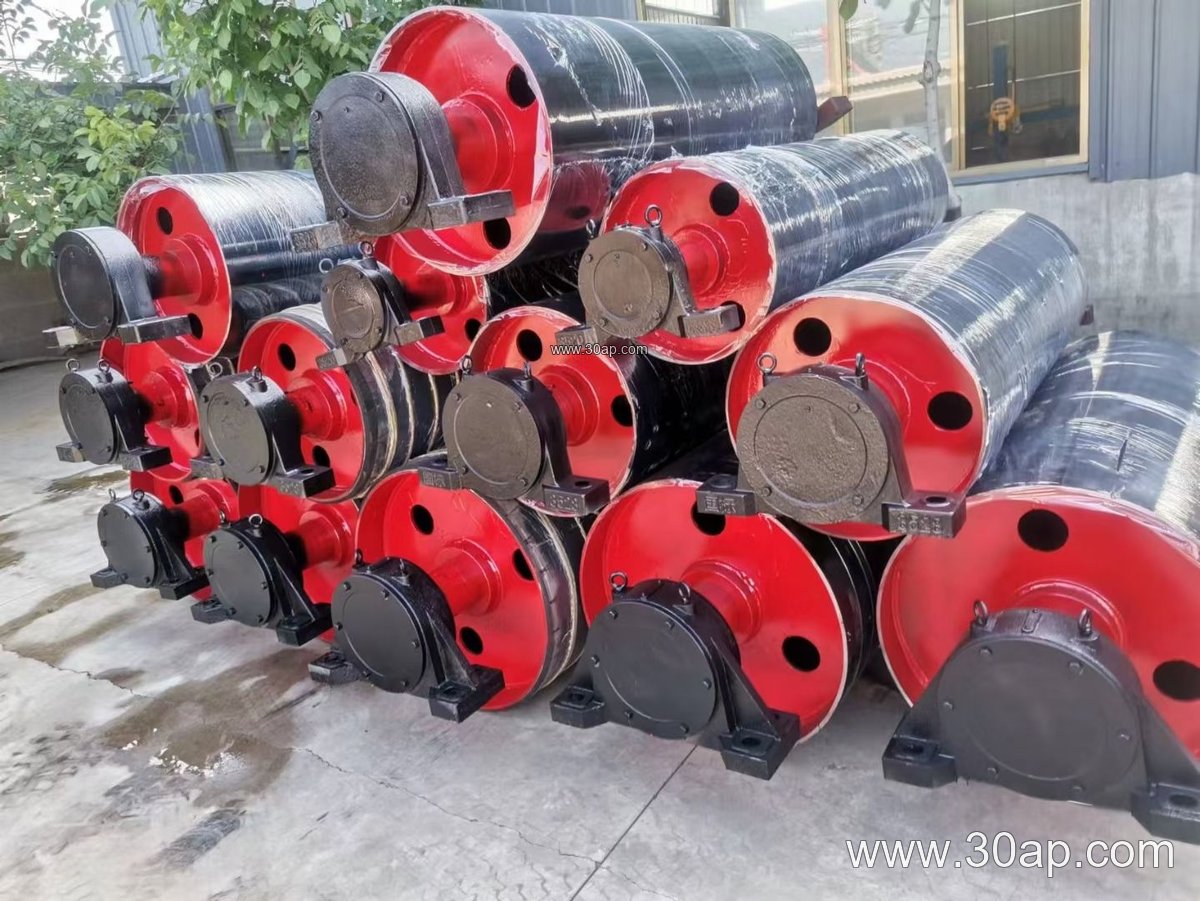
Most bend pulleys are built with a cylindrical shell, end discs, a shaft, and bearing housings. The shell is often made from seamless steel tube or welded steel, machined for balance. Shafts are typically sized by torque and load, with common diameters ranging from Ø50 to Ø200 mm, though larger sizes exist for heavy-duty applications. Bearings are usually spherical roller types housed in cast or fabricated bearing blocks. Surface options include plain finish, rubber lagging (cold-bonded or hot-vulcanized), diamond groove lagging, and ceramic lagging. Lagging thicknesses commonly range from 8 to 12 mm for standard bend pulleys, with thicker options available for high-wear zones. The pulley face width usually exceeds the belt width by 50 to 200 mm to accommodate belt tracking; for instance, a B800 belt often uses a pulley face around 950 mm, but this is a design choice, not a fixed rule.
Where It Fits in Bulk Material Handling
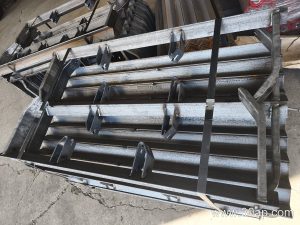
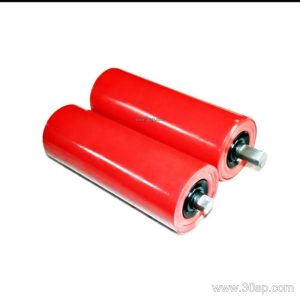
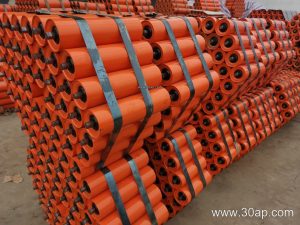
Bend pulleys appear in a wide range of industries. In a limestone mine, they help route the conveyor around a crushing station. In a cement plant, they may redirect the belt near a clinker cooler. Aggregate operations use them to navigate around screens and transfer towers. Port facilities employ bend pulleys to guide belts along ship loaders. Other common settings include power plant coal yards, steel mill sinter lines, and fertilizer granulation plants. The pulley works with the conveyor belt, idler rollers, and conveyor brackets to maintain proper belt alignment and tension. For high-abrasion environments, pairing a bend pulley with an abrasion resistant conveyor belt can extend service life. Similarly, in underground coal mining, a flame retardant conveyor belt is often used alongside well-lagged bend pulleys to meet safety requirements.
Matching the Pulley to the Belt and System
Selecting a bend pulley involves more than picking a diameter. The belt width, belt type, and system tension all influence the choice. For example, a B1200 belt might use a pulley with a face width around 1400 mm and a diameter of Ø800 or Ø1000, depending on the wrap angle and load. Narrower belts like B500 often pair with Ø315 or Ø400 pulleys. However, there is no universal rule that a given belt width must use a specific diameter; the pulley diameter is typically determined by belt stiffness, minimum bend radius, and tension. Shaft diameter is calculated from torque and load, not from belt width alone. Common shaft sizes include Ø80, Ø100, and Ø120 mm for medium-duty pulleys, while heavy-duty mining conveyors may require Ø160 or Ø200 mm shafts. Buyers should also consider the lagging type: plain steel for low-friction applications, rubber lagging for general grip, or ceramic lagging for high-wear, high-tension drives. The conveyor bracket and bearing housing must match the shaft and mounting arrangement.
Buyer Checklist for Conveyor Bend Pulleys
- Confirm the belt width and belt type (e.g., EP conveyor belt, steel cord conveyor belt, or fabric core conveyor belt) to determine face width.
- Verify the required pulley diameter based on belt minimum bend radius and tension.
- Specify shaft diameter from torque and radial load calculations, not from belt width alone.
- Choose lagging material and thickness according to environmental conditions (e.g., oil resistant conveyor belt in recycling plants, heat resistant conveyor belt in cement kilns).
- Ensure bearing type and housing are suitable for the load and speed.
- Check that the pulley is balanced and machined for smooth rotation.
- Consider maintenance access and lubrication requirements.
In summary, the conveyor bend pulley is a critical but often overlooked component that keeps a conveyor system running smoothly. By understanding its construction, application, and selection criteria, buyers can make informed decisions that improve reliability and reduce downtime. For more information on related components such as conveyor pulleys, idler rollers, and conveyor brackets, please visit our website at www.bendpulley.com.