What a Striped Lagged Pulley Does
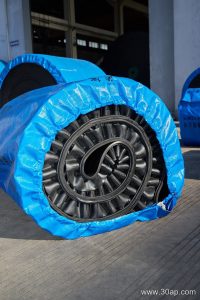
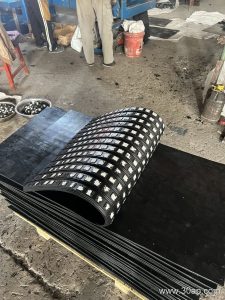
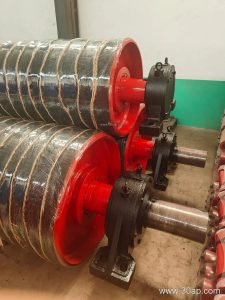
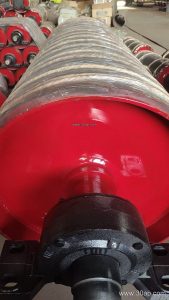
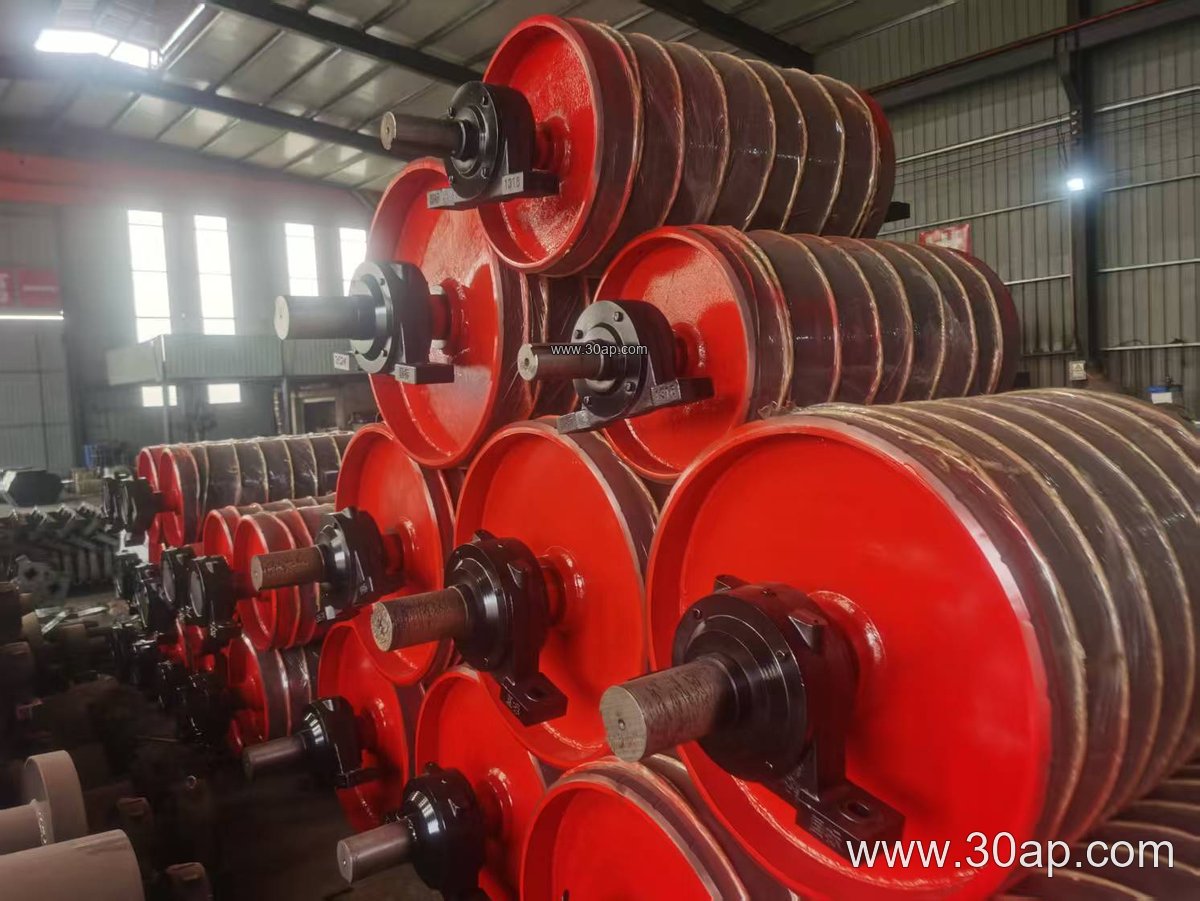
A striped lagged pulley is a conveyor pulley whose shell is covered with a rubber or ceramic lagging that carries a striped surface pattern. The stripes—often parallel, diagonal, or in a chevron-like arrangement—are designed to improve grip between the pulley face and the conveyor belt while allowing water, dust, and fine material to escape from the contact zone. This type of pulley is commonly used as a drive pulley, but it can also appear at tail or bend positions where extra traction or self-cleaning is helpful. In a quarry or sand and gravel line, a striped lagged pulley helps maintain steady belt speed even when the belt surface is damp from washing or dust suppression.
Construction and Surface Options
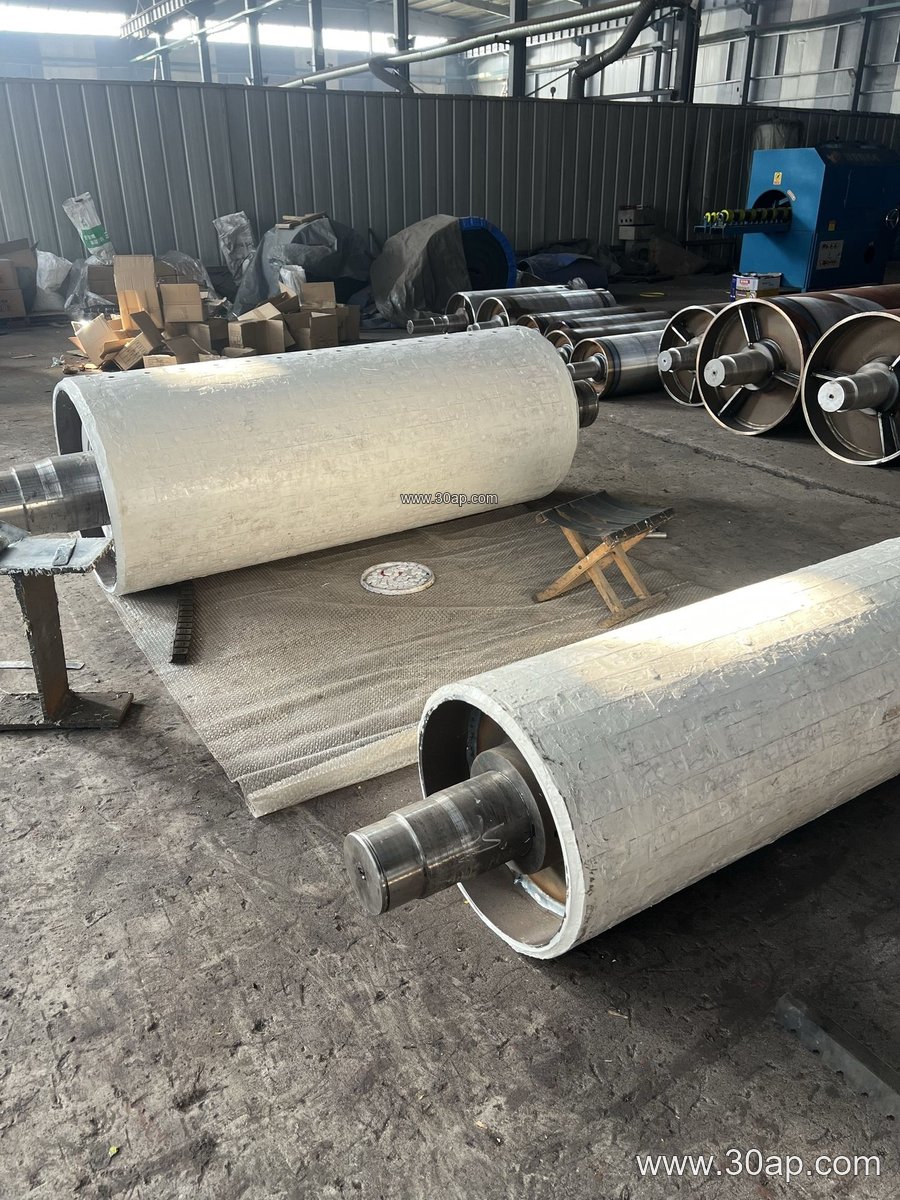
The base is a steel shell with end discs and a shaft, machined to accept lagging. Lagging may be applied by hot vulcanization, cold bonding, or cast directly onto the shell. The stripe pattern is either molded into the rubber or cut into the surface. Common lagging thicknesses are 8, 10, 12, 15, and 20 mm, selected according to belt tension and torque. The pulley face width is usually slightly wider than the belt; for example, a B800 belt often pairs with a shell around 950 mm wide, while a B1200 belt may use a shell near 1400 mm. Diameters are not fixed by belt width alone—B800 × Ø500 and B1200 × Ø1000 are both practical combinations when the drive design calls for them. Shaft diameter is determined by torque and load, not by belt width, so a Ø120 shaft may appear on more than one pulley size. Surface options include plain rubber, diamond lagging, ceramic lagging, and the striped pattern described here.
Where It Fits in the Conveyor System
On a coal mining conveyor or underground coal mining conveyor, a striped lagged pulley is often chosen for the drive position because the pattern helps shed coal dust and reduces slip during start-up. In a cement plant clinker line, the same pulley type can be used on a short transfer conveyor where fine powder tends to coat the belt. At a port loading facility, a striped lagged pulley may serve as a bend pulley to keep the belt tracking while allowing moisture to drain. It is not a substitute for a tail pulley or a take-up pulley; each position has its own load profile and belt wrap angle. When comparing with a plain lagged pulley, the striped version offers better wet traction but may wear faster in very abrasive conditions, so the belt and pulley should be matched carefully.
Belt Compatibility and Selection Notes
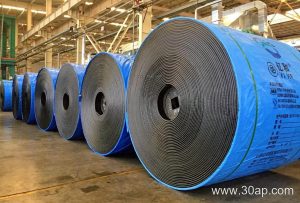
A striped lagged pulley works with many belt types, including EP conveyor belt, NN conveyor belt, and steel cord conveyor belt. For a heavy-duty mining conveyor belt carrying iron ore or copper ore, the lagging should be thick enough to resist cutting and should match the belt’s cover hardness. A fabric core conveyor belt on a shorter aggregate conveyor may use a thinner striped lagging. If the belt is a chevron conveyor belt or a corrugated sidewall conveyor belt, check that the stripe pattern and lagging height do not interfere with cleats or sidewalls. For food or clean-room applications, a food grade conveyor belt may require a smooth or easily cleaned lagging rather than a deep stripe. Always confirm pulley width, diameter, shaft size, and lagging thickness against the actual conveyor bracket dimensions and bearing centers.
Maintenance and Buyer Checklist
- Confirm the pulley position: drive, tail, bend, or take-up. Striped lagging is most often specified for drive pulleys, but it can be used elsewhere if traction or drainage is needed.
- Check belt width and pulley face width together; do not assume one belt width matches only one pulley diameter.
- Review lagging thickness and pattern with the belt type—abrasion resistant conveyor belt, heat resistant conveyor belt, or oil resistant conveyor belt may need different rubber compounds.
- Inspect the striped surface periodically for wear, glazing, or embedded material. Replace lagging when the stripe depth is significantly reduced.
- Keep the pulley aligned with the conveyor bracket and idler roller frame to avoid edge wear on the belt.
For a quarry conveyor belt or a crusher conveyor belt, a striped lagged pulley can be a practical choice when wet or dusty conditions cause slip. Buyers should provide the belt width, expected belt tension, pulley location, and environmental conditions so the supplier can recommend a suitable lagging pattern and thickness. Visit conveyor pulley and conveyor belt for related components, and consider how the pulley interacts with the idler roller and conveyor bracket in the overall system.