What an Adjustable Conveyor Bracket Does
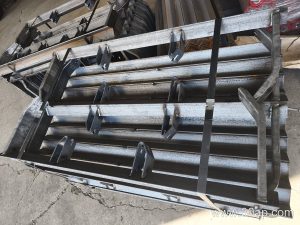
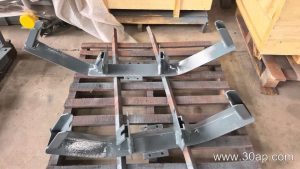
An adjustable conveyor bracket is a support component that holds the idler roller assemblies at a defined angle while allowing that angle to be changed after installation. On a troughed belt conveyor, the bracket carries the upper idlers that shape a flat conveyor belt into a trough. Because the bracket can be moved across its adjustment range, the maintenance team can tune the trough profile to the material being carried, correct minor belt training issues, and compensate for wear without replacing the whole idler frame.
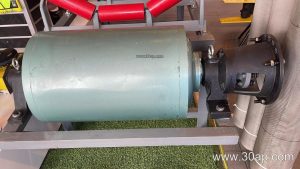
This component is often called an adjustable idler bracket or a variable-angle troughing bracket. It should not be confused with the drive pulley, tail pulley, or bend pulley, which are separate rotating components at the ends and corners of the conveyor. The bracket is a static structural part; the pulleys and rollers do the rotating.
Construction and Adjustment Features
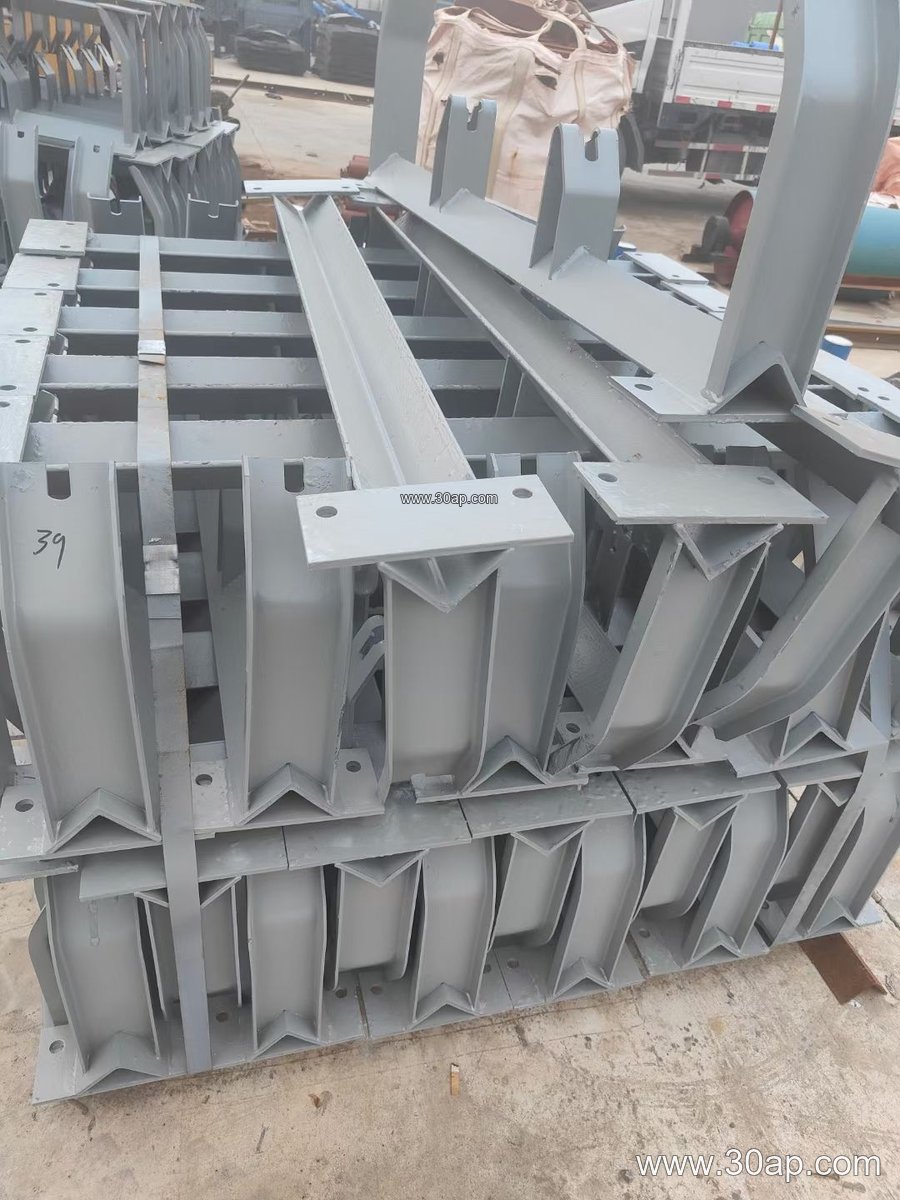
Most designs are fabricated from angle steel, channel steel, or folded steel plate, then welded and drilled for mounting. The adjustment may be achieved through slotted holes, a pivoting arm, a set of index positions, or a hinged connection between the side roller support and the center frame. Locking bolts hold the chosen position once set.
- Side roller arms that pivot to set the troughing angle
- Slotted or multi-hole mounting plates for angle selection
- Cross beams sized to the belt width
- Welded or bolted connections to the main conveyor frame
- Optional forward tilt of about 1.5 to 2 degrees for belt training
Common troughing angles are 20, 30, 35, and 45 degrees, and a good adjustable bracket can move between these positions. The correct angle depends on material characteristics, belt stiffness, and capacity requirements, not on a single fixed rule.
Matching Belt Width, Angle, and Roller Diameter
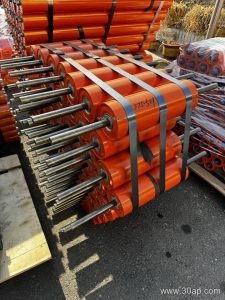
Buyers usually start from the belt width and the required trough shape. Typical belt widths include B500, B650, B800, B1000, B1200, B1400, B1600, B1800, B2000, and B2200. Roller diameters such as Ø89, Ø108, Ø133, Ø159, and Ø194 are common, but no single belt width is locked to one roller diameter or one troughing angle. The mounting hole spacing and cross beam length change with width and angle, so these dimensions should be confirmed against the conveyor drawing rather than assumed.
| Belt Width | Troughing Angle | Typical Roller Diameter | Bracket Note |
|---|---|---|---|
| B500 | 20–30 degrees | Ø89 | Compact frame, short cross beam |
| B650 | 20–35 degrees | Ø89 or Ø108 | Slotted side arms |
| B800 | 30–35 degrees | Ø108 | Common quarry and aggregate size |
| B1000 | 35–45 degrees | Ø108 or Ø133 | Heavier cross beam |
| B1200 | 35–45 degrees | Ø133 | Multi-position adjustment |
| B1400–B1600 | 35–45 degrees | Ø133 or Ø159 | Reinforced welded frame |
| B1800–B2200 | 35–45 degrees | Ø159 or Ø194 | Heavy-duty fabricated design |
These combinations are examples for orientation only. Actual selection should follow the conveyor design, the load, and the belt construction.
Where It Is Used
Adjustable brackets appear wherever the trough profile may need fine tuning. In a limestone quarry or aggregate plant, they help keep a heavy-duty mining conveyor belt centered on the loading zone. In a coal preparation plant or a power station coal yard, they support the upper run of a flame retardant conveyor belt and allow the angle to be adjusted as the belt ages. Cement plants, steel sinter lines, and port ship loaders also use them on long transfer conveyors.
The bracket works together with the conveyor belt, idler roller, and conveyor pulley. A well-set trough reduces spillage and belt edge wear, which matters when the belt is an EP conveyor belt, a steel cord conveyor belt, or an abrasion resistant conveyor belt carrying sharp ore. For more on matching belts and rollers, see beltconveyorpro.com adjustable conveyor bracket notes and the roller selection pages.
Adjustable versus Fixed Brackets
A fixed troughing bracket is welded or bolted at one angle. It is simple and rigid, but changing the trough profile means replacing or reworking the frame. An adjustable version costs more in fabrication but gives the operator room to correct belt training, adapt to a new material, or restore the intended trough after years of service. For a conveyor that handles varied bulk material, the flexibility is often worth it.
Buyer Checklist
- Confirm belt width and required troughing angle range
- Match the bracket to the idler roller diameter actually used
- Check mounting hole spacing against the existing frame
- Confirm material thickness and finish for the site environment
- Decide whether forward tilt or training adjustment is needed
- Ask for the cross beam length for each width and angle combination
Routine checks should include locking bolt tightness, corrosion at welded joints, and whether the angle has drifted after heavy impact loading. Keeping the bracket set correctly protects the conveyor belt and extends idler roller life in quarry, cement, and power plant service alike.