What a Drive Pulley Does
A drive pulley, also called a head pulley or drive drum, is the powered drum at the discharge end of a belt conveyor. Its shell grips the conveyor belt, and the shaft transmits torque from the gearbox or motor to move the belt and the material on it. Everything upstream depends on this one rotating part: if the drive pulley slips, the whole line slows down, and belt tracking suffers.
Because the drive pulley is a distinct component, it is not interchangeable with a tail pulley or a bend pulley. Those drums guide or tension the belt, while the drive drum is the one that puts power into it. A tail drum turns freely; a bend drum changes belt direction; the drive drum pulls.
How the Drum Is Built
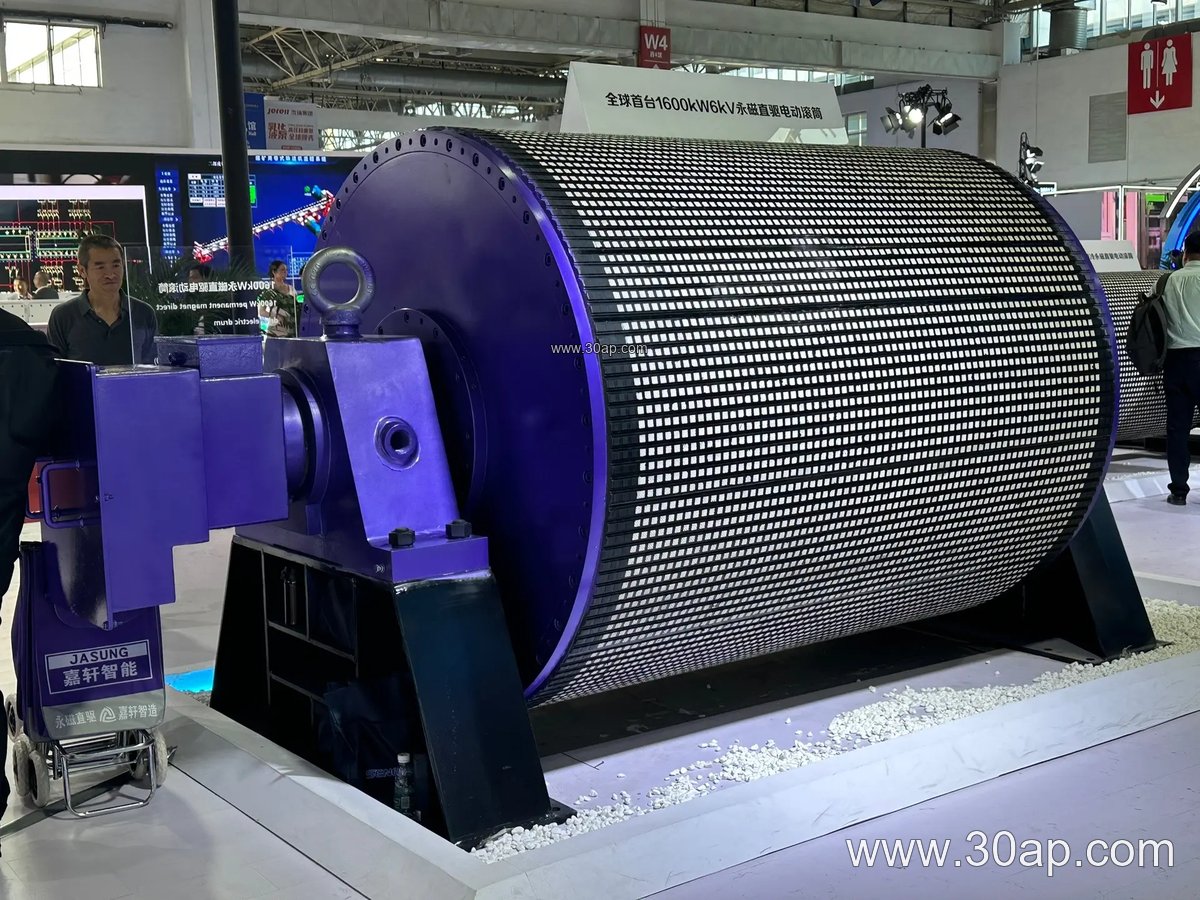
The main parts are the shell, the shaft, the end discs, and the bearing housings. The shell is usually a rolled steel cylinder, machined and then covered with rubber lagging to raise friction against the belt. The shaft is sized by torque and radial load, not by belt width, so a B800 conveyor and a B1000 conveyor can use the same shaft diameter if the loads match. Common shaft diameters include Ø80, Ø100, Ø120, Ø140, and Ø160, but the final value comes from the drive calculation.
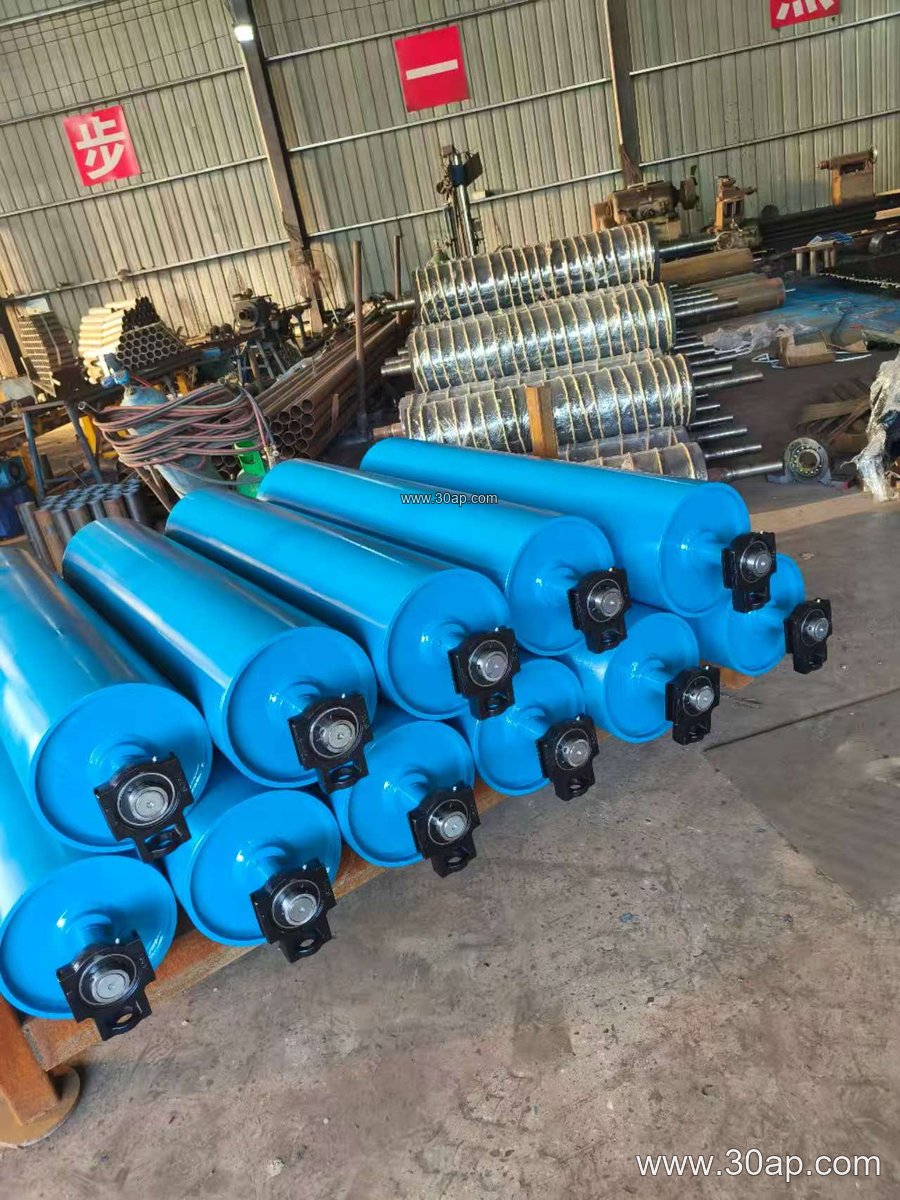
Lagging is a key choice. Plain, diamond, herringbone, and ceramic surfaces each suit different conditions. Rubber lagging thickness is often 8, 10, 12, 15, or 20 mm. Diamond lagging helps shed water and fines, while ceramic tiles resist wear in abrasive service such as a quarry or a sand and gravel line.
Matching Drum Size to Belt and Duty
Shell width is normally a little wider than the belt. Typical pairings are B650 with about 750 mm face, B800 with about 950 mm, B1000 with about 1150 mm, and B1200 with about 1400 mm. Diameter is chosen from belt tension, wrap angle, and the space available at the head end. Examples such as B800 × Ø500, B1200 × Ø1000, and B1400 × Ø800 appear in real projects, but no single diameter is fixed to a belt width. A short, lightly loaded conveyor may run a smaller drum than a long, heavily loaded one of the same width.
| Belt width | Typical drum face | Common diameter range |
|---|---|---|
| B500 | about 600 mm | Ø250 to Ø400 |
| B800 | about 950 mm | Ø400 to Ø630 |
| B1200 | about 1400 mm | Ø630 to Ø1000 |
| B1600 | about 1800 mm | Ø800 to Ø1250 |
| B2000 | about 2200 mm | Ø1000 to Ø1400 |
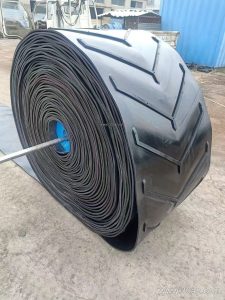
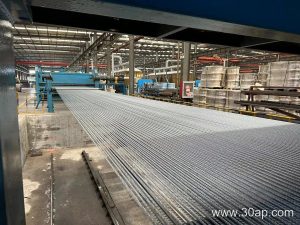
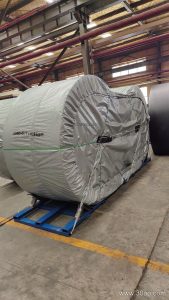
These are reference values, not universal rules. The drive pulley must also be checked against the belt it carries. A heavy-duty mining conveyor belt or a steel cord conveyor belt needs a larger drum to keep bending stress low, while a fabric core conveyor belt tolerates a smaller diameter. In coal mining, flame retardant conveyor belt and anti-static conveyor belt are common, and the lagging should be selected with the same fire-safety intent.
Where It Is Installed
The drive pulley sits at the head of the conveyor, where the belt unloads. In a cement plant it may pull clinker from a transfer point; in a power plant it may move coal from a stockpile to the boiler bunker; in a copper or iron ore concentrator it may handle ore after crushing. The same part appears in a port bulk terminal, a fertilizer plant, and a stone crushing line.
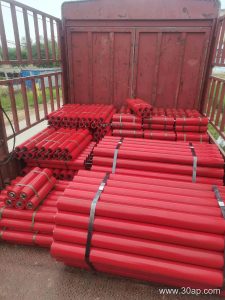
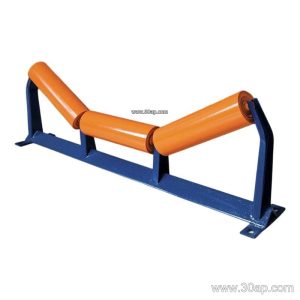
At the head end, the drive pulley works with the conveyor belt, the conveyor pulley frame, and the conveyor bracket that ties the bearing housings to the structure. The idler roller on the carrying side keeps the belt supported before the drum, and the belt must arrive centered so the lagging wears evenly. Misalignment here shows up quickly as edge wear and belt wander.
What Buyers Should Confirm
- Duty and torque. Provide the motor power, belt speed, and starting method so the shaft and shell can be sized correctly.
- Belt data. Belt type, tension, and width decide the drum face and minimum diameter. A steel cord conveyor belt and an EP conveyor belt have different bending limits.
- Lagging. Specify plain, diamond, herringbone, or ceramic, and the rubber thickness, based on wet, oily, or abrasive conditions.
- Interface. Confirm the shaft diameter, keyway, bearing type, and the distance to the conveyor bracket so the drum fits on site.
- Environment. In a coal mine or a dusty quarry, choose flame retardant and anti-static materials where required, and plan for lagging wear.
For a full conveyor project, the drive pulley, tail pulley, bend pulley, and idler roller should be specified together rather than one by one, because belt tension links them all. A well-matched drive drum keeps the belt running straight, reduces slip, and protects the belt from unnecessary stress.