What a Custom Conveyor Pulley Really Is
A custom conveyor pulley is a drum-shaped component made to order for a specific conveyor layout, rather than picked from a short list of stock sizes. It sits at the heart of the belt loop, transferring motion, guiding the belt, or maintaining tension. Because every conveyor has its own geometry, load profile, and material to move, a made-to-spec pulley often fits better than a general-purpose one.
In practice, buyers usually specify the pulley by position and function. A drive pulley transmits torque from the gearbox to the belt. A tail pulley returns the belt at the loading end. A bend pulley changes belt direction. These roles are not interchangeable, and a made-to-order drum is normally defined by one of them, plus the belt width, diameter, shaft, and surface treatment. If your line already uses an EP conveyor belt or a steel cord conveyor belt, the pulley is matched to that belt’s tension and tracking behavior, not chosen in isolation.
How the Drum Is Put Together
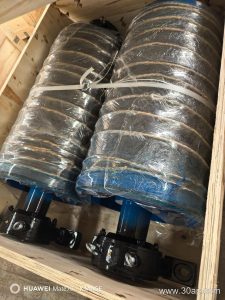
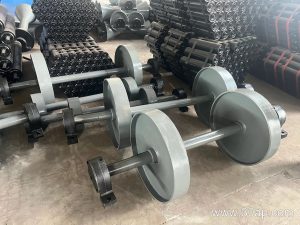
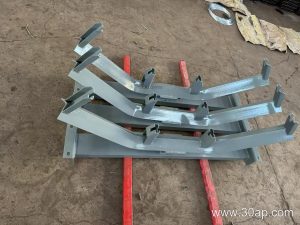
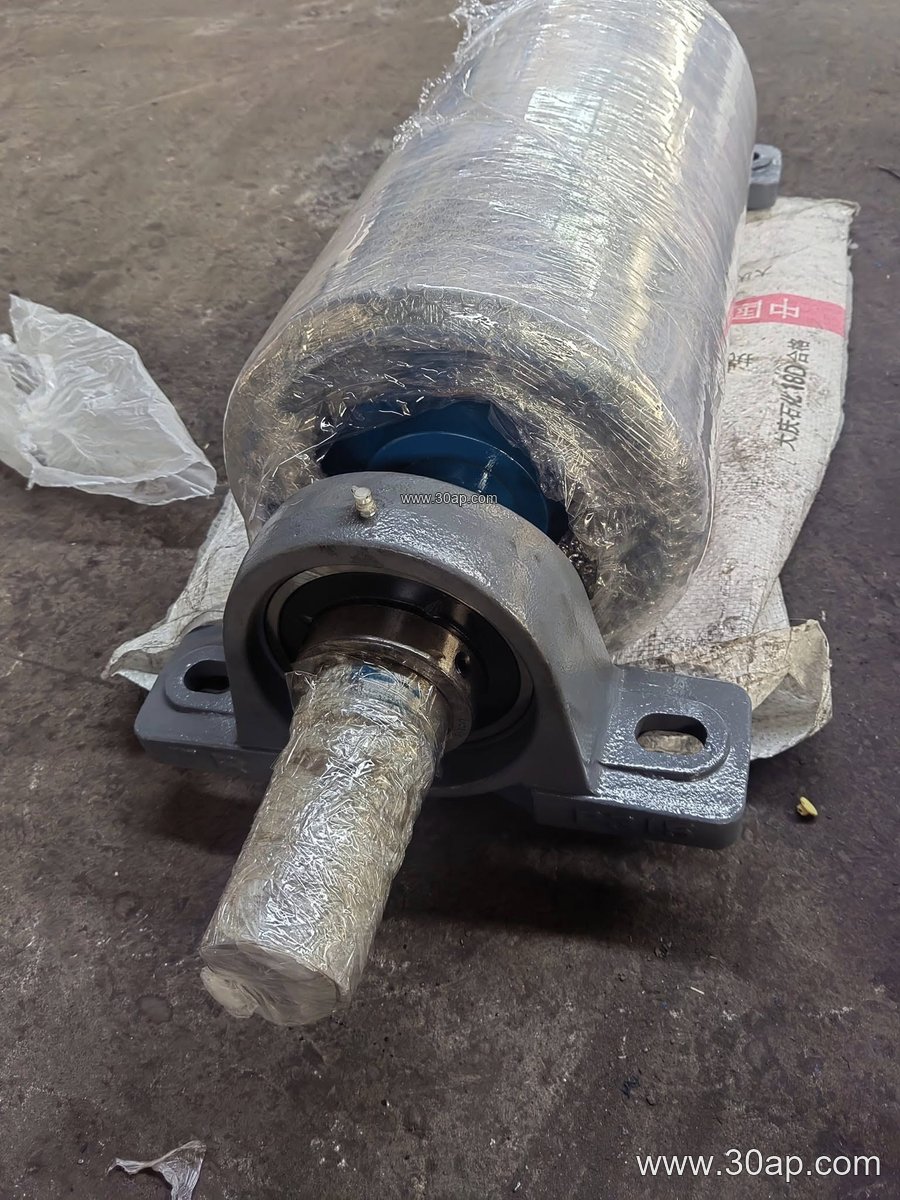
The basic build is a cylindrical shell, two end discs, a shaft, and a bearing arrangement. The shell is usually rolled steel or seamlessly tubed, then machined so the belt runs true. End discs are welded to the shell and hub, and the shaft is keyed or shrink-fitted depending on torque. Bearing housings, locking assemblies, and a conveyor bracket at each side complete the assembly.
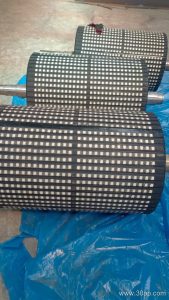
Surface finish matters as much as the structure. Common options include plain finish, hot-vulcanized rubber lagging, cold-bonded rubber, diamond grooving, herringbone lagging, and ceramic lagging. Lagging thickness is often 8, 10, 12, 15, or 20 mm. In a quarry or aggregate line, diamond lagging helps shed grit; in a coal mining conveyor, flame retardant belt and lagging choices may be requested together.
Typical Reference Dimensions
The figures below are common reference values, not fixed rules. Final dimensions are set by the conveyor design.
| Belt width | Approx. shell face width | Example diameter pairing |
|---|---|---|
| B400 | about 500 mm | Ø200 to Ø400 |
| B500 | about 600 mm | Ø250 to Ø500 |
| B650 | about 750 mm | Ø315 to Ø630 |
| B800 | about 950 mm | Ø400 to Ø800 |
| B1000 | about 1150 mm | Ø500 to Ø1000 |
| B1200 | about 1400 mm | Ø630 to Ø1250 |
| B1400 | about 1600 mm | Ø800 to Ø1400 |
| B1600 | about 1800 mm | Ø1000 to Ø1600 |
| B1800 | about 2000 mm | Ø1250 to Ø1800 |
| B2000 | about 2200 mm | Ø1400 to Ø1800 |
Shaft diameter is determined by torque and load, not by belt width alone. Common shaft sizes run from Ø50 up to Ø200, and a wider belt does not automatically mean a larger shaft. A B1200 x Ø1000 drive pulley and a B800 x Ø500 tail pulley can both be correct on different conveyors.
Where It Fits on the Line
In a stone crushing plant, a custom conveyor pulley at the head end pulls a heavy-duty mining conveyor belt loaded with rock. In a cement plant, bend pulleys guide clinker belts around tight structures, while in a power plant coal yard, tail pulleys handle dusty return strands. The same product appears in ports, steel plants, and sand making lines, always shaped by the duty around it.
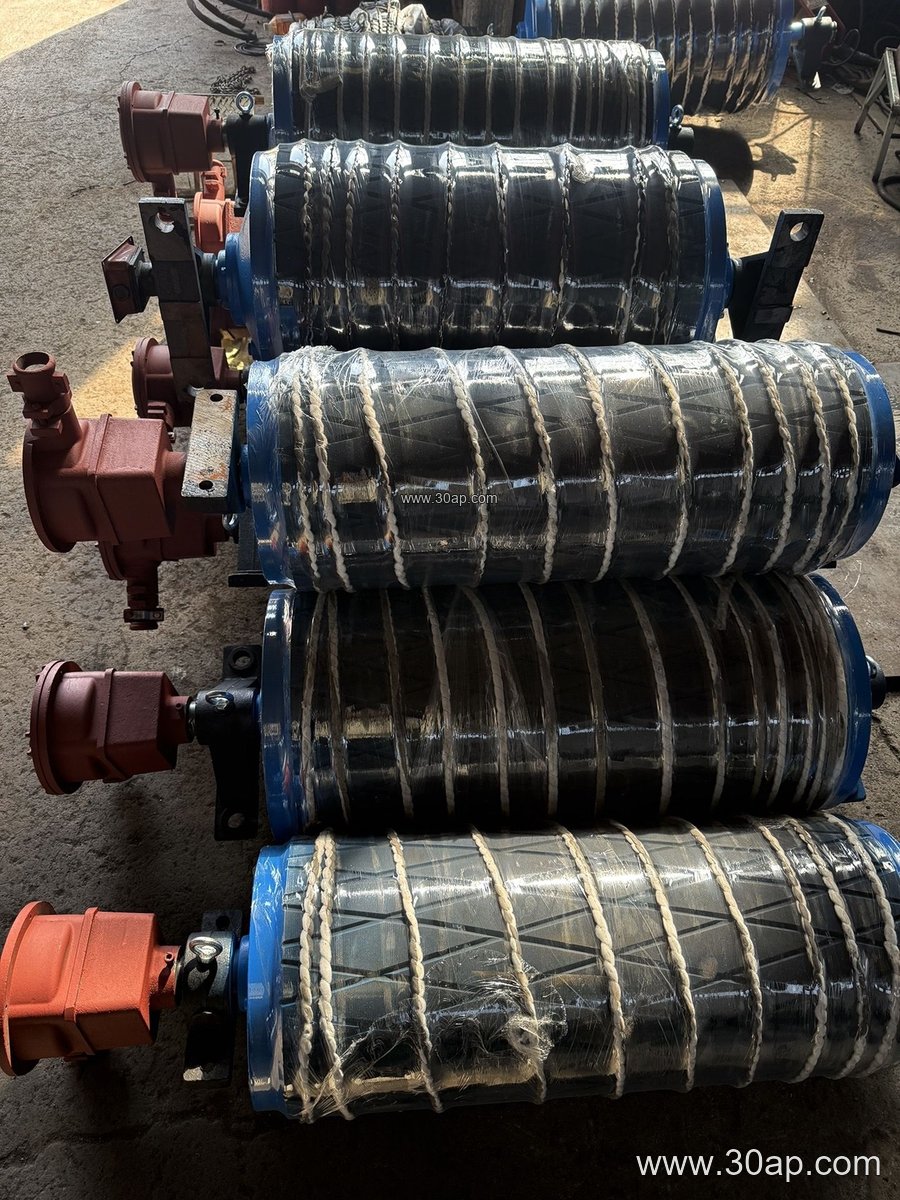
Position changes the design. A drive pulley needs enough lagging grip and shell strength for starting torque. A tension pulley may need a longer slide or take-up travel. An electric drum combines the motor inside the shell, which suits compact layouts. A wing pulley, with its open vanes, is often chosen where sticky material would otherwise build up on a smooth drum.
Choosing the Right Specification
Start with the belt. A fabric core conveyor belt, a multi-ply fabric core belt, and a steel cord conveyor belt all impose different tension and pulley diameter requirements. A chevron conveyor belt or corrugated sidewall belt may need extra clearance and a carefully sized pulley face. Heat resistant, oil resistant, and abrasion resistant belts each affect lagging choice and inspection intervals.
- Confirm the pulley’s function: drive, tail, bend, take-up, or snub.
- Match shell face width to belt width with proper edge clearance.
- Select lagging type and thickness for grip, wear, and material build-up.
- Size the shaft from torque and bearing load, not from belt width.
- Check that the conveyor bracket and bearing housing fit the existing frame.
- For underground mining or coal mining duty, specify flame retardant and anti-static properties where required.
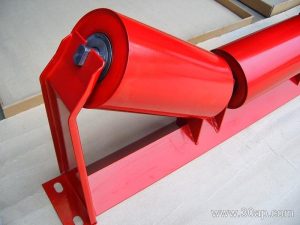
Maintenance is simpler when the drum is built for service access. Grease points, bearing type, and locking assembly design should allow inspection without dismantling the whole conveyor. Keep the idler roller and belt tracking in good condition too, because a misaligned belt damages lagging quickly.
For a reliable result, share the belt type, belt width, expected tension, shaft load, and mounting position with the supplier. A custom conveyor pulley at conveyor pulley suppliers who understand bulk material handling can then match shell, shaft, and lagging to your actual duty, whether the line moves ore, clinker, coal, or aggregate.