What Conveyor Bracket Fabrication Covers
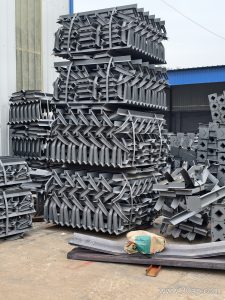
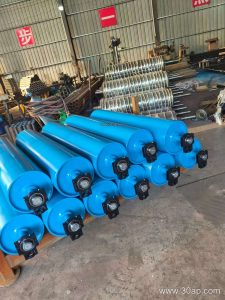
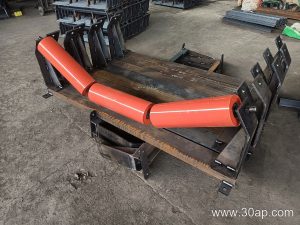
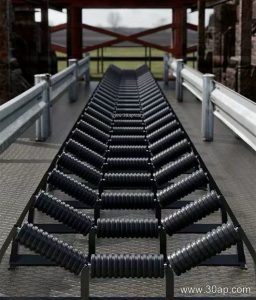
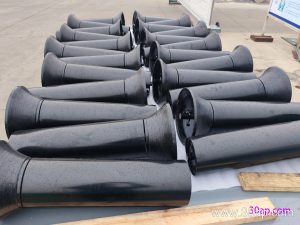
Conveyor bracket fabrication is the process of cutting, bending, welding and finishing the steel frames that hold idler rollers in position along a conveyor line. These brackets, often called idler frames or roller stands, sit between the conveyor belt and the supporting structure. Their geometry decides the trough angle, the roller spacing and the tracking behaviour of the belt, so fabrication quality has a direct effect on how smoothly a conveyor belt runs in a quarry, a cement plant or a power plant coal yard.
Fabrication is not a single operation. It combines material selection, forming, jig-based welding and dimensional inspection before the parts are galvanised or painted.
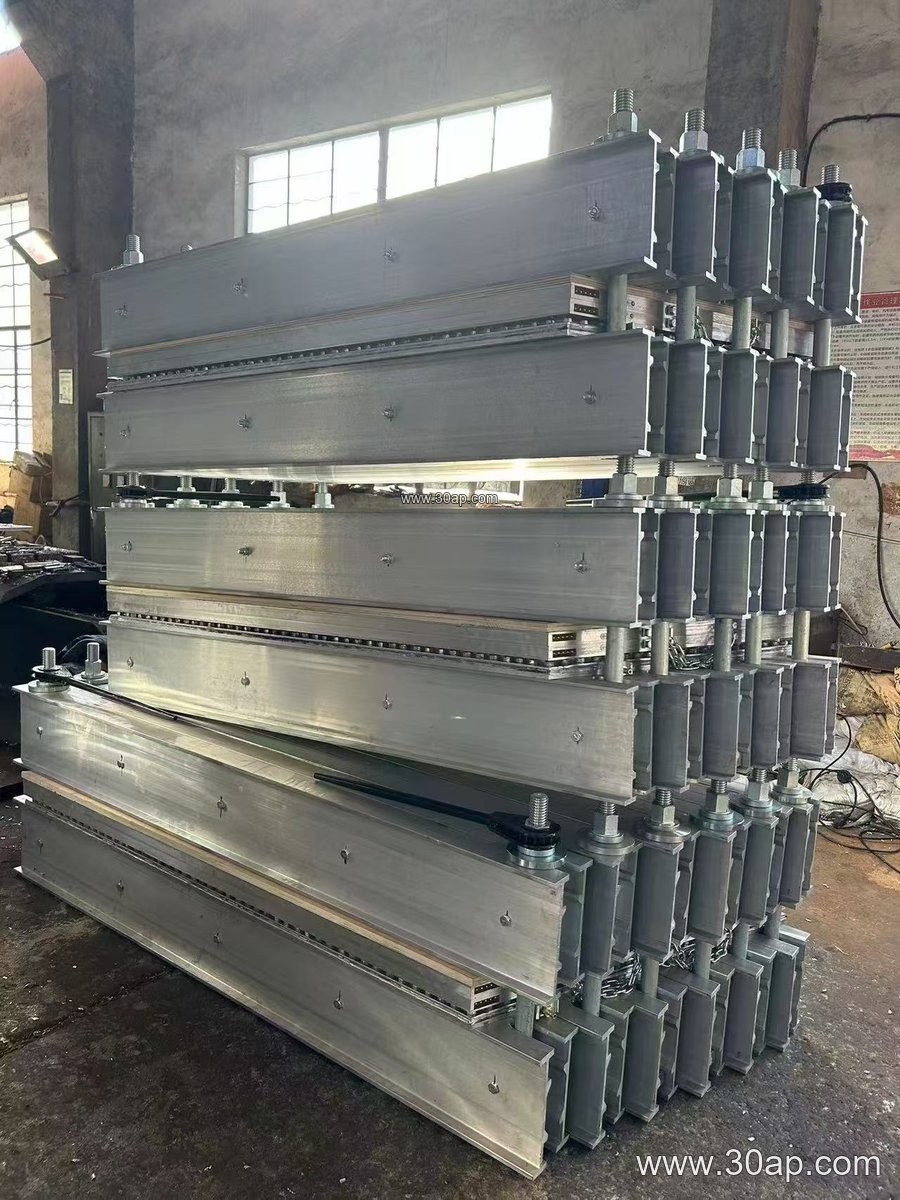
Materials and Build Methods
Most frames are produced from angle steel, channel steel or folded steel plate. The choice depends on load and environment. Angle steel suits lighter carrying brackets, while channel steel is common on heavy-duty return and impact frames. Folded plate gives a cleaner profile and fewer weld seams.
Typical fabrication steps include:
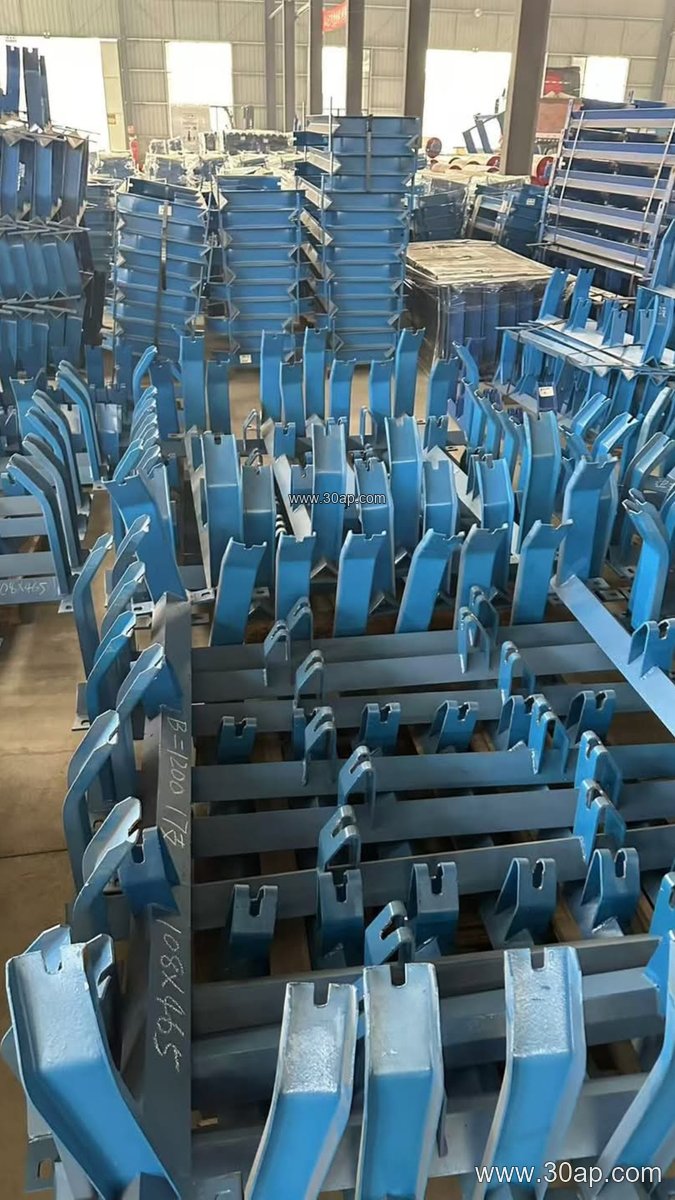
- Cutting bar stock to length according to the belt width and trough angle.
- Punching or drilling mounting holes for the idler roller shaft.
- Bending cross members to the required trough profile.
- Welding in fixtures so that hole centres and frame squareness stay consistent.
- Surface treatment, usually painting or hot-dip galvanising for outdoor installations.
Hole spacing and crossbeam length change with belt width and trough angle, so they are determined by design rather than fixed values.
Common Bracket Types and Their Role
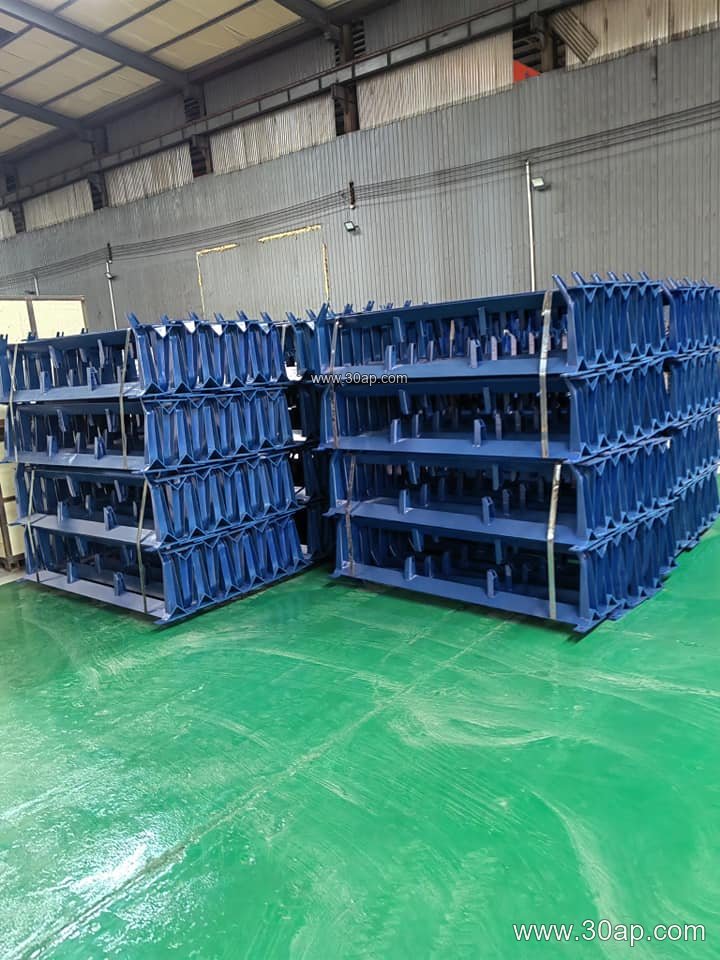
Several frame variants appear on one conveyor. Troughing brackets carry the loaded side and set the trough angle. Transition brackets ease the belt from flat to troughed. Return brackets support the empty strand, and V-return frames help centre the belt on the way back. Impact brackets with rubber cushions are placed under loading points, while self-aligning frames correct minor mistracking.
| Frame type | Position | Typical belt width range | Common trough angle | Matched roller diameter |
|---|---|---|---|---|
| Troughing bracket | Carrying side | B500 to B2200 | 20, 30, 35, 45 degrees | Ø89, Ø108, Ø133, Ø159, Ø194 |
| Transition bracket | Near pulleys | B650 to B1800 | Adjustable | Ø108, Ø133, Ø159 |
| Return bracket | Return strand | B500 to B2000 | Flat or V form | Ø89, Ø108, Ø133 |
| Impact bracket | Loading point | B800 to B1800 | 30, 35, 45 degrees | Ø133, Ø159 |
The values above are common references. A B800 frame at 35 degrees with Ø108 rollers is a frequent combination, and a B1200 line at 45 degrees often uses Ø133 rollers, but other pairings are equally valid when the design calls for them. Adjustable frames allow the trough angle to be changed between 20 and 45 degrees on site, which is useful during commissioning.
Where Fabricated Brackets Are Used
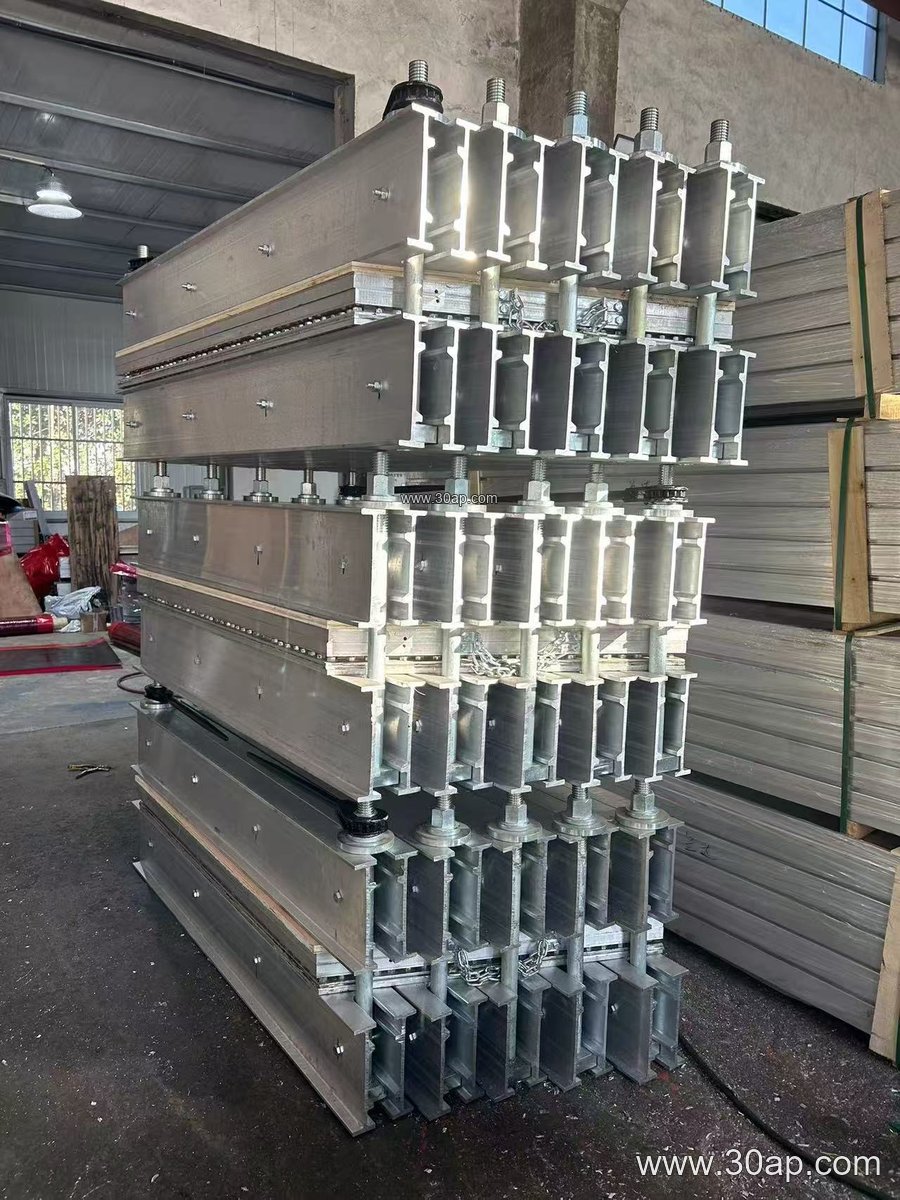
These frames appear wherever bulk material moves on a belt. In a limestone mine or crushing and screening line, troughing and impact brackets support abrasive rock loads. In a coal washing plant, flame retardant and anti-static belt grades run on galvanised frames. Cement plants use them on clinker and raw meal lines, while port terminals apply long rows of return brackets under ship loading conveyors.
Bracket fabrication also has to match the belt type in service. A heavy-duty mining conveyor belt with steel cord reinforcement needs stiffer frames and larger roller diameters than a light fabric core belt. Chevron or corrugated sidewall belts may require modified clearance around the frame edges.
Buyer Checklist
Before ordering, confirm the belt width, trough angle, roller diameter and mounting hole pattern. Ask how the frames will be surface treated and whether the welding jig guarantees interchangeability between batches. Check that the fabricated bracket matches the conveyor pulley centre height, since a mismatch at the tail or drive end causes belt misalignment.
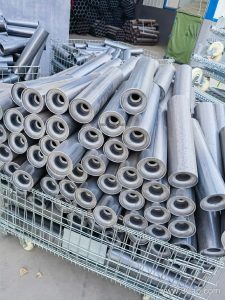
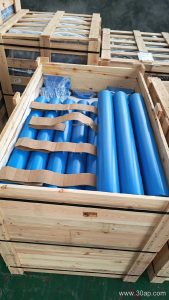
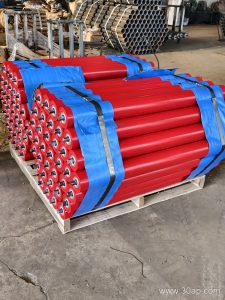
For a full belt handling package, buyers often combine fabricated brackets with idler roller sets, a conveyor pulley assembly and a suitable rubber conveyor belt. Clear drawings and agreed tolerances keep fabrication, rollers and belt working as one system.